After my delightful two weeks of solitary safari in remote Gonarezhou National in Zimbabwe and a short excursion into Mozambique, I made it back to South Africa and entered Kruger National Park in the very northeastern corner of the country.
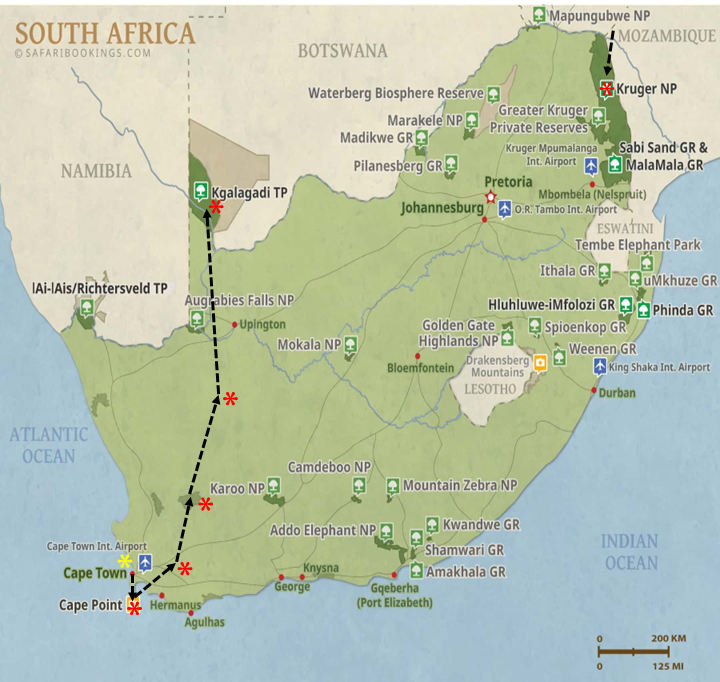
This was my second extended visit to Kruger, my first being in 2023 as I made my way north from Cape Town to Nairobi, Kenya. In that previous journey, I spent several days in the southern and central sections of Kruger before exiting and heading into Botswana. This year, however, I entered the Park at its northern terminus, where the countries of South Africa, Mozambique and Zimbabwe meet along the Limpopo River, and then slowly worked my way south.
In my 2023 blog, I posted 4 separate entries for my visit to Kruger and covered a lot of material in those posts that would be hard to cover again, and be redundant, so I will refer you to those posts for more information and travelog descriptions, and some great photos and, especially, videos.
Briefly, Kruger National Park is the iconic flagship Park of the South African Parks system and by far the most famous and visited of Parks in all of southern Africa. In part, this is because it is in South Africa close to Johannesburg and thus very accessible to the locals and international tourists alike. But its popularity is also because it is a huge Park at 7,576 square miles (the largest in South Africa and 6th largest in all of Africa) encompassing a diversity of environments and habitats for a diverse array of flora and fauna, inclulding all of the famous megafauna of the region. Its diversity, in part, stems from the fact that the Park extends 220 miles north to south along a strong climatic and thus environmental gradient, as well as 40 miles east to west from the summit of the Lebombo Mountains on the border with Mozambique across a gradient of basalt and granitic soils that support different vegetation communities, including changes in the all-important grasses for the grazing animals. The result of these strong environmental gradients is that Kruger supports a wide range of habitats for an exceptional array wildlife. Traveling North to South and East to West through the Park, as I did this year, almost guarentees you will see just about all of the classic southern African wildife. For a more detailed overview of Kruger, check out my first Kruger post from 2023:
Kruger, from my perspective, is a Park of strong contrasts. The contrasting environments is evident, but even more striking is the contrast between the wild African bush juxtaposed to the very modern built infrastructure, most notably the so-called “rest camps”. Indeed, camping in Kruger is as unlike camping in Gonarezhou, Chobe, Moremi or the Central Kalahari as you can get. Not only are the main roads paved, but the Rest Camps are little cities within the Park, and they come with every sort of comfort and convenience, including restaurants, food markets, fuel stations, laundry, spas, chalets/cottages of all levels of luxury, and crowded campsites. I won’t say more here, nor will I show any photos of my Kruger campsites (because I couldn’t bring myself to photograph them), but I will refer you to my Kruger Cities post from 2023, in case you want to hear more about camping in Kruger. Suffice it to say that one moment you are watching elephants or leopards and then moments later you are filling your vehicle with fuel and stopping at the shop for a cold drink (or dark chocolate bar) – crazy. Among the vast number of tourists there are hard-core overlanders and kitted out rigs, like me and mine, driving next to small sedans – crazy:
While Kruger may not have the greatest wild and wilderness feel to it, one thing is does have is lots of wildlife to see. In Kruger, you don’t have to work very hard to see most of the wildlife. This is for two major reasons. First, the Park is large and productive and supports lots of wildlife with big populations that have been protected for a long time, making the chances of seeing any particular species relatively high. Second, there are lots and lots of people on safari in the Park, including lots and lots of safari guides carrying loads of tourists. Consequently, it is hard to find a private drive and only rarely do you get to see the megafaunal species without one or more, often many, other vehicles showing up immediately to share the sighting. That being said, I did manage a few relatively private drives and wildlife viewings by traveling the gravel loop roads off the main thoroughfare. On the flip side, the crowds means there are thousands of eys looking for the harder-to-see species, such as the predators, dramatically increasing your chances of benefiting from someone else spotting that hard-to-see leopard or cheetah. SO, you get to see lots of wildlife, but its rare to have intimate viewings. That being said, in 2023 I had lots of amazing sightings and described some of them detail and included some cool videos in that post. In particular, there is a great 8 minute video of my private viewing of wild dogs in the Kruger Highlights post below:
Lastly, I delved into some of the themes above in more detail in my final Kruger 2023 post in the following:
As for this year’s Kruger journey. This year, I intended to spend a full 11 nights in Kruger at 5 different Rest Camps, moving from the northern extreme to the southern extreme 2 (or 3) nights at a time, giving me the opportunity to really experience the full breadth of the Park’s diversity. Unfortunately, due to an ugent need to replace the Green Dragon’s transfer case (a.k.a., transmission) because of a failed bearing in the transmission which started causing serious issues that I did not want to ignore, I had to cut my stay off by 1 night at my southern most Rest Camp (Berg en Dal) – better safe than sorry, right! What is truly amazing is that despite the transmission inside the transfer case being badly damaged, including having no transmission fluid left in the transfer case due to a crack in the housing caused by the exploding bearing, the Green Dragon kept on driving for hundreds of kilometers – only a land cruiser troopie could keep on trucking with that level of internal damage!
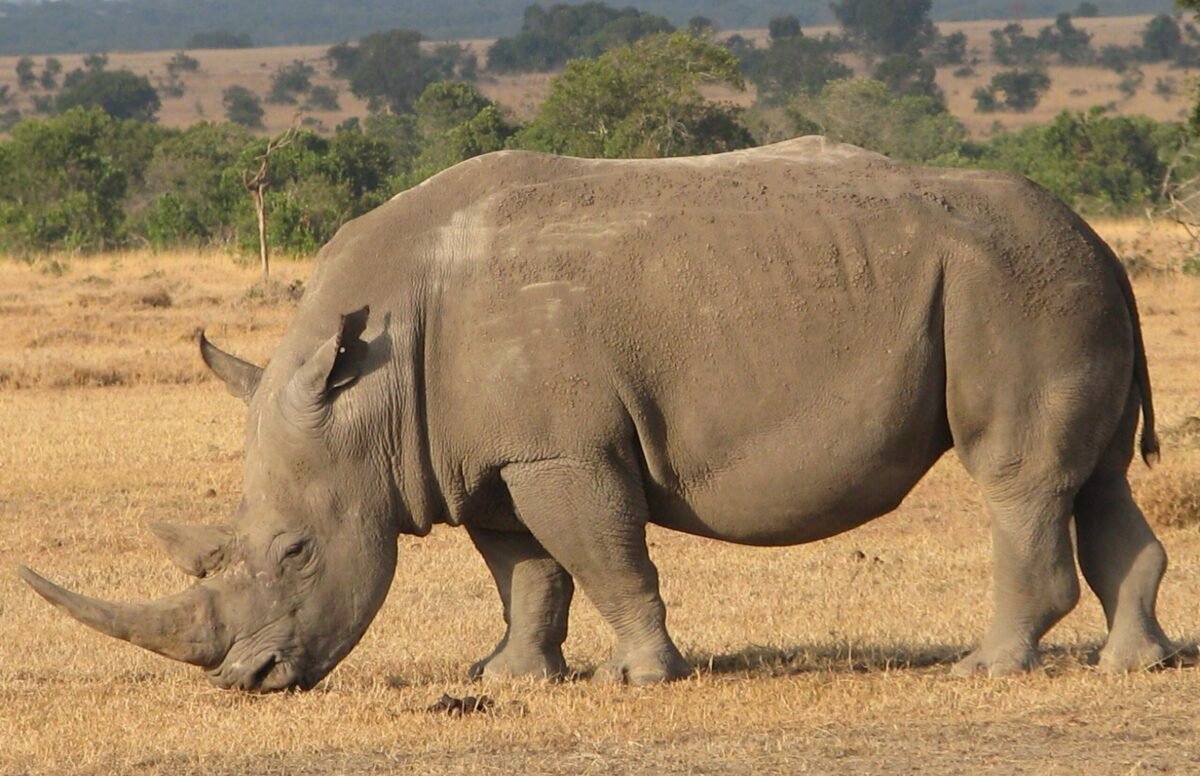
Nevertheless, 10 nights gave me plenty of time to see almost all the megafauna and lots of the smaller creatures, including a wide variety of bird species. The only magafauna I missed, regrettably, was the Rhino (white and/or black), as they were most likely to be found around my last Rest Camp which I did not have a lot of time to explore because of the diversion to the Toyota service center. Because I took so many photos (and some videos), rather than try to present my trip chronologically with photos and descriptions, as I did with Gonarezhou, instead, I created a slideshow. This slideshow is a pictorial journey through the Park from north to south, as I experienced it, minus pictures of the Rest Camps. Note, I included many of photos of the same species, such as elephants, as they were representing the Park as I moved along, and of course there were many of the smaller species not represented in these photos. Enjoy!
And for those that like cats and dogs, here’s a 10 minute composite video of some lion, cheetah, leopard and wild dog sightings:
Ok, that’s all for Kruger. My next and last destination is Mokala National Park (a new Park for me) en route back to Cape Town. See you there!
Major bummer about the transfer case! Glad you were still able to continue on AND find a repair shop. Safe travels!!