We left the Namibian coast and said goodbye to the Atlantic Ocean, and headed inland to the southern portion of Damarland (region dominated by the Damara tribe) and Spitzkoppe National Monument:
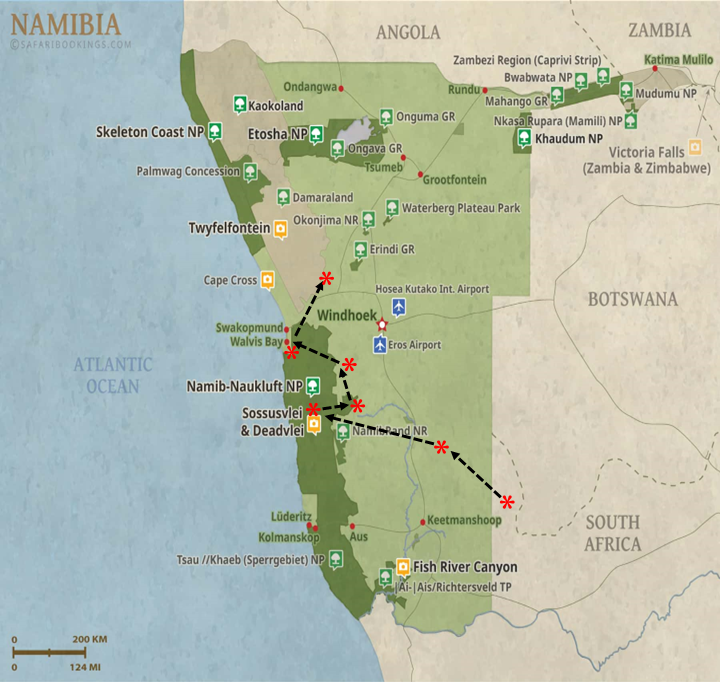
Once again, this visit was mostly a repeat of last year’s visit with Steve and Ki, with a few minor variations. Nevertheless, here’s the link to last year’s post in case you are interested in the differences:
overlandwithkmcgee.com/august-2-3-spitzkoppe-mountains/
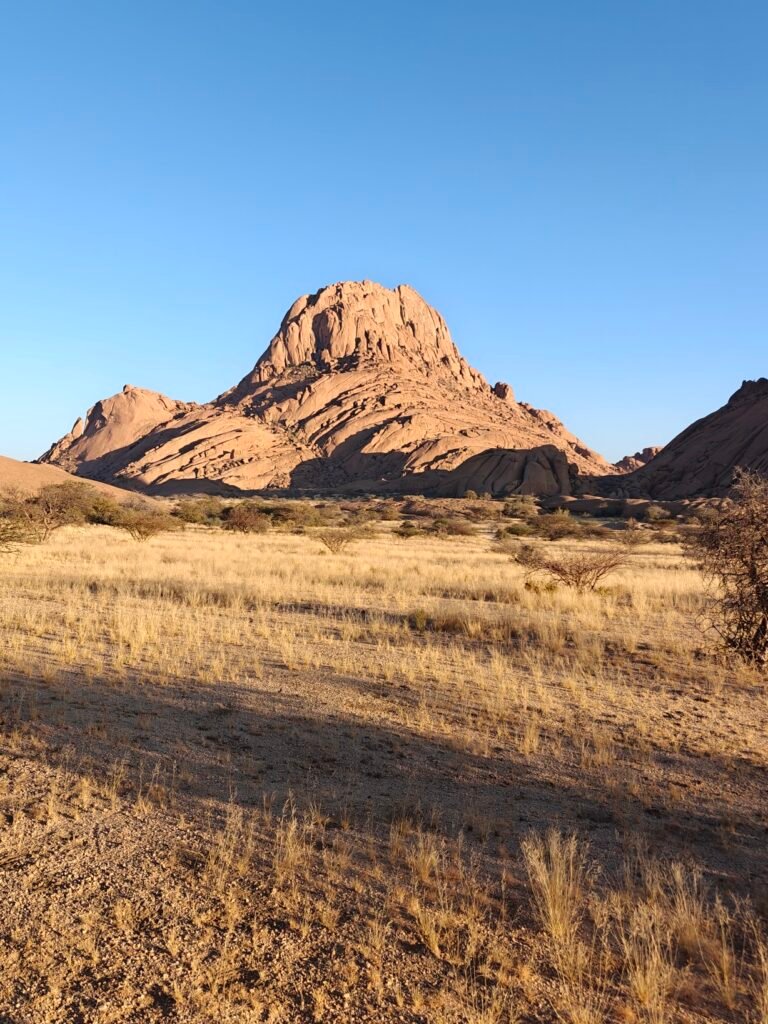
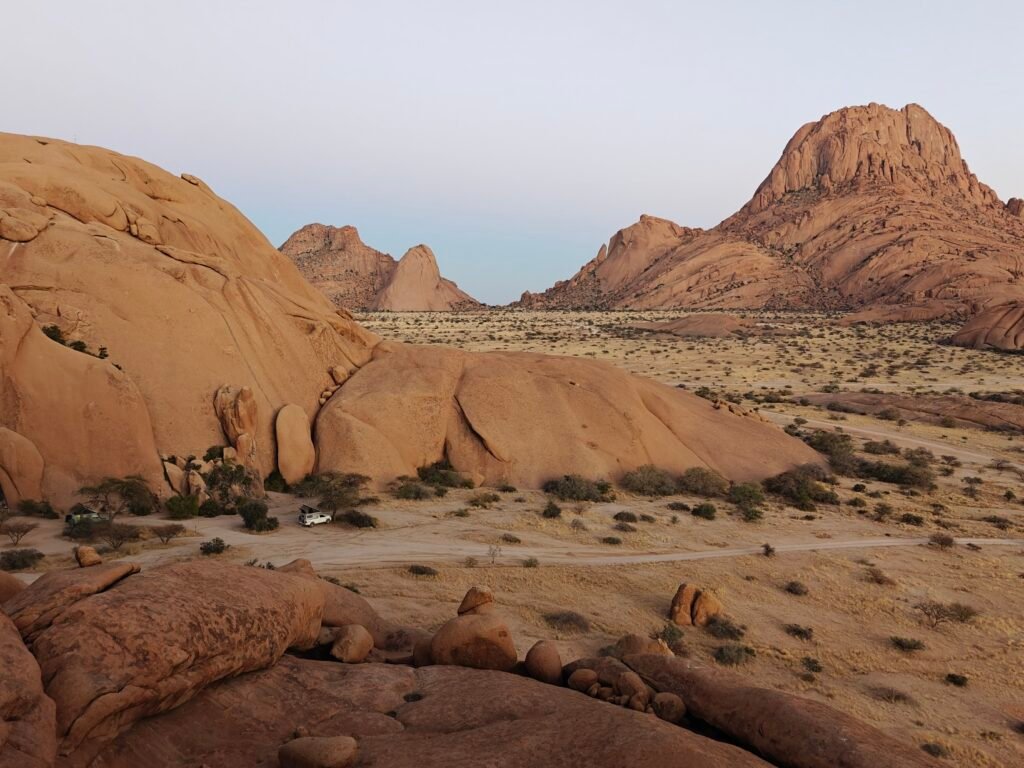
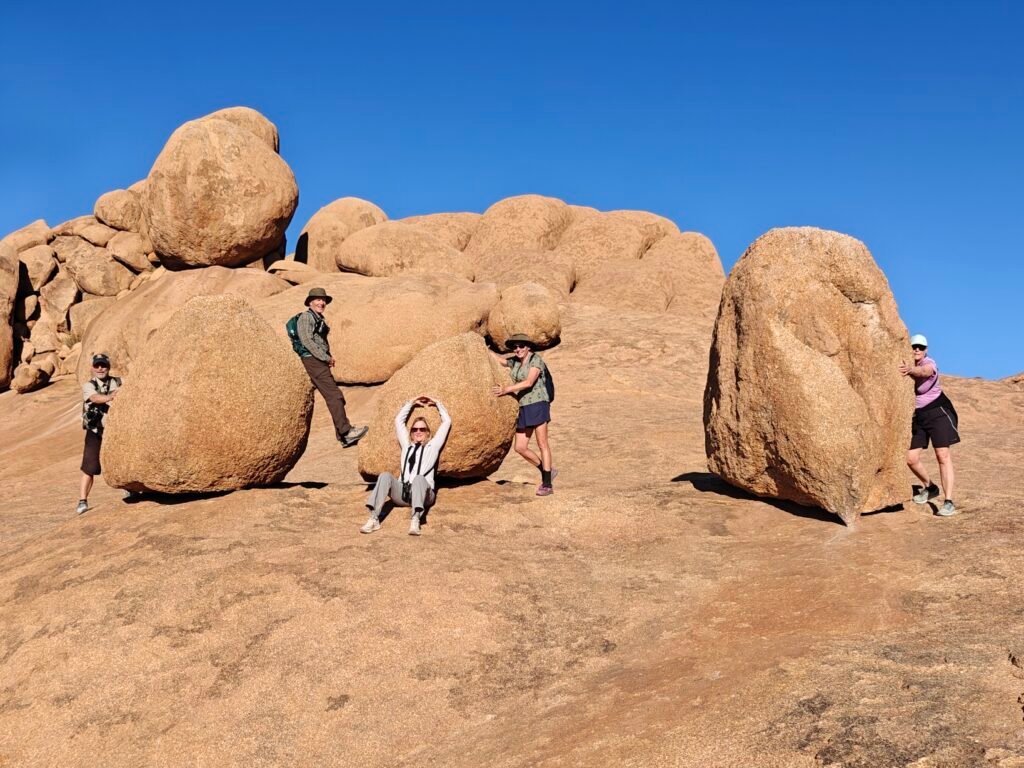
Briefly, the Spitzkoppe Mountains are a 130 million year old group of bald granite peaks or inselbergs (i.e., isolated mountain of rock rising up from the plains) kown as the “Matterhorn of Namibia” located on the eastern edge of the Namib desert and rising more than 2,000 feet above the plains. Here’s a few photos to help you visualize the spectacular landscape:
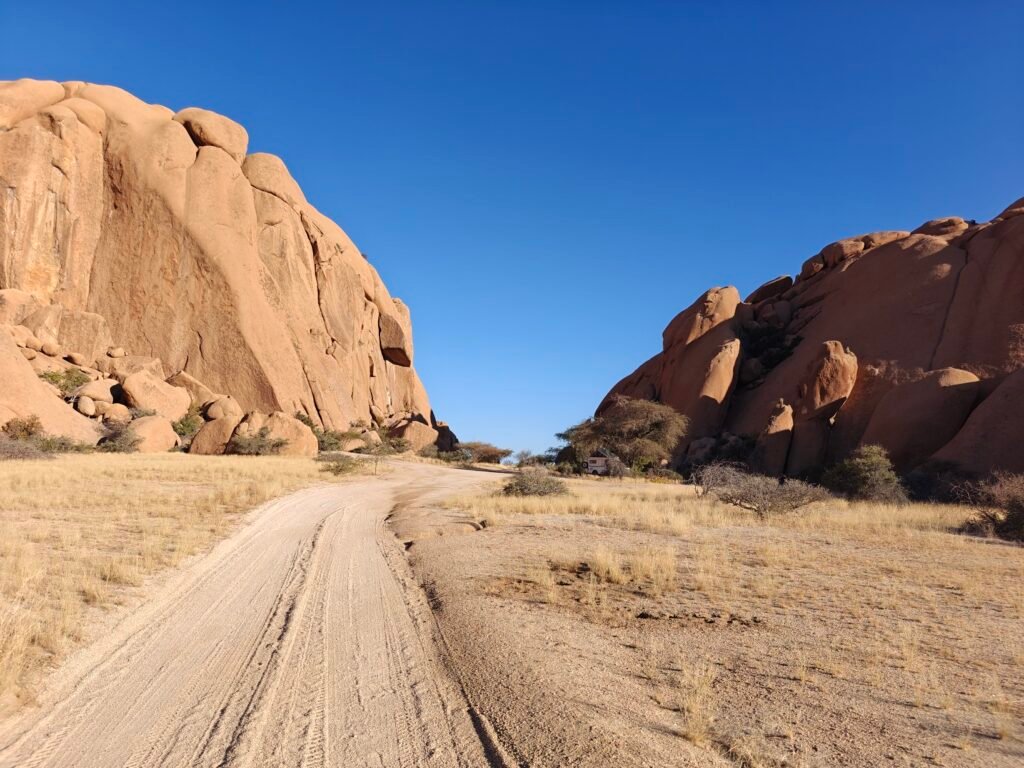
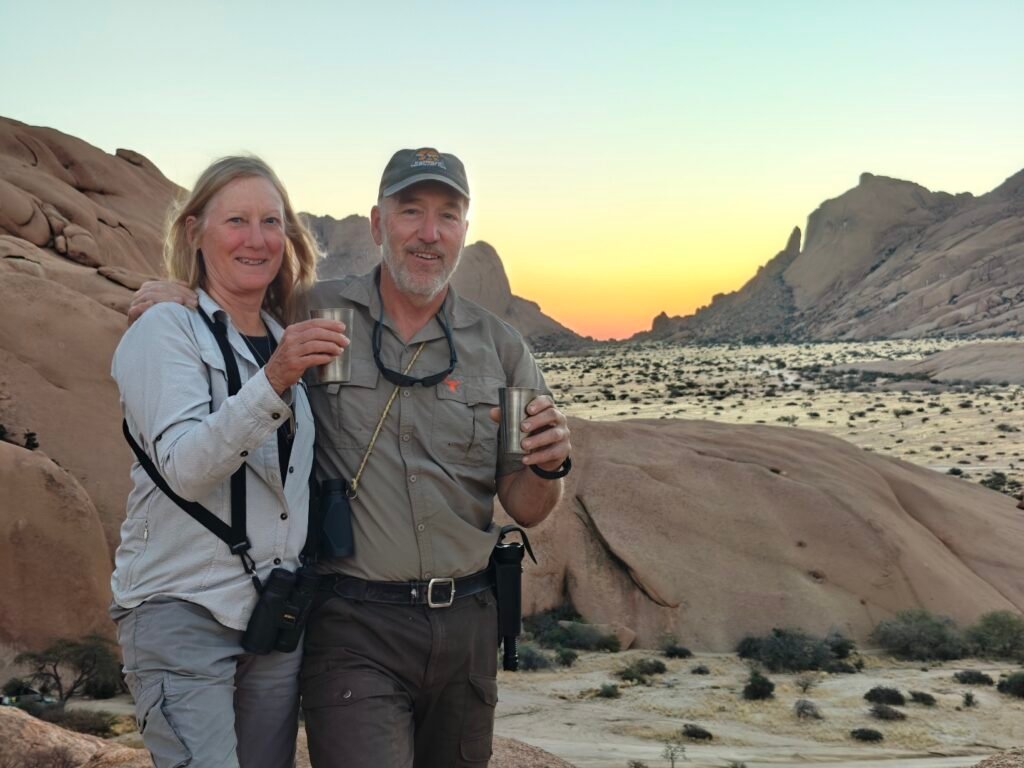
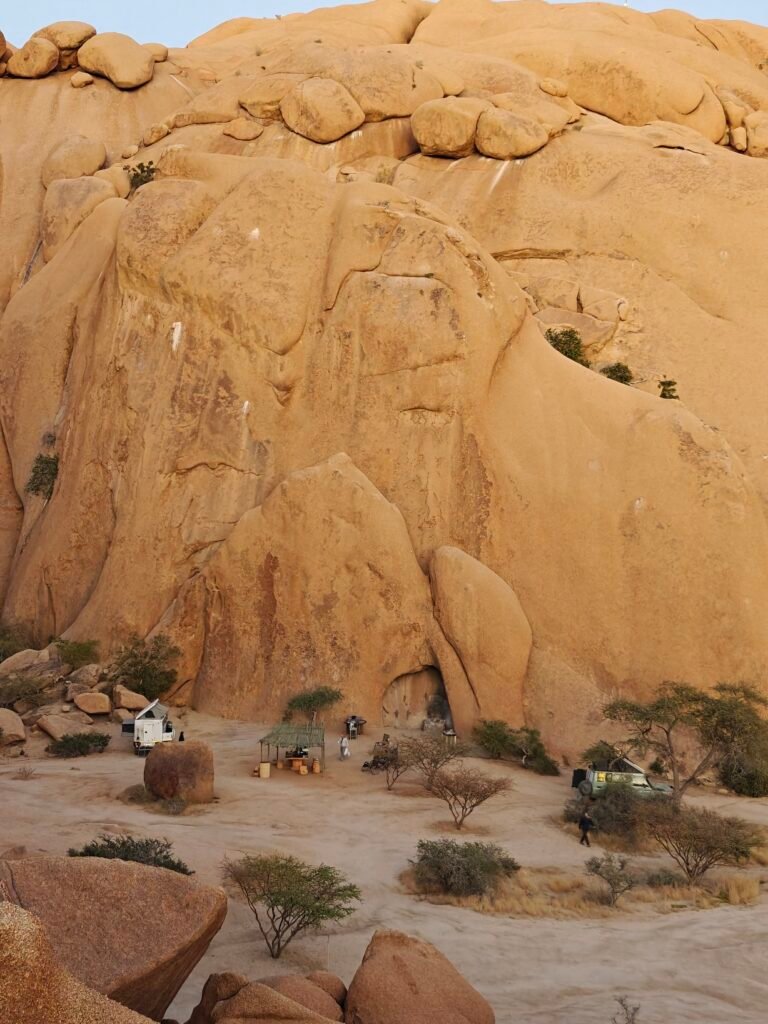
We had an awesome campsite nestled up against the rocks in a narrow gap between two rock koppies, and with plenty of space to separate the vehicles that allowed the revervberations of the snoring members of our party to (partially) dissipate before reaching the neighbors.
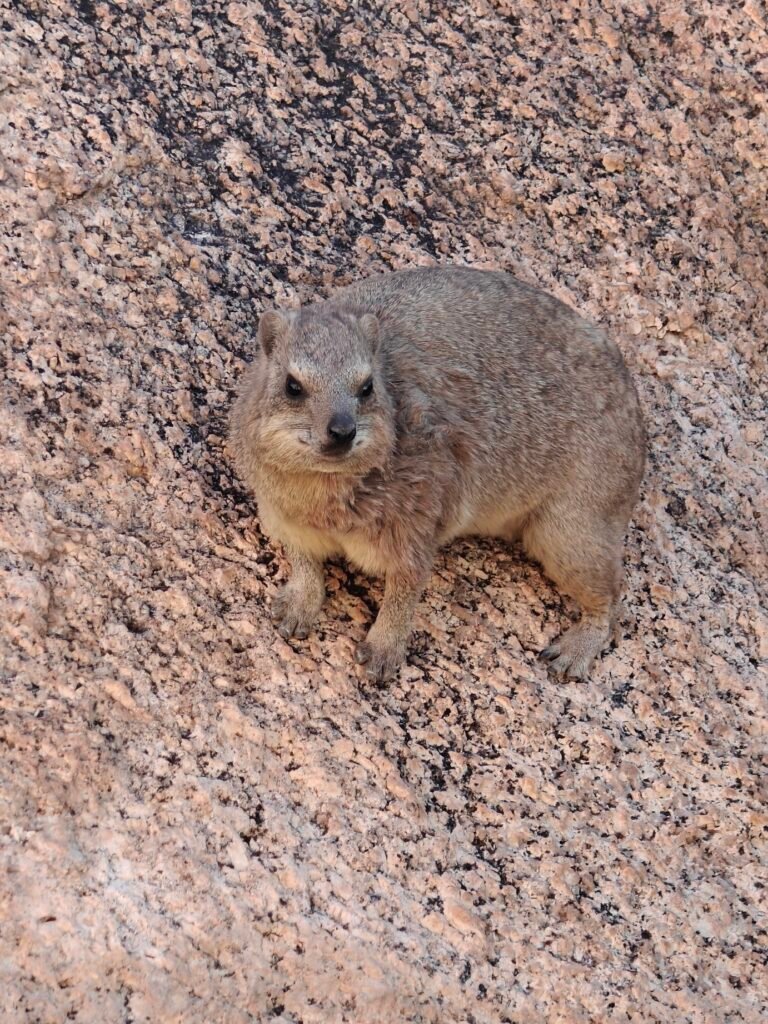
We had lots of campsite attendants, but by far the most abundant and interesting were the many rock hyrax (or rock dassies) that plastered the rocks and fed in the bushes all around us:
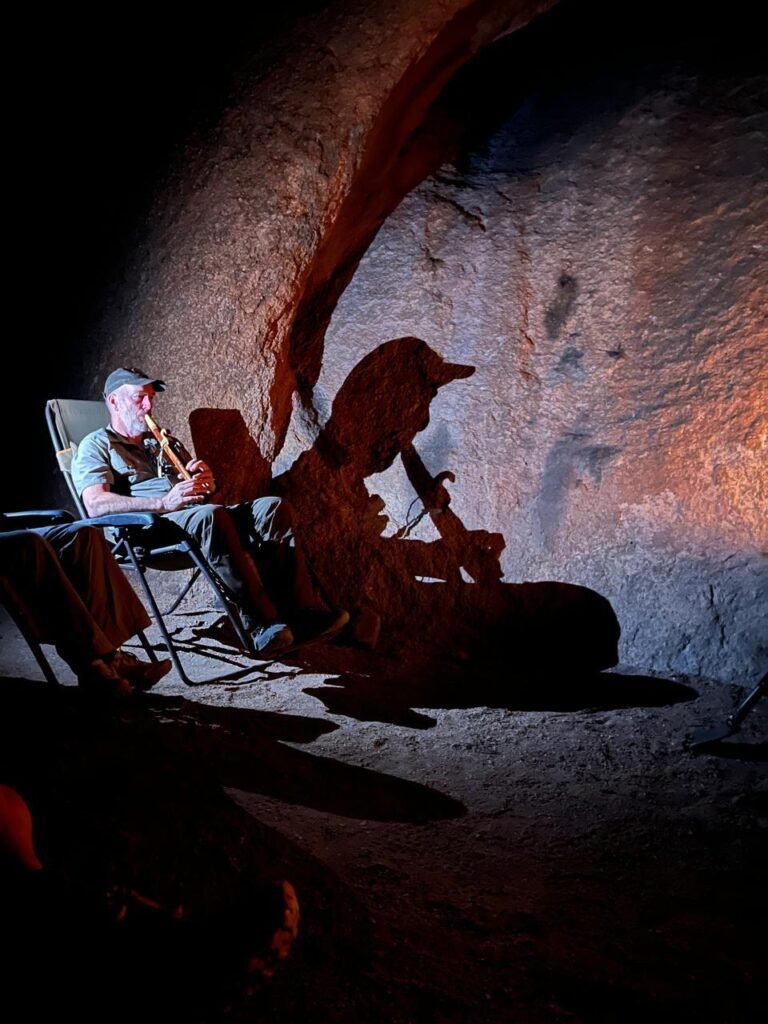
One great feature of this campsite was the fireplace up agains the big rock wall that had a natural chimney formation that funneled the smoke up and away. This afforded us some very pleasant evenings around the campfire, including a little fireside flute music:
Another great feature of this campsite was its location between the rock koppies that allowed us to ascend the granite slopes for a spectacular sundowner:
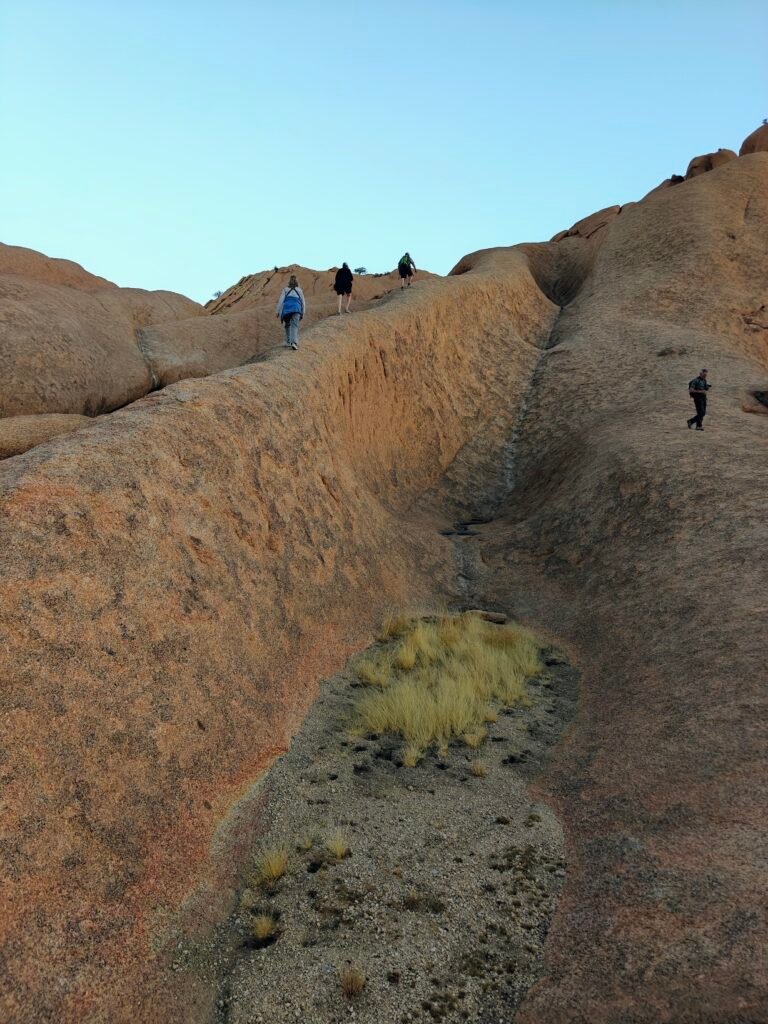
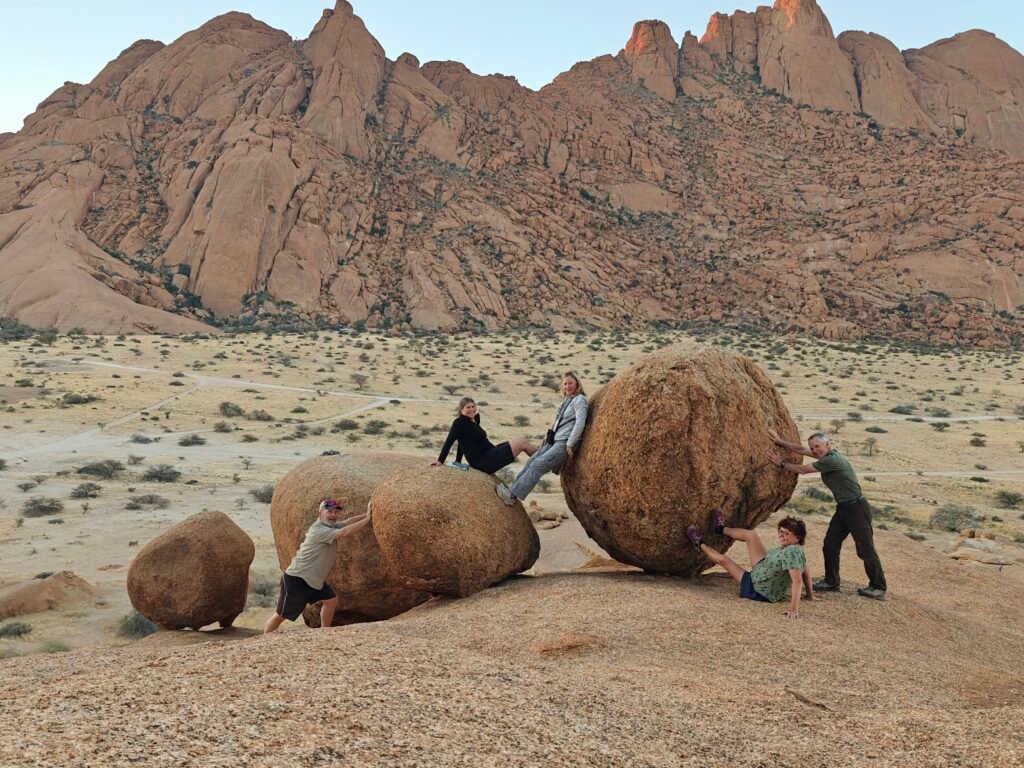
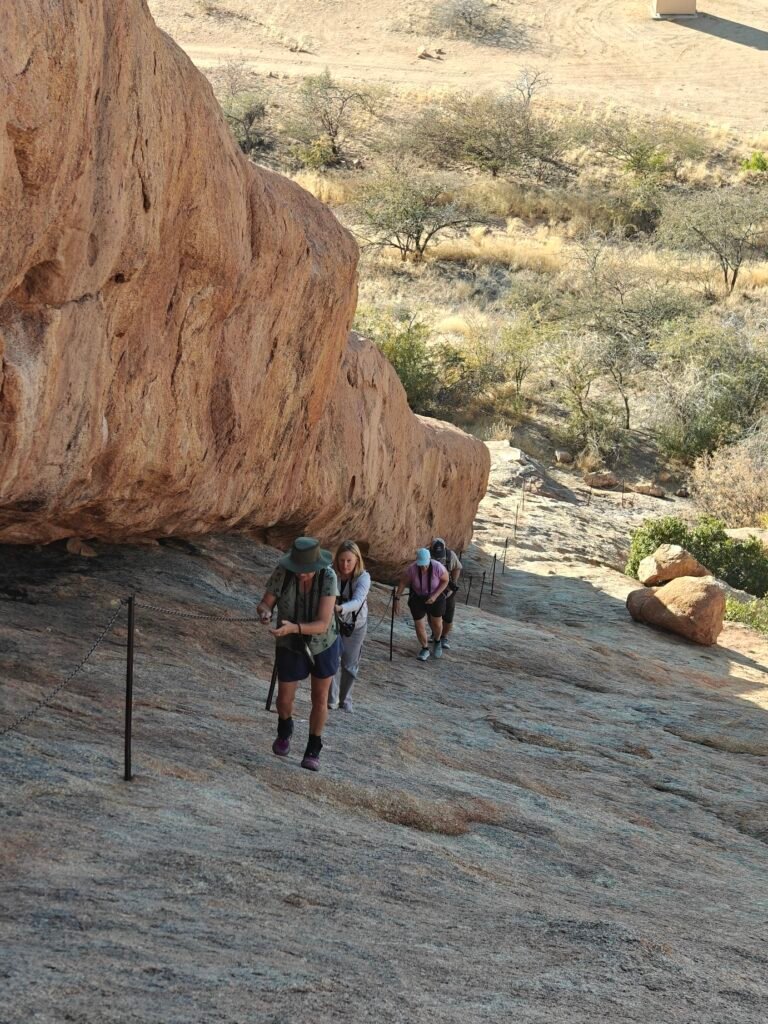
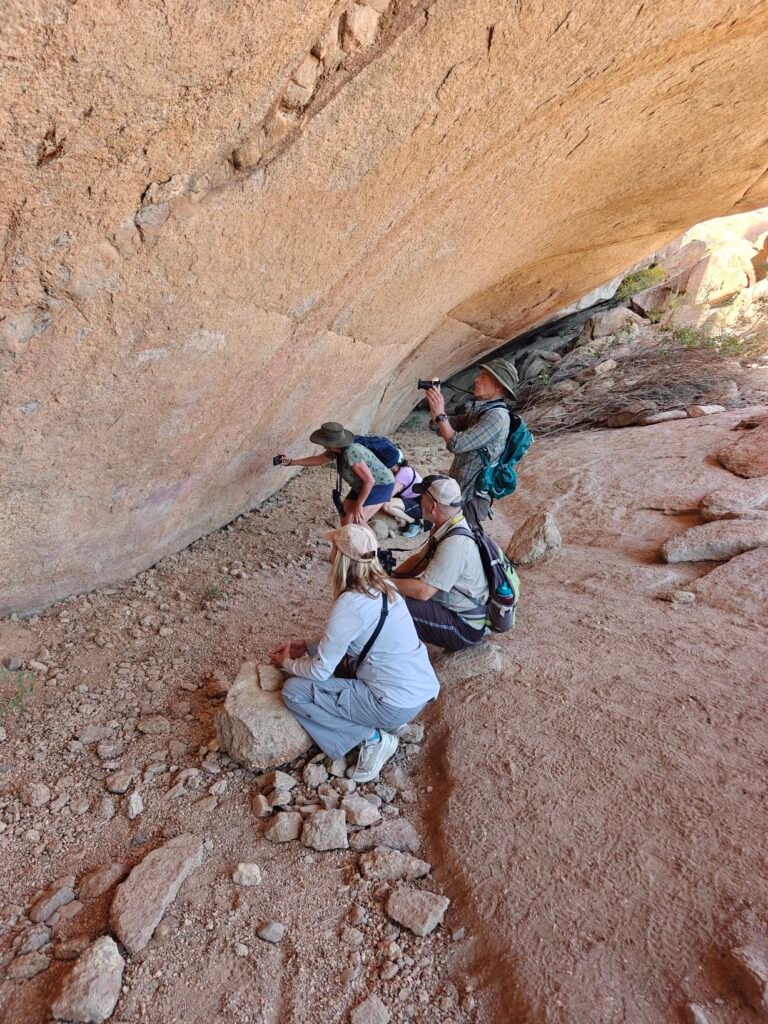
We had one full day for hiking and made the most of it. We hiked cross-country from our campsite to the “chain”, which ascends a steep rock face with the aid of a chain up to a large cave known as “Bushman’s Paradise“. The cave is famous for its ancient Bushman rock art. Recall that the Bushman (or, more properly, the San people) were the original indigenous people of southern Africa who led a hunter-gatherer life style before being displaced, enslaved, or massacred by the invading Bantu-speaking tribes from the north and then the Dutch and eventually the Germans and Brittish as the Europeans colonized the land. However, the San left behind a remarkable legacy of rock art that is well-distributed throughout southern Africa. Bushman’s Paradise is but one example:
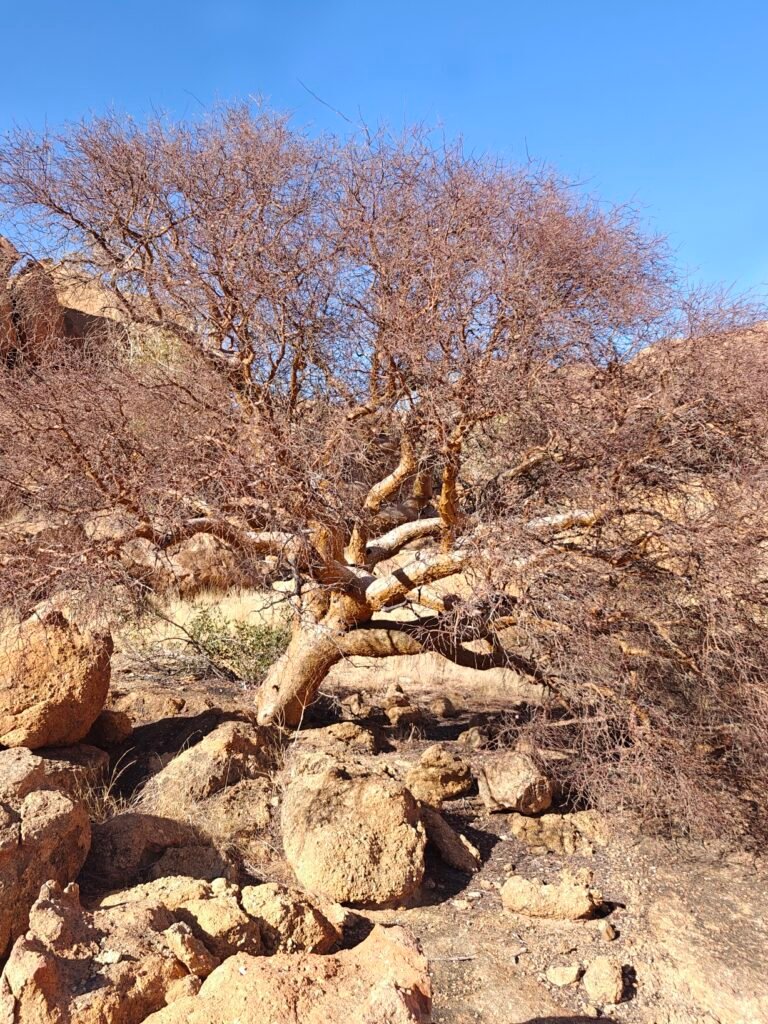
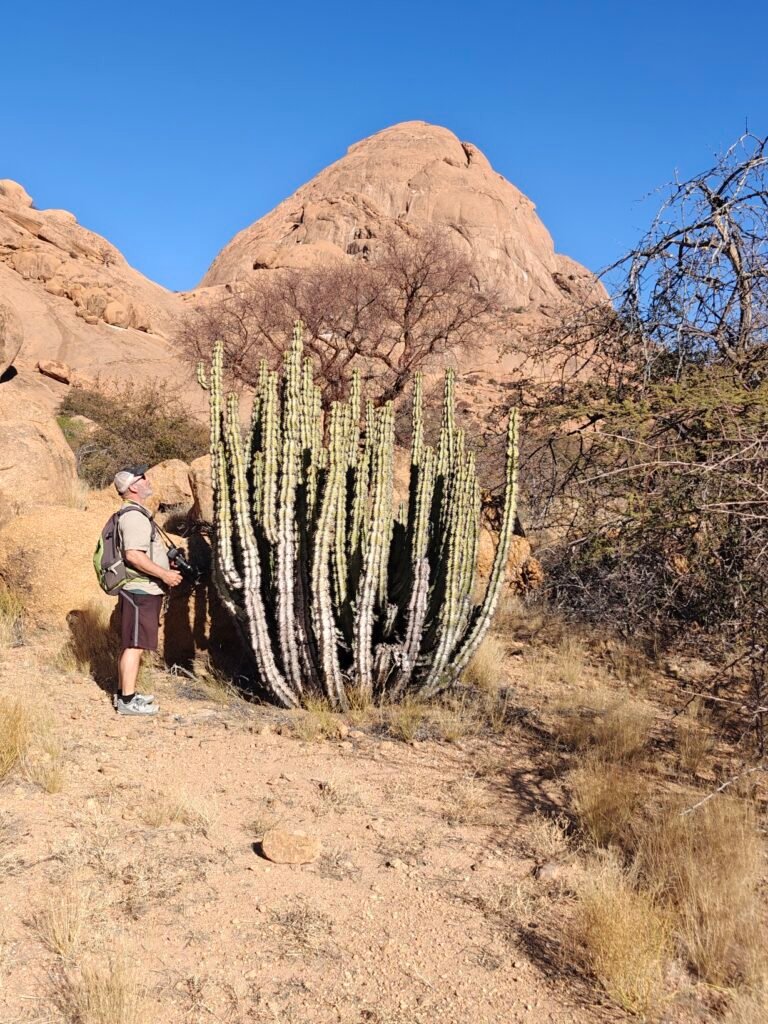
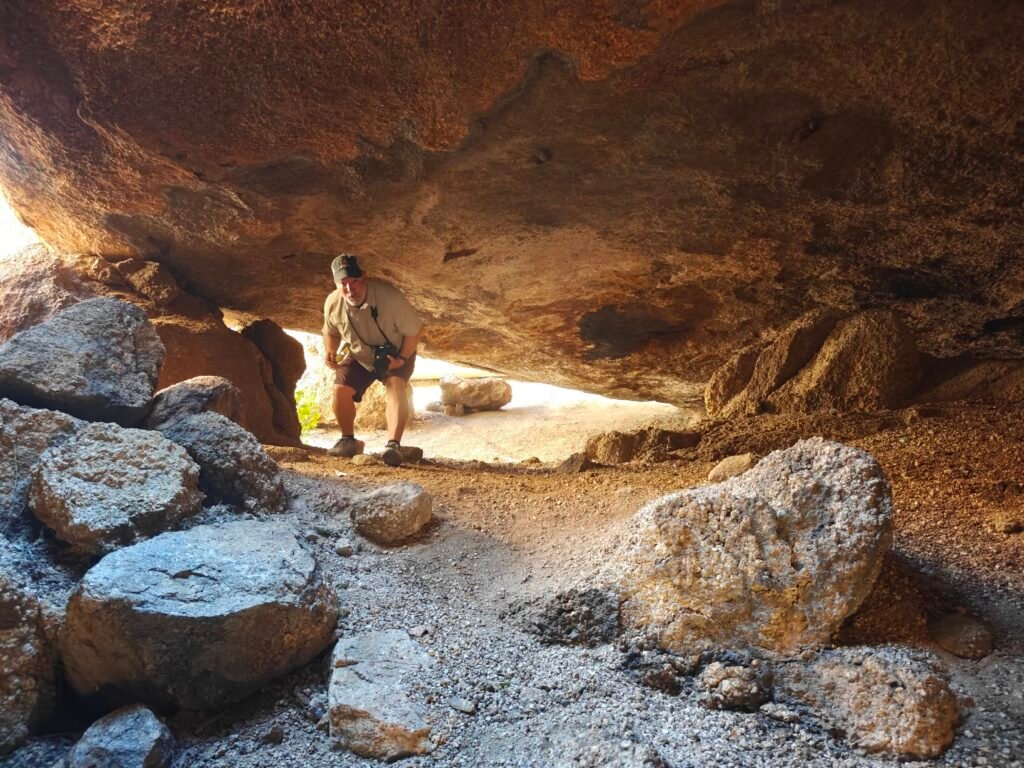
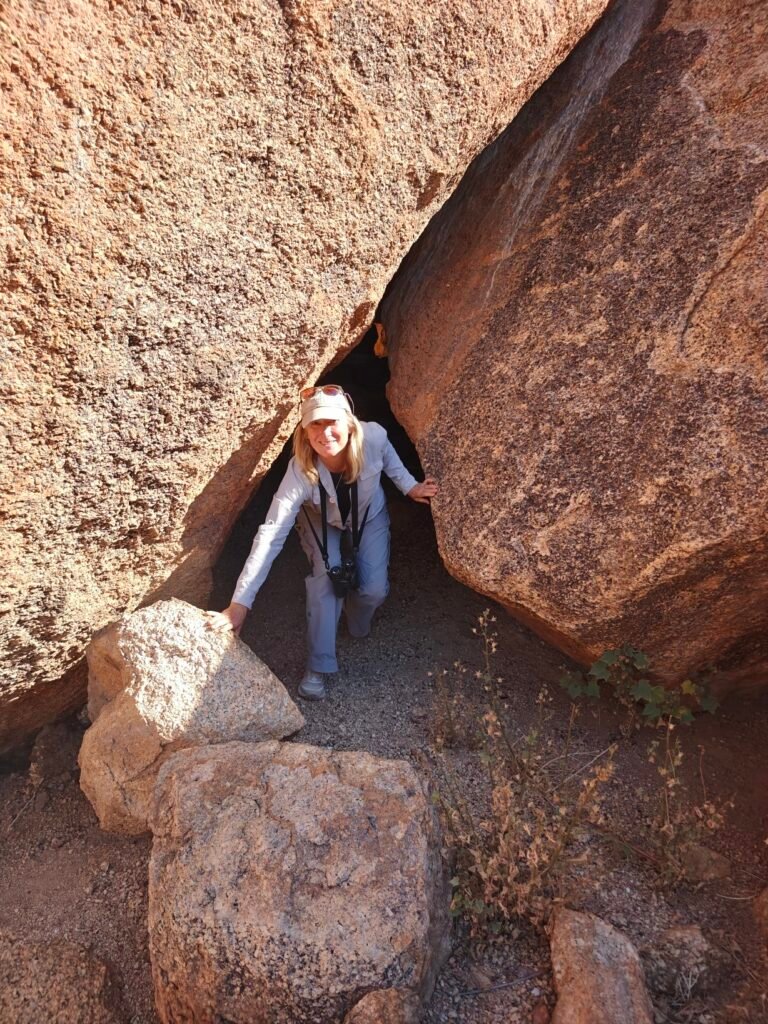
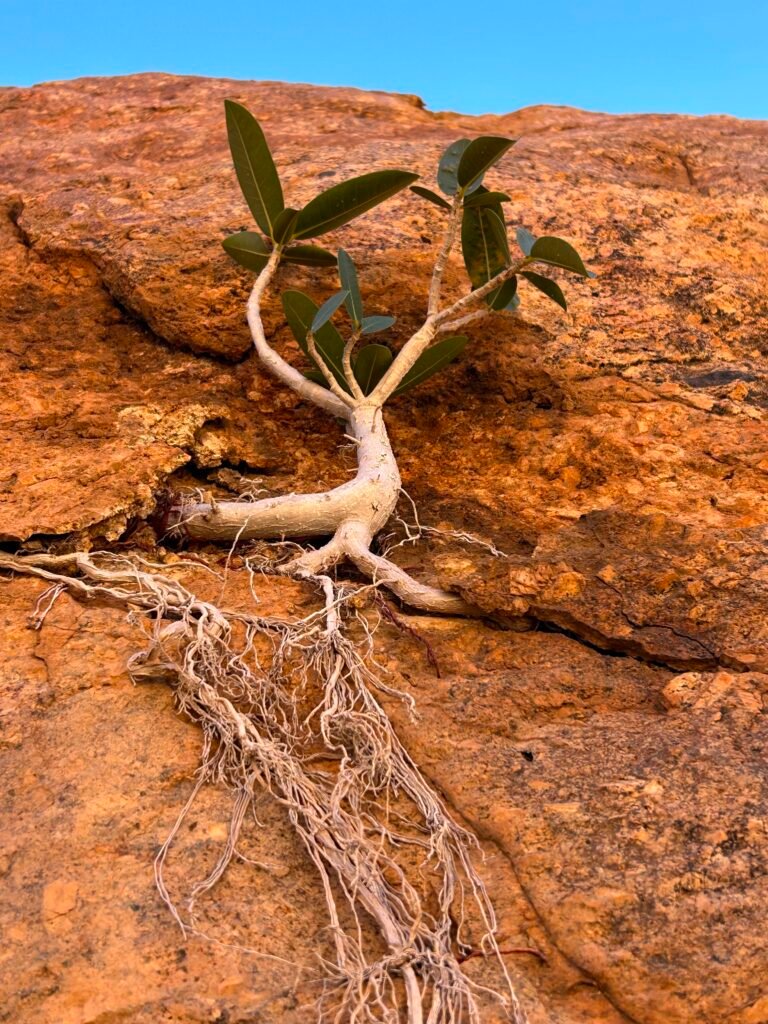
We continued our cross-country hike past Bushman’s Paradise into a hidden nested valley, where we came upon some beautiful desert-adapted plants, and then descended through a canyon that even had us squeezing through a cave at one point, but only after scaring a large hare out of its mid-day resting place
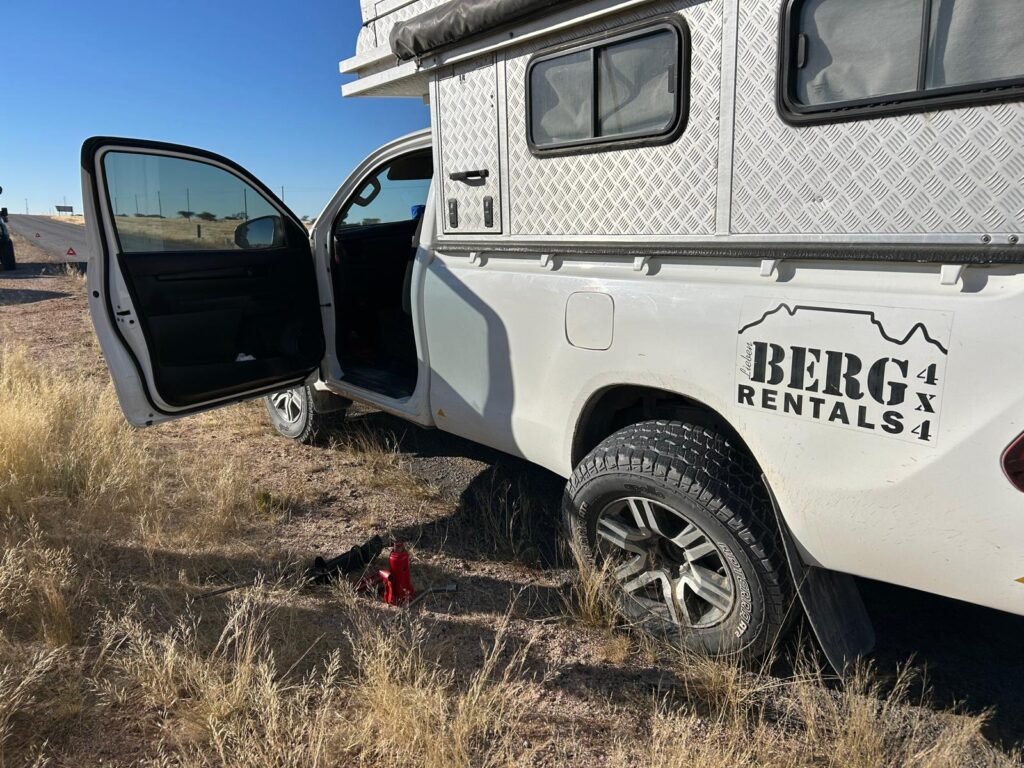
We said goodbye to our last night of camping in Namibia, before Mark, Kirsten, John and Annette all leave to continue with other adventures (John and Annette to Botswana for 10 days, and Mark and Kirsten back to Nairobi and then home to Bend, Oregon). But not before one last bit of overlanding excitement. Leaving Spitzkoppe, John and Annette’s vehicle almost lost a rear wheel when 5 of 6 wheel studs sheared off, leaving the wheel barely attached by one stud and lug nut – yikes, another close call averted. After a few hours of waiting by the side of the road, eventually a mechanic arrived and quickly replaced the studs and sent us on our way with a big sigh of relief:
We made it to our final destination in Namibia, Bella’s tiny house and gypsy wagon (a.k.a. as “Laura’s house“, as I named it last year because I know Laura would love this place and all its creative designs), located near the airport outside of Windhoek.
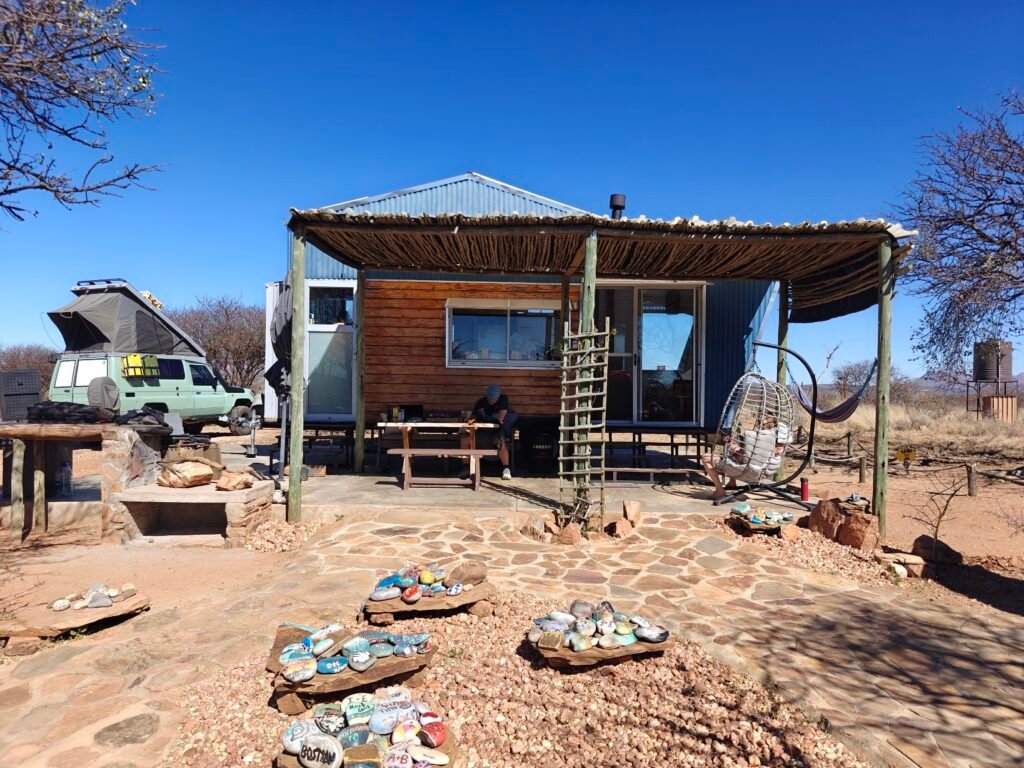
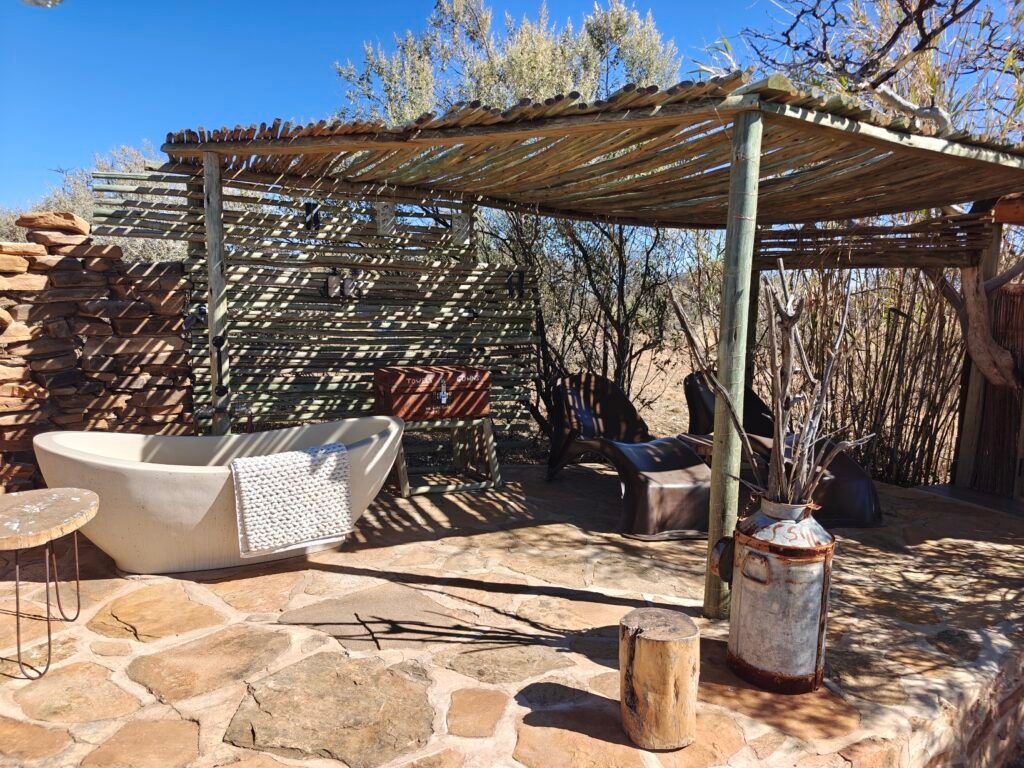
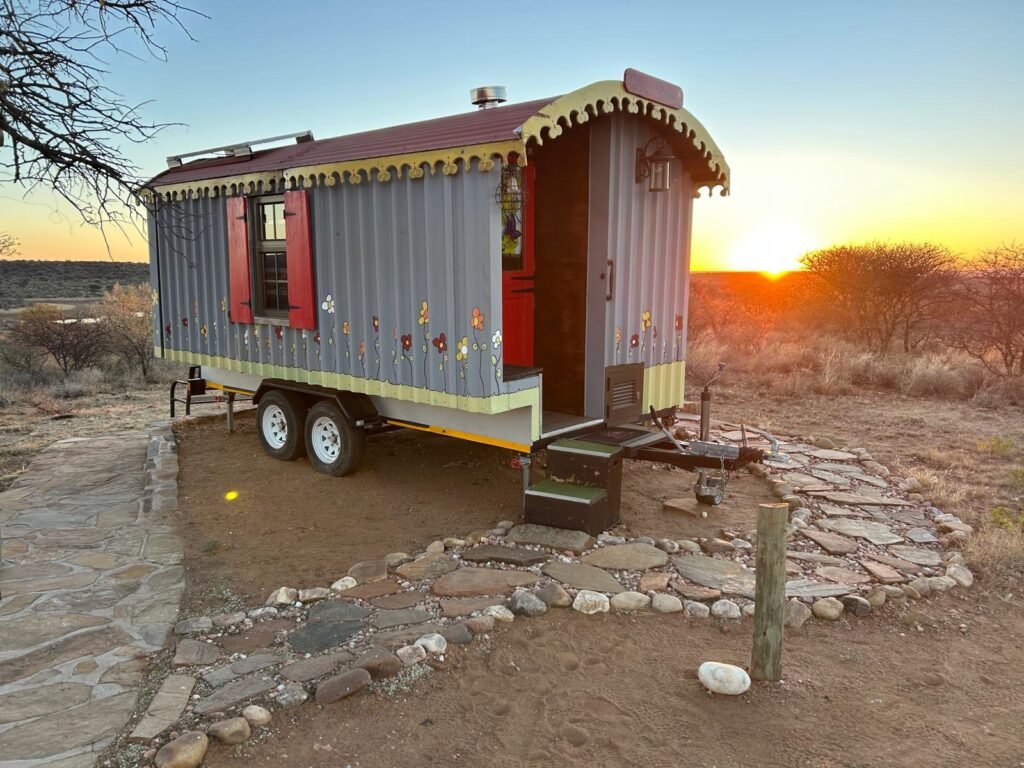
However, the most important activity at Laura’s house was celebrating Kirsten’s birthday, which we did with a flare by making cinnamon rolls (her favorite) and an egg/potatoe scramble for brunch:
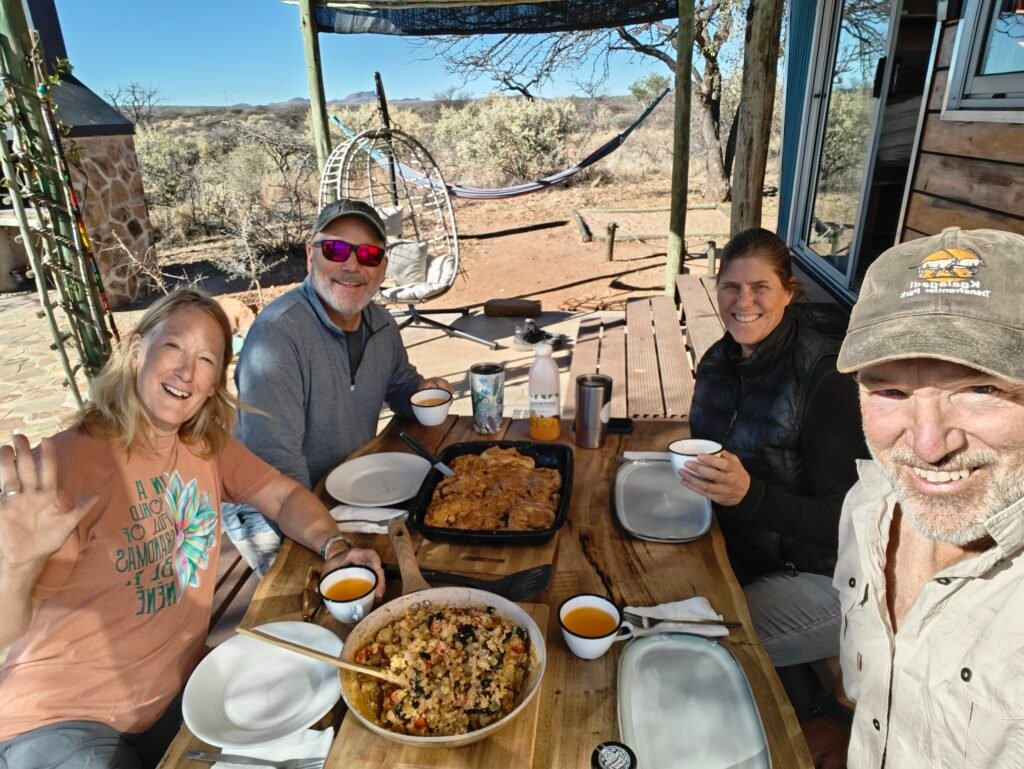
That’s all she wrote for our visit to Namibia this year. Everyone else is on their way and Nancy and I are headed into Botswana for the next exciting leg of our journey. Please NOTE, we will be in the Central Kalahari Game Reserve for the next 6 days without any cell or wifi service, so you will not hear from me for a while; that is, assuming we get past the hungry desert lions!
That Spitzkoppe campsite in the rocks might be my favorite so far! What a cool spot!
Post some flute playing. I just love when you play. I want video please! Thanks – love Kara