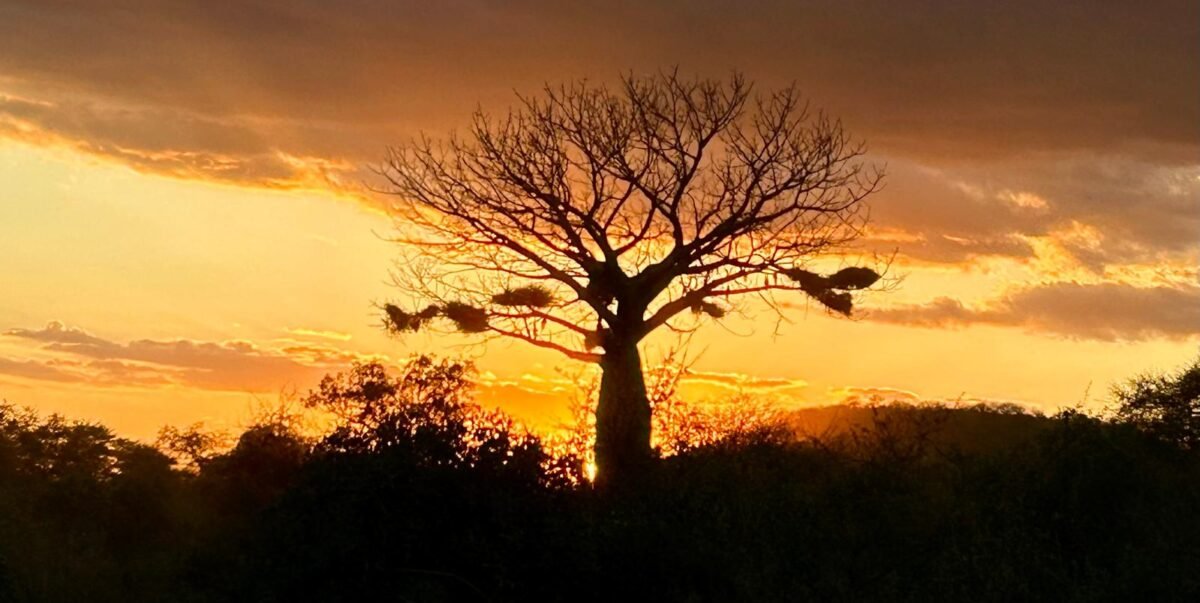
After several days of “taking care of business” in Cape Town (i.e., a few improvements and servicing of the Green Dragon, purchasing supplies, and getting the vehicle registered in my name, FINALLY), I had some free time before Nancy, Mark, Kirsten, John and Annette arrive to explore more of the beautiful Cape Fold Mountains that lie just north and northeast of Cape Town.
Since this is my first real post on this year’s African journey, I should refer you first-time blog followers, or those with a short memory or wanting a refresher, to my post of a few years ago on the country of South Africa that presents some interesting facts about this country and its history. In case you are interested, here’s a link to that post:
http://overlandwithkmcgee.com/may-5-south-africa/
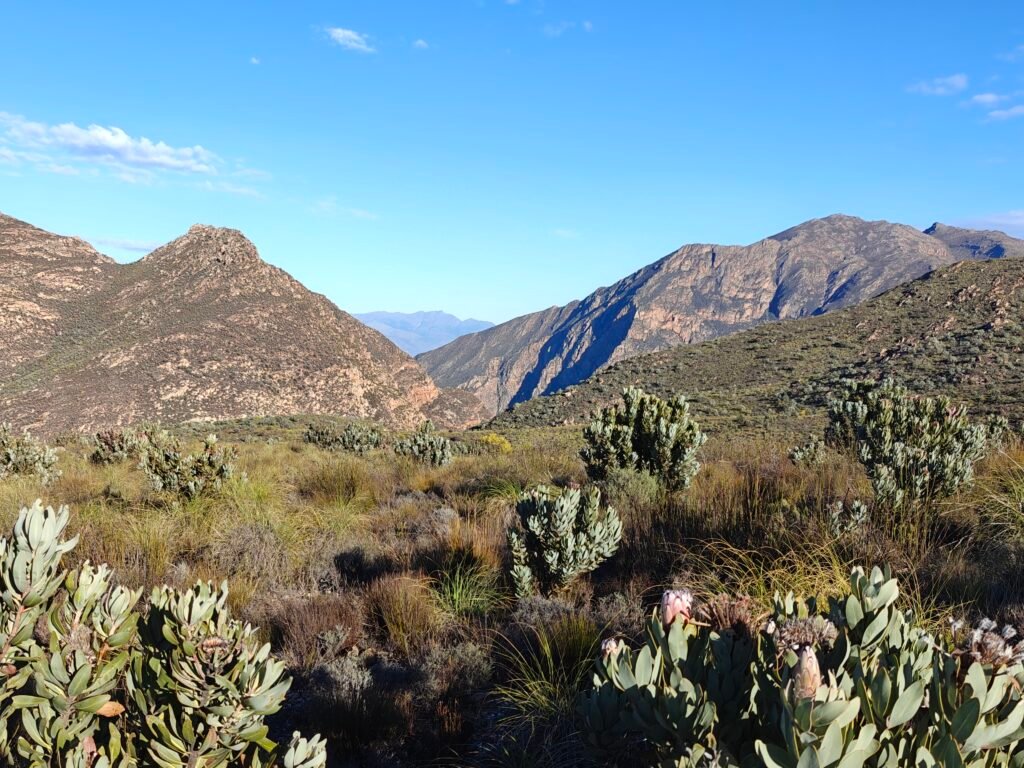
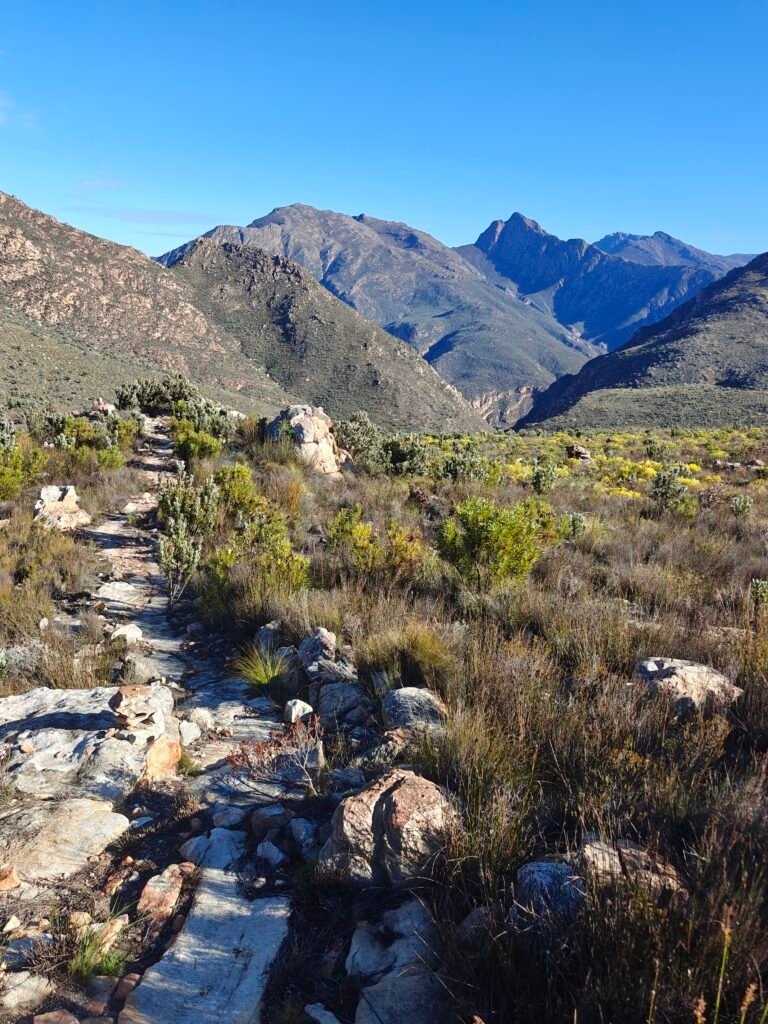
During my “free days and nights” I ventured into the Cape Fold Mountains outside of Cape Town. Some of you may recall that I did the same last year while waiting for my vehicle registration. The Cape Fold Mountains are a series of mountain chains two or three deep running parallel to the western and southern coast. The name of these mountains suits them well, as they are literally a series of folded and faulted moutains, as if they were crumpled up, created by extraordinary tectonic forces some 250+ million years ago when the tectonic plates collided to form the supercontinent of Pangea. The mountains are dominated by mountain fynbos vegetation, which is low-lying shrubby and herbaceous species of extraordinary diversity (many of which are endemic), whereas the lower-lying areas support more succulent karoo vegetation that is also low-lying shrub and herbaceous species but of a slightly different mix. Well, in reality, most of the low-lying valleys have been converted to vineyards and orchards, so there is actually very little of the natural succulent karoo vegetation left within the Cape Fold Mountains outside of the few parks and reserves. The landscape is quite stunning, with rugged mountains rising above lush valleys with small settlements interspersed throughout to support the region’s booming wine and fruit industry.
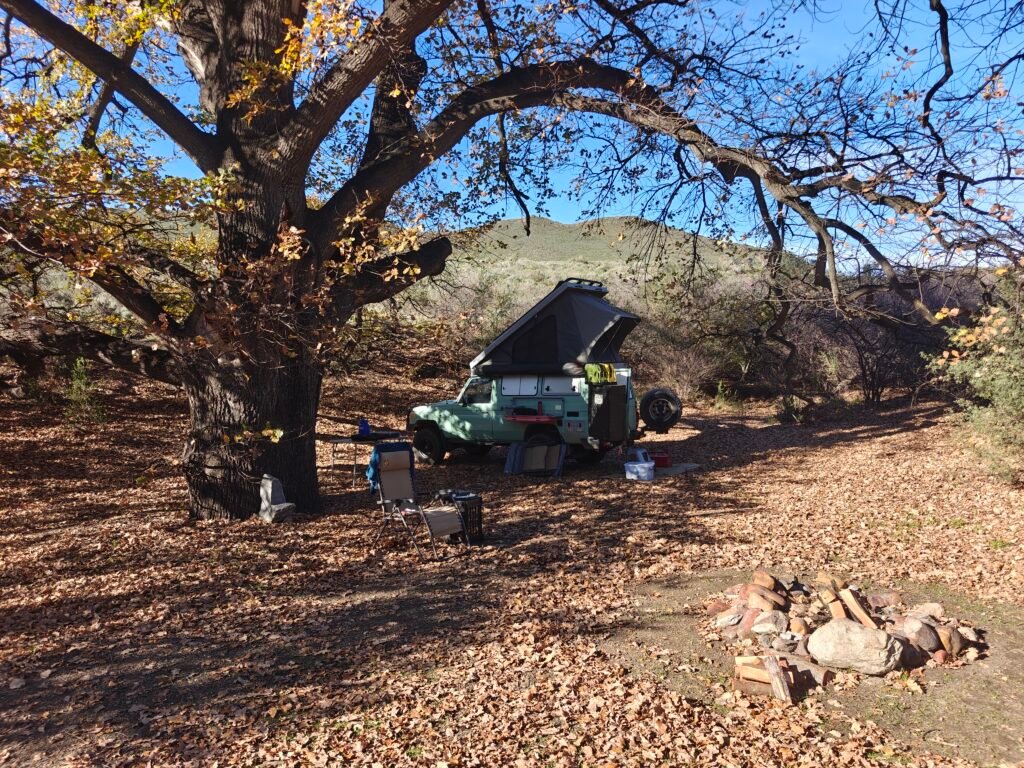
My first venture was for two nights to a place called Simonskloof nestled in a valley at the end of a 10 km gravel drive. Not surprisingly for this time of year, I was the only visitor, so I had the small campground to myself. I switched sites between nights because of the frost covering on everything in the open to a site nestled under a 300-year English Oak tree. This tree, obviously planted by the earliest colonial settler to this place, was a stark reminder of the dark and bloody history of this country, in which the technologically superior white settlers (initially the Boers of Dutch origin, but later on the Brittish) displaced, enslaved, and massacred the natives – an all too familiar story throughout history and across the planet that I won’t reflect on further in this post. Here are some photos of my campsite:
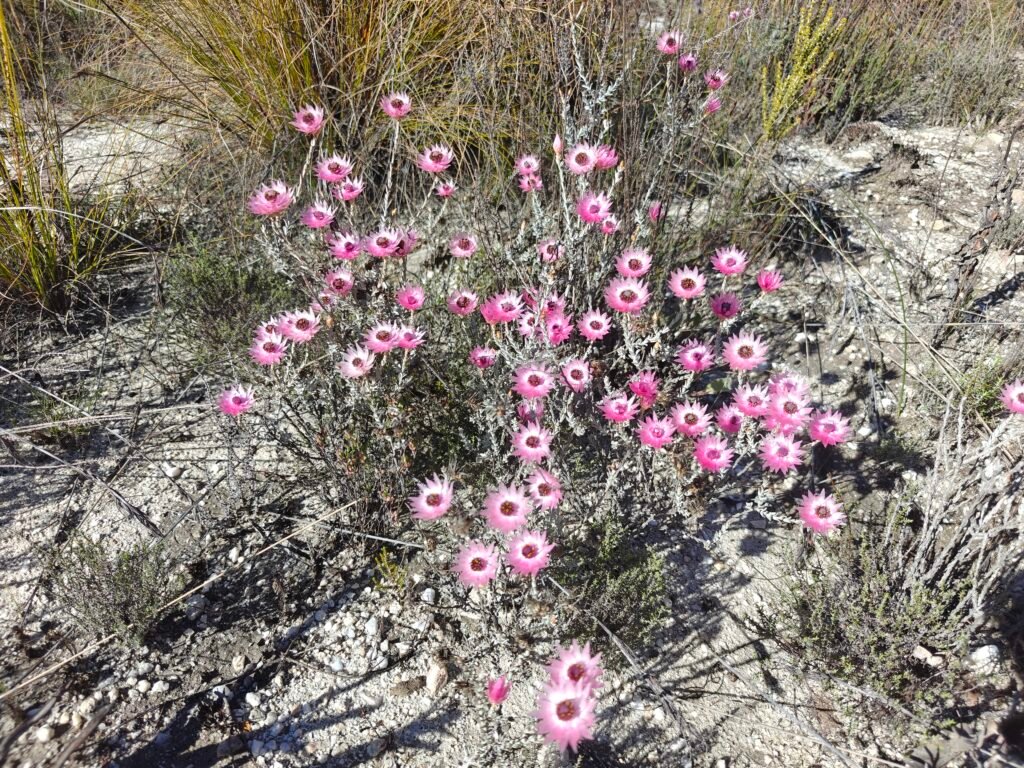
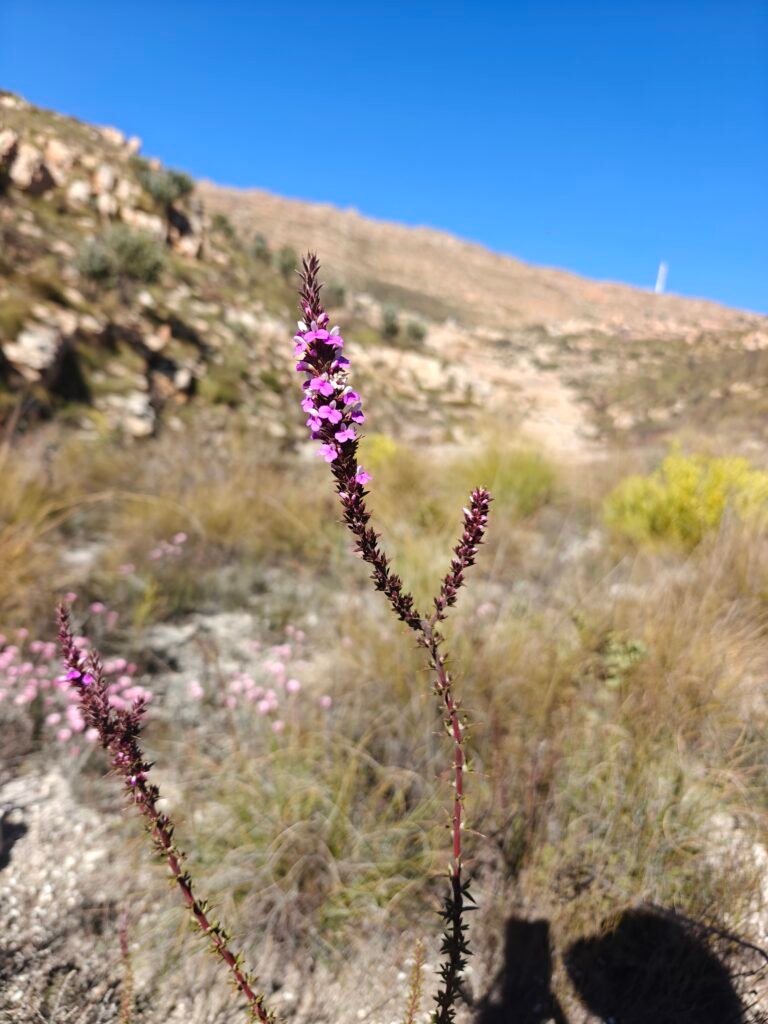
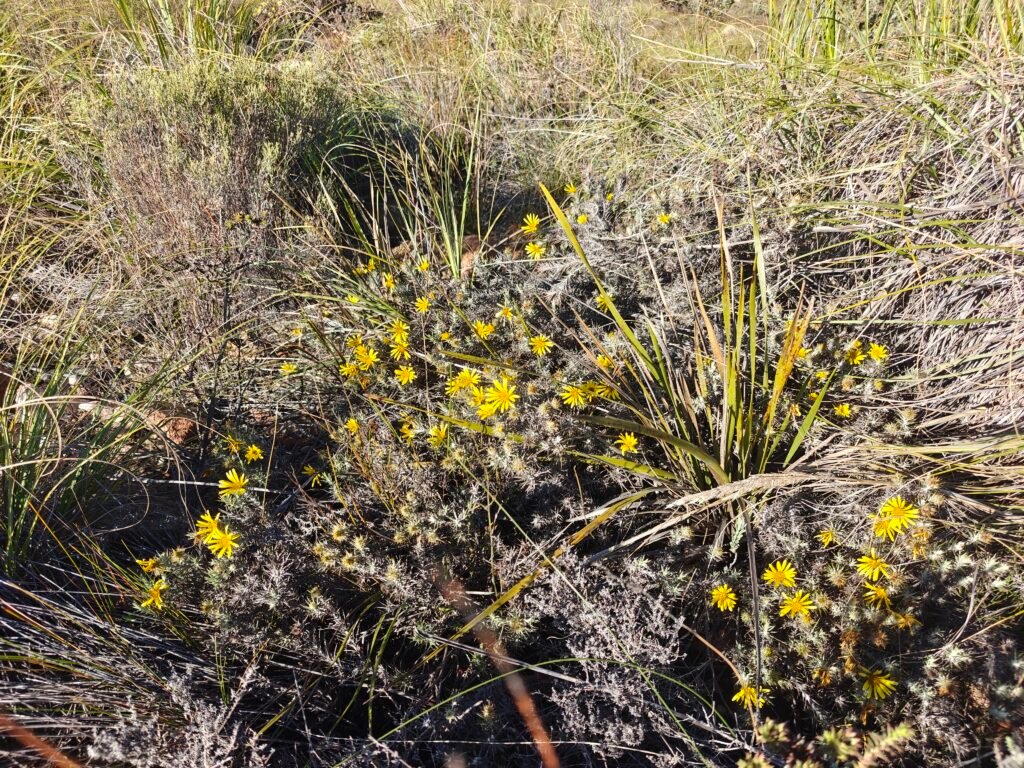
On my hike, I was delighted to get a small taste of the last of the Fall wildflowers in the mountain fynbos:
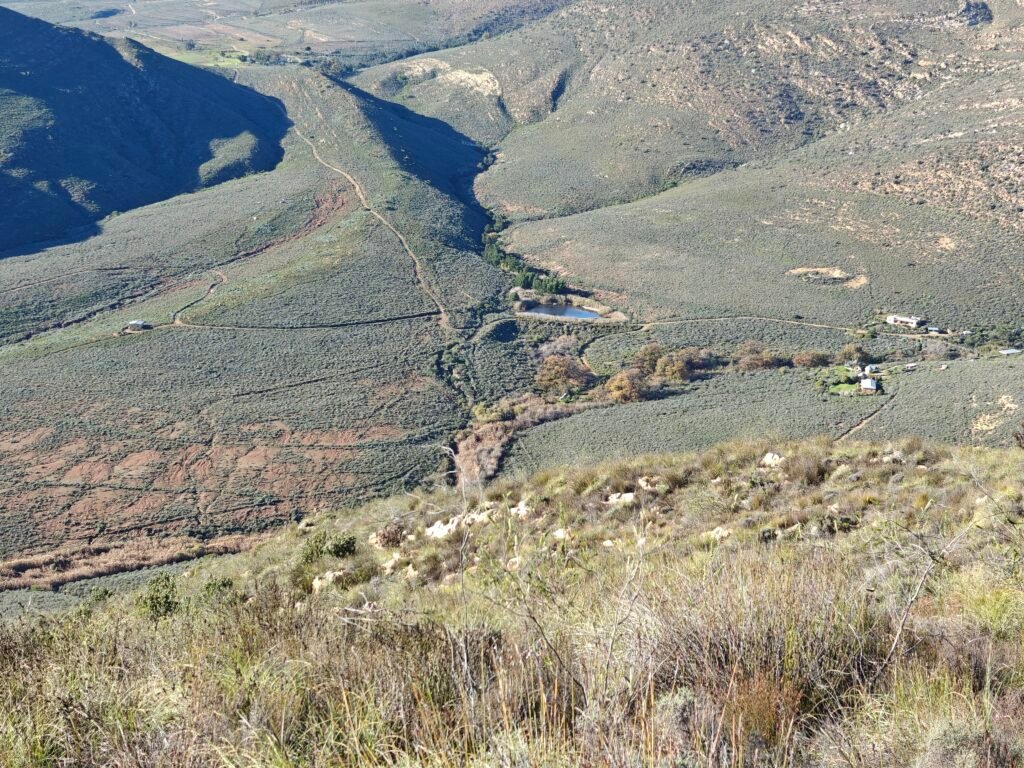
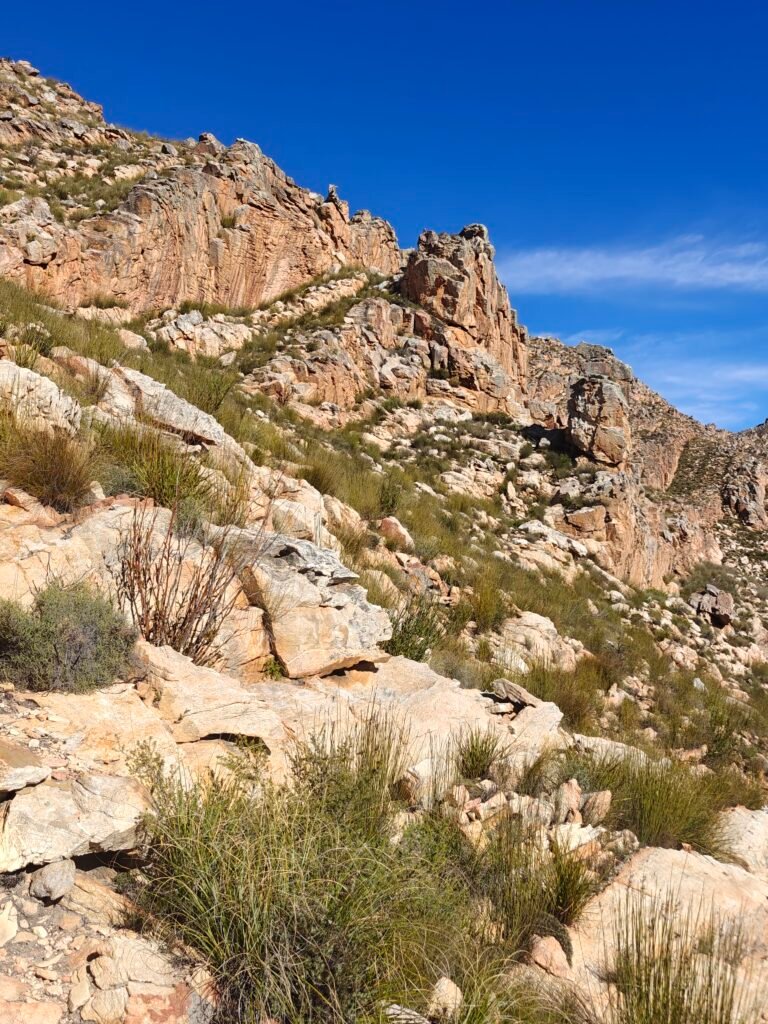
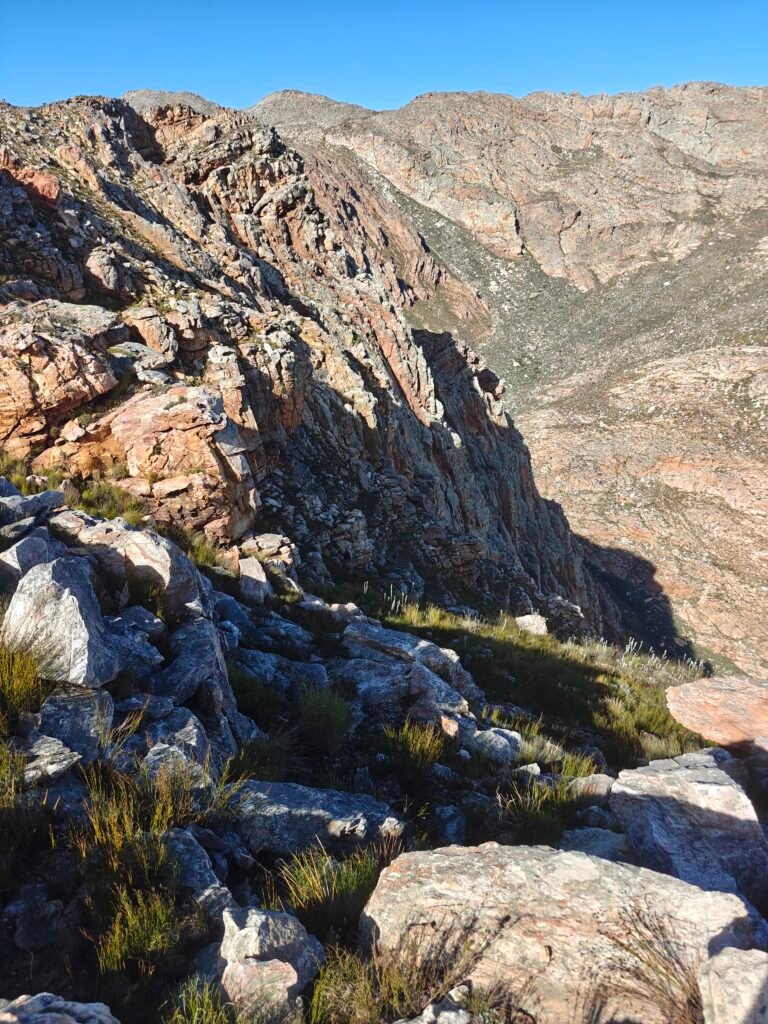
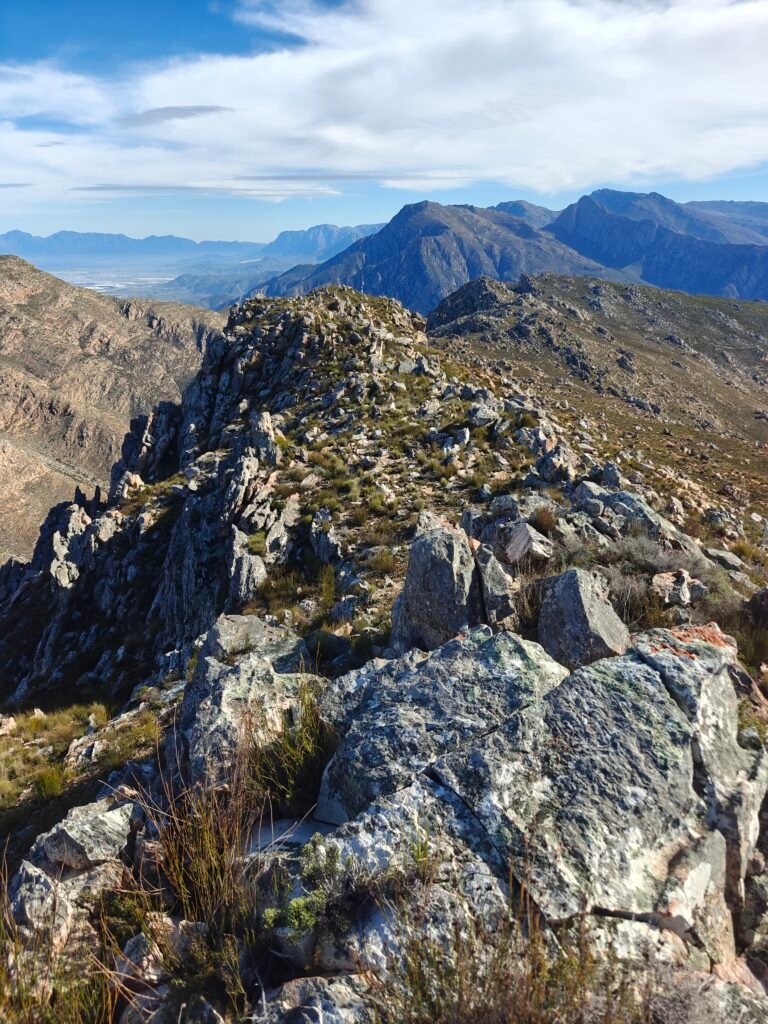
The hike to the ridgeline and peaks above the campsite afforded me some great views of the landscape:
OK, that’s enough for this post. See you on the next Cape Fold mountain.
Cheers!
On another adventure. Looking forward to traveling along with you. Enjoy. Be safe.
Love, Cousin Amy. Xoxo
Looks like a gorgeous hike to begin your adventures with! Clear sunny day!
Looks like a great start to this years Africa adventure! Congrats on finally “owning” the green dragon😉 Looking forward to following your adventures !
Hey Kevin & Nancy. Great to see your new travel log . Love the landscape context you provide. Really enjoyable. I’ll keep an eye on you !! : )