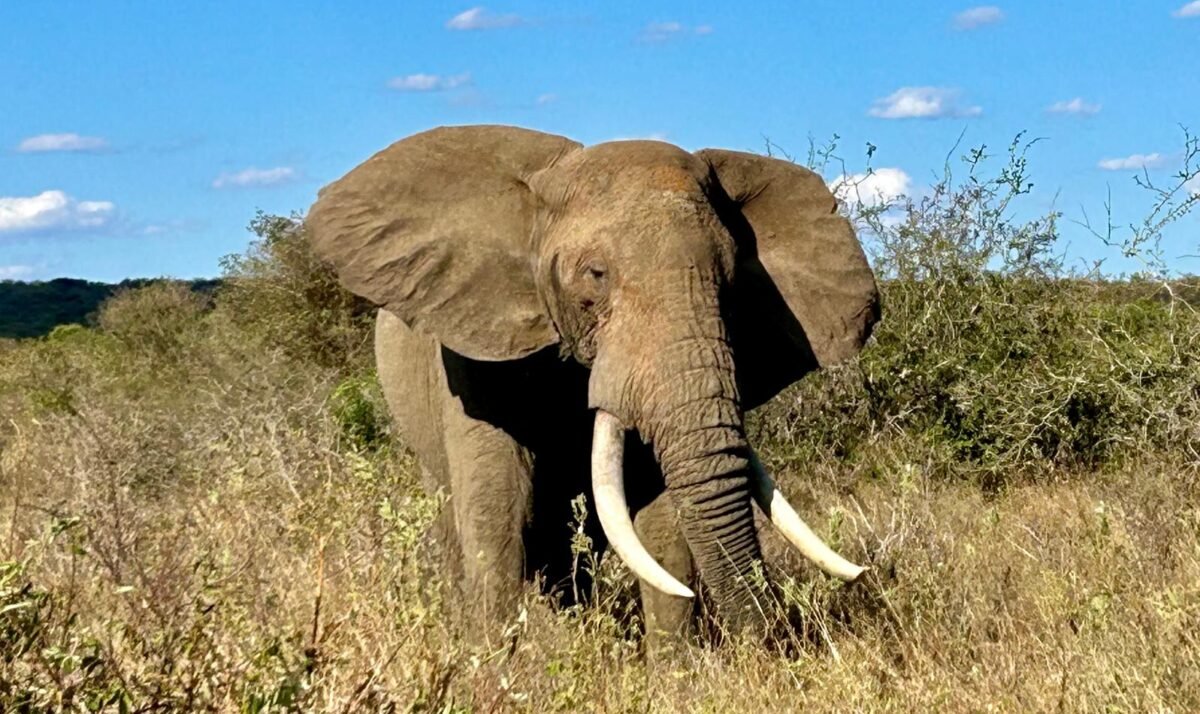
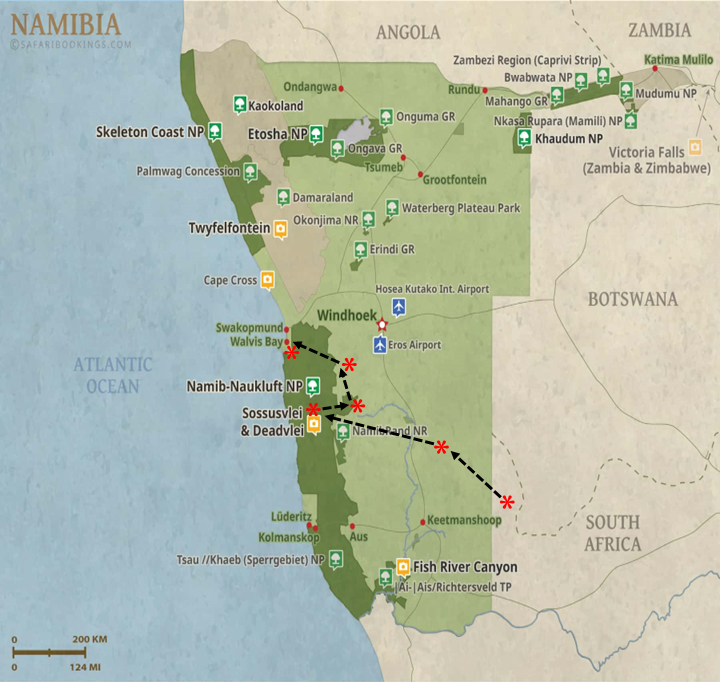
After leaving the Naukluft Mountains and visiting the cheetah sanctuary near Solitaire, we headed to the coast at Walvis Bay:
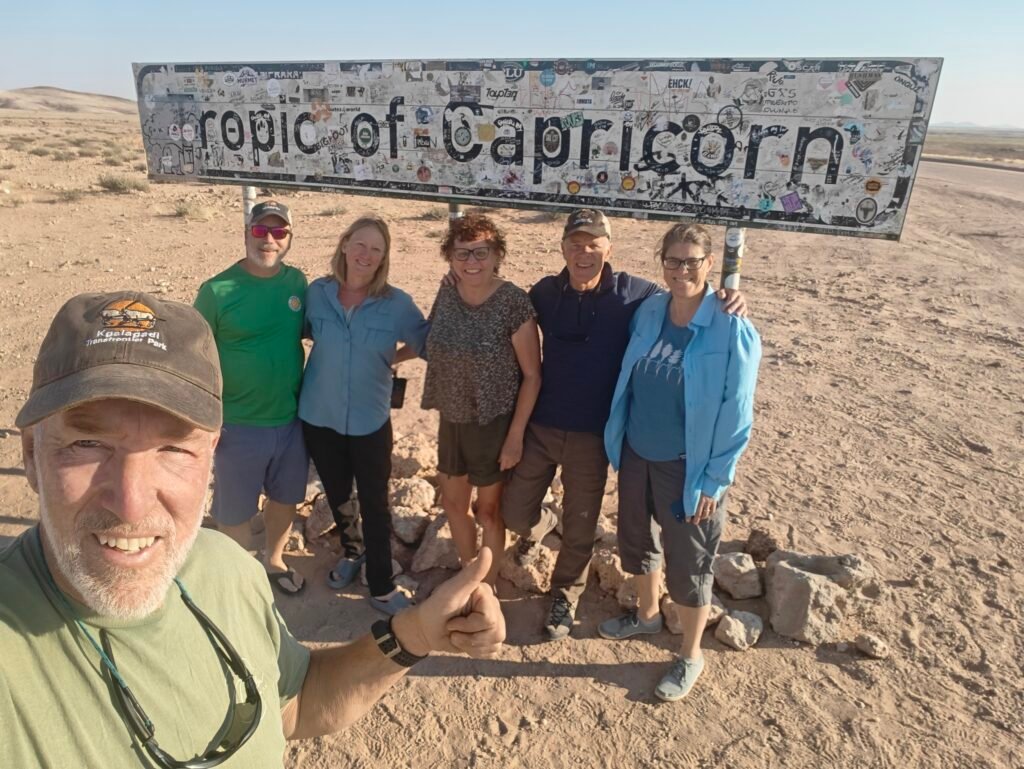
En route to Walvis Bay we crossed the Tropic of Capricorn and stopped for the obligatory picture:
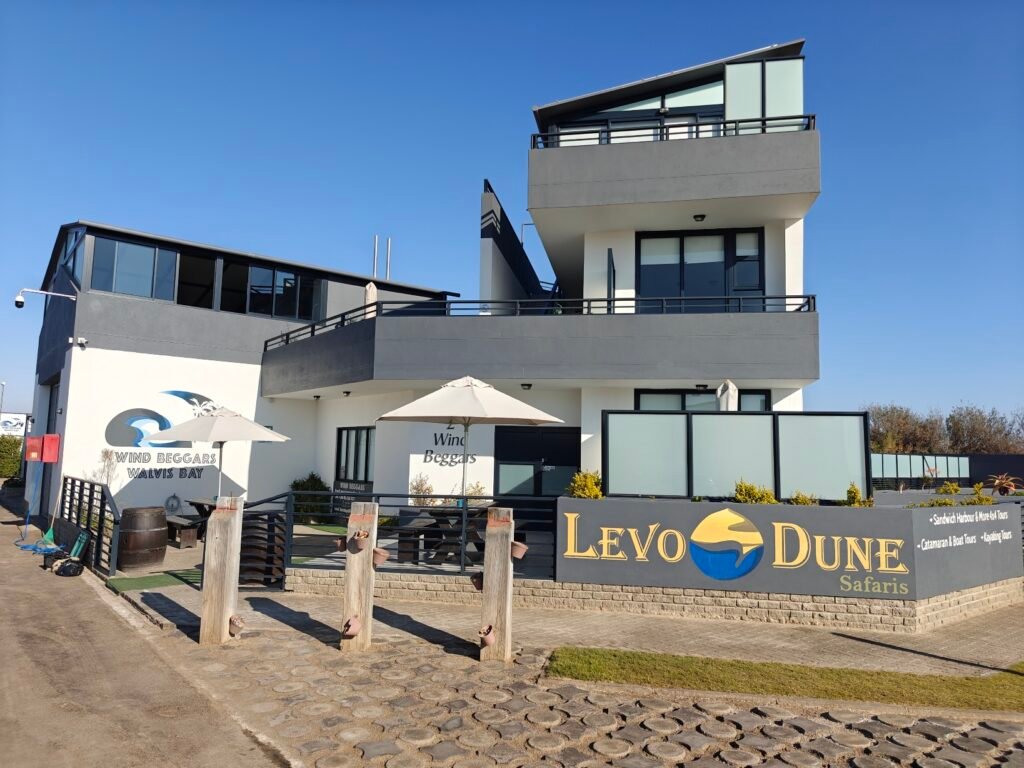
Our visit to Walvis Bay this year was similar to last year’s visit with Steve and Ki, but with an additional sea kayaking excursion. Here’s the link to last year’s post for those interested:
overlandwithkmcgee.com/august-24-25-sandwich-bay-in-namib-naukluft-national-park/
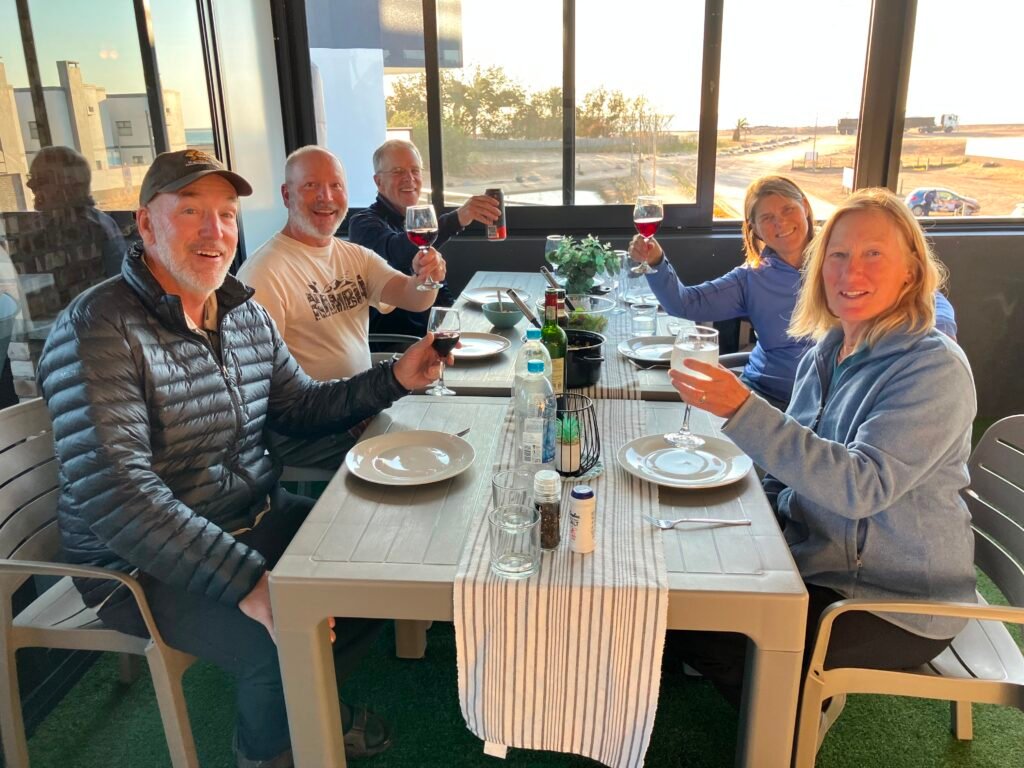
Like last year, we stayed in Wind beggars efficiency apartments, with each couple enjoying their own private room. Pretty sweet digs and in stark contrast to camping out of our rigs over the past weeks. This included self-catered dinners in the shared dinning/bar area and front-row seats watching the Argentina-Egypt World Cup knock-out game (in an amazing come-back from being down 2-0, Argentina won 3-2 in the last 11 minutes). Somehow, we have been lucky enough to stay at places that have allowed us to watch some of the World Cup games.
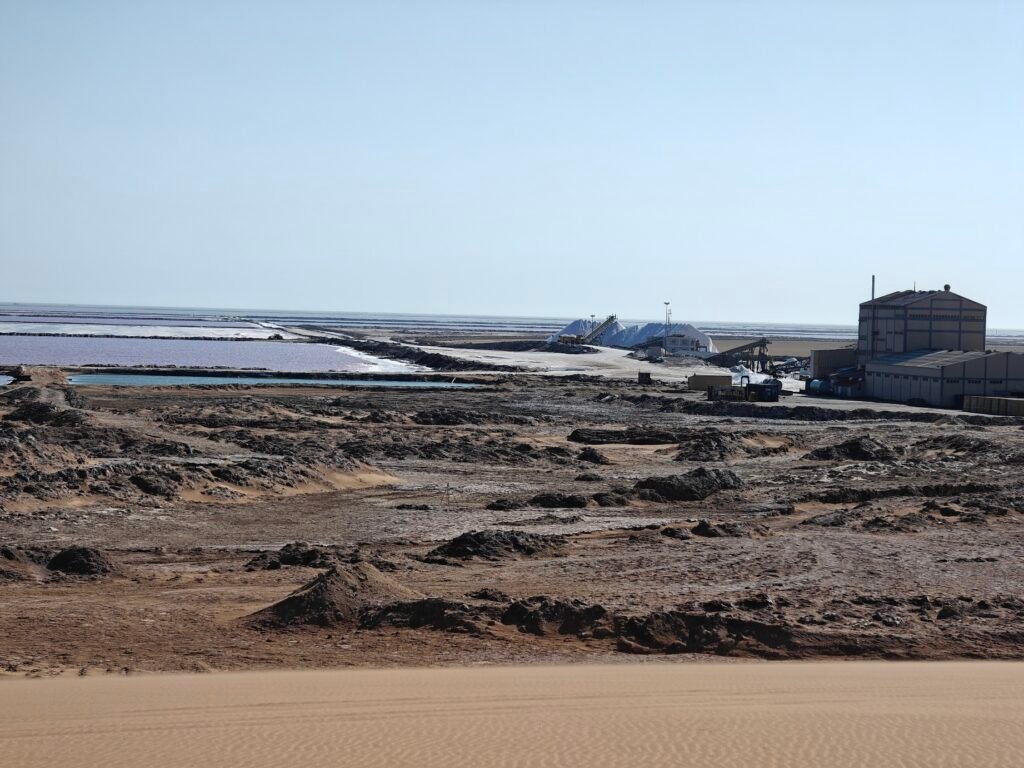
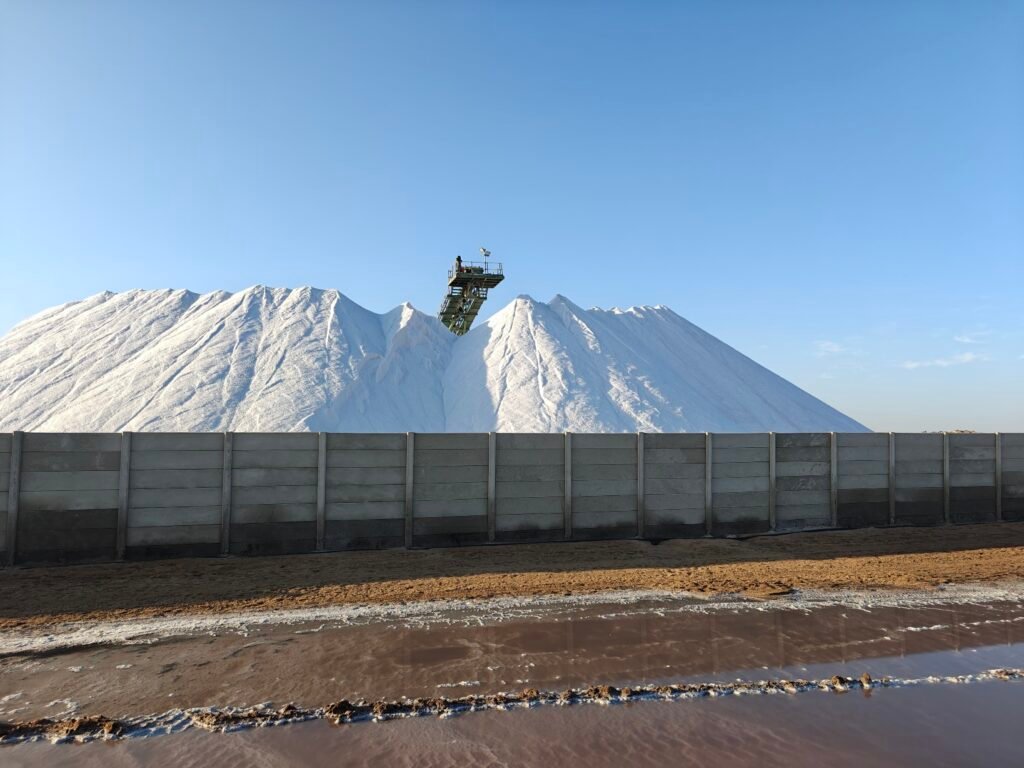
Walvis Bay, I will remind those of you that followed my blog last year, is the Port city on the coast that does all of the shipping inports/exports for the country, including one of the countries major exports, salt, which is harvested from extensive saltworks located adjacent to the city. Briefly, first, salt water from Walvis Bay is pumped into two huge (~12,000 acres) reservoirs. Then, after some settling and evaporation, along with unique salt-loving algae that feeds on the nutrients from flamingo excrement which gives the water is distinctive pink color, the water is pumped into evaporation ponds, where it sits for 8-10 months while the water evaporates, leaving the concentrated salt deposits as much as 30 cm thick. Lastly, the salt layer is scrapped off the top by harvesters and piled into mountains of salt – jokingly referred to as “Namibian coccaine”. Most of the salt produced gets shipped to the U.S. and northern Africa for both industrial uses (e.g., road salt) and human consumption. Indeed, that Morton salt on your table might very well have come from Walvis Bay in Namibia.
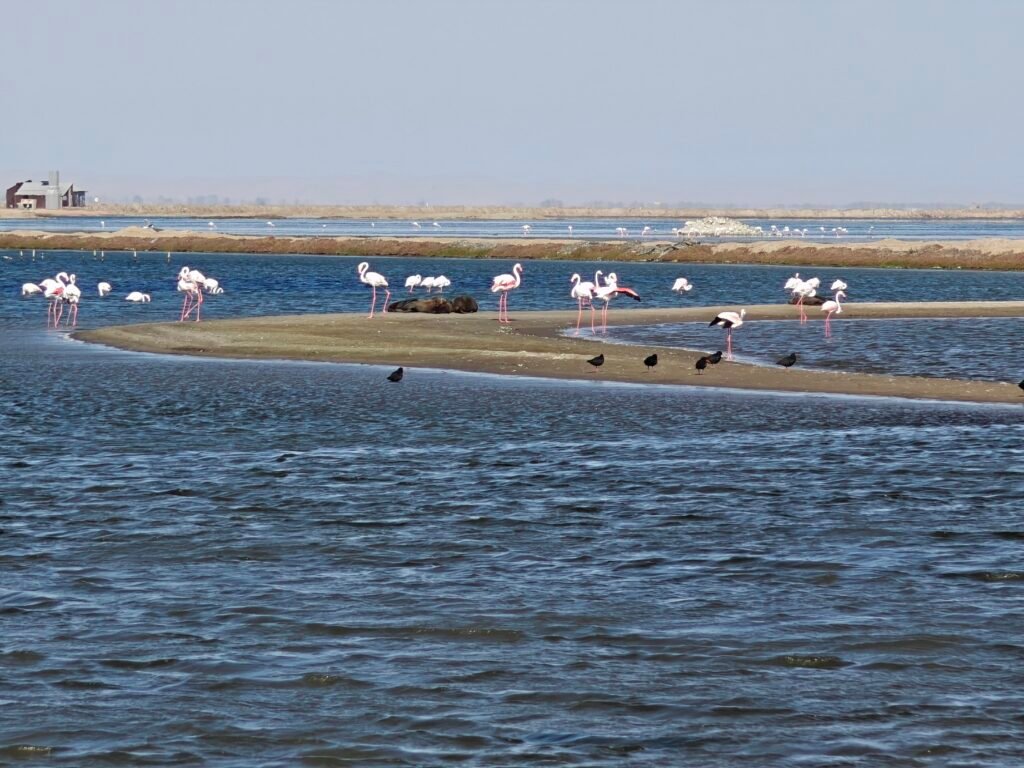
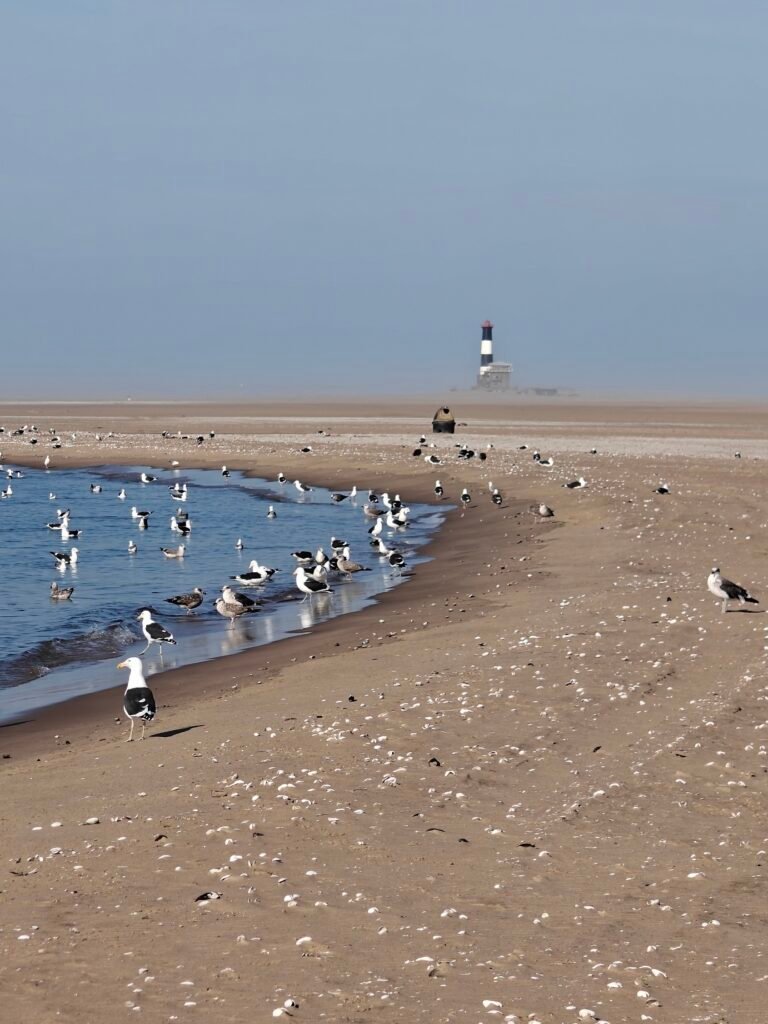
Another noteworthy feature of Walvis Bay is the extensive tidal wetlands that have been designated as a RAMSAR site, i.e., a wetland of international significance. The wetlands provide critical habitat for many different species, but chief among them are both lesser and greater flamingoes, which overwinter here in the tens of thousands:
One final factoid about Walvis Bay and this portion of the Namib Desert along the central coast is that this area receives essentially no precipitation. Other than the exceptionally rare rainfall of only a few millimeters, the only moisture any of the plants and animals get comes from the fog that rolls in and out on occasions. Otherwise, the plants have to send down deep taproots to the below-ground aquifers that follow the fossilized riverbeds, and the animals must get their water needs from the plants they eat or the fog droplets they lick off the plant surfaces. Despite the paucity of water, there is abundant desert-adapted species, even in the sand dunes. Here’s a few of the creatures, large an small, that eke out of living in this harse landscape:
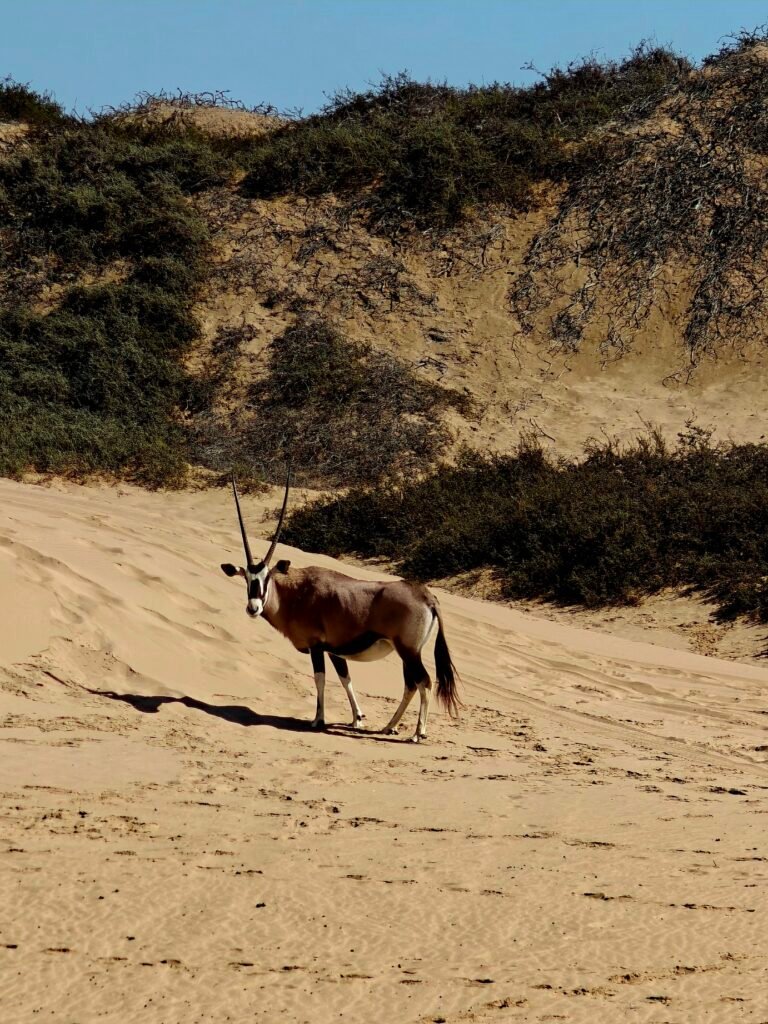
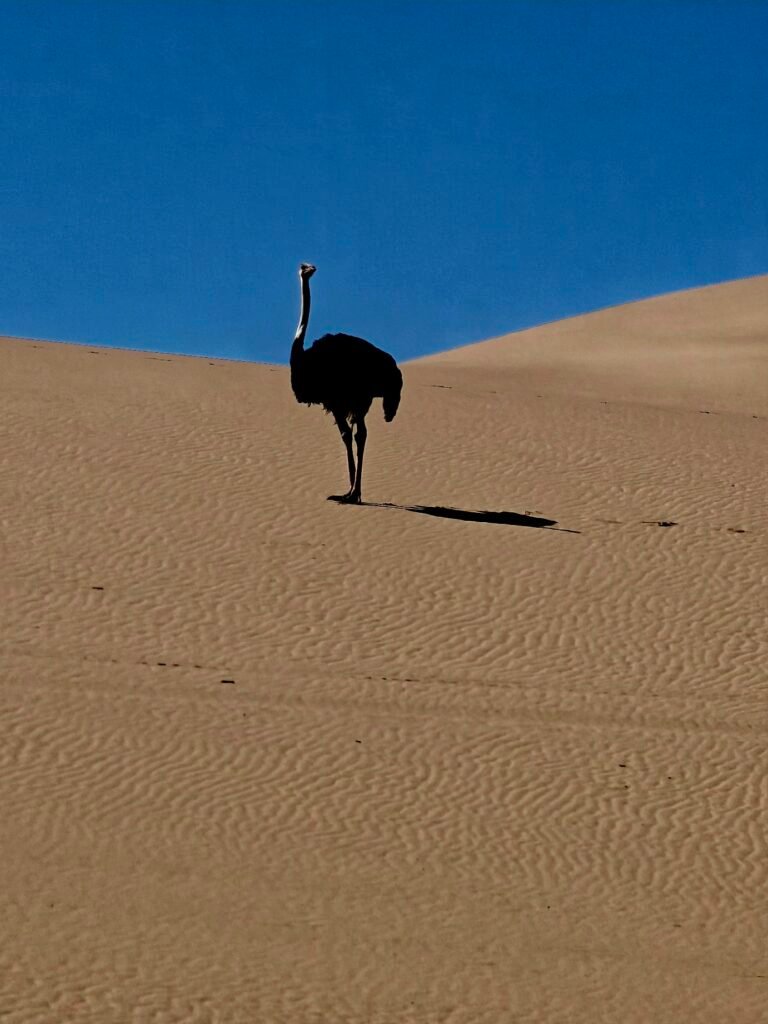
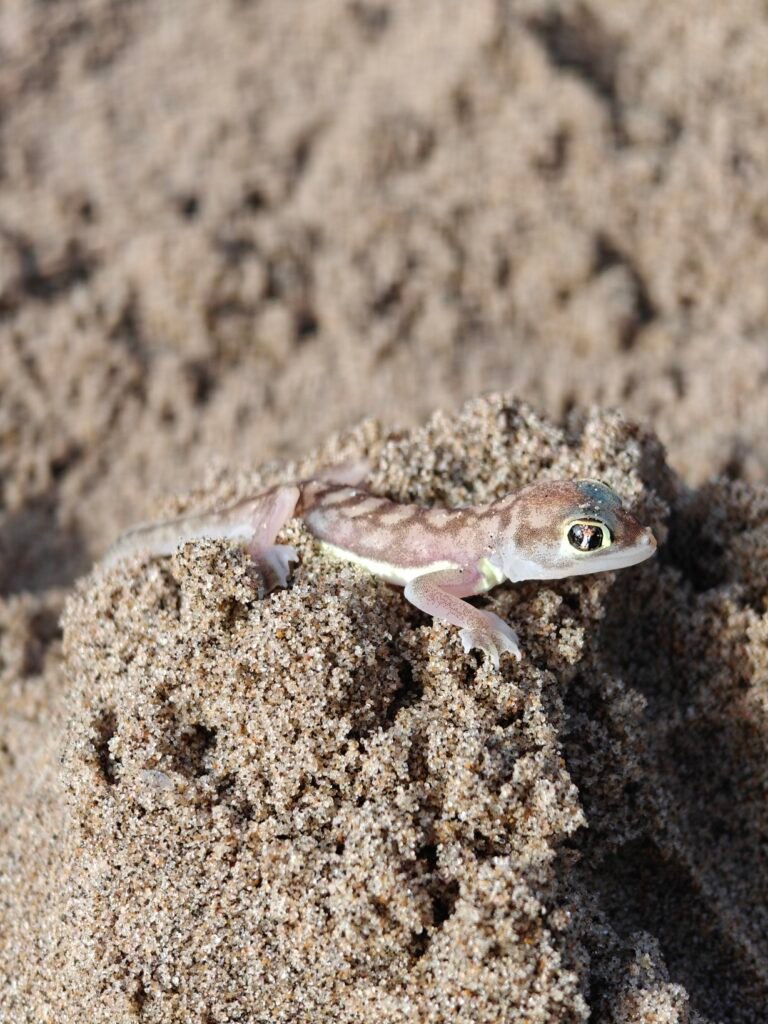
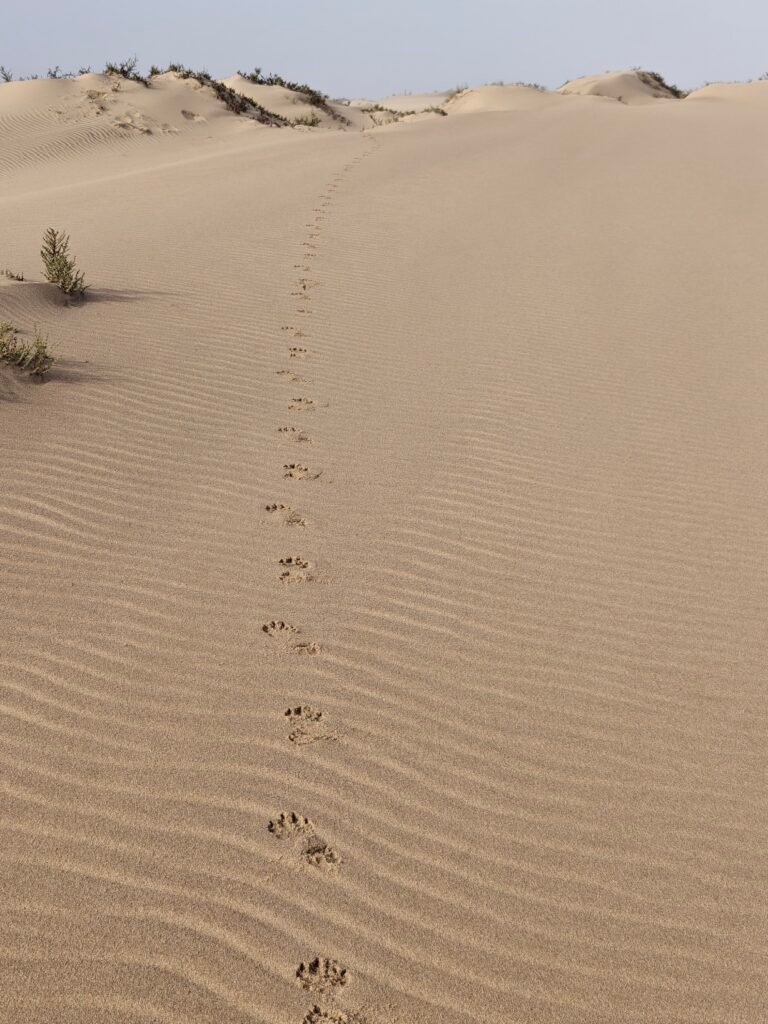
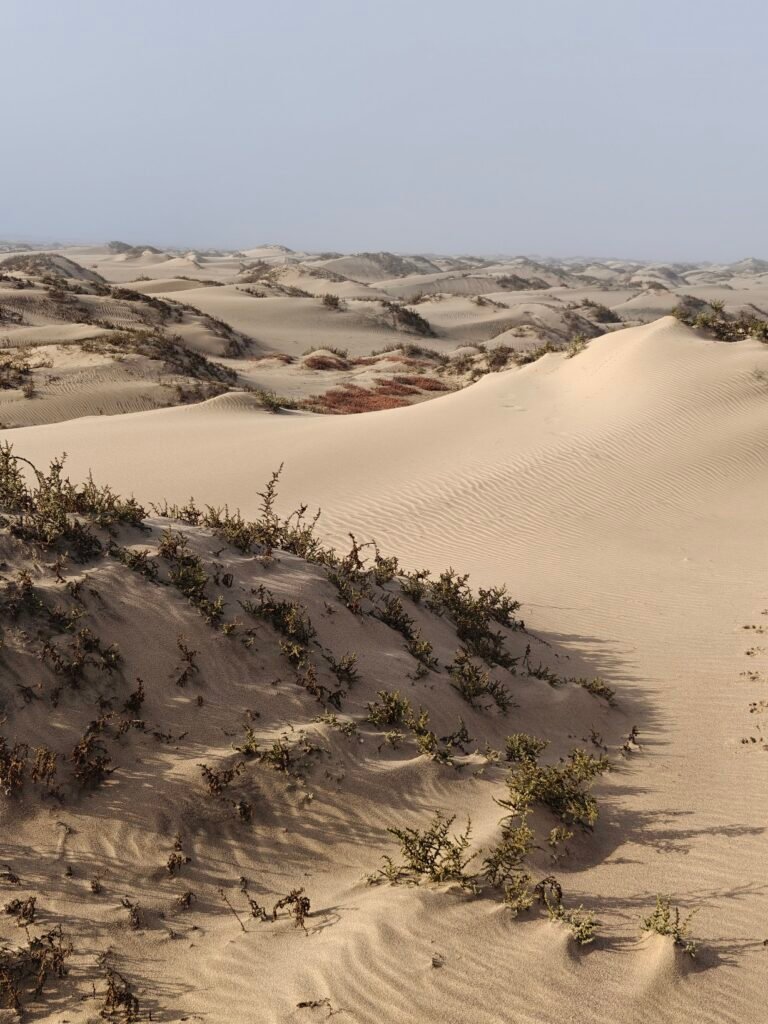
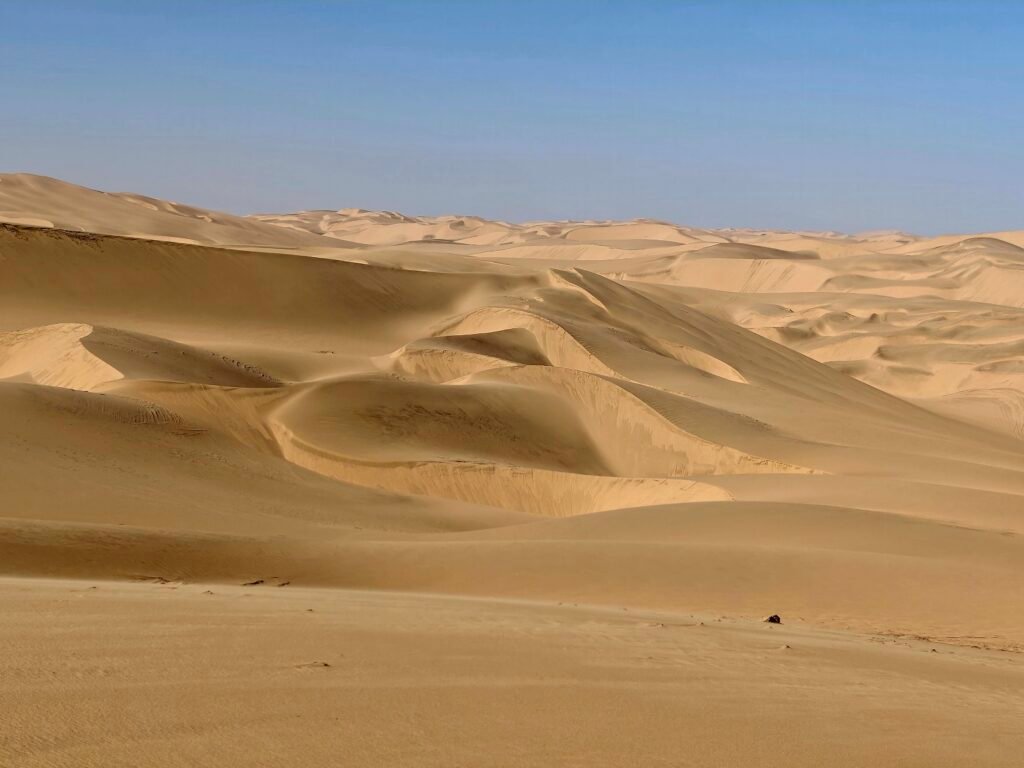
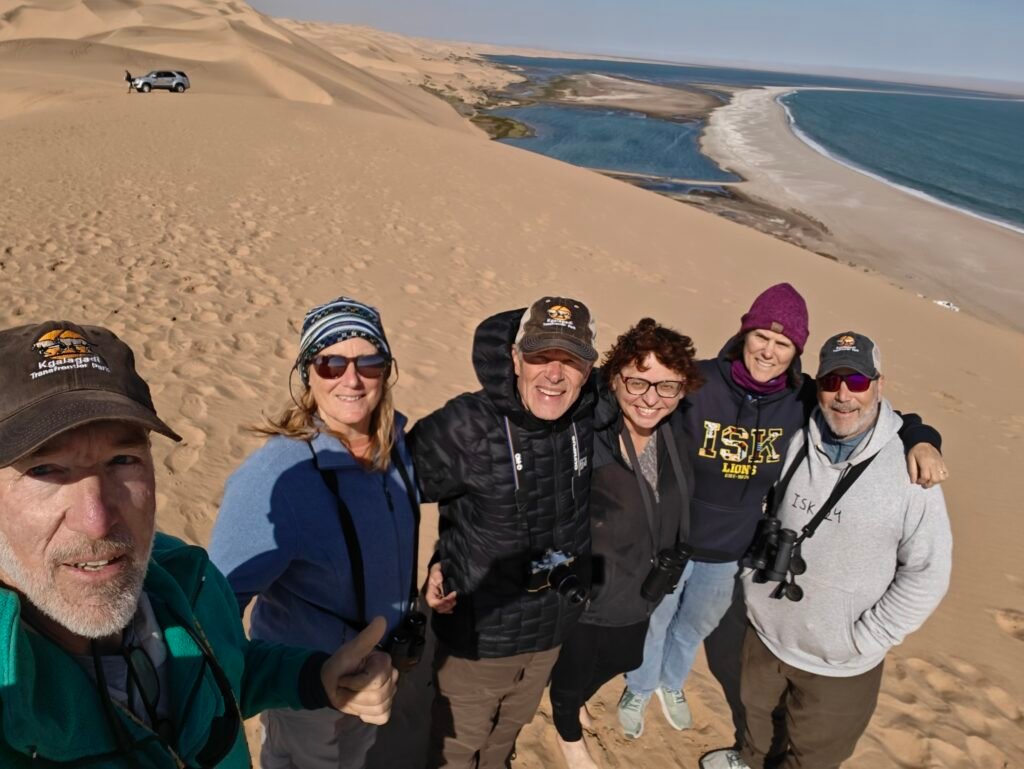
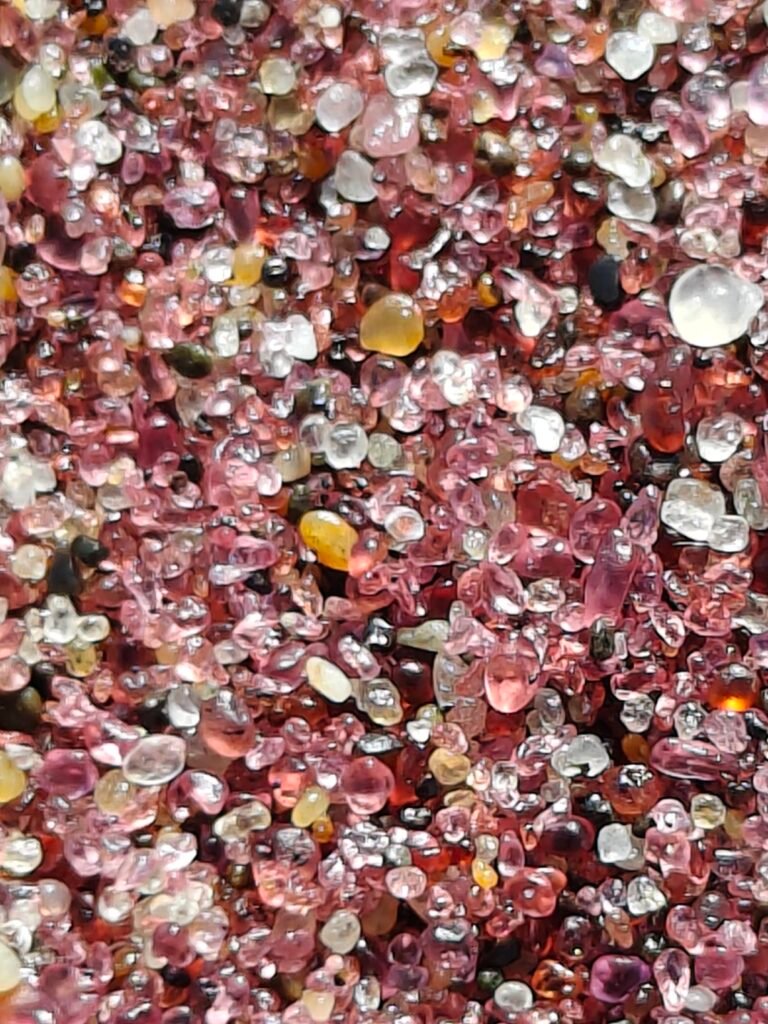
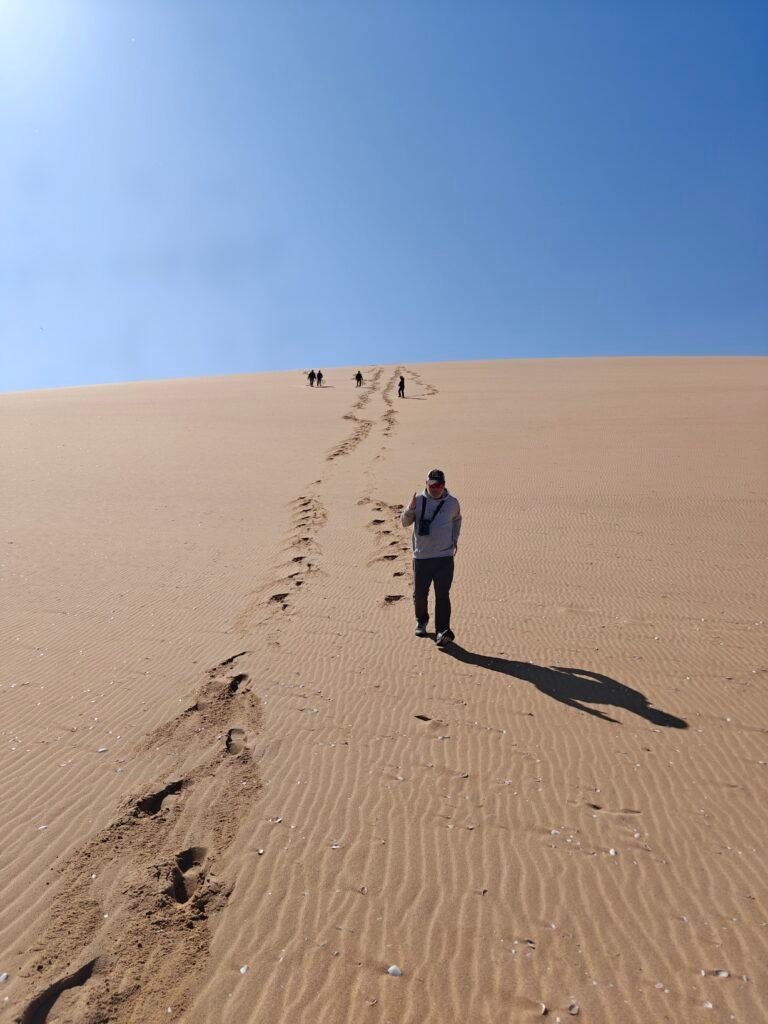
Our first full-day excursion was a 60-km beach and dune ride down to Sandwich Harbour for a gourmet picnic lunch. We sped along the beach next to crashing waves, raced up and down steep-sided dunes, not always able to see what was waiting for us on the back side as we toppe a dune, stopped to view desert-adapted wildlife, such as those shown above, marveled at the dazzling display of colors in the minerals of the purple/pink beach sand, and spent some time birding the RAMSAR wetlands of Walvis Bay. Here’s a few pictures to get you in the mood:
More fun in the sun on day two at Walvis Bay. This excursion was a morning Sea Kayaking tour of the Cape Fur Seal colony at Pelican Point in Walvis Bay. This colony, perhaps over 100,000 strong, is the second largest Cape fur seal colony in Namibia. There were lots of very playful young seals, perhaps 6-8 months old, frolicking in the water with us and moms and a few dads on the beach overlooking the entire affair. Here’s a few pictures and a short video of this excursion:
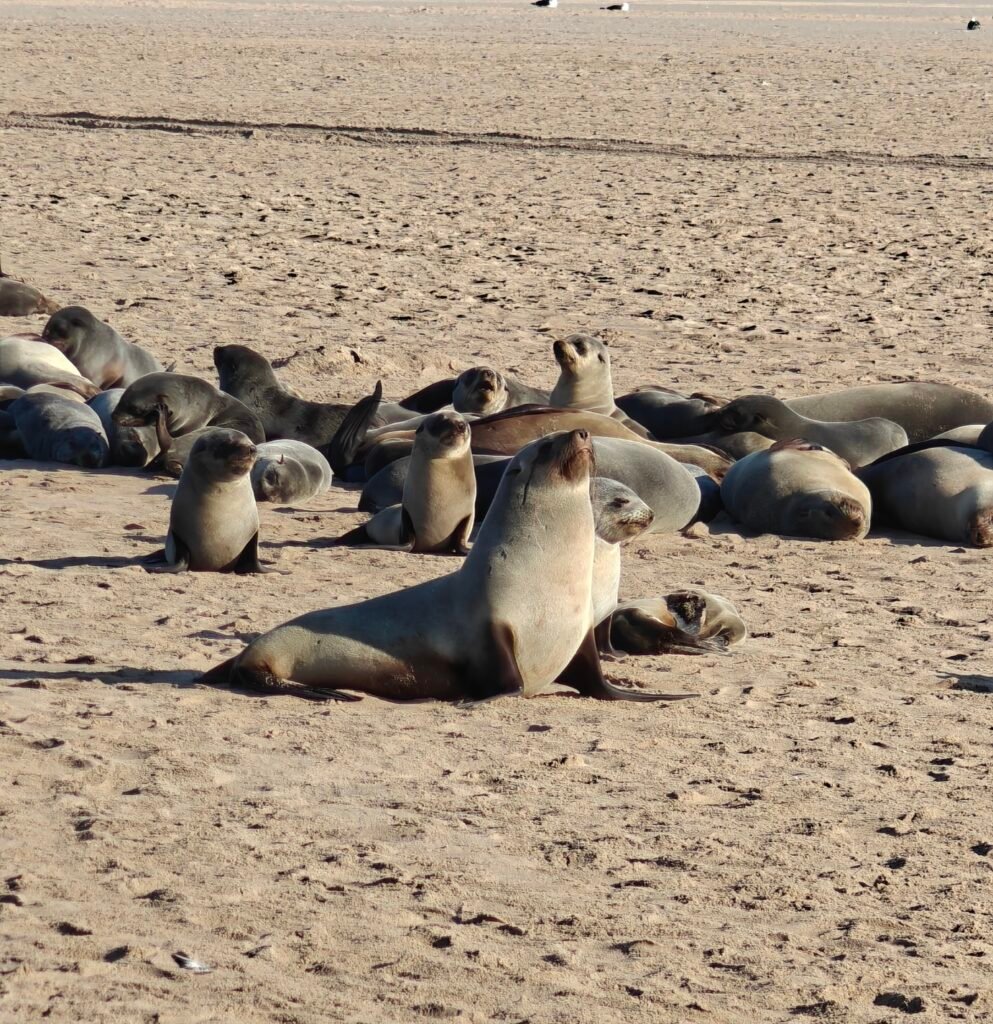
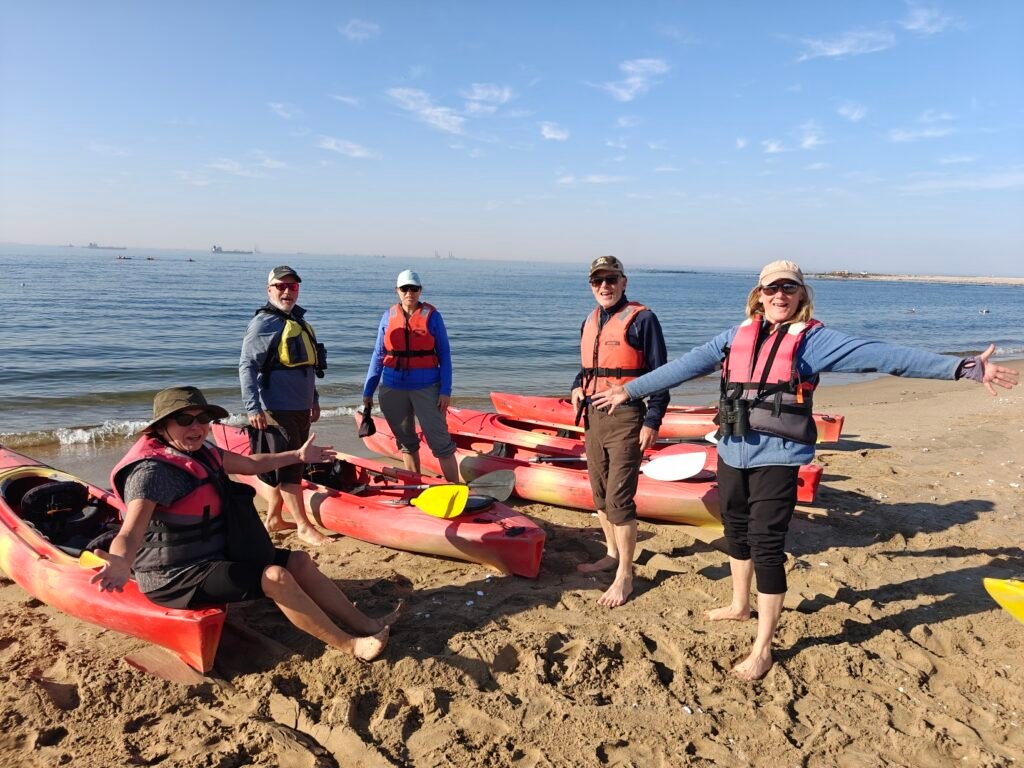
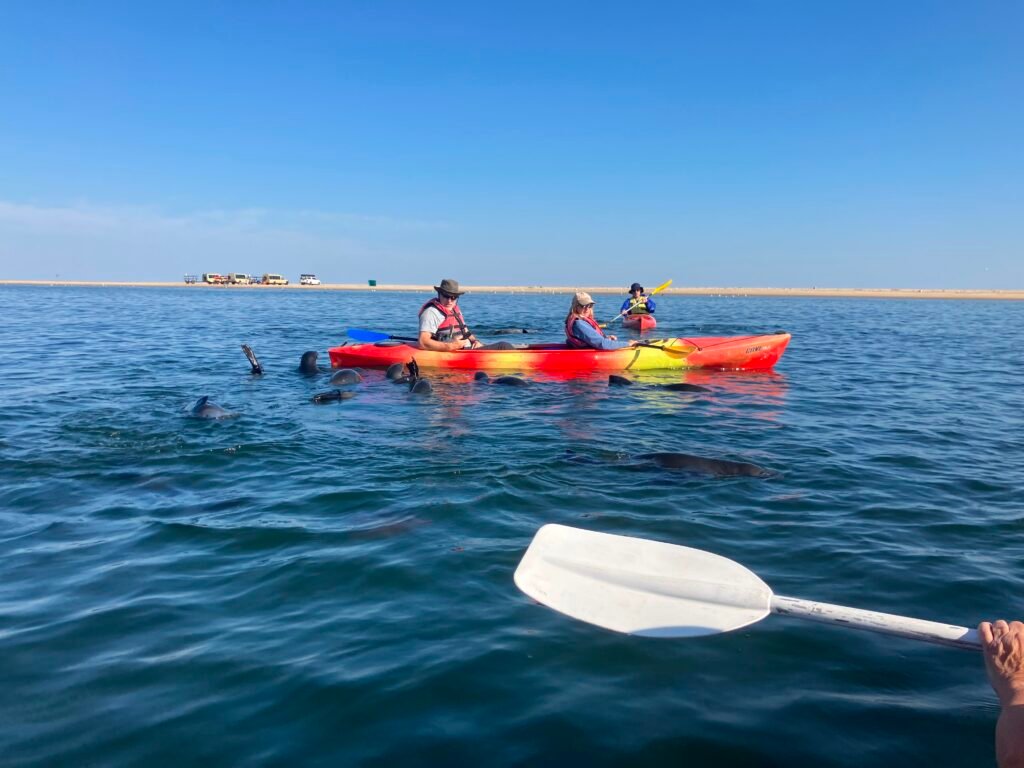
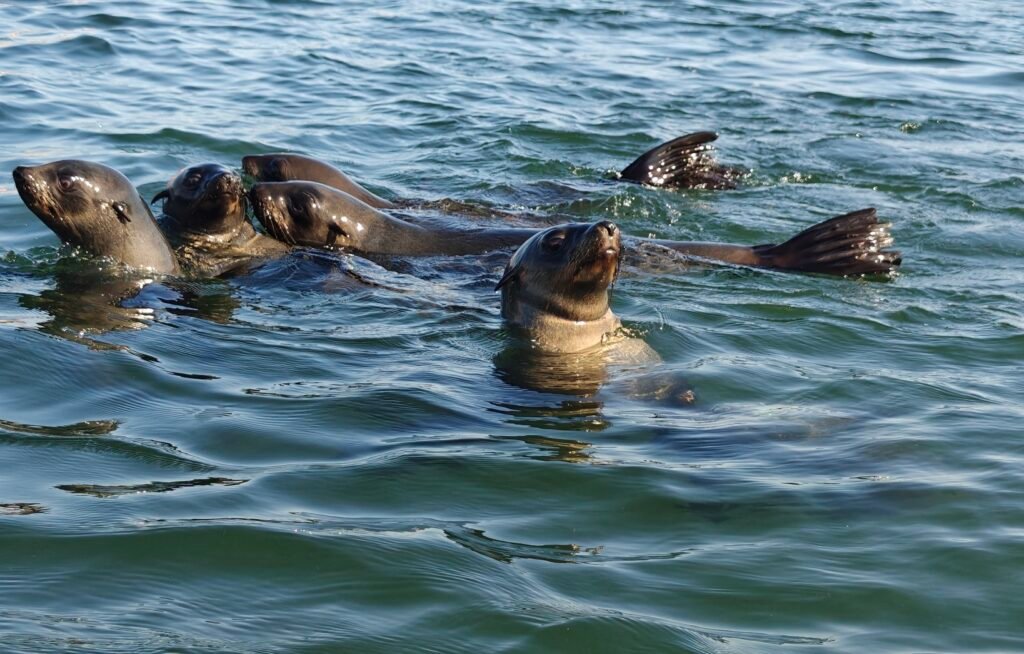
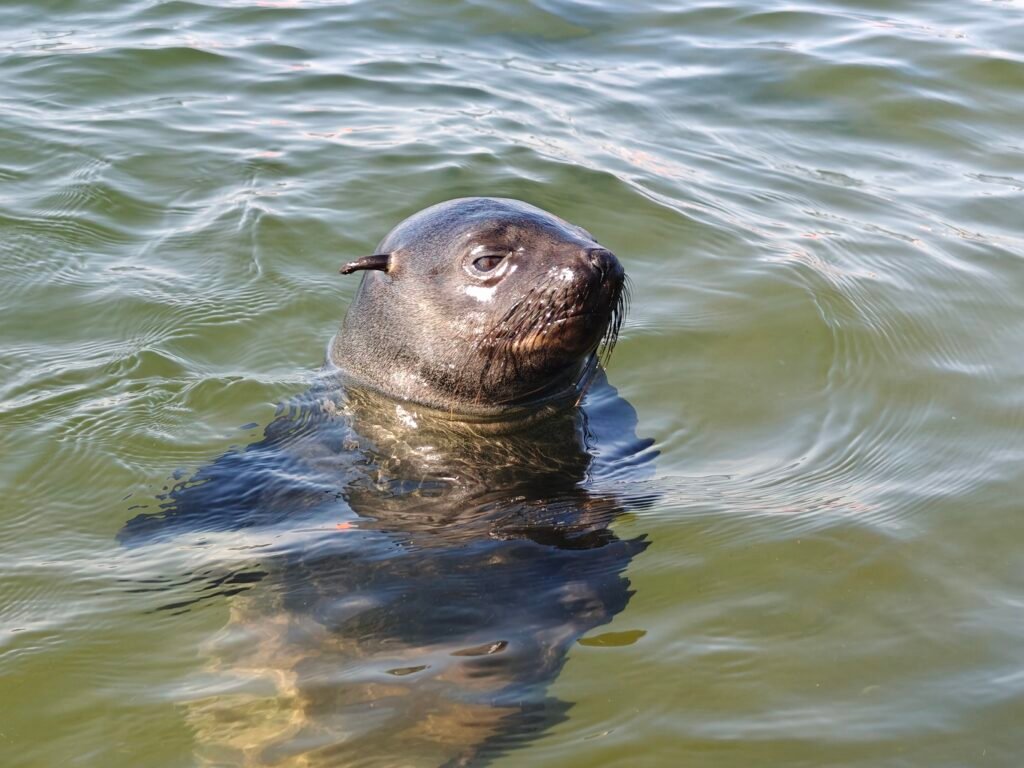
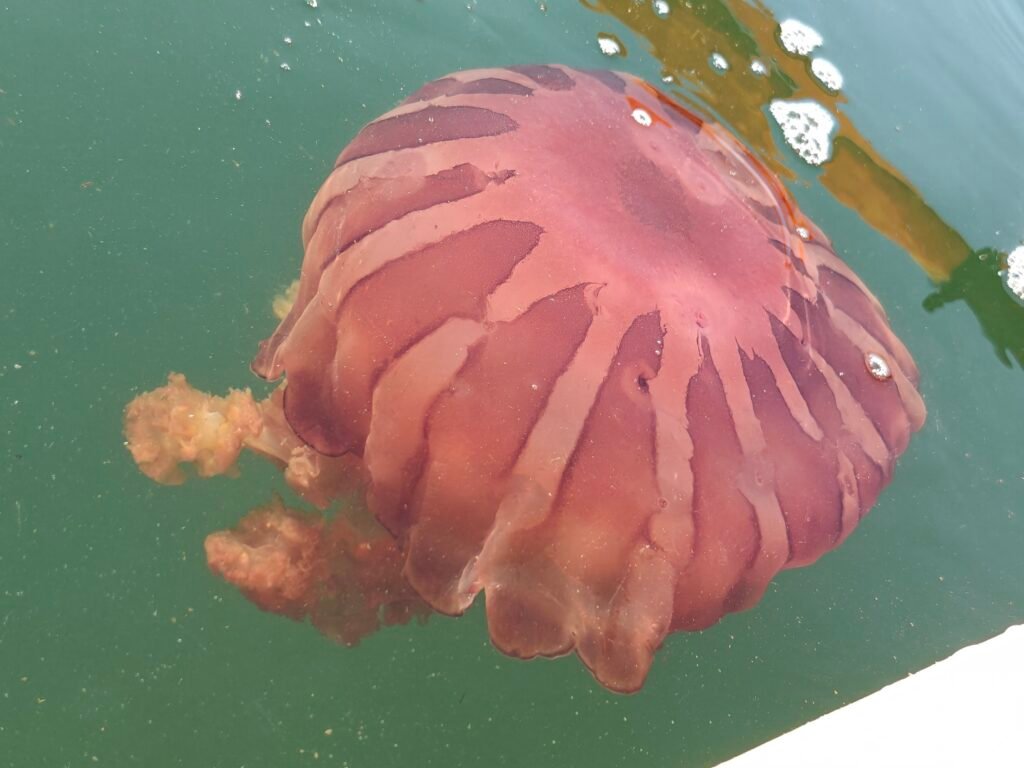
Here’s a short 4-minute video of us kayaking with the Cape Fur Seals:
Kayaking with Cape Fur Seals video (4 minutes)
OK, that’s all she wrote for Walvis Bay and our dune and Bay excursons. Next stop, Spitzkoppe for a couple nights camping before heading to Windhoek and a sad goodbye to Mark, Kirsten, John and Annette.
With all those seals where were the sharks that eat them?