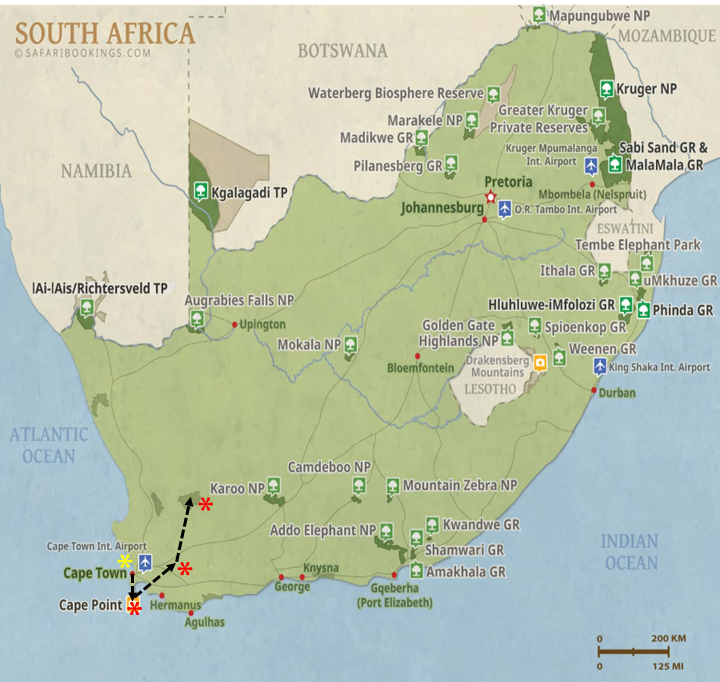
After getting our fill of South African wines at the Spier Winery in Stellenbosch, we headed inland to Tankwa-Karoo National Park:
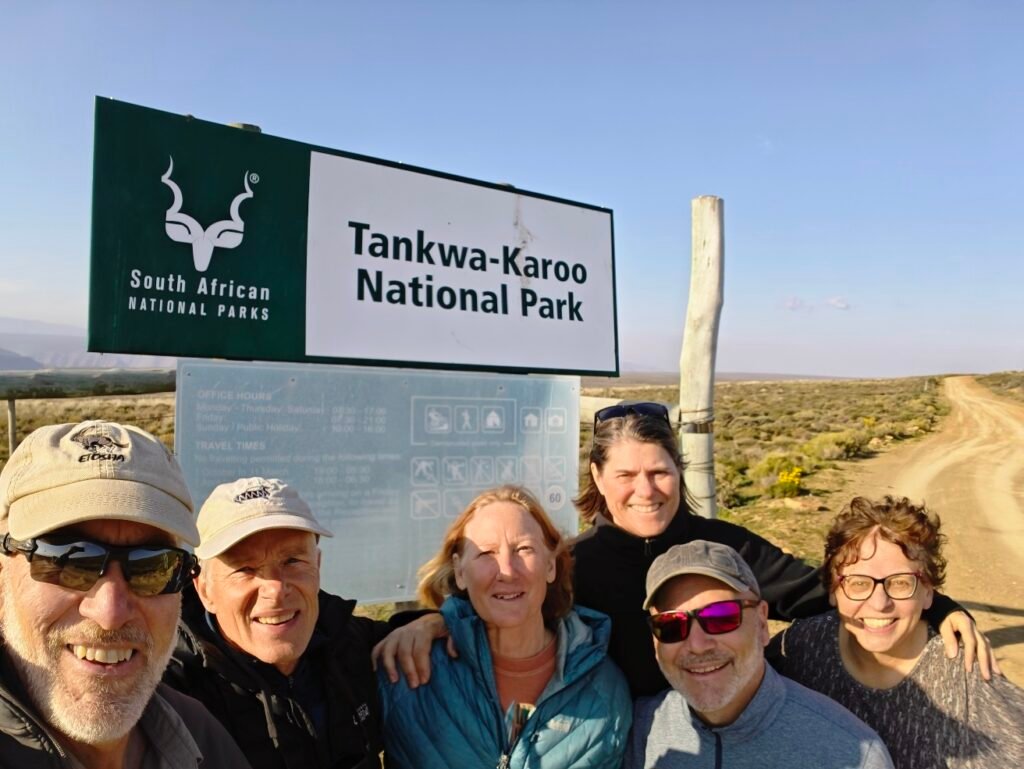
Here’s a link from last year’s post on the Tankwa-Karoo, which provides some background information on the natural and cultural history and, of course, pictures of our visit:
http://overlandwithkmcgee.com/september-20-21-tankwa-karoo-national-park/
In case you don’t review last year’s post, briefly, the Tankwa-Karoo is part of what is referred to as “Succulent Karoo”, which is dominated by succulent plants prevalent in the western region of the Karoo, and it is also within the “Lower Karoo” as it is located below the great African Escarpment. In fact, the Park is sandwiched between the Great Escarpment, specifically the Roggeveld Escarpment, on the north and the Cape Fold Mountains on the south.
Any visit to the Tankwa is special for lots of reasons, but its roads are notorious for tearing up tires. We succumbed to the treachery of the these roads shortly after getting there, but our crew pulled together and changed the flat at a speed that would make a Formula 1 pit team jealous:
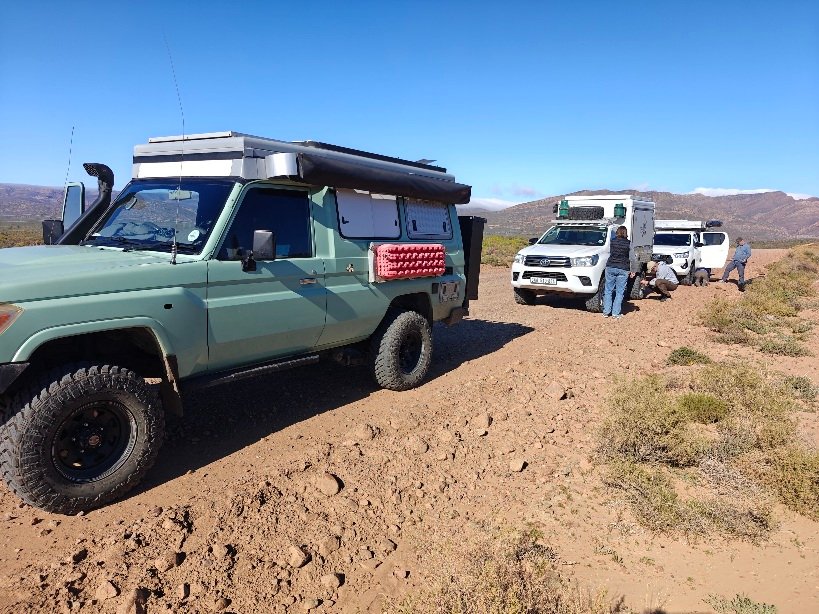
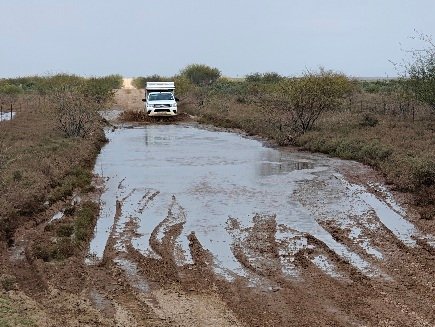
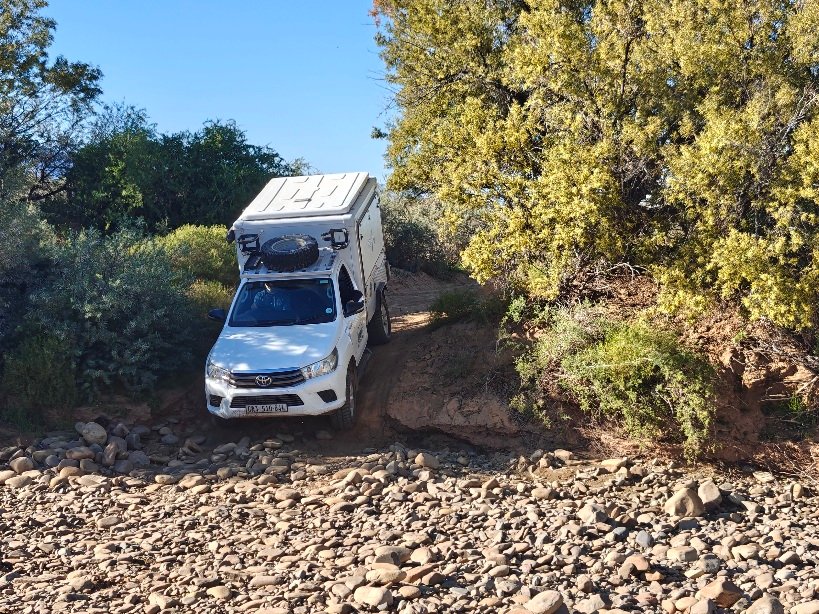
Despite the challenging road conditions, we managed to get in a little 4×4 driving in to add to the fun:
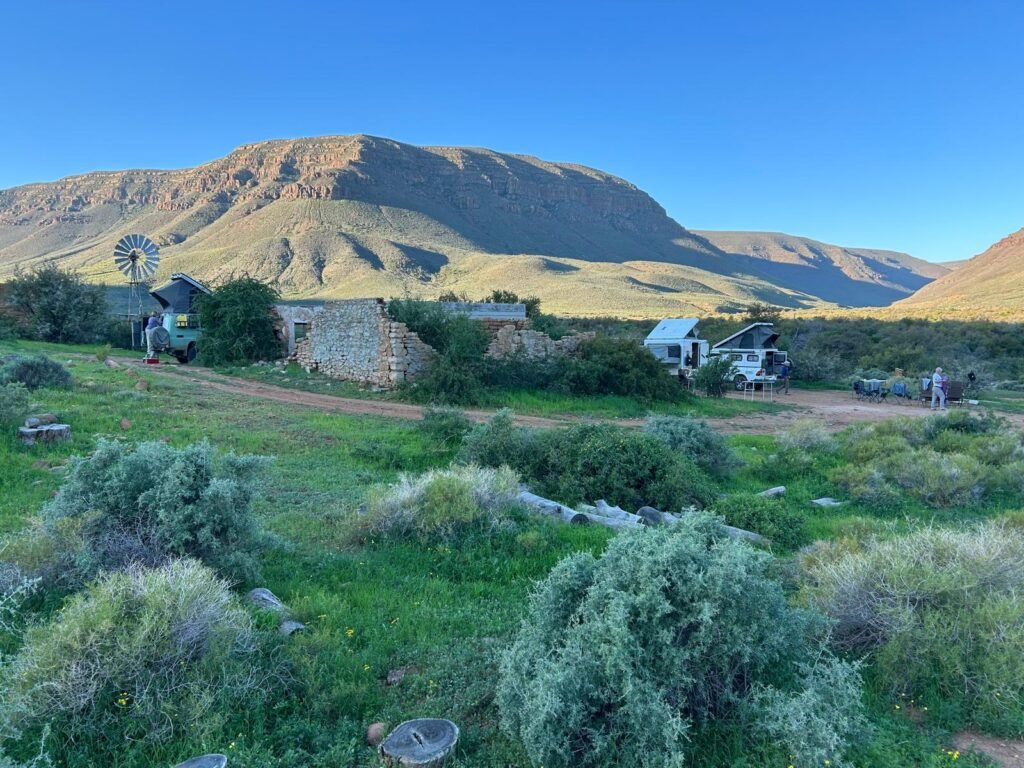
Our campsite this year was in a spectacular setting at the end of a 4×4 road at the base of the Roggeveld Escarpment, and at the site of an old homestead. And the hot showers were to die for:
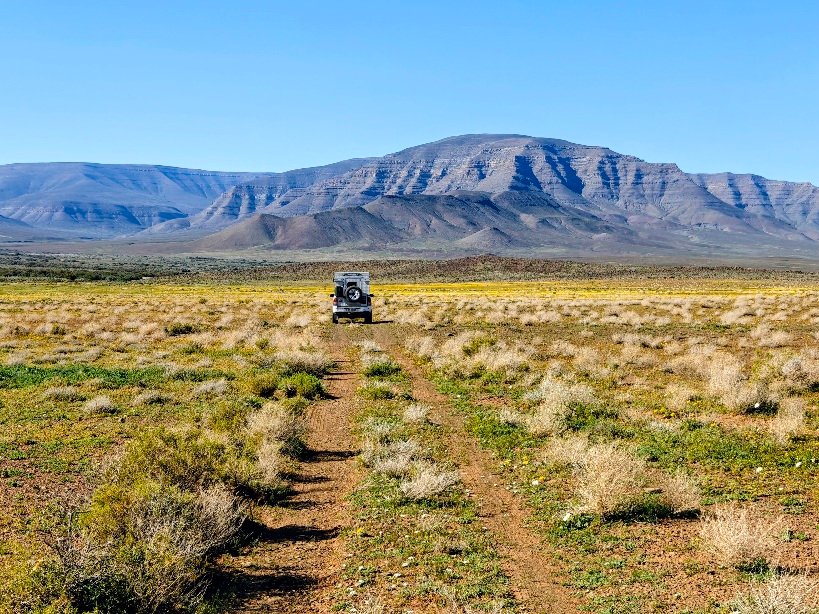
The difference between this year’s visit to the Tankwa and last year’s was the vegetation. Last year, albeit 3 month later in September at the end of Winter here, the ground was practically barren of vegetation – think moonscape. This year, the region had way above average precipitation and abundant rainfall just 3 weeks prior to our visit. The result was a sort of mega-bloom of wildflowers. The basin was awash with grass and forbs and colorful wildflowers – a greenscape to behold. Here’s a few pictures to wet your appetite:
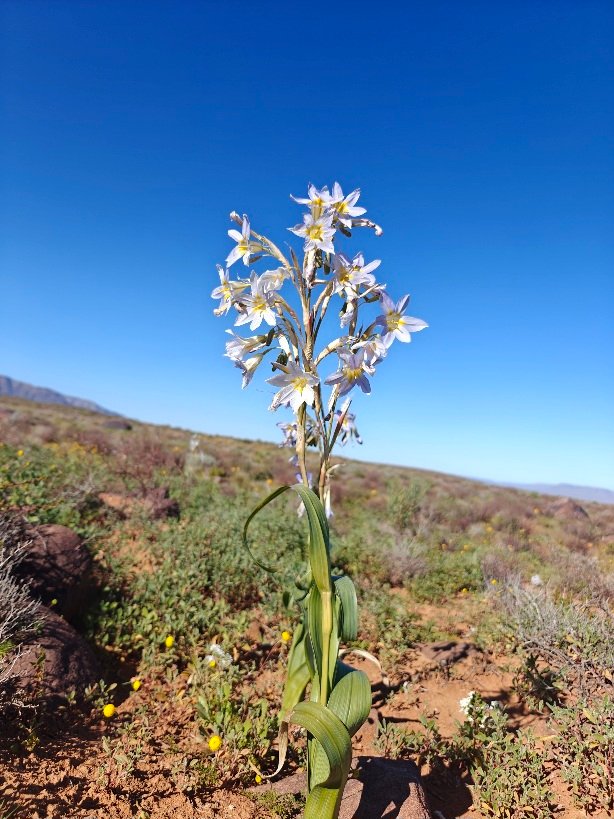
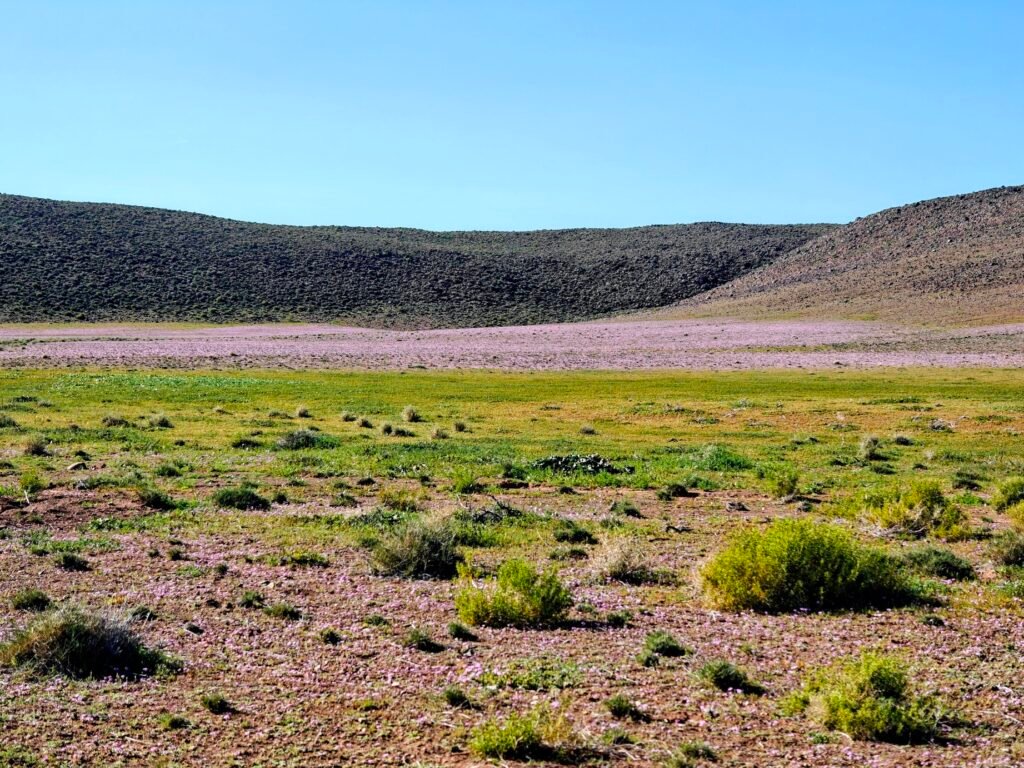
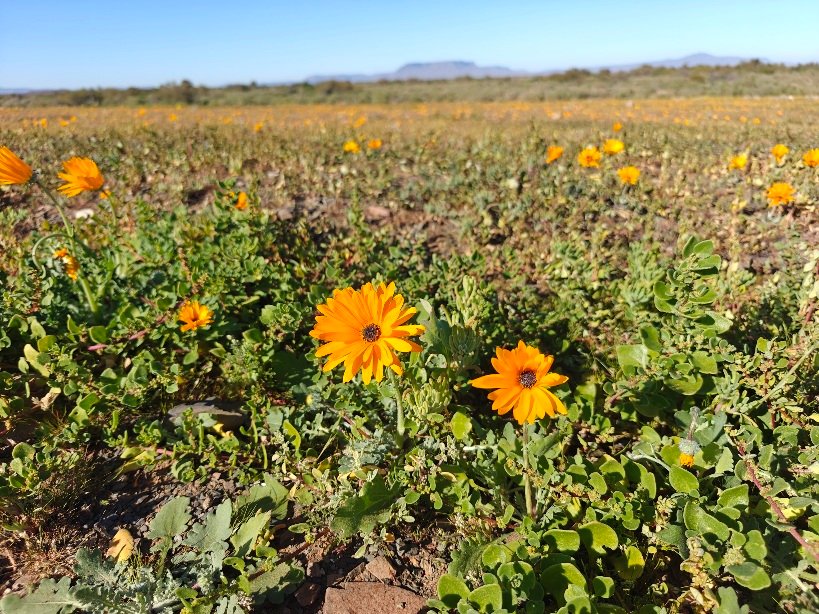
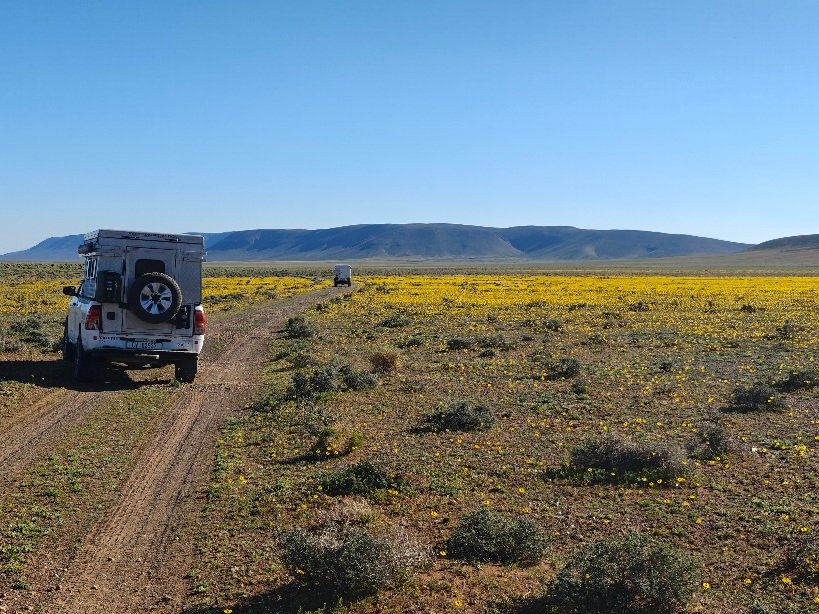
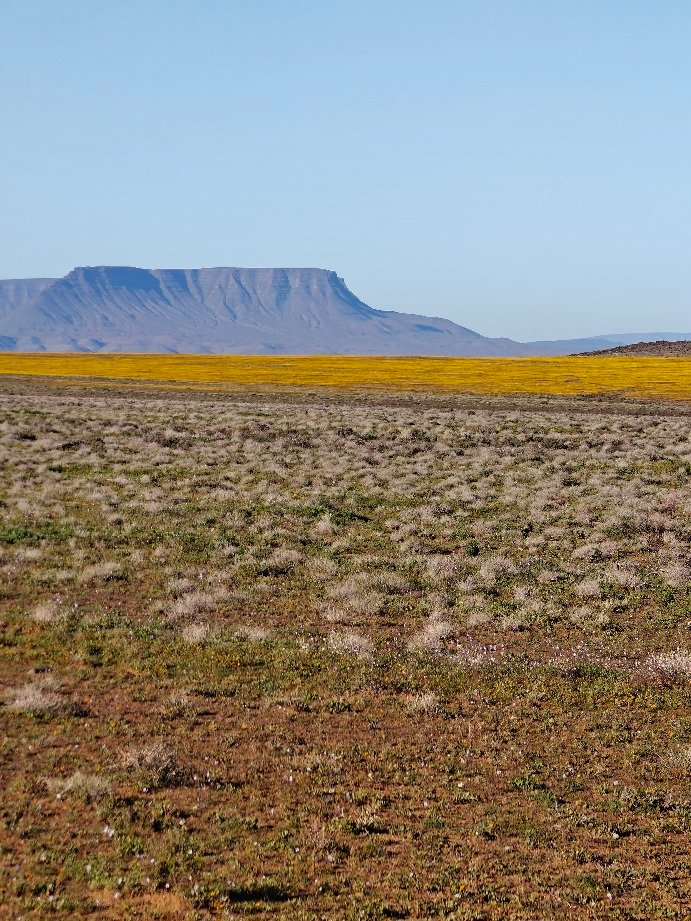
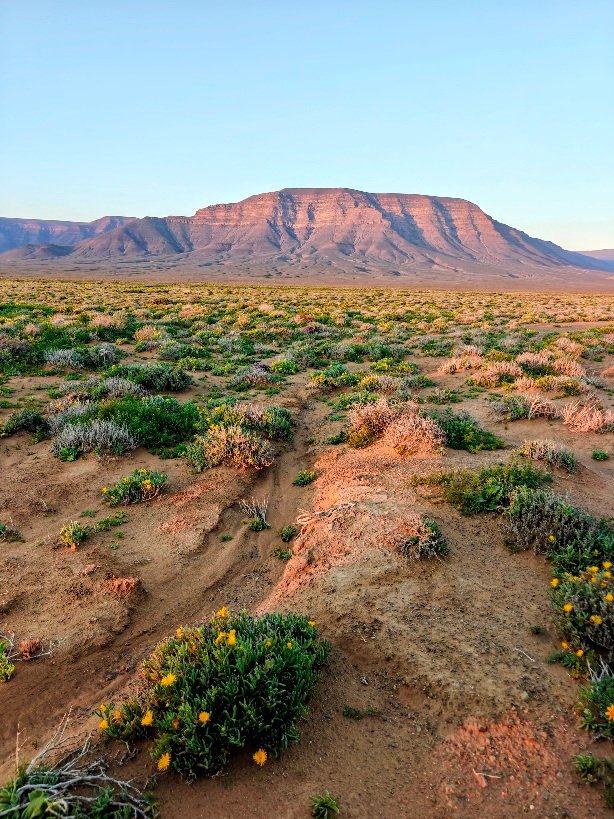
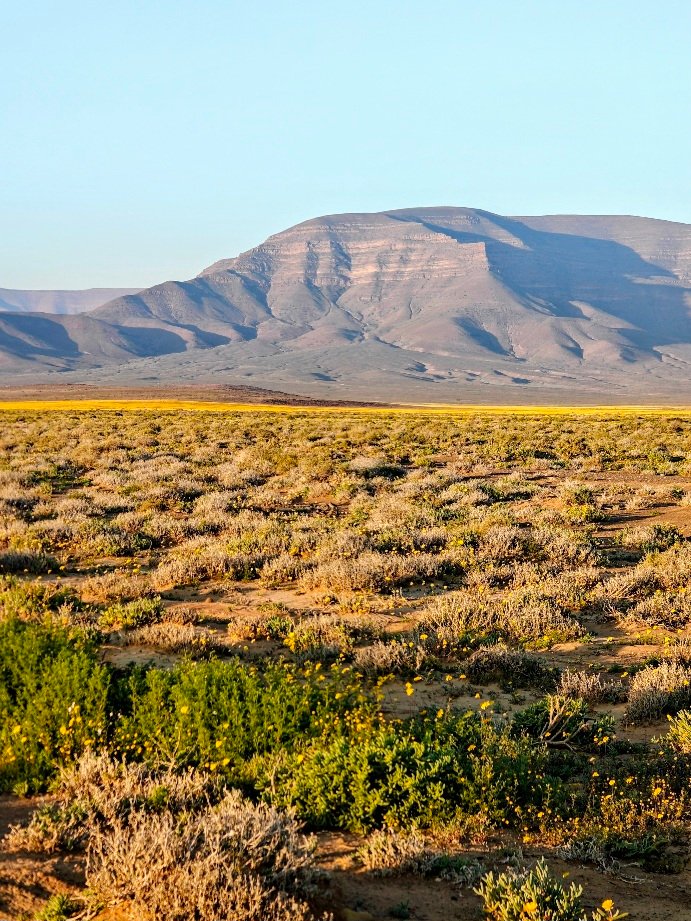
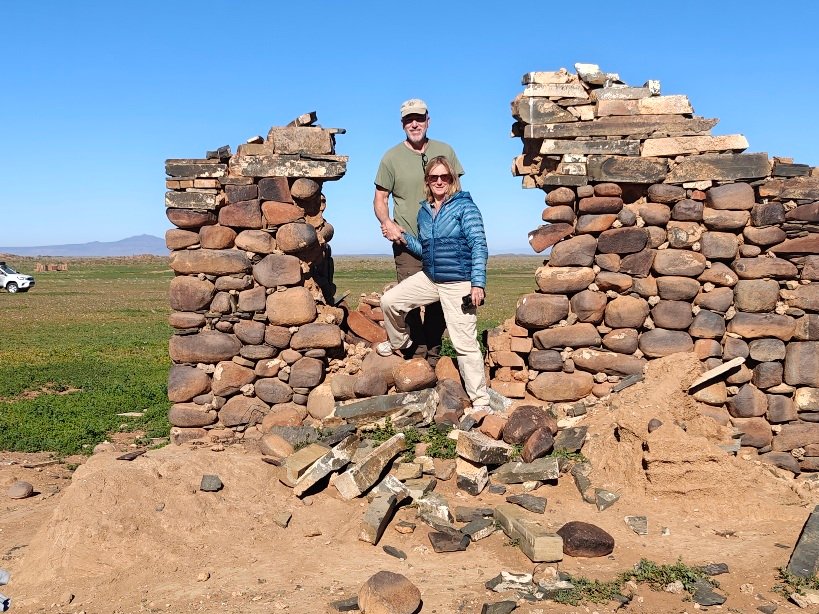
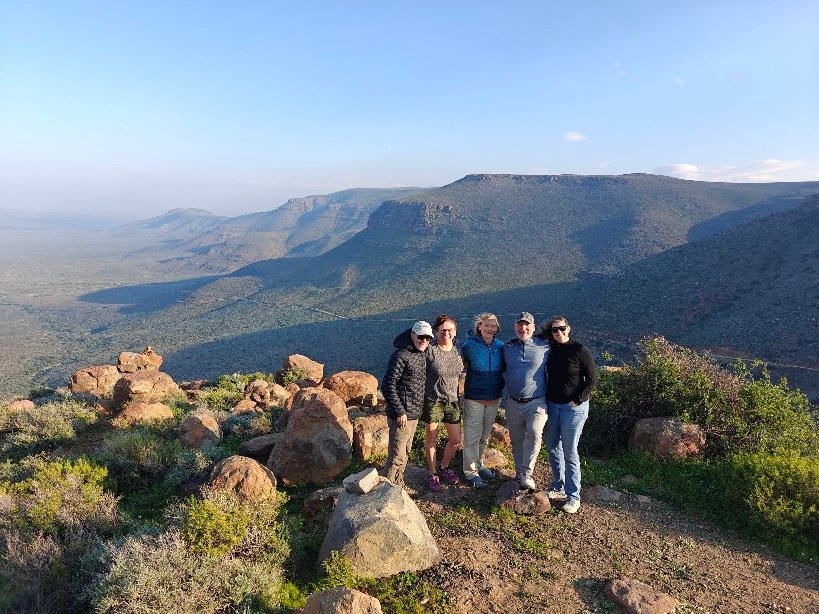
Our exit from the Park involved driving up to the top of the Roggeveld Escarpment via Ganaga Pass, which is a marvel of 19th century engineering built on the backs of convicts with pick axes and shovels, but nonetheless breathtaking:
OK, we are off to the Khalagadi Transfrontier Park for a wildlife adventure, hopefully to match last year’s sightings. See you there!
Beautiful country so far. Thanks for sharing the flower pictures. As you know, wildflowers are a passion of mine.
Hi guys!
It’s amazing you don’t have those flats more often!!! I’m glad you have a good team ! The location of campsite is gorgeous and happy for you that you had hot showers . That would make me happy . The rhino is very impressive
Xxoo