September 3-7: Kgalagadi Transfrontier Park – Nossob River

NOTE: It will be a minimum of 9 days, possibly more, before my next post, as we are heading into the real wilderness of the KTP, so please don’t worry, all is great!

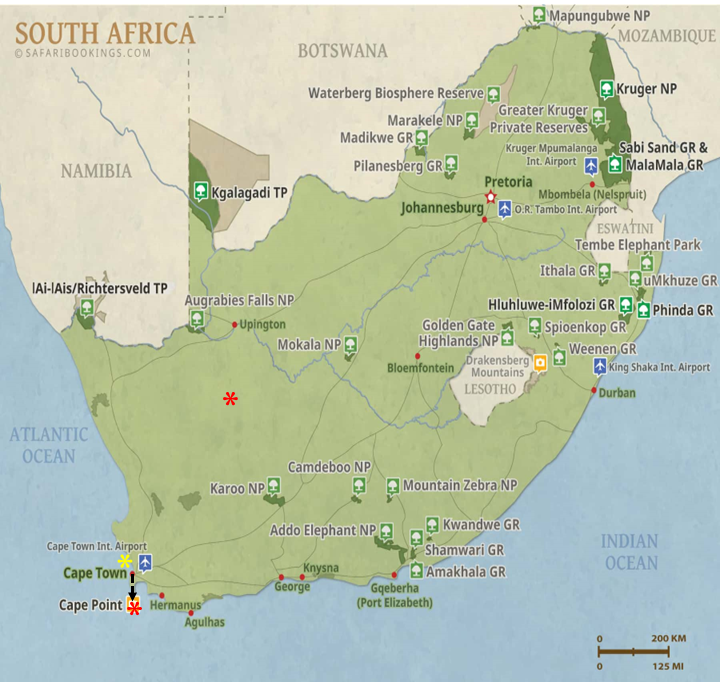
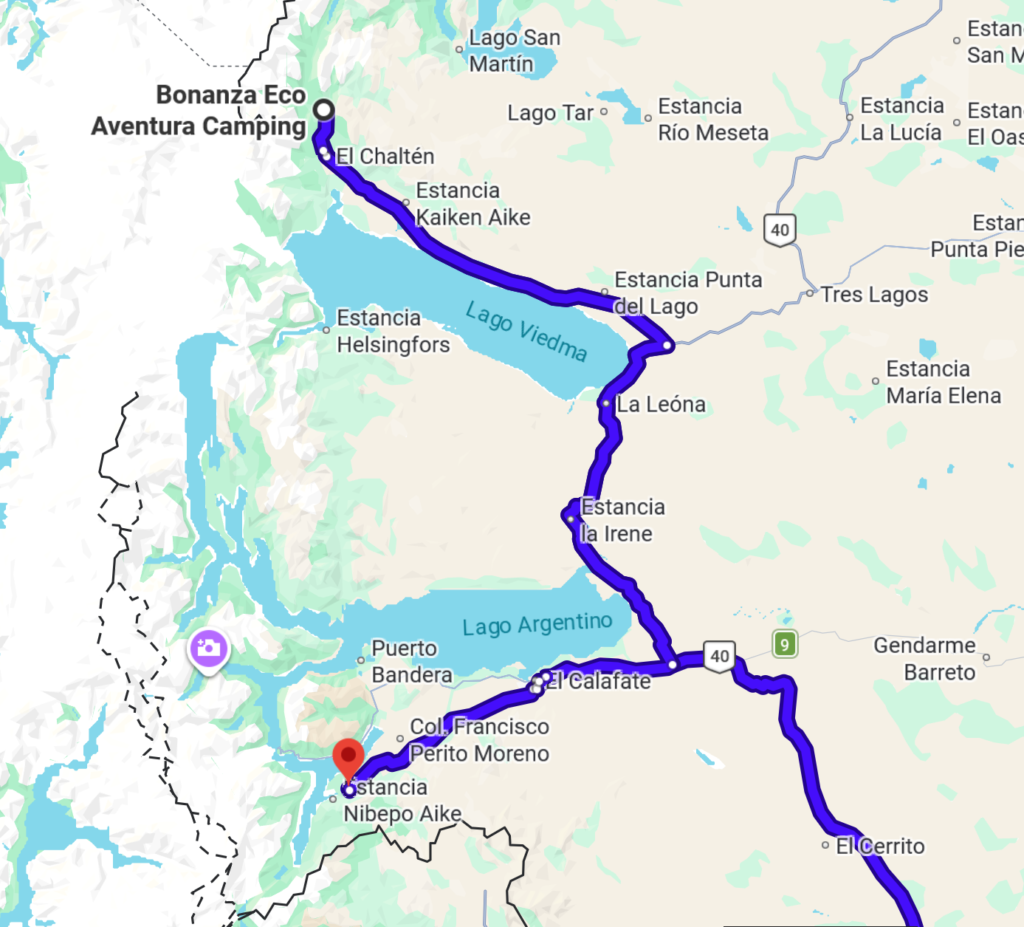
We left the KTP Mata Mata campsite and the fossilized dry riverbed of the Auob River – one of two major fossil river beds in the KTP – and traversed the rolling dunes over to the Nossob riverbed – the other major fossil river bed in the KTP (destination #2 on the map below):

As described previously, the KTP is considered a semi-arid desert, although actually it should be considered a gradient from true desert with as little as 6 inches of precipitation per year in the southwestern part of the Park to semi-desert with as much as 13 inches in the northeastern part of the Park.

The landscape has three distinct environments that can be readily distinguished by landform, vegetation and wildlife. These include: (1) the fossilized dry riverbeds of the Auob and Nossob Rivers, which only have surface water and “flow” a little in scattered places once or twice every 100 years under the current climate – so not really a “river” anymore by current standards, hence the reference to “fossilized” river; (2) salt clay pans of varying sizes, some expansive and others very small and scattered about, with the biggest pans in the northeastern part of the Park in Botswana; and (3) rolling dunes, which constitute the vast majority of the area. I should note that although the riverbeds typically have no surface water, apparently there is still plenty of sub-surface or ground water in these riverbeds to support the tree growth – and the tourist camps!

The vegetation varies from bare ground (which increases in coverage during the drought years) to grassland (which varies opposite the bare ground, and in wet years, such as 2025, can be quite prolific) interspersed with bushveld (scrubby, thorny shrubs) and tree savannahs. In addition, interestingly but not surprisingly, the grasses in the dry riverbeds are more nutritious than those in the dunes, hence the wildlife is largely concentrated in the riverbeds.

In part because of where the accessible Park roads are located, but also because of where the wildlife is concentrated, almost all of the Park tourists drive up and down the riverbeds, stopping at the intermittent waterholes maintained by the Park. The downside of this Park (similar to Etosha) is that virtally ALL the visitors are constrained to a single road up and down each of the two dry riverbeds.

Here’s a few pictures of the riverbed and dune landscape to get you in the mood, but note that this was a year of exceptional rainfall in the summer so the grass cover and height is exceptional as well. We will be here again next year and the differences could be dramatic:

Dry riverbed and adjacent dunes
Vegetated dunes in the KTP
Vegetated dunes in KTP
Misty (a.k.a. “dusty”) morning in the Nossob riverbed
Nossob riverbed
Polentswa waterhole in the Nossob riverbed

What is most surprising about the Kalahari, and the KTP specifically, is the abundance of wildlife in this semi-desert landscape. In addition to the concentration of large mammals in the dry riverbeds and more ostriches than can be counted, the ground is alive with desert mice running every which way and that, skinks and lizards everywhere, ground squirrels and mongoose running all over the place, sociable weavers in the thousands making picnicking near nesting colonies a real challenge, turtle doves galore especially at the waterholes, various raptors on every other tree it seems, and owls everywhere. So far, in our brief visit, we managed to see lions, cheetahs and African wild cats on multiple occasions, and on one morning we saw both bat-eared fox and the elusive cape fox, and of course black-back jackals everywhere!

Our first two nights in the Nossob River valley were spent at the main Nossob restcamp (#2 on the map) and we did both day and night drives. The campsite was pretty nice, all things considered, even if we had relatively close neighbors. The coolest thing about the campsite was the spotted eagle owls flying all over the place, including our campsite, and even landing on our camp chairs. Who ever heard of eagle owls as camp pests?

Nossob restcamp
Spotted eagle owl camp guest at our Nossob campsite

After two nights at the Nossob restcamp, we drove north up the Nossob River to a campsite called Polentswa (#3 on the map) in Botswana, which was a spectacular site. There were only 3 well-spaced campsites and each had a magnificant view out over the vast grassland savannah and riverbed. We stayed in two different campsites at Polentswa. Gorgeous sunrises and sunsets, starlit skies, few people, lots of wildlife nearby, and lions roaring outside of the campsite at night – doesn’t get much better (unless you are Rick perhaps, in which case the latter might not be desired anymore, ha)! Here’s some pics:

Polentswa campsite #1
Polentswa campsite #2
Polentswa sunrise
Polentswa sunset
Polentswa campiste #2 by firelight after sunset

Our fourth night in the Nossob River valley was back at the main Nossob restcamp (#4 on the map), only this time we went Full Monty and stayed in a riverfront chalet with a front row view of the lighted waterhole. Hard to believe you are in the middle of the Kalahari desert and the KTP when you are sitting on your deck, with wine in hand, overlooking a waterhole 100 feet away, with a blood moon rising and total luna eclipse unfolding. Here’s a few pics to make you jealous:

Nossob restcamp riverfront chalet
Drinks from our deck overlooking the waterhole from our Nossob riverfront chalet
Dinner on our Nossob riverfront chalet eating Steve’s mother’s favorite Italian pasta fazoole dish (which Nancy prepared)
Blood moon rising from our Nossob riverfront chalet, with luna eclipse just starting

There were too many wildlife sightings and encounters to describe them all, so I will only describe the ultimate one. This was a bucket list item for me and one that I have been waiting 25 years for: a cheetah chase and kill! That’s right, not just cheetah sightings, which you may recall we had in the Auob River on two occasions and I have had elsewhere on a few occasions, but an actual chase from beginning to end, and a successful one at that! Here’s the scene:

We were just leaving the Nossob restcamp in the morning, a bit latter than most people, which turned out to be fortuitous on this day, and I noticed two springbok sprinting at lightning speed down the riverbed on the opposite side. I couln’t believe the speed of the spingbok – I had never seen them run even close to this fast – they were flying. The only thing that could cause this was a cheetah chasing them. Sure enough, an adult female cheetah was close behind and moving with blazing speed, but the springbok had too much of a headstart and the cheetah quickly tired and gave up the chase and turned into the grassland fringe of the riverbed. Shortly, she returned to the riverbed and plopped down in plain sight to us to recover from the chase. Then, about 50 yards upriver, we noticed movement and spotted 3 cheetah cubs, perhaps 1-year olds, waiting and watching mamma at work – hopefully learning the art of hunting springbok. As the cubs slowly made their way closer to mom, close enough to watch her but not interfere with her, mom rose up with intent on trying again with 3 unsuspecting springbok in the opposite direction. How those springbok didn’t notice the cheetah chasing their cousins moments before, we will never know, but they made the ultimate mistake of not being more vigilant. I should also note, that we were the only ones watching this event unfold – a truly personal and intimate experience with one of the greatest predators in the animal kingdom!

We could see momma cheetah getting ready for the chase, her eyes absolutely fixated on the springbok, as she rose up, took a few careful steps in the direction of the springbok, and then burst into action. She went from standing still to blazing speed in an instant. I have never witnessed such amazing acceleration. The 3 sprinbok took off at full speed away from the charging killer. Within a couple of seconds the cheetah was rapidly gaining on the springbok, and as they went around a corner, we briefly lost sight of both the attacker and its prey, but a cloud of dust gave away the ultimate ending to the chase. We quickly moved up around the corner to see the cheetah on her victim and the 3 cubs approaching excitedly. The whole chase and kill took all of about 6-7 seconds, but I tell you it was perhaps the most exciting 6-7 seconds of my wildlife career! The following video tells the rest of the story, but here’s a couple of Steve Destefano pictures of the cheetah chase first:

Cheetah chasing springbok
Cheetah in flight (note dust clouds behind) in dazzling display of blazing speed and acceleration

KTP Nossob River video (13 minutes), including a full 6+ minutes of the cheetah encounter!

OK, we are off to the KTP wilderness for 8 nights!

Photo Gallery:

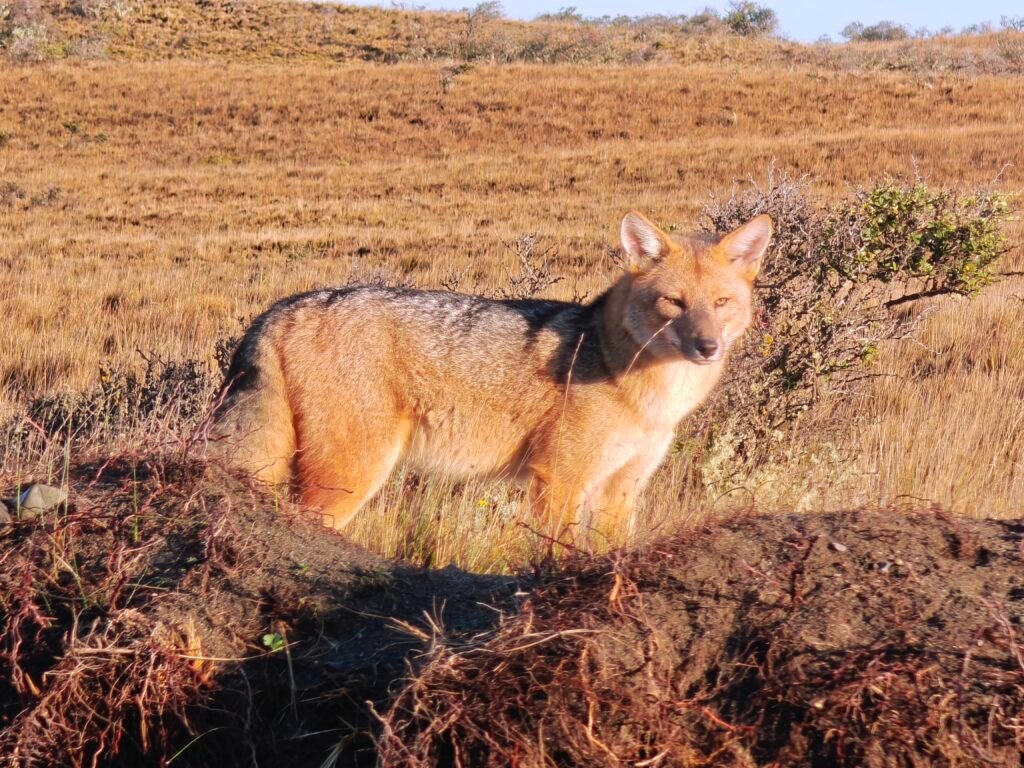
A beautiful cape fox (photo by Steve DeStefano)
Classic giraffe scene (momma, teenage daughter and baby)
Kalahari tree skink
Kalahari 4-lined mouse
Fledgling spotted eagle owl
Lioness at Nossob restcamp waterhole
Lions resting along the Nossob River road
Lion resting along the Nossob River road
Yellow mongoose camp visitor
Lioness and cub at Polentswa waterhold
Unidentified Kalahari lizard
Just a classic waterhole scene (gemsbok, wildebeest, springbok, ostrich)

New Species:

  • Cape fox
  • Kalahari 4-lined mouse
  • Black-tailed tree rat

September 1-2: Kgalagadi Transfrontier Park – Mata Mata

We made it to the Kgalagadi Transfrontier Park (KTP), the anticipated highlight of this year’s journey. The KTP is a place I have been hearing about from other overlanders for 3 years and having been chomping at the bit to visit.

After a brief one-night stand at a nice private campsite called Die Skuur outside of Mariental, located halfway between Sesrium and the KTP, we completed the rather delightful drive to the KTP on a combination of asphalt and nice gravel surface. I only mention this because I didn’t have to curse once about the road conditions the entire drive, much to Nancy’s delight and relief!

Prior to leaving Mariental, we managed a carwash that featured a serious undercarriage power wash to remove the caked on and solidified mud we picked up in Walvis Bay. And how much do you think a 1 hour car wash of this type cost? 5 bucks! That’s right, although we tipped heavily.

Green Dragon gets a badly needed undercarraige wash

We left Namibia – with some reluctance – breezed through the border post and entered the KTP and South Africa through the Mata Mata gate – the only entrance to the KTP from Namibia. Nancy even opened the gate to let us into the KTP:

Entering the KTP at last
Nancy let’s us out of Namibia and into South Africa and the KTP

The KTP, as it is generally referred to locally, is a transfrontier park in the Kalhari Desert, which you may recall from previous year’s posts, is a large semiarid sandy savanna in southern Africa covering 350,000 sq mi, including much of Botswana  as well as parts of Namibia and South Africa. In the local native Tswana tounge, the name “Kalahari” means “the great thirst” and the Kgalagadi, which occupies a portion of the Kalahari, means “a waterless place” – because there is no permanent surface water.

The KTP was created by combining the Kalahari Gemsbok National Park in South Africa, created in 1931, with the Gemsbok National Park in Botswana, created in 2000, and together they encompass 15,000 square miles. The two Parks are combined into one management area to allow the wildlife to move freely between the two countries – wildlife without borders – and to facilitate management of the greater Kalahari ecosystem.

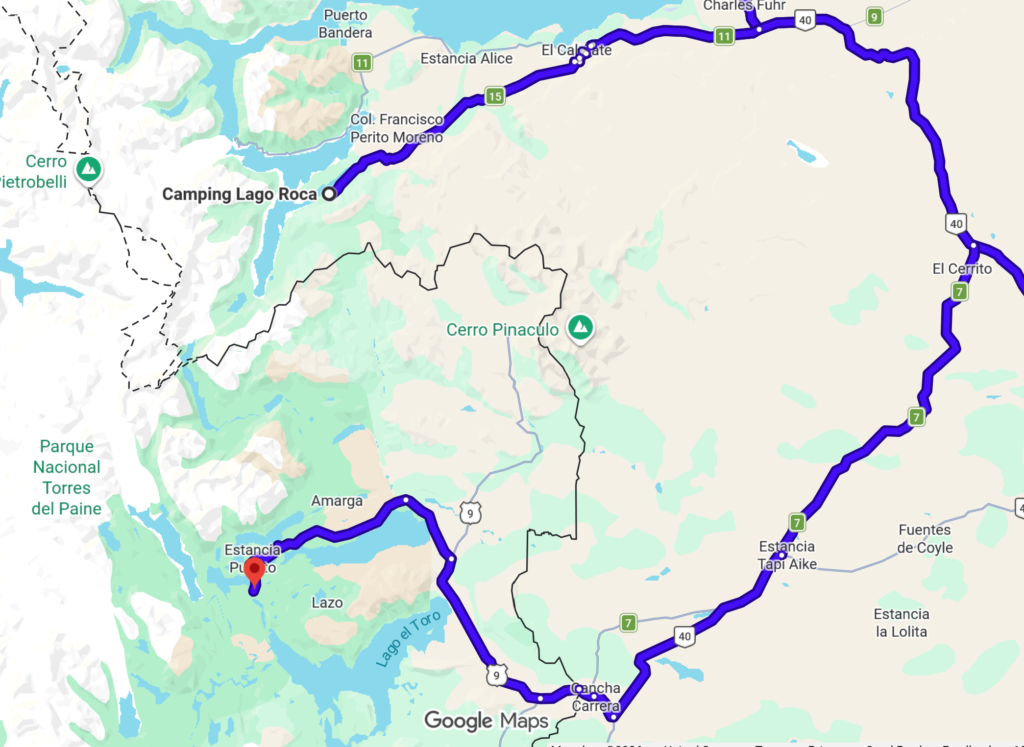
Our visit to the KTP this year extends over 18 nights – that’s right, 18 nights. Why so long, you might ask? Because this is a vast area and to fully experience the KTP in all its geography and subtleties, and to have time to observe ALL of the characteristic wildlife with liesure, and to be able to fully immerse ouselves in the sublime environment of the Kalahari – takes time. Here’s a map of the KTP with some annotations to help explain our trip. The numbers on the map correspond to the sequence of our movements through the Park:

  1. Mata Mata (2 nights)
  2. Nossob (2 nights)
  3. Polentswa (2 nights)
  4. Nossob (1 night)
  5. Bosobogolo pan(2 nights)
  6. Mbuasehube pan (2 nights)
  7. Mpayathutlwa pan (2 nights)
  8. Kiding pan (1 night)
  9. Musemane (1 night)
  10. Nossob (1 nights)
  11. Twee Rivieren (2 nights)

Because our journey through the KTP is so long, I am not going to cover it in one massive post at the end of our visit – my usual mode of posting. Rather, I am going to break it up into several posts, WiFi permiting. Note, for the Botswana wilderness portion of the trip (#5-9), we will be totally disconnected from the world (and that means no WiFi), so do’t expect to hear from me for a week or so during that portion of the trip.

For this post, let’s focus on our first stop for two nights at Mata Mata (#1) and wildlife drives along the Aoub River valley. I can’t begin to cover all the wonderful wildlife sightings and encounters, so I will mostly let the pictures and composite video do the talking. One of the main highlights of these two days included a couple of different sightings of cheeetah, but some of the smaller, less notable widlife species produced some amazing encounters as well. Hope you enjoy!
Here’s the composite video for those that like (or need) action:

KTP Mata Mata video (10 minutes)

Here’s some selected pictures:

Ki makes some spicy fajitas for dinner
KTP’s iconic species, the Gemsbok (or Oryx)
Common KTP resident, the Cape Cobra
My favorite picture so far, a nestling Spotted Eagle Owl
Typical scene in the Aoub River valley
KTP’s most awesome species, the Cheetah

Our next stop is the Nossob Rest Camp, located roughly in the middle of the Park (#2). Hope to see you there!
August 26-27: Naukluft Mountain Zebra Park

After leaving Walvis Bay, we headed inland to the Naukluft Mountains for a couple nights en route to the famous Sossusvlei salt pan and great sand sea.

The Naukluft Mountains form the eastern part of the Namib-Naukluft National Park. The Mountains were originally designated as the Naukluft Mountain Zebra Park to protect the Hartmann’s mountain zebra, but it was folded into the Namib-Naukluft National Park in 1979.

The Naukluft Mountains were formed by a complex serious of geological processes that I won’t try to summarize, other than to say that the current result is a beautiful array of geological formations, as hopefully my pictures and video below will show.

Our first night was actually spent outside the Park at the base of the Naukluft Mountains at the Bushman’s Desert lodge and campsite, the same place I camped a few weeks back when en route to Windhoek to meet Nancy, only you may recall that I camped in an exclusive bush site. This time, however, we went Full Monty and camped at the main camp with flush toilets, kitchen, etc. Here’s what the surrounding landscape and delightfull campsite looked like:

En route from Walvis Bay
Crossing the Tropic of Capricorn en route from Walvis Bay
En route from Walvis Bay
Bushman’s Desert campsite from the hilltop
Bushman’s Desert campsite
Steve making grilled cheese, onion and chutney sandwiches
Bushman’s Desert campsite landscape
A quiver tree of gals at Bushman’s Desert campsite
En route to Sossusvlei

One of the highlights of this segment of our trip was a guided visit to a cheetah sanctuary in Solitaire a short distance from our campsite. A guide took the four of us in an open-air safari vehicle into a 48 hectare enclosure that serves as home to 4 sibling cheetahs, including two sisters and two brothers. Their mother was caught killing goats on a private farm and her leg was broken. She was brought to the Sanctuary and died shortly after, but not before giving birth to these 4 siblings. Unfortunately, without their mother to teach them the ways of the world (i.e., what is food and what they are food for) it was impossible to release them back into the wild, where they would assuredly die. Thus, they remain in the enclosure, but in a semi-wild state. We absolutely loved being so close to these magnificant animals. Here’s a few pictures to wet your appetite, but watch the video if you really want to see them:

Cheetah
Cheetah
Cheetah
Cheetah
Cheetah

Here’s the cheetah video:

Cheetah Sanctuary video (6 minutes)

Our second night was spent inside the Park at the Naukluft Park campsite. I failed to take a picture of our campsite, but it was nicely situated along a streambed with pooled water at the base of a rock cliff and overhanging trees for awesome shade. Nancy and I did a nice 10 km hike on the Olive trail that took us up to the top of the escarpment and then down a long and narrow canyon with steep walls on either side, reminiscent of some of our slot canyons in the Colorado Plateau. Rather than post a bunch of pictures, I have a 2 minute slide show for your entertainment. I should also say that a highlight of the hike, other than the spectacular mountain scenery, was spotting a small group of Hartman’s Mountain Zebra high up on the plateau, but well out of range for a photo.

Naukluft Mountain hike video (2 minutes)

Here’s a short (1.5 minute) video of Nancy and I using a chain attached to the canyon wall to pass by a drop-off pool in Olive Canyon on our Naukluft Mountains hike.

Olive Canyon pool crossing (1.5 minutes)

Ok, next stop, Sossusvlei. See you there!

August 24-25: Sandwich Bay in Namib-Naukluft National Park

After reluctantly leaving our desert campsite at Rock Arch, we headed to the coast and Walvis Bay for a couple of nights at an apartment and a full-day guided trip down the coast to Sandwich Bay:

We spent two nights in Walvis Bay at Windbeggars in an efficiency apartment located one block from the Bay and on the southern edge of town. It was quite a contrast from our previous desert hilltop campsite. The only thing in common was that they were both perched up high, one on a rocky hill, the other on the second floor of the building.

The main reason for coming to Walvis Bay was to see the coast, in stark contrast to the desert we just came from, pick up some new birds for Steve and Ki, and take a full-day guided safari down the coast to Sandwich Bay. But in the meantime, we learned that Walvis Bay is the only Port in Namibia and all overseas exports go through it. One interesting factoid about Walvis Bay is that it is home to the largest saltworks in the southern hemisphere, which is a major export product for the country and includes sending salt to the U.S. The table salt you are using right now might have come from this very spot. Here’s a shot of the saltworks, that involves pumping salt water from the “lagoon” into basins and then letting the water evaporate over 6-8 months, afterwhich they are left with 15-20 cm of harvestable pure salt, which they bag for truck transport to neighboring countries or put on ships for overseas export. Here’s a picture of a portion of the saltworks:

Walvis Bay saltworks

We also learned, and observed first hand, that they also mine lots of Uranium in the surrounding desert – there are 5 mines in the immediate area – and ship all of the ore to China, who, by the way, is gradually taking over, at least economically, large parts of Africa.

Sandwich Bay (or Sandwich harbour) is accessible only by 4×4 and involves traversing beach and dunes for 60 km to get there. The Bay is included within the Namib-Naukluft National Park and is designated as a RAMSAR site for the expansive shallow saltwater lagoon (that was formerly freshwater). In case you don’t recall, RAMSAR is an international treaty signed in 1971 for the protection of wetlands of international significance. The RAMSAR list currently includes over 2,500 sites across the globe, including 5 in Namibia.

Based on the descriptions of Sandwich Bay and the tours, we fully expected the tour would be focused on seeing wildlife in Sandwich Bay lagoon. Well, it turned out to be much more about the desert dune landscape – which was very welcome – but even more about the wild ride up and down the dunes at break-neck speeds, racing up a steep dune and going over the lip of the dune without being able to see the drop off before descending, or rather falling off, what felt like near vertical faces (which in reality clearly didn’t exceed the angle of repose of perhaps 35-40%). It was quite a thrilling ride that many of you (yes, I am referring to you Caitlin) would have enjoyed immensely, especially the adrenaline junkies, but others might scoff at. But rest assured that the next wind wipes away the dune tracks so the impact on the physical environment is rather negligible. Here’s a few pics of the dunes and beach drive, but there is also a little video footage (see below):

Entrance to Namib-Naukluft National Park en route to Sandwich Bay
Beach rode en route to Sandwich Bay
There is water in the desert (beneath the surface as indicated by this patch of vegetation)
Driving the dunes en route to Sandwich Bay
Namib dunes
Crazy dune formations en route to Sandwich Bay
Driving the beach en route to Sandwich Bay
Sandwich Bay from atop the dunes
Sandwich Bay from the shore

The biggest surprise was seeing the wildlife making a living in the rear dunes supporting sparse vegetation. This included gemsbok (oryx), springbok, ostrich, and black-back jackal. We also had a wonderful encounter with a Cape fur seal on the beach (see video footage). Here’s a few pics of the critters:

Springbok in the dunes
Gemsbok in the dunes
Caspian terns in Sandwich Bay
Black-backed jackal on the beach

Here’s a short video of a cool fur seal giving himself a sand bath on the beach and some beach and dune driving:

Sandwich Bay video (4 mins)

Next stop the Naukluft Mountains en route to the famous Sussosvlei salt pan and the red sand dunes. See you there!

August 28-30: Sossusvlei

After our brief visit to the Naukluft Mountains, we headed east to the true desert of the Namib and the famous Sossusvlei salt pan and Namib Sand Sea.

Sossusvlei is perhaps the most iconic place in Namibia, and one of the top few tourist destinations – for very good reason! Sossusvlei is one of those salt pan formations that I have talked about on multiple occasions in this blog, formed by ephemeral flooding of the Tsauchab River and the accumlation of salts in the clay topsoil, although water from the River rarely reaches the pans today. The Pan itself, however, is not the real star of this Park in my opinion, but rather it is the striking towering red dunes, purported to be some of the highest in the world, that captures the imagination. And it’s not just one pan, but several, including the famous Deadvlei Pan with its ancient, fossilized trees. The skeleton trees in Deadvlei died around 900 years ago when the climate changed and the river bed shifted course, leaving the pans dried up most of the time, except for the ephemeral seasonal rains. Because of the exceptionally dry climate, the skeleton trees have persisted for 9 centuries, thwarting any attempts to decompose them. 

Much to our great surprise and delight, our Park campsite was rather OK, or as our resident PolyAnna (yes, I am referring to Ki) exclaimed, “it was awesome; we had a site on the edge of the campground, no really close neighbors, lots of animal tracks right in our campsite, and two big piles of gemsbok poop right in our site, what more could we ask for”. Sherry, rest assured that Ki is a suitable substitute for you in this regard. Here’s a pic:

Our Sesrium campsite

We had a couple of epic days in the dunes. The highlight of the first day was climbing “Big Daddy” dune, said to be the tallest dune in the Sossusvlei area at ~1066 feet above the Pan, and overlooking Deadvlei Pan. Of course, we shared the climb with several dozen other tourists also seeking the view from the top, but it was well worth the exertion and sharing the views. And the run down the slope of the dune was truly exhilarating, despite the 5 pounds of sand that we collected in our shoes. The skeleton trees, or “fossilized” trees as they refer to them here, of Deadvlei Pan were also quite beautiful, more so had we been there during the early morning hours and the sun angle low to cast shadows (perhaps next year Mark and Kirsten!).

The highlight of the second day was a hike up “Big Mamma” dune overlooking Sossusvlei itself. Big Mamma is “only” ~656 feet above the Pan, but what was epic about this hike was the strenuous “trail” breaking climb up the long crested ridge to the top – much more strenuous than climbing all the way to the top of Big Daddy on other’s footprints – and the ultimate solitude of being atop the dune by ourselves for the duration. It was the highlight of the visit for us to be sure.

We also did a short hike in Sesrium Canyon in the headwaters of the Tsauchaub River, which to our surprise was a slot canyon carved through hundred(s) of feet on conglomerate material – essentially compressed mud and rounded cobbles of varying sizes all packed together in layers of varying thicknesses. It was easy to imagine a river flowing through the canyon and depositing material for eons after eons.

OK, for your visual entertainment I have created a slide show of our wonderings AND a composite video. Take your pick, or if you are really committed, watch both. Hope you enjoy.

Here’s the slide show. Note, for you serious wildlife biologists, the dune beetle in the slide is a Tenebrionid beetle (Tok-Tokkies) and the grasshopper-looking insect is, well, a grasshopper:

Sossusvlei slide show (3.5 minutes)

Here’s the video composite. Note, I switched from landscape to portait mode in the middle of filming in Sessrium Canyon at the end of the video and I could not figure out how to merge the landscape and portrait segments, so you’ll have to turn your head on its side to watch the last couple of minutes. Sorry for the neck bending, but lesson learned – send me your hospital bill if :

Sossusvlei video composite (10.5 minutes)

We are off to the Khalagadi Transfrontier Park (KTP) for an extended safari through this part of the Khalahari Desert. Don’t panic if you don’t hear from me for several days at a time, as we will be very remote at times and without cell service.

New Species:

  • Gray tit

August 23: Tinkas in Namib-Naukluft National Park

After leaving Daan Vijoen Wildlife Reserve outside of Windhoek, we headed west and camped for a night in the Namib-Naukluft National Park en route to Walvis Bay on the coast:

Ordinarily I might not post a blog entry for a one-night stand en route to a destination, but our campsite was so awesome that I decided to. We camped at a remote and exclusive desert campsite called Rock Arch in the Namib-Naukluft National Park about 30 km on a 4×4 track off the main route to Swakopmund on the coast (n.orth of Walvis Bay). This was desert camping at its finest, and Ki was especially at home and delighted being the old desert rat that she is, owing to her days researching pronghorn antelope in southern Arizona.

The Namib-Naukluft National Park is located in western Namibia and ecompasses over 19,000 square miles of the Namib desert, which is purportedly the oldest desert on Earth. The Namib extends from the Atlantic Ocean east to the Great Escarpment that runs down and around the southern part of Africa, mostly in South Africa. You may recall from last year my visit to the Drakensberg escarpment on the northeast coast of South Africa. The Drakensberg is part of the same Great Escarpment that wraps around South Africa. The Namib is a true desert, with an average of only 4 inches of precipitation per year, which comes in the form of coastal fog that warms and falls as rain. More on the spectacular dunes in the Namib in a subsequent post.

The Namib-Naukluft Park is one of the largest wildlife parks in all of Africa. The orgins of the Park date to 1907, but there have been several substantial additions over time. The Park now runs 370 miles north to south along the coast and, thanks to an addition in 1979, it includes 1,000 miles of Atlantic Ocean coastal waters as a marine reserve. This is a really big Park; we have nothing in the States to compare in terms of size.

Ok, back to my original justification for this post – a one-night stand to a surprisingly awesome desert campsite. Our campsite was remote, private and desert camping at its finest. Our site was perched on the top of a rocky outcrop (or kopje, or koppie) perhaps only 50 feet above the plains, but enough to afford us spectacular views of the surrounding desert. There was a grotto to sit under for shade with seating and a really nice loo below the koppie. I will let the photos do the rest of the talking.

Driving into the Namib desert
Quiver tree in the Namib desert near our Rock Arch campsite
Sociable weaver nest
Heading to Rock Arch campsite
Our hilltop Rock Arch campsite
Our Rock Arch campsite
Steve and Ki’s rig
Our Rock Arch campsite
Our Rock Arch campsite looking through the arch
Our drop-toilet loo below our Rock Arch campsite
Kevin in the grotto
Nancy holding up the arch
Nancy in the grotto
Ki in the grotto
Nancy, Ki and Steve in the grotto
Sunset through the arch at our Rock Arch campsite
Sunrise from our Rock Arch campsite

Off to Walvis Bay and a trip to Sandwich Bay. See you there!

August 20-22: Back to Windhoek and Steve and Ki

After leaving Waterberg Plateau National Park, we ccompleted our big loop through northwest Namibia by heading back to Windhoek to meet up with Steve and Ki, resupply, and head out on the next leg of our journey.

En route to Windheok we spent a night at a wonderful campsite in a private game reserve called Omatozu located 100 km or so north of Windhoek, and then headed on to Windhoek to meet up Steve and Ki, shop in a fully-stocked supermarket, and then on to the Daan Viljoen Game Reserve just outside of Windhoek for a couple of nights R&R and some leg stretching.

Before we get to the good stuff, let’s do a little TIA drama! Hopefully you remember that TIA refers to “This Is Africa” and all the simple things that can go wrong or become challenges that would otherwise not be in the States. Well, here’s a good one for your entertainment. After meeting up with Steve and Ki (see below) and stocking up on food and drink, we stopped at the Shell fuel station to top off our tanks before heading into the remote portions of Namibia. As usual, I hopped out of my driver’s seat and told the attendant to fill up my Sub tank (that’s my secondary tank in the rear) with diesel, and then I went into the station to look for something. When I came back out to the car and looked at the pump and the guy pumping the fuel, my heart stopped beating – literally – as I saw that he was pumping petrol (gasoline) into my diesel fuel tank! This was a DISASTER in the making. Contaminating diesel fuel with any amout of petrol can destroy an engine. Fortunately, someone or something was shinning down on me because I did not turn the key in the ignition before I noticed what was happening and yelled STOP, and thus none of the contaminated fuel got into the fuel lines or engine, which would have been a serious problem. Anyways, we – actually the station manager – called an expert experienced with this problem for emergency help. He came and drained and flushed the Sub tank, and then we test drove the Green Dragon and he guaranteed all was well – but only because I had not turned the ignition key to the On position, which would have pulled fuel into the fuel pump to prime it. After 2.5 hours and just a little bit of stress, we were on our way. BTW, this was a great way to welcome back Steve and Ki to TIA.

Push the Green Dragon away from the pumps to drain and flush the tank
Draining the contaminated fuel from the Sub tank

We spent two nights just outside of Windhoek at the tiny Daan Viljoen Game Reserve, named after the South African administrator of South West Africa (when South Africa governed the territory of what is now Namibia). This National Park, established in 1962, encompasses only 15 square miles of hills and valleys west of Windhoek. The vegetation is mostly short Acacia and Mopane woodland and the Park hosts several of the classic wildlife species, but no lions or elephants. We had a delightful campsite and so far as we knew shared the entire Park with only one other party – a German family that didn’t stray too far from the WiFi.

We had a wonderful 10 km morning hike and another 3 km evening hike, giving our legs some much needed exercise (see pics below), but the most noteworthy event of our stay was the raid on our campsite by a large male baboon. We were setting up camp the first night and getting prepped to make dinner. We had car doors open and stoves and other gear on the tables, as we were all busy getting stuff from the vehicles to set up camp, when a huge male baboon came around the corner and we saw him get into the driver’s side of the Green Dragon. At which time we all yelled and I darted to the Dragon causing him to abandon the front seat – while I quickly wondered what he was trying to steal from the front seat. Anyways, he immediately ran around to the back of the Dragon, climbed in and grabbed a bag of beautful seeded rolls that Nancy was really looking forward to eating – since good bread is almost impossible to find in this country. I raced to the back of the Dragon at the same time as he and yelled and lunged at him while he came out of the Dragon, at which time he turned and aggressively lunged back at me – bread rolls in his mouth – with a growl and with his HUGE fangs bristling white and looking quite menacing – and my heart stopped for a second time in the same evening. Fortunately, he realized that he had his prize and turned and very confidently strode away knowing that he was the boss of this one-on-one confrontation. There is no question that he would easily take me down in a fight if he wanted to. Fortunately, his brain is relatively smaller than mine – I think – and thus he didn’t realize his superiority.

Knowing he had hit the jackpot with us during his first raid, our baboon “friend” returned in the morning by stealth, as we were now on constant look-out for him, and tried a rear ambush from the other side of our camp. He darted in from behind the ablution block, but Nancy yelled out and I grabbed my new slingshot – thank you Nathan for that xmass present – and at the sight of the slingshot he took off. Phew! This guy was bold and aggressive and certainly poses a safety risk for the Park’s visitors. Subsequently, the Park staff revealed that they will have to remove (i.e., shoot) this baboon. Sad fate for an animal just trying to get food in the easiest way possible, like we all do.

Here’s a few pics of our campsite, with first night drinks with Steve and Ki, and our hikes:

Welcome to Daan Viljoen Game Reserve
First night drinks with Steve and Ki
Nancy, Steve and Ki with the wildebeest in the background
Hiking in Daan Viljoen

OK, hope you enjoyed the TIA anecdotes, because now we are off to the desert and the coast. See you there!

New Species:

  • Sabota lark

August 19: Waterberg Plateau Park

OK, the Etosha post was indeed rather long – but it was afterall 4 days in the crown jewel Park of Namibia – so I will make this one short. After leaving the Onguma Reserve and Etosha, we headed south towards Windhoek to meet up with Steve and Ki, who will join us for the remainder of this year’s journey. We made a brief one-night stand stop in Waterberg Plateau National Park, primarily because it was conveniently located halfway to Windhoek, but also because it provided an opportunity to stretch our hiking legs

Waterberg Plateau is, as the name suggest, a large sandstone plateau a few hundred kilometers north of Windhoek rising roughly 800 feet above the vast plains of the Kalahari of eastern Namibia. The Park, encompassing 156 square miles, was declared a reserve in 1972. It is largely inaccessible; hence, in the early 1970s several of Namibia’s endangered species were translocated there to protect them from poaching, and it worked! The Park now supplies other Namibian parks with rare species, including the rare black rhino.

The Park is rather picturesque from the southern side where a several hundred foot escarpment rises from the plains along a roughly 100 km stretch to reach the top of the plateau. When the sun hits the red rocks as sunrise and sunset, especially with the multi-colored lichens on the rocks, it is truly a beautiful sight to behold.

The Plateau still hosted a small tribe of the San (Bushman) as recently as the 1960s, but they are all gone now. The site is also somewhat famous, at least in German history books, as the place where the Ovaherero people lost their last and greatest battle against the German colonial forces at the beginning of the 20th century. Native survivors fled to neighboring British Bechuanaland (now Botswana), but an estimated nearly two-thirds of the Ovaherero population lost their lives during this period – yikes!

Here’s a few pictures from our brief visit that involved a few hour hike up to the top of the escarpment:

Waterberg Plateau escarpment
Nancy scrambling up the Waterberg Plateau escarpment
Waterberg Plateau escarpment from the top
Rosy-faced lovebird
Kevin scale’s a termite mound
Nancy chooses not to scale the termite mound
Nancy hiking with the Aloe trees
Dik-did, the smallest antelope in Africa
The delicately beautiful dik-dik

Here’s a short 2 min video showing the escarpment from the top and some close encounter footage with a pair of dik-diks, Africa’s smallest antelope:

Waterberg Plateau video (2 min)

From the Wildside:

“Soccer (“football”) is without question the world’s greatest and most played sport”

New Species:

  • Alpine swift
  • Bradfield’s swift

August 14-18: Etosha National Park

We left the Kunene River and the border post town of Ruacana and headed back south a few hundred kilometers to the western entrance to Etosha National Park.

Our journey through Etosha involved a west-to-east route through the Park, entering through the western gate and exiting through the eastern Gate, with 3 nights at campgrounds inside the Park and 1 night at a campsite in the Onguma Conservancy on the eastern side of the Park.

Etosha NP is the crown jewl of the Namibian Park system, and really the only Park in Namibia with the full complement of wildlife species, including all the big ones. The Park is one of the largest national parks in Africa, encompassing 8,600 square miles – that’s pretty big! It started as a game reserve like most Parks in Africa, with a focus on supplying big game for the white hunters, proclaimed in 1907 by the governor of German South West Africa, which you may recall was ruling Namibia before the South Africans took it over at the start of World War 1. At the time of its establishment, the game reserve was several times larger than the current Park and extended west all the way to the Atlantic ocean and north all the way to the Angola border. Subsequently, the South African government declared it a national park in 1967 and over time was progressively reduced in size to its current extent, primarily to honor the land rights of the native people in the region. 

The Park is named after the enormous Etosha pan, which is almost entirely within the park and encompasses an area of 1,840 sq mi and constituting 23% of the total area of the Park. You may recall that these pans form in low-lying areas that flood during the rainy season and subsequently dry out, and in the process concentrate salts on the surface, often producing a white salty crust and generally preventing vegetation growth due to the high salinity. Etosha pan has vast expanses of salty clay soil interspersed with salt-loving grassland. Surprisingly, you can find lots of springbok out on these salt pans, along with zebra and wildebeest in the grassy areas. Here’s a few pics of the pan and fringing sweet lime-loving grasslands on the fringe of the Pan:

Etosha pan panorama
Edge of Etosha Pan
Sweet grasslands on the fringe of Etosha Pan
Etosha pan sweet grasslands
Etosha pan fringe
Etosha pan fringe sweet grasslands with plains zebra

The 77% of the Park that is NOT the Pan is very flat, with only a few hills in the far west of the Park and a couple of isolated hills (or koppies) in the south, and mostly covered with short mopane woodland interspersed with shrubby acacia thornveld – not the stuff you want to do a walkabout in. Truth be told, much of the Park is rather monotonous landscape with very few animals to see in most of it; we probably spent 90% of our time driving through homogenous vegetation without seeing anything or much. But then there are hotspots where the animal life is concentrated and in large numbers and it makes all the driving worth it. Here’s a few shots of the grassy/shrubby openings in the otherwise monotonous mopane woodland (which you have seen enough of):

A patch of grass/shrubland amidst the extensive mopane woodland
A patch of rass/shrubland amidst the extensive mopane woodland

The Park is home to all the classic savannah species of southern Africa, but is most noteworthy for its population of the endangered black rhino. Unfortanately, despite the Park’s anti-poaching efforts, as recently as 2022, 46 were killed inside the Park. The Park is simply too big to effectively patrol and the Park’s boundary fence is too easily thwarted by the poachers. At this rate of poaching, I’m not sure how long the Park will have black rhinos.

Our first night was spent at the Olifantrus camp in the western section of the Park. While the campground was unexpectedly rather devoid of any redeeming character or views of the surrounding landscape, it did have a waterhole just outside the campground with an elevated blind or hide that offered up close and personal observations of elephants and other creatures. Here’s what happens to the 1/2 inch think plexiglass hide viewing window at ground level when an elephant head bangs it, probably trying to take out one of the many annoying French or German tourists:

Our drive eastward through the western section of the Park, after leaving Olifantrus, was mostly rather uneventful except for a couple of very special wildlife encounters: one with a pair of bat-eared foxes on the road in front of us and another with a honey badger digging out ground squirrels and eating them, but you’ll have to watch the composite video to see these observations as I was too busy tring to video to take pictures.

Our next campsite was called Okaukuejo, located in the central portion of the Park and serving as the administrative headquarters for the Park and overall hub for all tourist activity. This was a campsite from Hell, truly! 50 or more sites crowded together without any separation, partitions or shade to speak of, and crowded, dirty, shared ablutions. Here’s a picture of our campsite way before it got crowded later in the day:
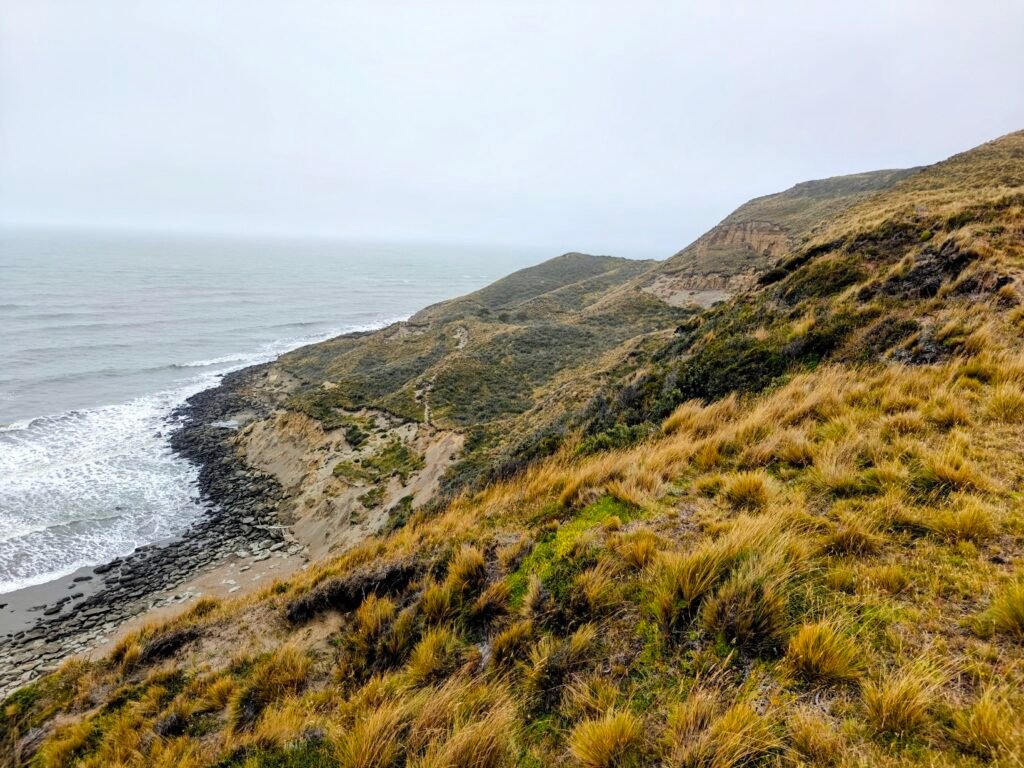
Okaukuejo campsite

This was one of my least favorite campsites in all of my African travels, in part because of the aweful campsite but also because of the hundreds of annoying European tourists, or to be more specific, French and German tourists. Do you sense a bit of tourist bias on my part? If so, you are right on, as we have encountered lots of rather discourteous French and German tourists on our wildlife drives and at the waterholes. The only highlight of this portion of the trip and our stay at this campsite was the waterhole, which they light up at night for viewing the nocturnal creatures. We were fortunate to watch a black rhino come to the waterhall after dark, despite the loud Frogs and Germans chattting away when the “Silence Please” signs are all over the place at the waterhold viewing area. Here’s a few shots of the waterhold at sunset and the endangered black rhino, and there is a little video footage as well:

Okaukuejo waterhold at sunset
Black rhino at Okaukuejo waterhole
Zooming in on black rhino
Zooming in even closer on black rhino

Our third night was spent at the Halali campite in the east-central section of the Park. Another campsite NOT to recommend for the same reasons as before, but somewhat more tolerable than the previous one. More importantly, there was a rather nice waterhole with night lighting and we managed to watch two black rhinos along with several spotted hyenas at this hole. See the composite video for some footage.

Our last night was spent just outside the eastern boundary of the Park in the adjoining Onguma Conservancy. Fortunately, we had a delightful campsite with all the trimmings, as shown here:

Onguma Conservancy campsite

Overall, we saw lots of critters during our visit to Etosha, but also spent a lot of time driving too, and on some pretty crappy corrogated roads which produced not just a few cuss words out of my mouth, much to Nancy’s irritation. Not much else to say abou the Park, so I will end this post with: 1) a link to the composite video that has some cool footage of the honey badger along with some night footage of the black rhinos and lots of miscellaneous stuff, 2) a few “From the Wildside” pics, and 3) a gallery of some highlight wildlife photos that didn’t make it into the story above.

Compsite Etosha National Park video (37 min)

From the Wildside:

“Sorry, we are not serving baboons today at this restaurant”
“Banana pancakes in the bush anyone? It’s brunch time at Etosha Pan”
“Phil, margarita on the dock, Namibian style – overlanding doesn’t always mean roughing it!”
“Mom, do we really have to be nice and pose for the French and German tourists?”
“That will be one Namibian dollar for the photo, please”
“Sis, do you mind if I rest my head on you for a bit, these tourist photos are wearing me out”
“John, it’s a good thing you made me do yoga this morning or I would never be able to get down far enough for a drink”
“In the eye of the elephant. I see you, the real you!”

Photo Gallery:

White-crowned shrike
Paradise whydah
Kori bustard (heaviest flighted bird in Africa)
White rhino (dehorned)
Black-faced impala (endemic race restricted to nortwest Namibia)
Classic waterhold scene (elephant approaching, springbok, black-backed jackal, and more)
Black-backed jackal
White-quilled bustard
Pale chanting goshawk
Springbok
Giraffe
African elephant (bulls)
(Red) hartebeest
(Blue) wildebeest

New Species:

  • Violet woodhoopoe

August 10-13: Kunene River

Regretfully, we left the Palmwag Concession and our delightful Elephant Song campsite and private lion encounter to head all the way north within Namibia, first for a one-night stand at the Kaoko Mopane lodge and campsite outside of Opuwo (the commercial and population center of Kaokoland, with a population of around 12k), then on to Epupa Falls on the Kunene River and Angola border, and finally east upriver to a campsite just short of the border post town of Ruacana.

Not much to report on Opuwo other than to say it was a nice place to resupply with food and fuel – actually, the only place – before heading up to the Kunene River on the Angola border. We found a decent lodge and campground for the night, but the only thing worth reporting was the clever use of recycled materials in the lodge, restaurant, and gardens. Here’s one example of what to do with your vehicle when it has died of old age:

Recycling at its best, or worst?

We left Opuwo and drove north through more mountains, valleys and plains covered with, you guessed it, Mopane woodland, the ubiquitous tree of this region, and almost no people. We continue to be in awe of how extensive the Mopane woodlands are that seem to stretch across mountains and valleys for endless distances. On the human population side, I suppose it is not too surprising that there appear to be almost no humans throughout most of this vast landscape given the aridity and minimal productivity of these lands. Every so often, we will come across a cluster of a few to a dozen huts and natives living a subsistence lifestyle, mostly by raising goats and/or cattles, but otherwise the landscape is rather void of humans. Here’s a few pics to give you a taste:

Kaokoland driving
Mopane woodland
Endless mopane woodland
More mopane woodland (and overgrazing by the local villagers)
Typical Kaokoland “village” (and, yes, families live in those tiny dome-shaped huts)

After 4 hours or so of driving, we eventually made it to our destination at Epupa Falls on the Kunene River and Angola border. The Falls were spectacular in many ways, but most notably by the way in which the water flowed through more than 30 paths/channels and then over falls and cascades into the gorge below. The Falls may not be the largest in terms of water volume, width, or height of the drop, but they certainly are in the running for having the most character. Pictures, of course, don’t quite capture the quality of the Falls, but here’s a few anyways to give you an idea of the marvel we beheld:

Nancy at the main falls at Epupa Falls
Largest falls at Epupa Falls
Epupa Falls continued
Epupa Falls panorama

But to really see the breadth and character of the Falls, you need to watch this 2 minute video, which better captures, but only partially, the magnificenc of the Falls:

Epupa Falls video (2 mins)

We spent two nights at Epupa Falls. Our campsite was right next to the river and just above the Falls, close to the spray and such that we heard the constant sound of the Falls, which made for nice backing music for my native American flute. Our site was not very rustic, as we were situated right next to the lodge owner’s house and close to the restaurant bar, but the proximity to the Falls compensated, as did the sublime sunsets and some of the campsite visitors. Check it out:

Our Epupa Falls campsite
Sunset from our campsite at Epupa Falls
Male Namibian rock agama in our campsite
Another male Namibian rock agama in our campsite
Water monitor passing by in front of our campsite
Female Namibian rock agama in our campsite, and trying to evade the horny male
Crocodile in the river above our campsite wondering how we would taste

We did a four hour morning nature walk with a local guide along a beautiful stretch of the river upstream from our campsite.

One of the many side channels of the Kunene River
Braided channels of the Kunene River

We saw lots of birds, including a couple of new species for me, but what was most interesting to us was some of the insights we gained into the local Himba culture. Our guide was half Portuguese, half Himba, reflecting the cultural reality that political boundaries, including international ones such as the one along the Kunene River, don’t mean that much to the locals living a subsistence lifestyle.

Our local Portuguese – Himba guide

We met a few local women and their children out foraging for Makalani palm tree seeds along the river floodplain and a deeper appreciation for the immensely difficult life they lead just trying to stay fed. Despite these hardships, though, the babies still look beautiful:

Local Himba woman and baby
Trying to pry open a Makalani Palm seed to get at the flesh on the without breaking a tooth

One of the more interesting factoids about the local Himba culture is their fondness for Palm wine. Why should we be surprised? All human cultures throughout time have found a way to produce alcoholic beverages. In this case, they tap the palm tree and drain the sweet sap, often killing the tree after the first tapping but at other times after several taps, and then add some Mopane tree bark as a fermenting agent and let it ferment for some unspecified amount of time. The palm trees are actually protected by law, but that does little good in the remote regions of the country, and thus we saw lots to tapped and dying or dead palms. Here’s a tree with a series of taps:

Tapped Makalani Palm tree

Our last night on the Kunene River was spent about 150 km upriver from Epupa Falls near the border town of Ruacana. The drive involved lots of ups and down, across dry washes and past numerous clusters of huts, mostly along the Kunene River floodplain, where the natives herded goats and cattle and grew maize. It was a great drive except for the fact that every child under about 15, when they heard our engine coming, ran out to the roadside to beg for handouts. Some of them had no clothes on. Heartbreaking to see all these kids so desperate for handouts and to have to pass them by because you quickly realize that it is impossible to stop for all the kids or you wouldn’t get very far – argh!. This kaoland region is apparently the poorest section of the country and the first-hand evidence surely supports that.

Driving the hills above the Kunene River
Driving along the Kunene River

We did a one-night stand at a somewhat random campsite called Tjonkuvy Otjiruwo (try to say that one fast) overlooking the Kunene River just below the big Ruacana hydroelectric dam. Nothing to write home about, but I am going to do so anyways, other than to say we had the campground to ourselves and would have enjoyed it more if it weren’t for the troublesome Mopane flies – think black flies that like to get in your eyes, ears and nose.

oplus_3145728

Next stop, southward en route to Etosha National Park and some real wildlife observations! See you there.
New Species:

  • Cinnamon-breasted bunting
  • Carp’s tit
  • Violet wood-hoopoe