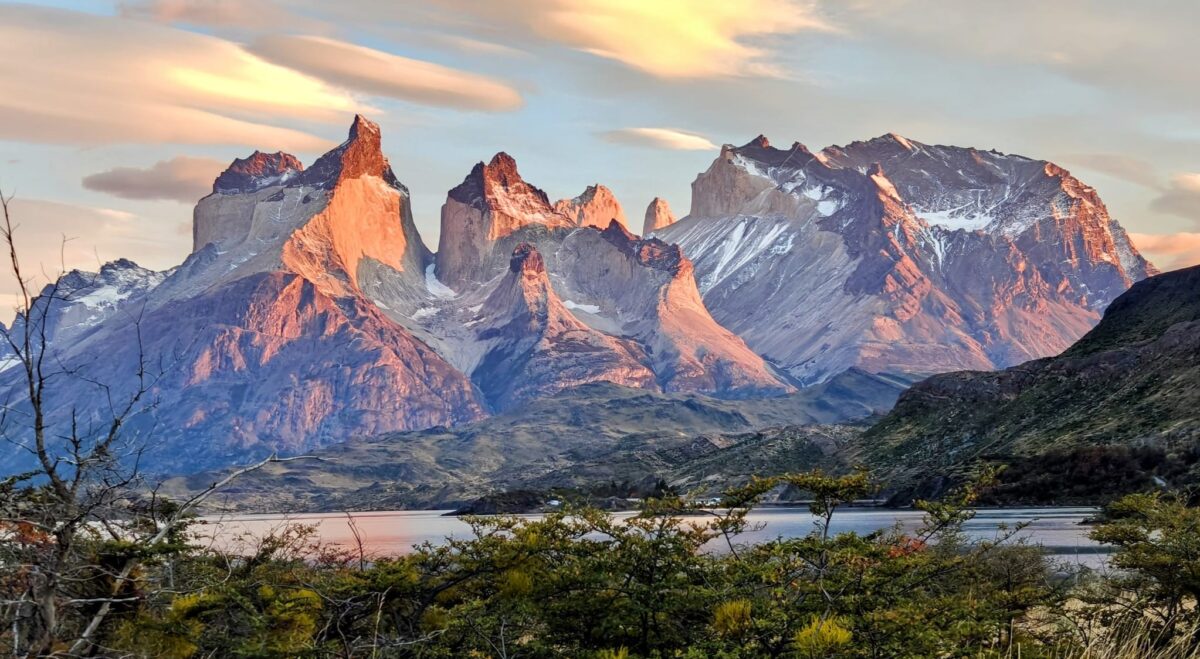
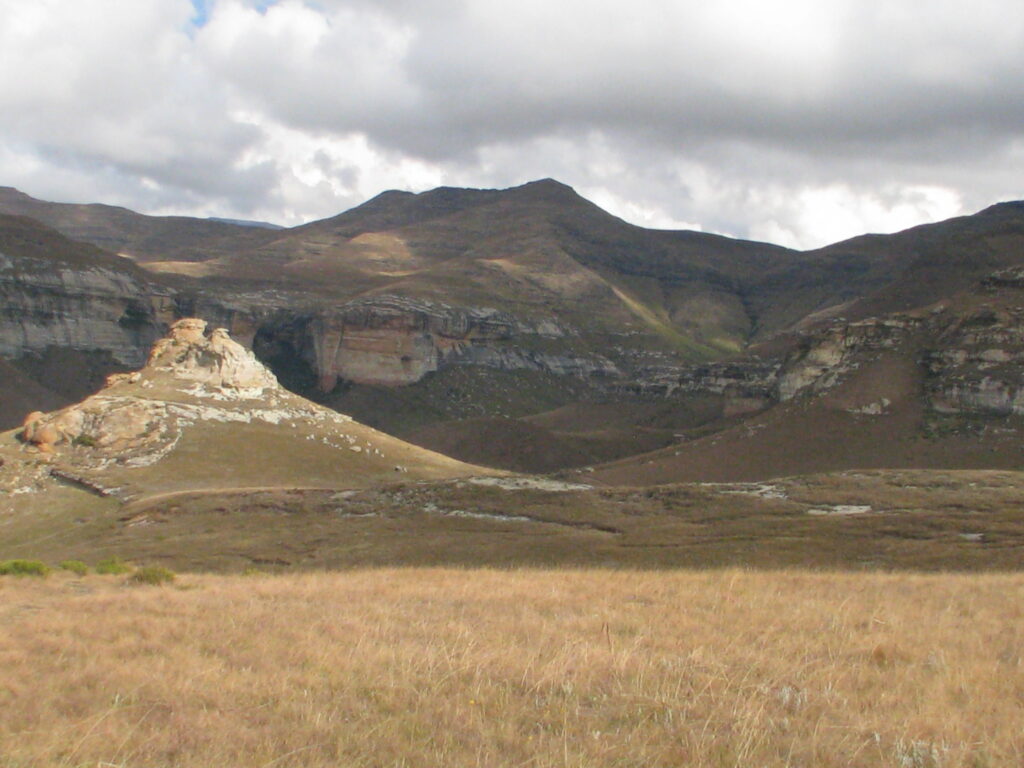
As per my previous post, I arrived at my destination Park last night. I spent today exploring Golden Gate Highlands National Park, located near the town of Bethlehem and on the northern edge of the embedded country of Lesotho. Golden Gate NP (130 sq mi), established in 1963 to protect the sandstone shelters that once served as shelters for the indigenous San people (a.k.a. “Bushman”), lies in the rolling foothills on the northern end of the Maluti-Drakensberg Mountains. The landscape consists mainly of wooded ravines, gullies and highland grasslands (or grassland veld as they call it). The park’s most notable features are its golden, ochre, and orange-hued, deeply eroded sandstone cliffs and outcrops that shine golden-yellow in the setting sun, from which the Park derives its name. I did my best to capture this scene in the following photos:
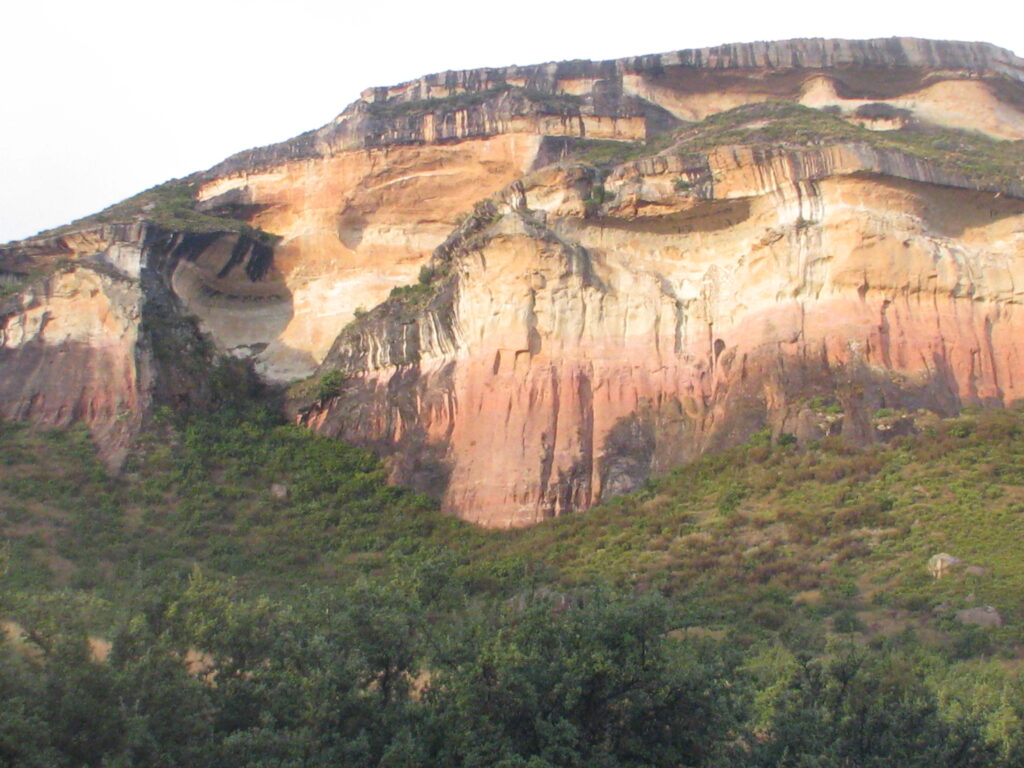
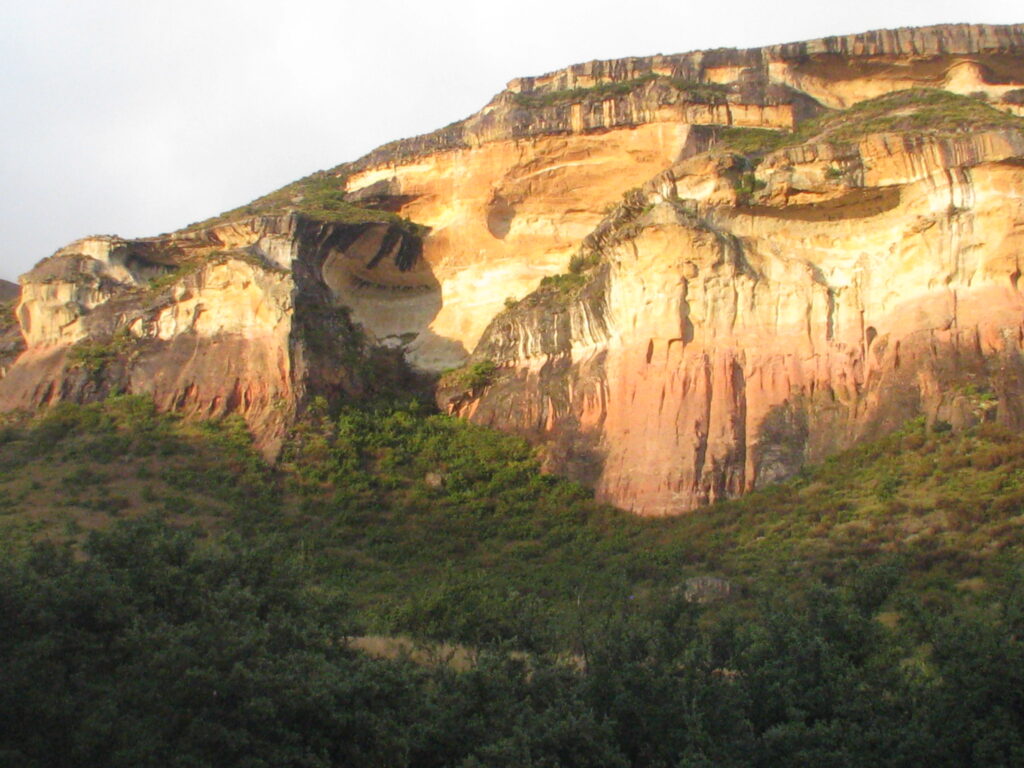

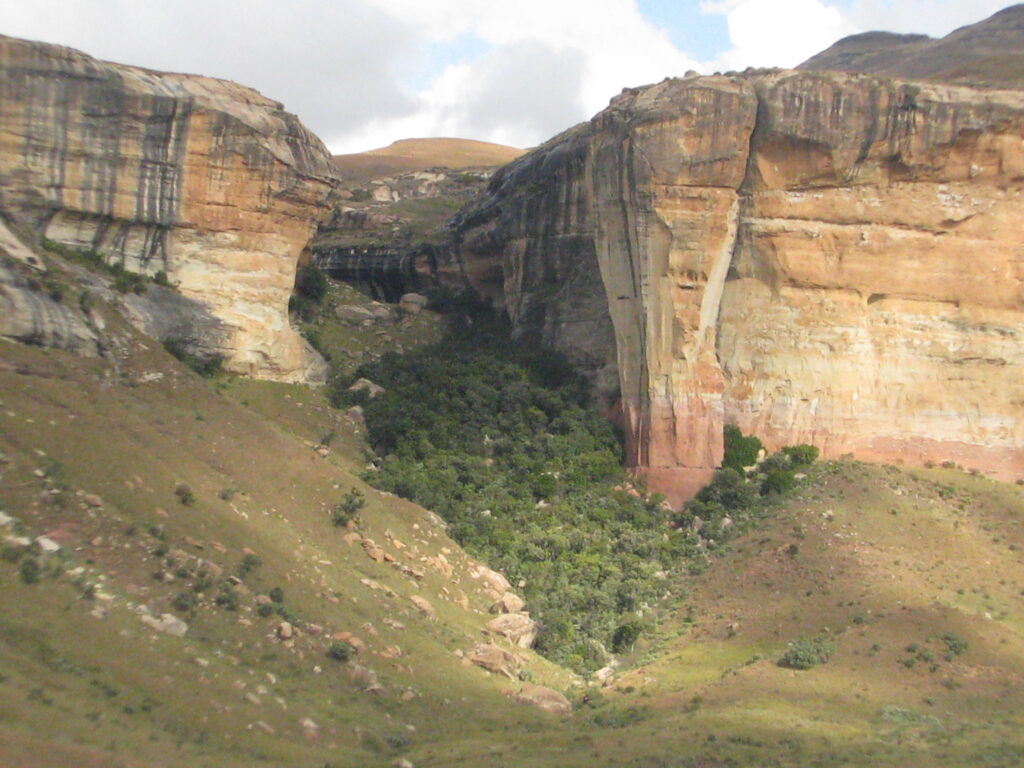
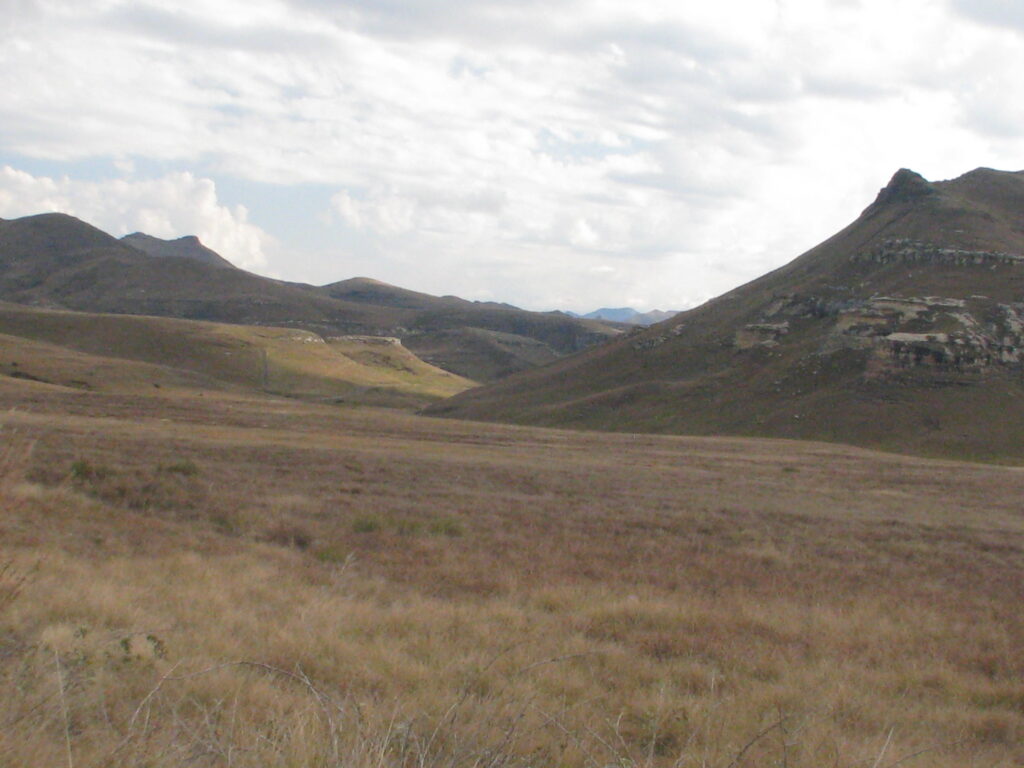
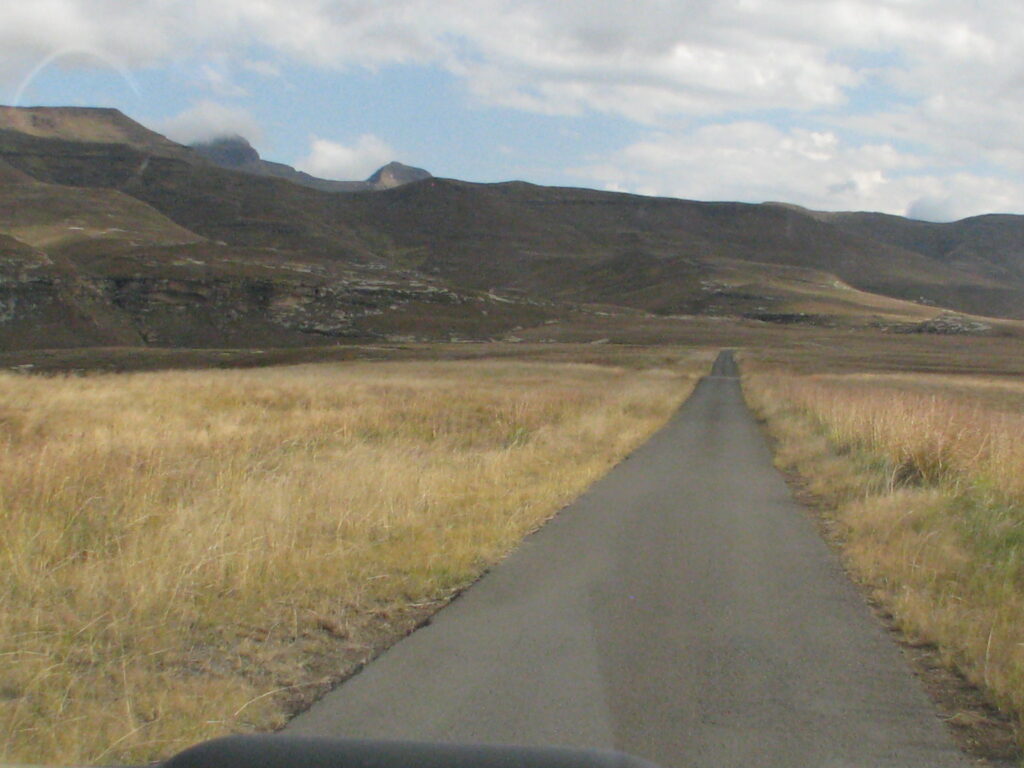
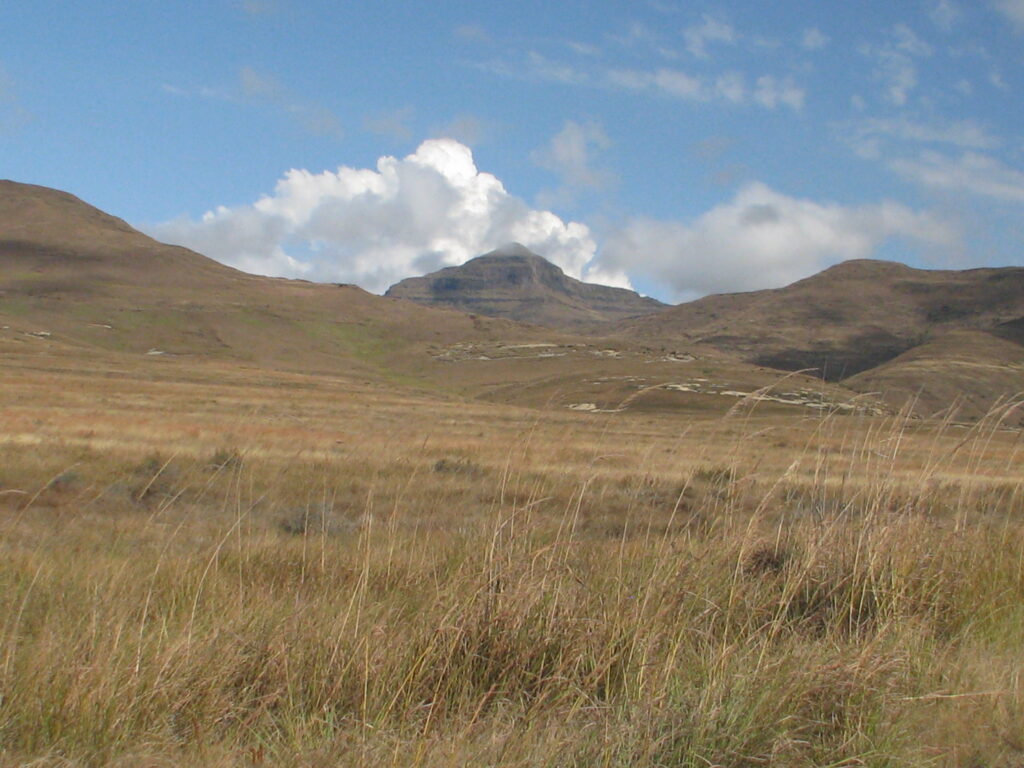
Although the rock cliffs and outcrops are the flagship features of the Park, the Park is actually most important for its conservation of high elevation grassland veld. As this series of photos depict, the mountains and valleys are covered by grassland, with something like 40 different grass species making up the mix. It is truly remarkable to see grasslands extend from the valley bottom up over the tallest mountains, some of which climb over 10,000 ft in elevation.
Another notable feature of the Park is the numerous caves and shelters displaying San rock paintings, which I was not able to see. The San were popularized, you might recall, in the movie “The Gods Must be Crazy”. The San are part of a larger ethnic group of herders (Khoi) and hunter-gatherers (San) in southern Africa known as Khoisan, which as recently as 22,000 years ago apparently constituted the largest group of humans on earth. Unfortunately, like most indigenous groups in Africa and elsewhere, the Khoisan were dispossesed of land and gradually displaced and/or assimilated by more “advanced” cultures – in this case, first by the southward immigration of Bantu-speaking agriculturalists around 2,000 years ago, and eventually by European colonists, primarily Dutch (known as the Boers) beginning in the mid 17th century and finally the British who took over from the Dutch in the early 19th century after a bloody war (known as the Boer war). As with many indigenous peoples, small pox decimated the Khoisan and Bantu after contact with European colonists, and many local populations were exterminated or enslaved by the technologically more advanced European colonists. Interestingly, following the end of Apartheid in 1994, the term “Khoisan” has gradually come to be used as a self-designation by ethnic South Africans as representing the “first nations” of South Africa vis-a-vis the ruling Bantu majority, and there has been an uprising of “Khoisan activism” in recent years, with ardent calls to restore ancestral land claims. I wish them the best of luck in their uphill endeavor.
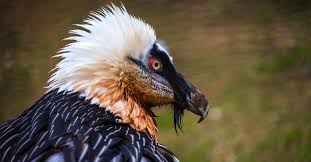
The Park is also notable as one of the last refuges in all of Africa of the rare bearded vulture (also known as the lammergeier and ossifrage) and the southern bald ibis, as well as the rare oribi (a small, slender species of antelope). Alas, I did not see any of these species today despite my efforts, but these was not surprising given how rare they are and the time of year – regardless, it’s nice to know they are here. I just have to show you a picture of the head of the bearded vulture that I borrowed from the internet – so cool:
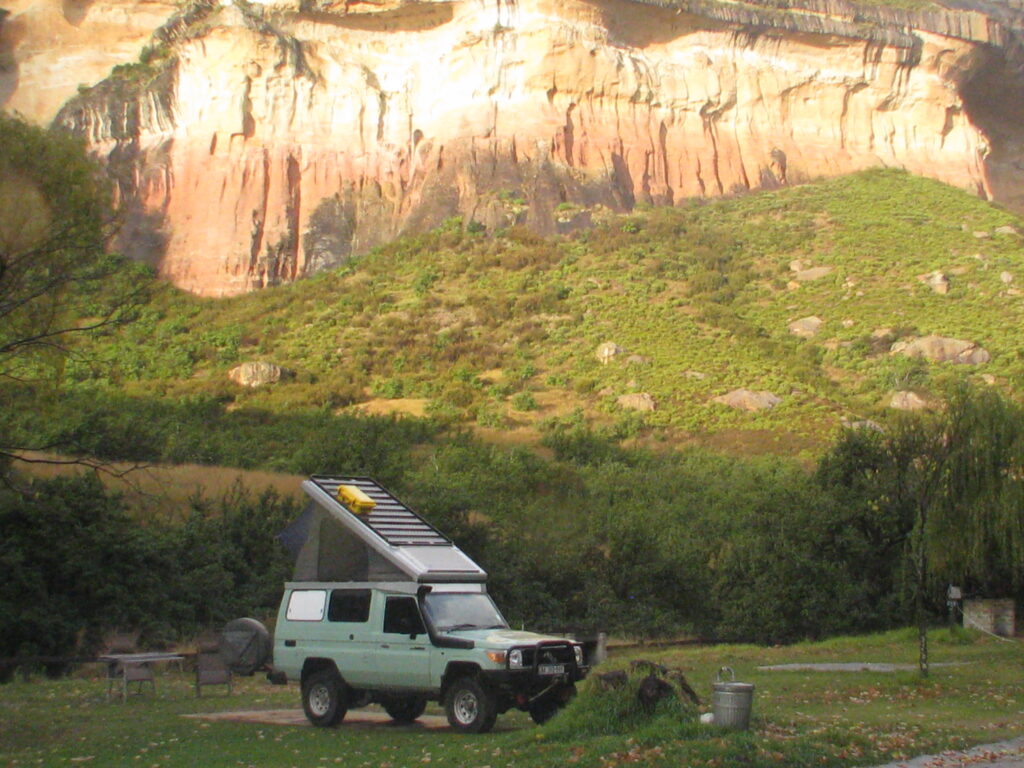
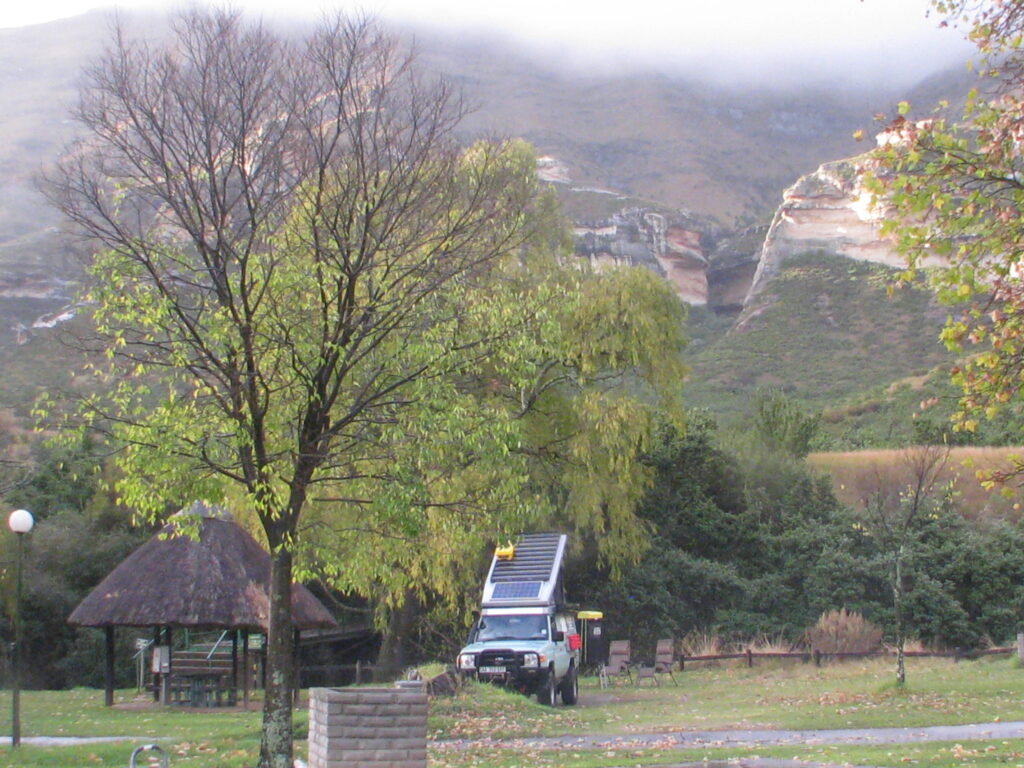
My public campsite is Glen Reenen rest camp in the Park. It’s a pretty awesome setting as I hope these photos capture:
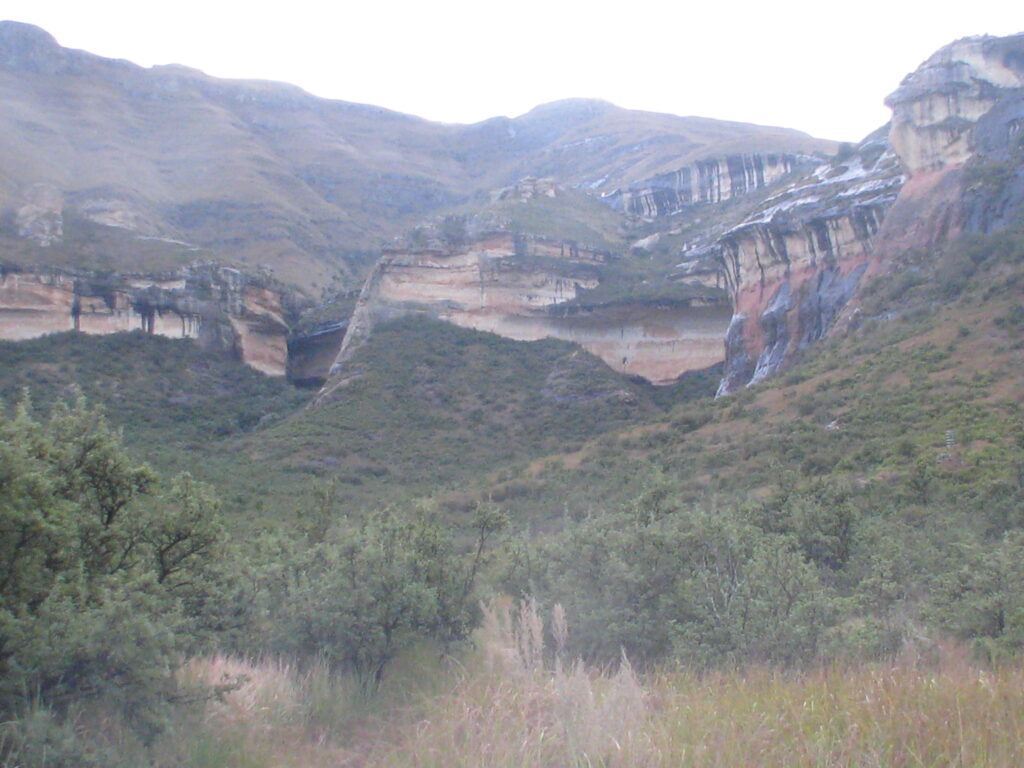
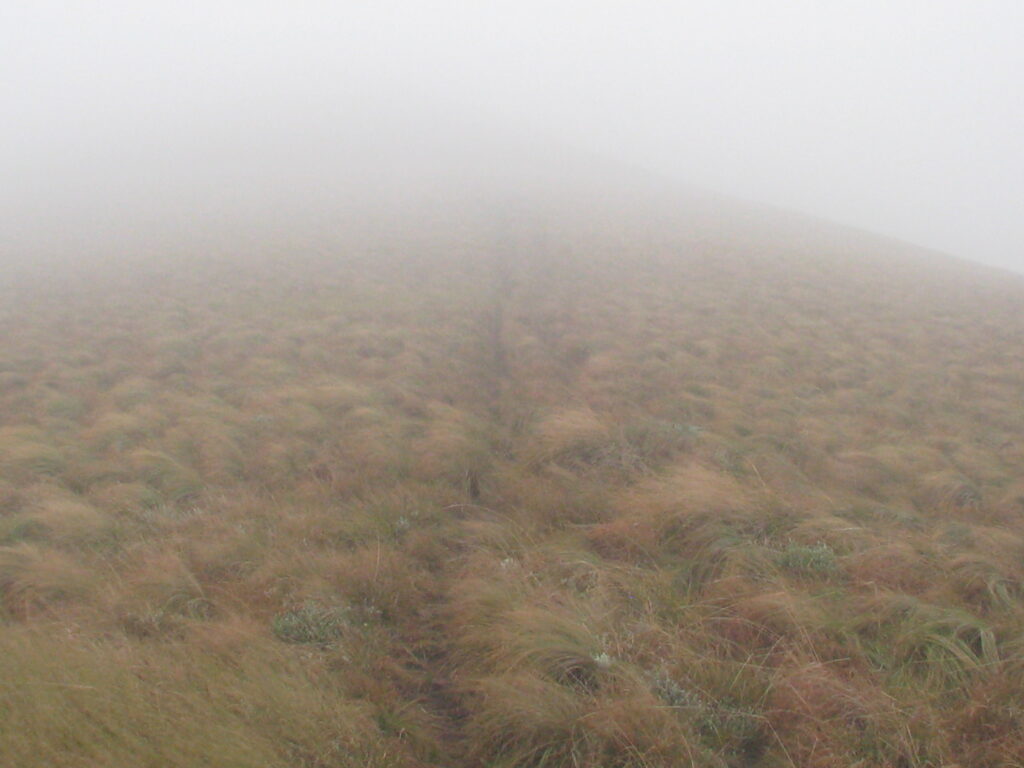
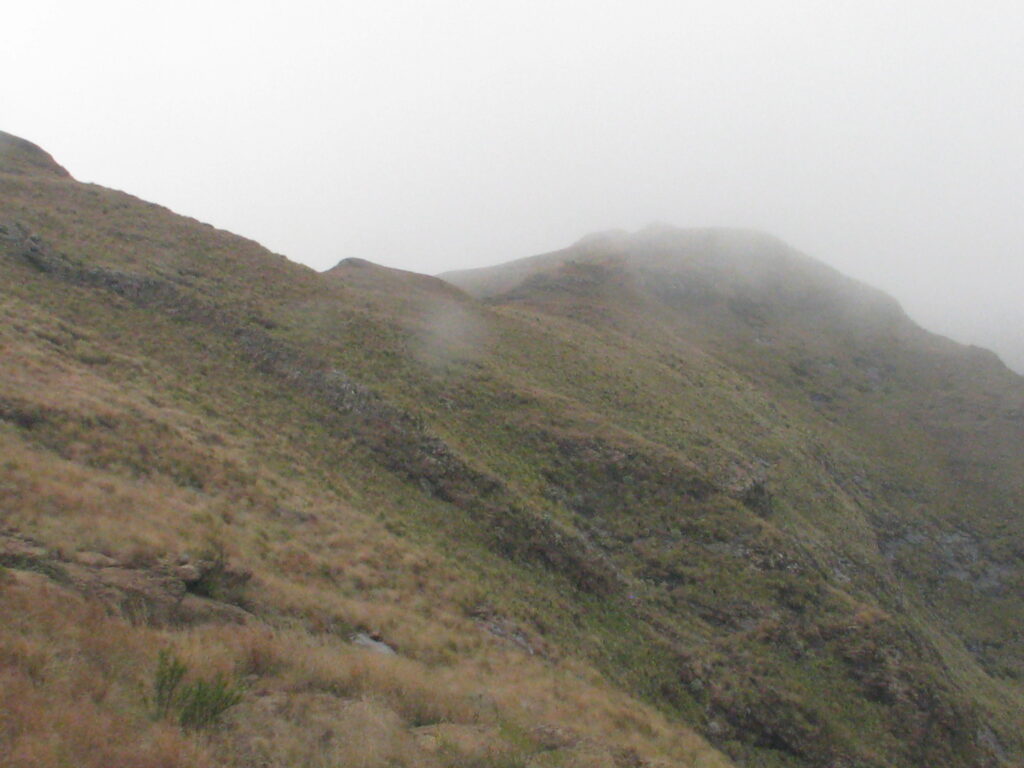
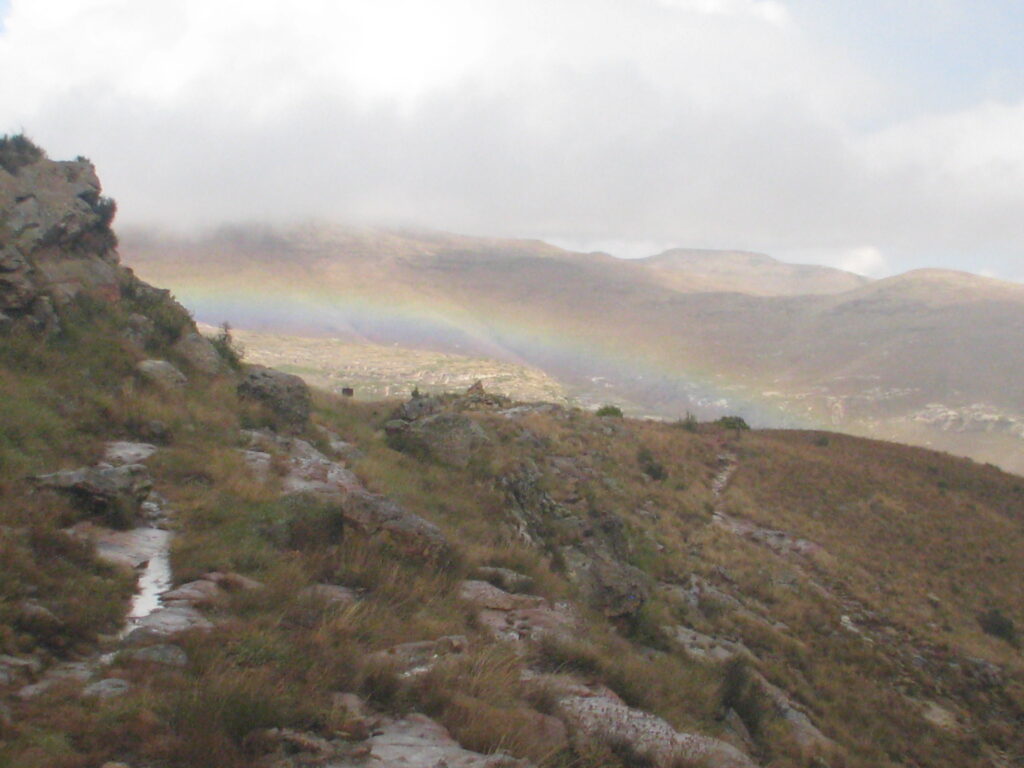
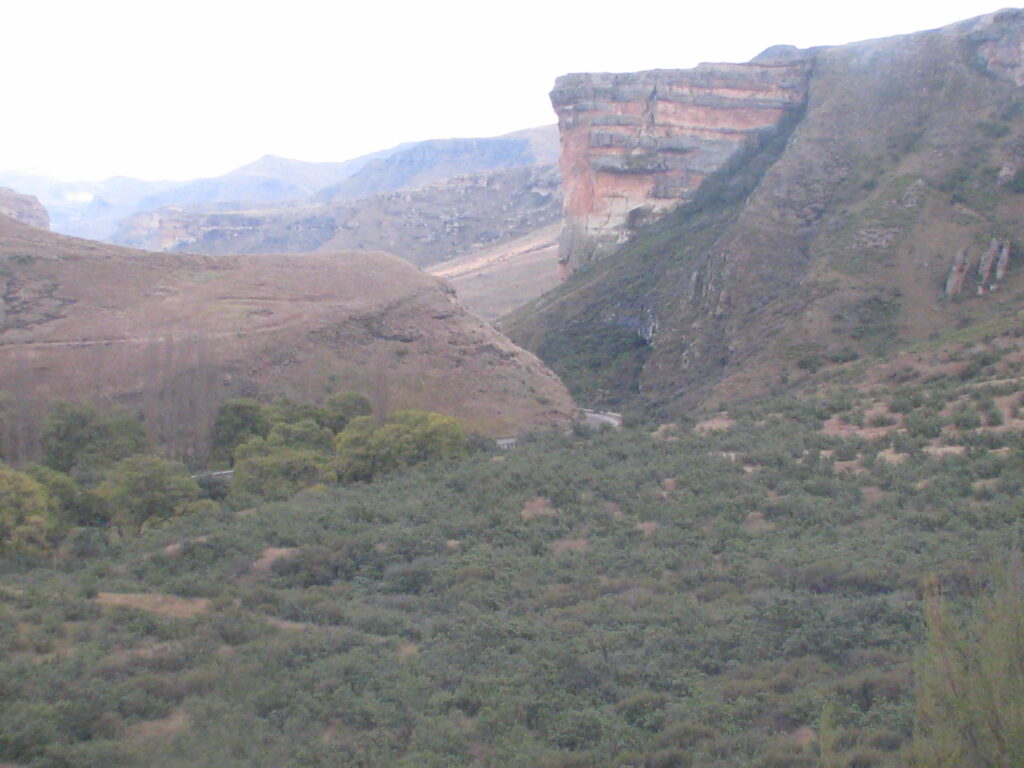
I know this post is getting long, but I have to share some details and photos of the 4 hour hike I did this morning becuase it was challenging and rewarding on many levels. Basically I climbed 3,000 ft up above the escarpment to the high ridge above the campsite and then traversed the ridge for a couple of miles and then descended to below the escarpment and traverse the base of it back to the beginning. I started in beautiful sunny weather with a few broken clouds but by the time I got above the escarpment the wind was howling and I was engulfed in rain clouds. Visibility was very poor at times, but then it would break a little and I would get spectacular views only to be socked in again a minute later. I was the only person on the trail – sublime! Here are some shots of the hike that make it look more tame than it actually was – honest. Note, the first picture shows the central part of the ridge I traversed way up above the campsite:

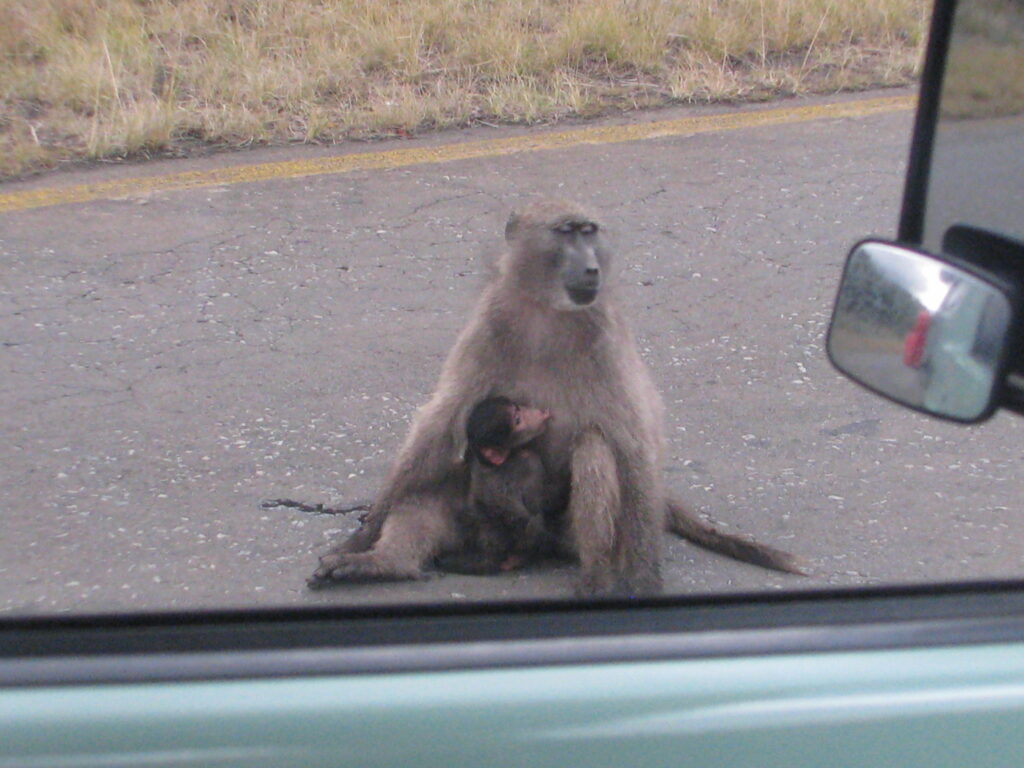
OK, enough is enough, it’s time for, you guessed it, species of the day. Today I am dedicating this choice to my granddaughter Skylar, and she will know why is just a second. The species is the Chacma Baboon, which most will be somewhat familiar with. While these guys can be a real nuisance around the campsite – stealing anything not tied down or that weighs less than about 50 pounds, edible or not – they have a remarkable social structure. They usually live in troops that vary is size, but usually have dozens of individuals, including a dominant male, several subordinate males, lots of females and young ones. And it is to this last item that I bring your attention Skylar. The picture below is of a mommy and baby! Indeed, this little guy couldn’t be more than a few days old. Mom was so intent on letting her little baby nurse that she wouldn’t even move off the road, forcing me and other vehicles to skirt around her. Now that’s a nurturing mommy!
Hope you liked that one Skylar. Tomorrow, on the road again. Cheers.


