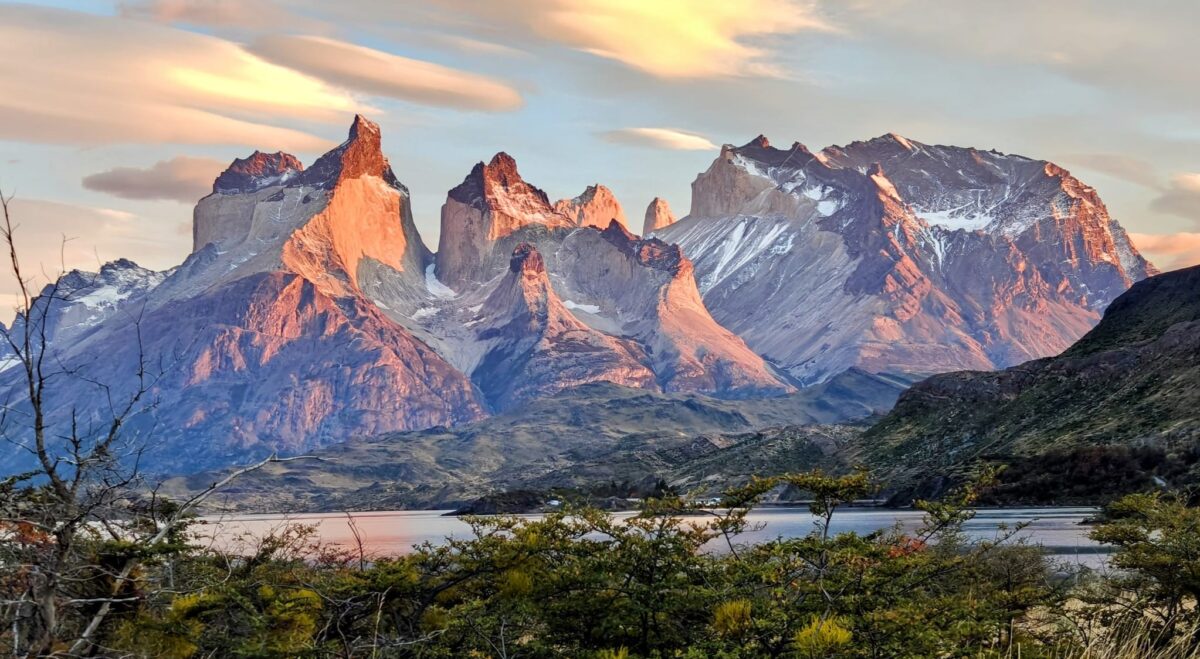
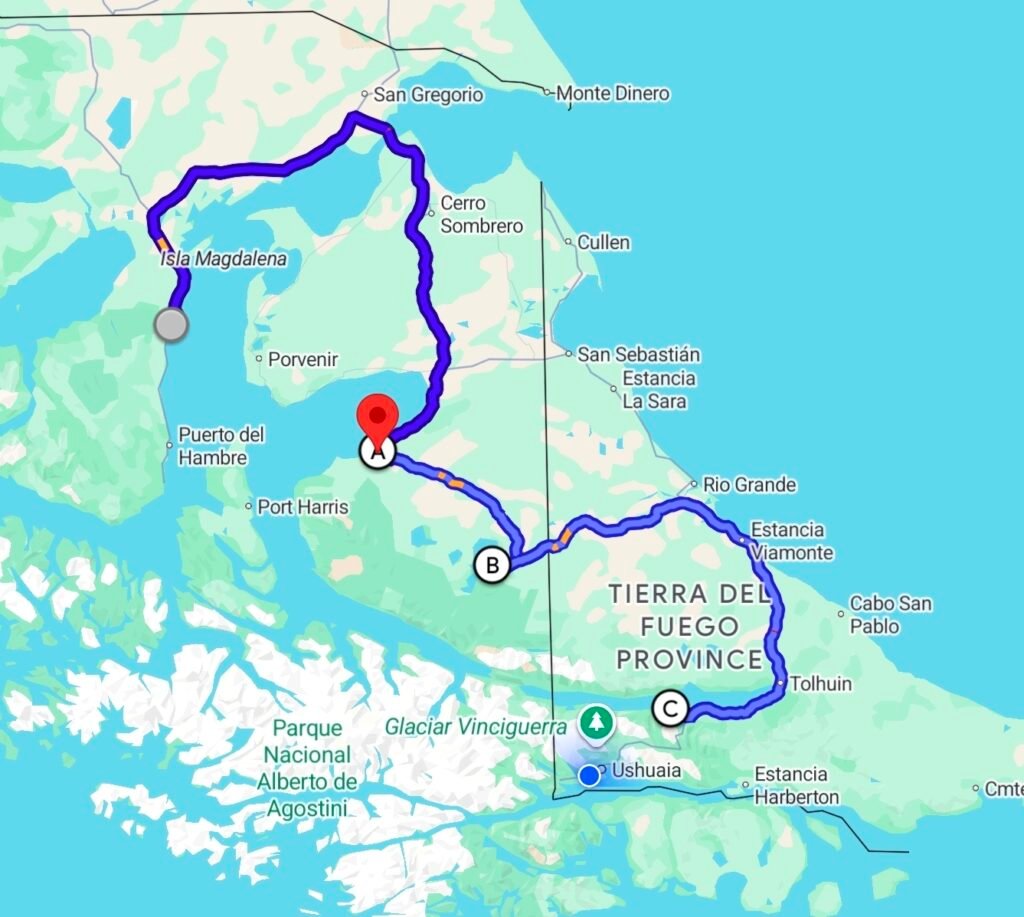
We began our overland journey from Punta Arenas by crossing the Strait of Magellan to the archipelago of Tierra del Fuego. Our first stop was the King Penguin colony at Parque Pinguino Rey, a protected area located in Bahia not far from the town of Cameron (see A on the map below).
King penguins are the second largest penguin species in the world (28-39 inches tall and 21-40 pounds), second only to Emperor penguins, and are distributed circumpolar in the Antarctic, with colonies reaching north to Tierra del Fuego and the Falkland Islands, among other locations. Most colonies are located on remote and isolated islands, making them difficult to visit, but the colony at Parque Pinguino Rey is readily accessible, so we deemed it a must see destination. Unfortunately, we arrived late (due to frustrating camper delays which I won’t rant about yet) and weren’t able to hike into the sanctuary and get close to the penguins, so we had to be satisfied with seeing them from afar with binoculars. But just so you see what we wanted to see up close, here’s a picture of King Penguins from the internet:
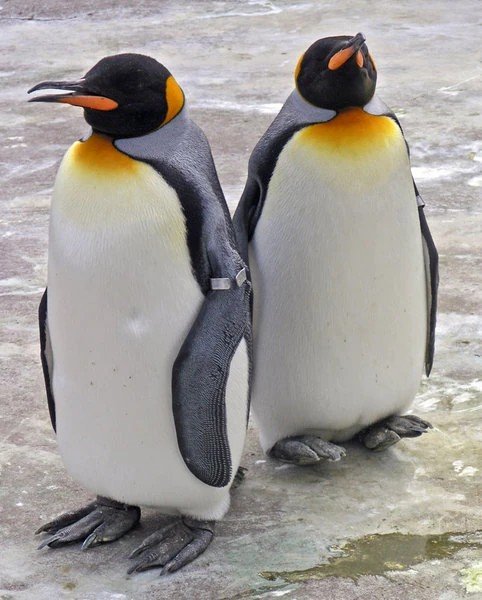
Here are just a few interesting factoids about King penguins. They mainly eat small fish, squid, and krill. Their main predators as adults are leopard seals and orcas. On foraging trips, they repeatedly dive to over 300 ft, and have been recorded at depths greater than 1,000 feet. They have a long reproductive cycle of 14 months and produce only a single egg with each breeding cycle, which means they can only raise 2 chicks every 3 years. Not surprisingly, this species was exploited commercially in the past for its blubber, oil, meat and feathers, but thankfully today it is fully protected under the IUCN, with a total population size estimated at over 2 million.
Although we were somewhat unsuccessful at the King Penguin colony, we were here to explore the landscape of Tierra del Fuego. Tierra del Fuego (“Land of Fire”, the name given to the area by Magellan because of the numerous fires from the indigenous people he saw along the coastline ), as I have previously noted, is actually an archipelago consisting of many islands. Our journey covers only the main island of Isla Grande de Tierra del Fuego, with an area of ~28,000 square miles. The western two-thirds is part of Chile, and the eastern part is part of Argentina. The southernmost extent of the archipelago, Cape Horn, lies just north of 56 degrees south, which is roughly the same distance south of the equator as the Alaskan peninsular and Scotland are north of the equator.
The indigenous people of Tierra del Fuego the were mostly wiped out by the colonialists during the late 1800s which was spurred on by the discovery of placer gold in the streams. Today, oil extraction, sheep farming, and tourism are what drives the local economy.
Our first night was spent camping in a quaint little campground in the small sheep-farming town of Cameron (see A on the map above). Not much to report here other than to say it was pleasant.
Our drive from Cameron to our next destination wild campsite on Lago Blanco (see B on the map above) gave us a great introduction to the mainstay livelihood of the rural residents of this part of Tierra del Fuego, namely, sheep farming. You haven’t witnessed sheep herds until you visit this place. There are probably 5 to 10 thousand sheep for every human in this landscape. The grasslands are vast and the sheep appear as, what John Muir called them, “range maggots”. Sheppards on horseback and sheep in the tens of thousands. Truly a site to see if you don’t mind livestock ranching on a grand scale. However, I must say the rangeland didn’t look too overgrazed or damaged by the vast sheep herds. Here’s a couple of photos to inspire your imagination on the life of sheep farmer in Tierra del Fuego (i.e., a lonely existence, unless you like sheep as company):
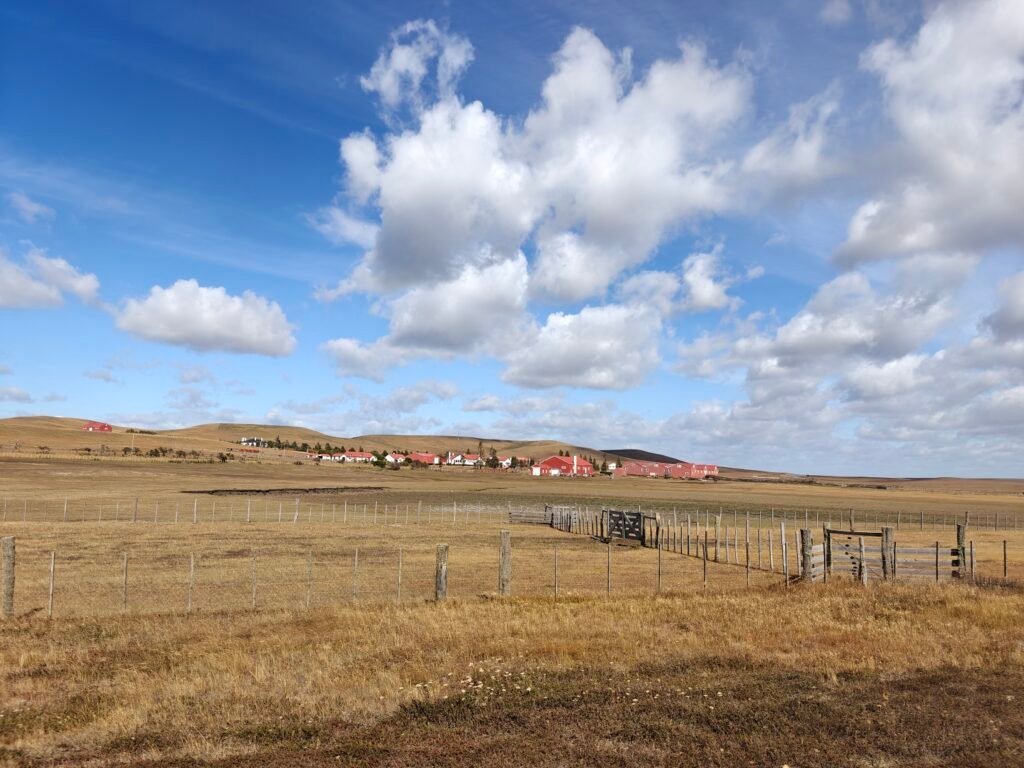
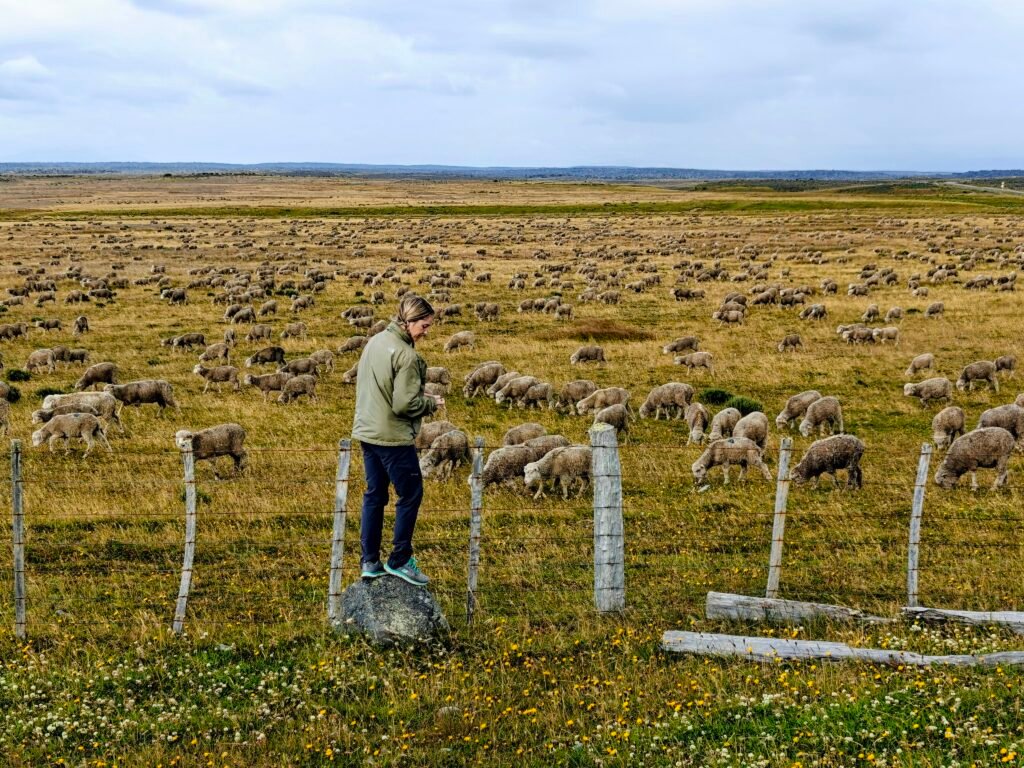
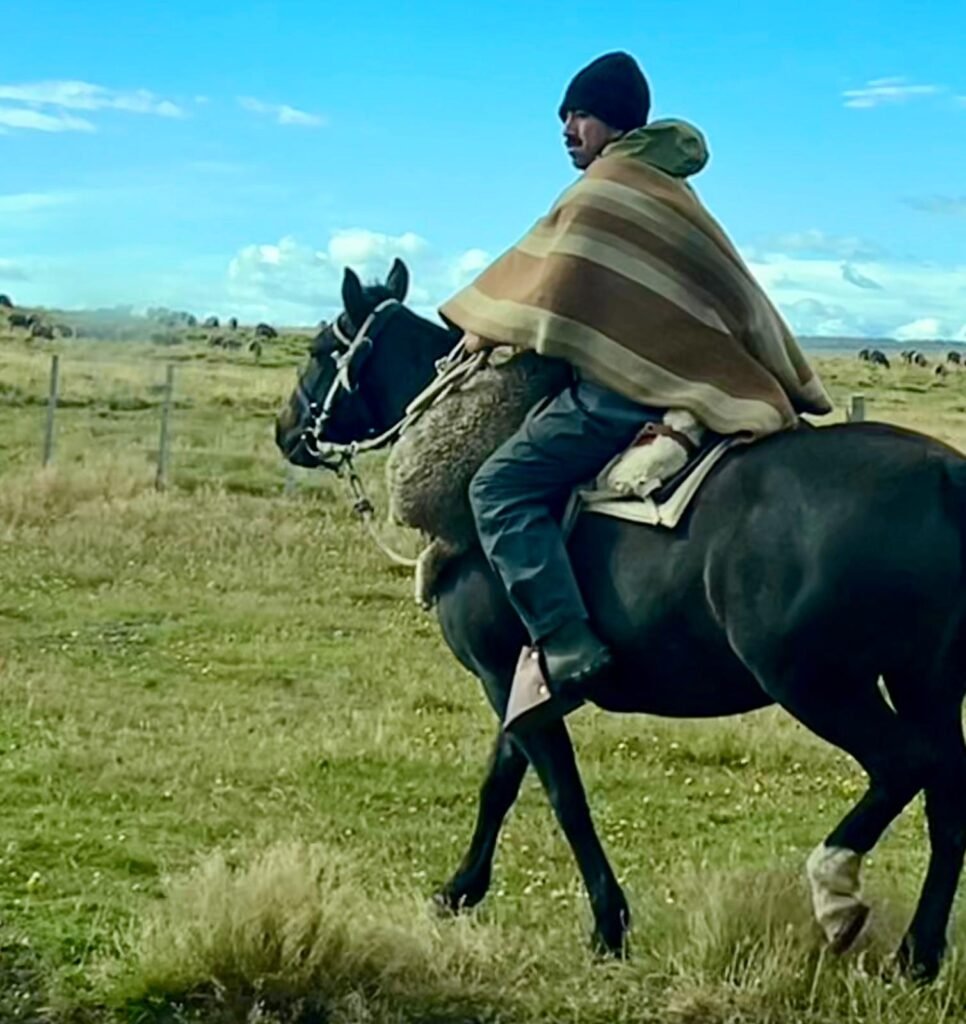
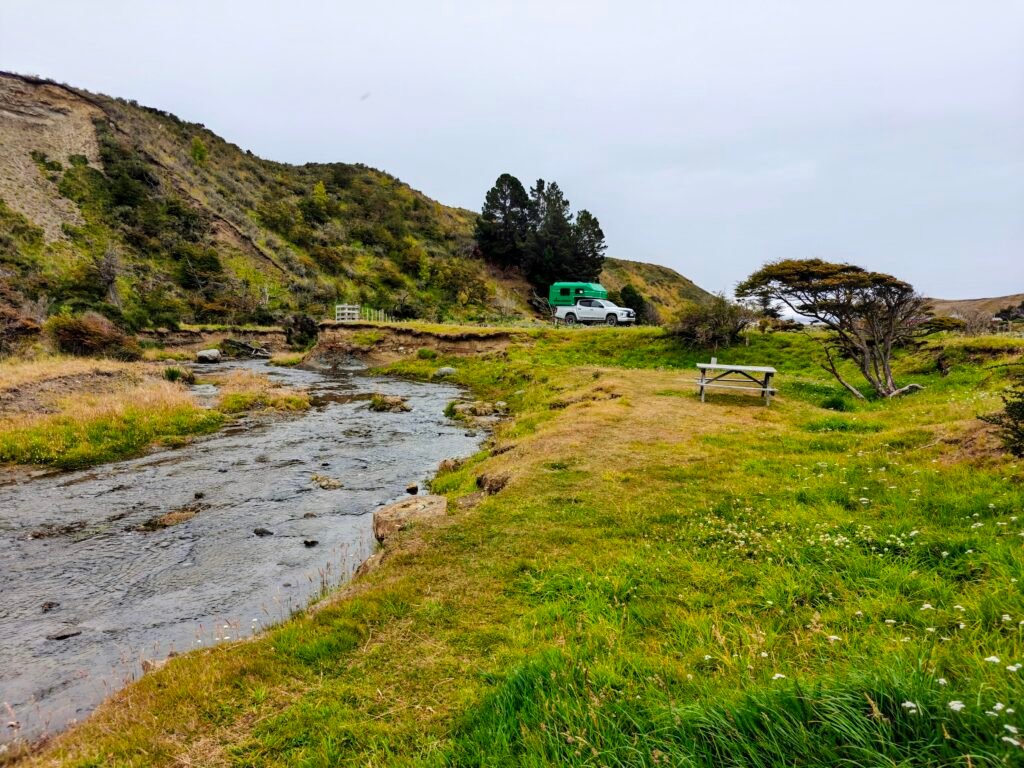
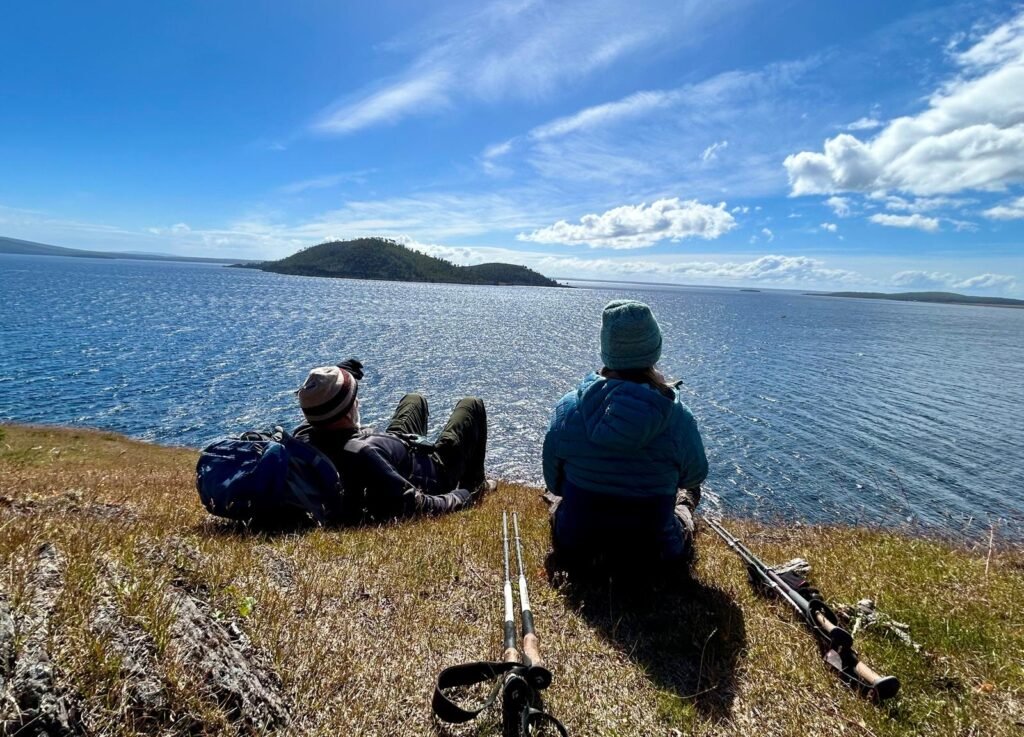
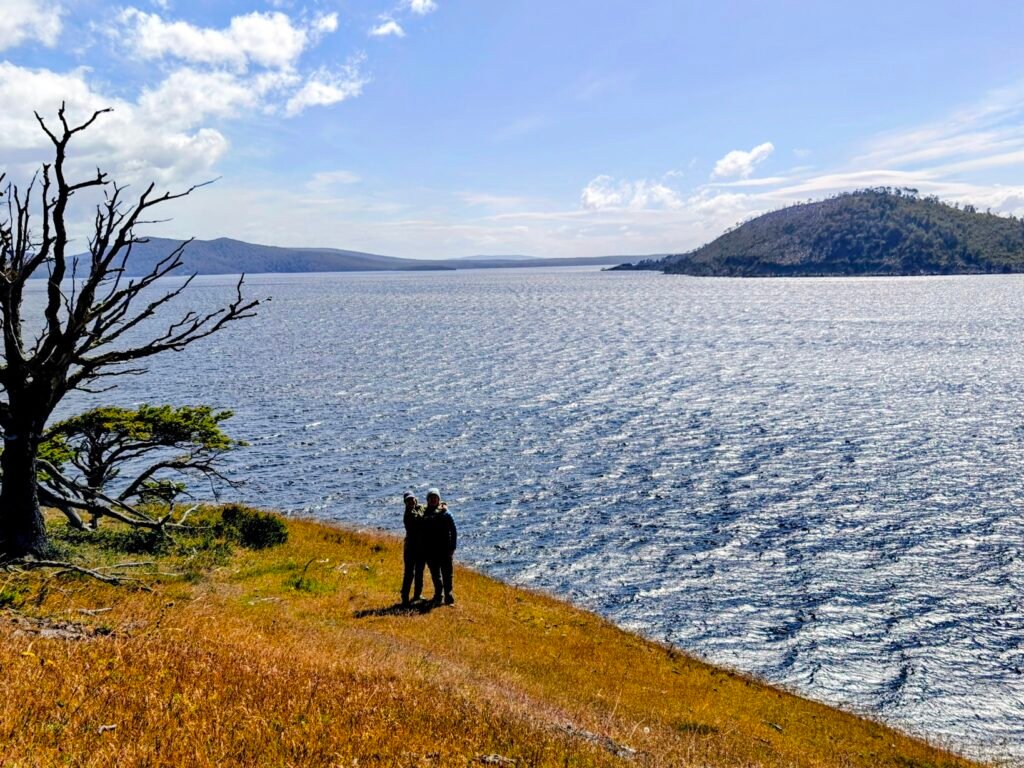
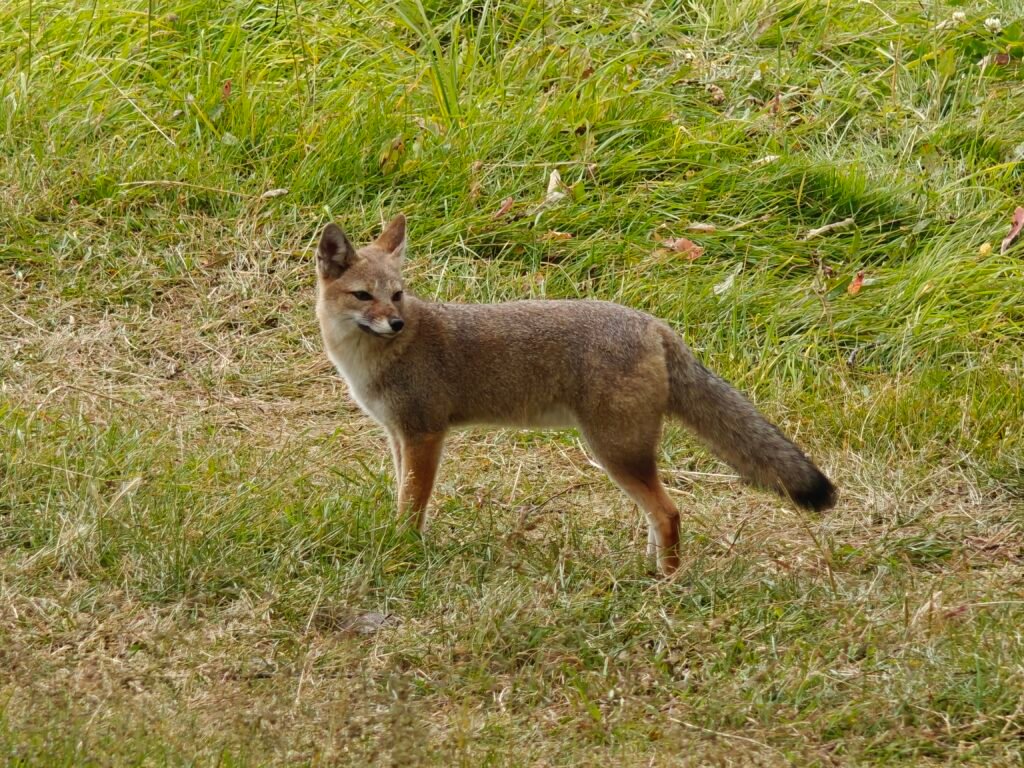
Our semi-wild campsite on Lago Blanco, a beautiful freshwater lake in the interior of Tierra del Fuego, was sweet. The setting was beautiful as the lake was surrounded by mountains. We also had a nice visit to our campsite by a Patagonian fox, a threatened subspecies of the South American Grey Fox. Importantly, we had the opportunity to stretch our legs on a few-hour hike along the lakeshore. Here’s some photos:
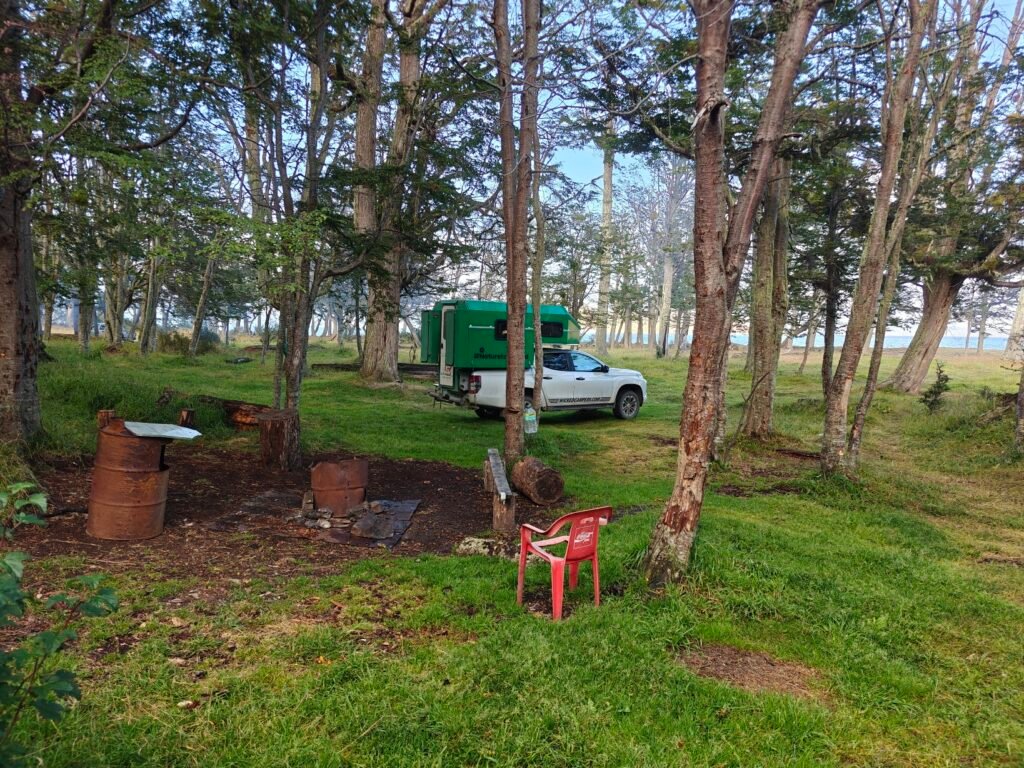
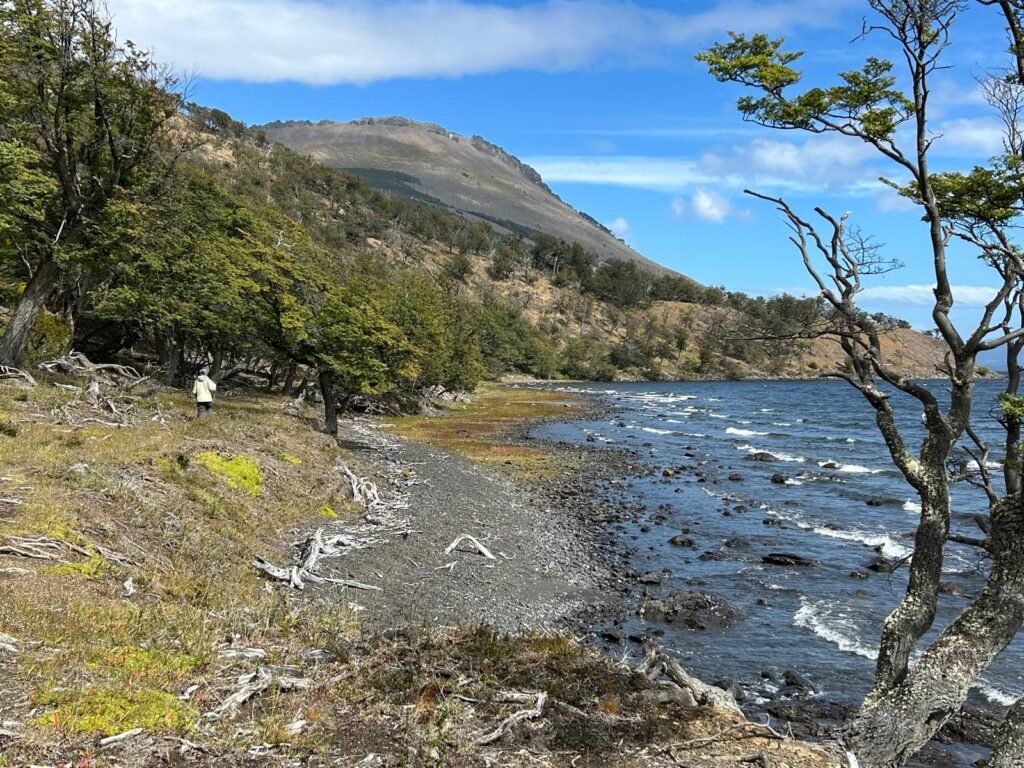
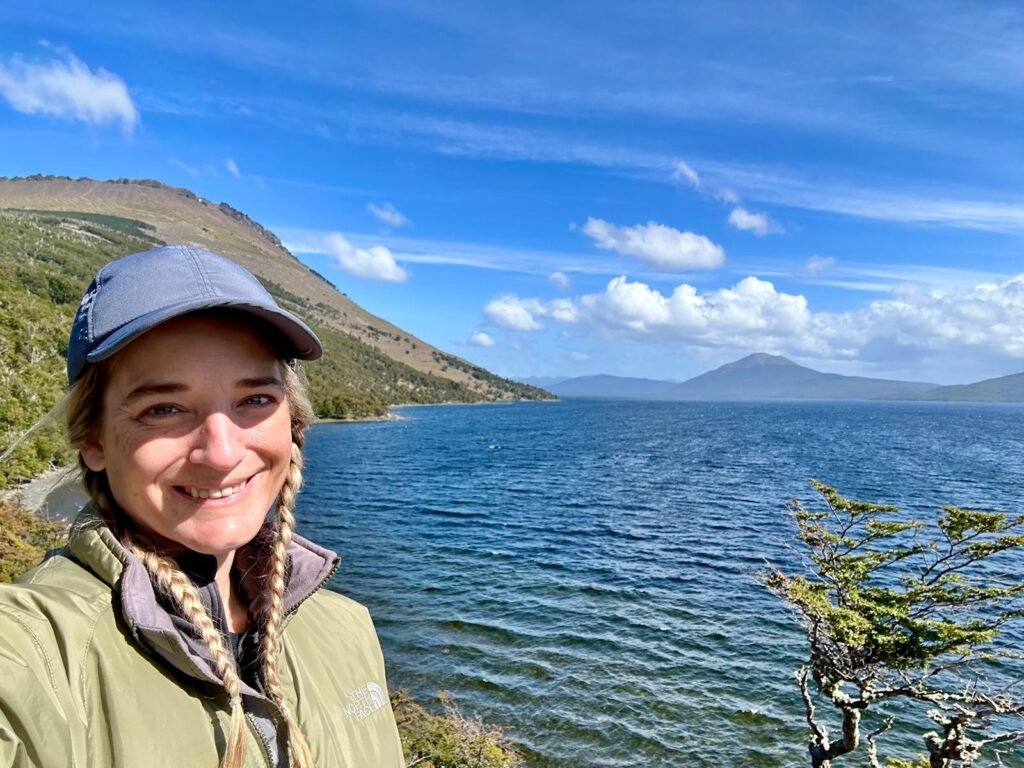
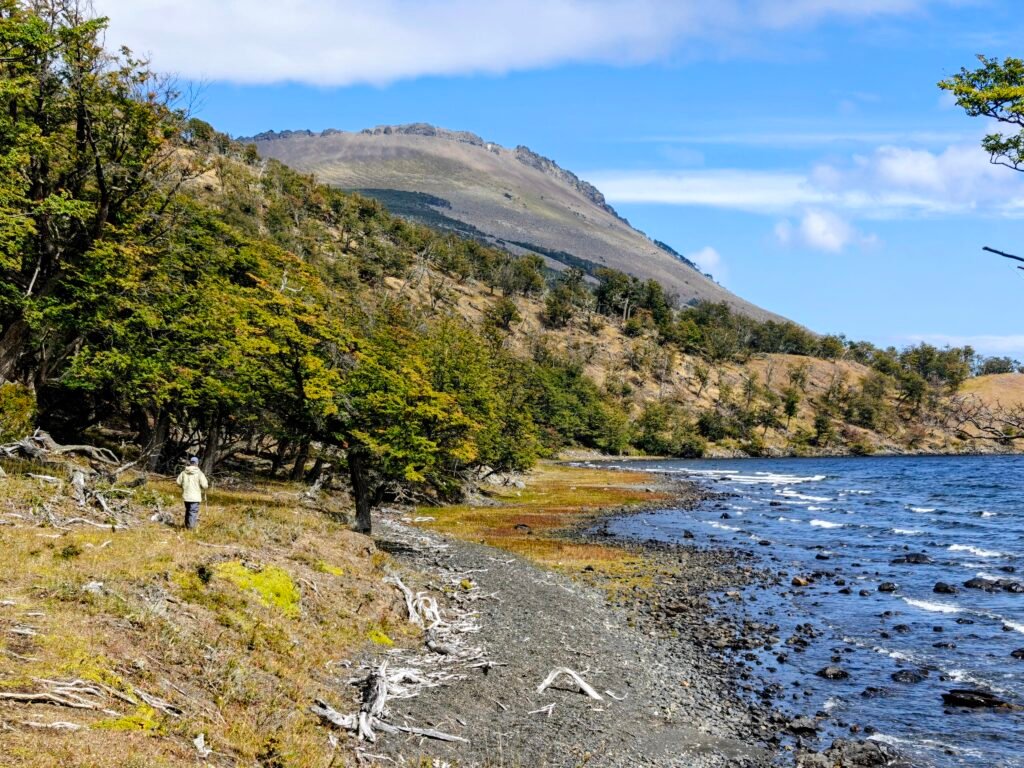
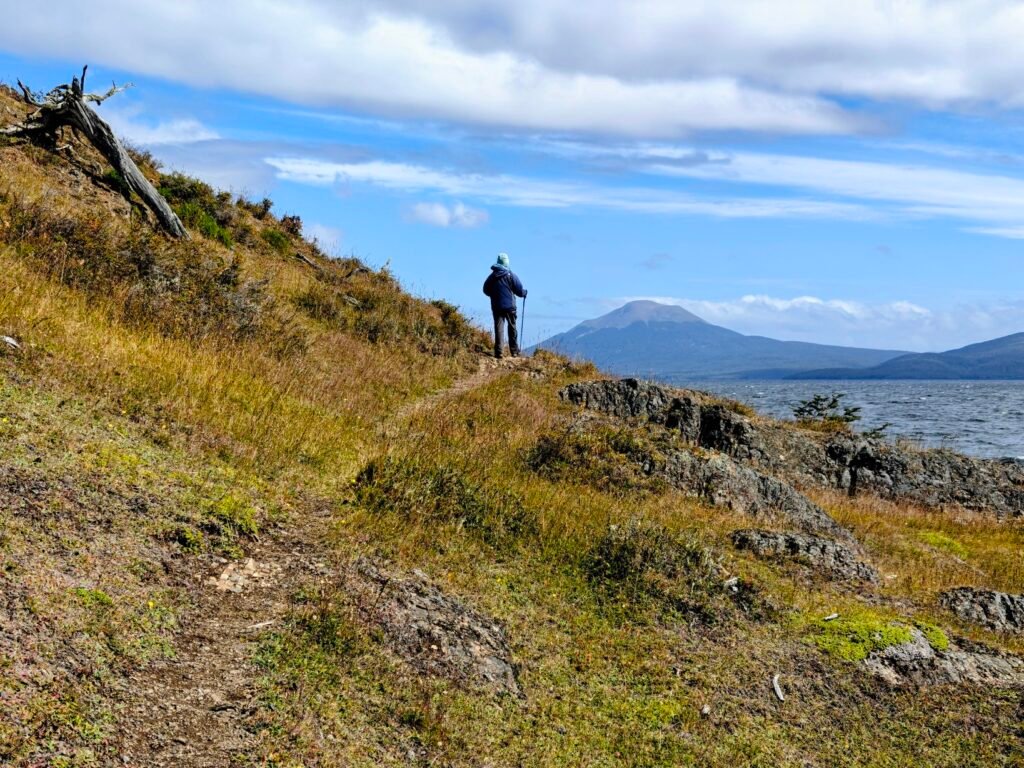
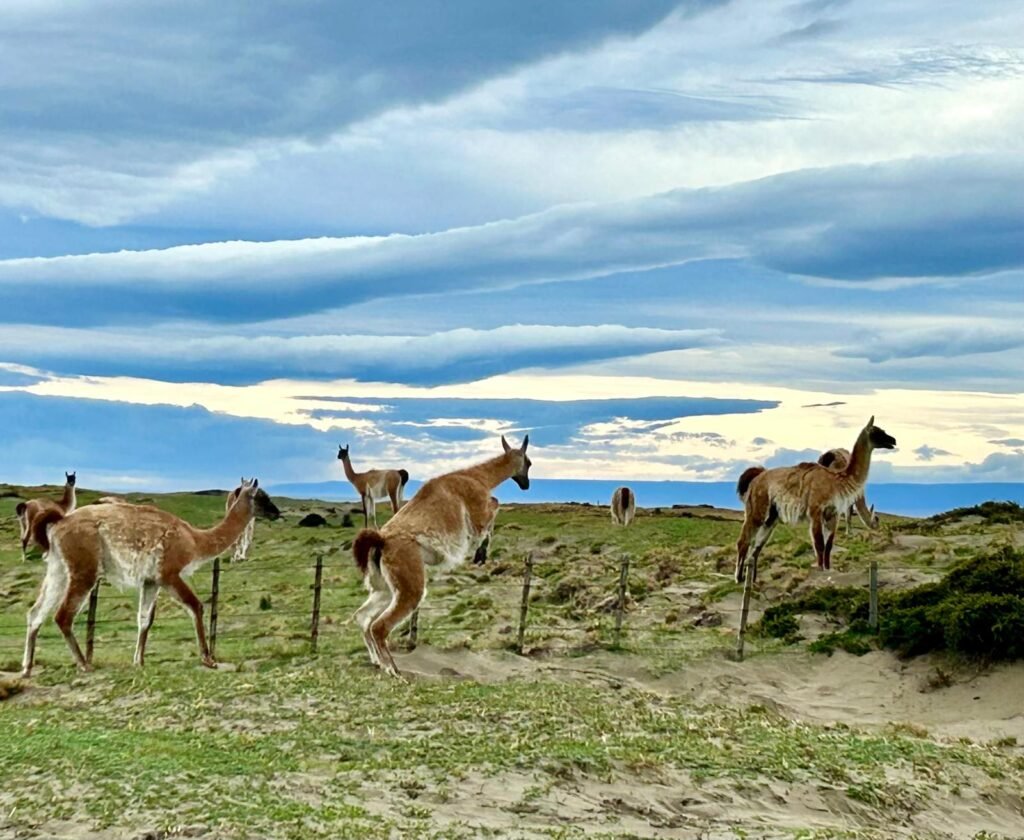
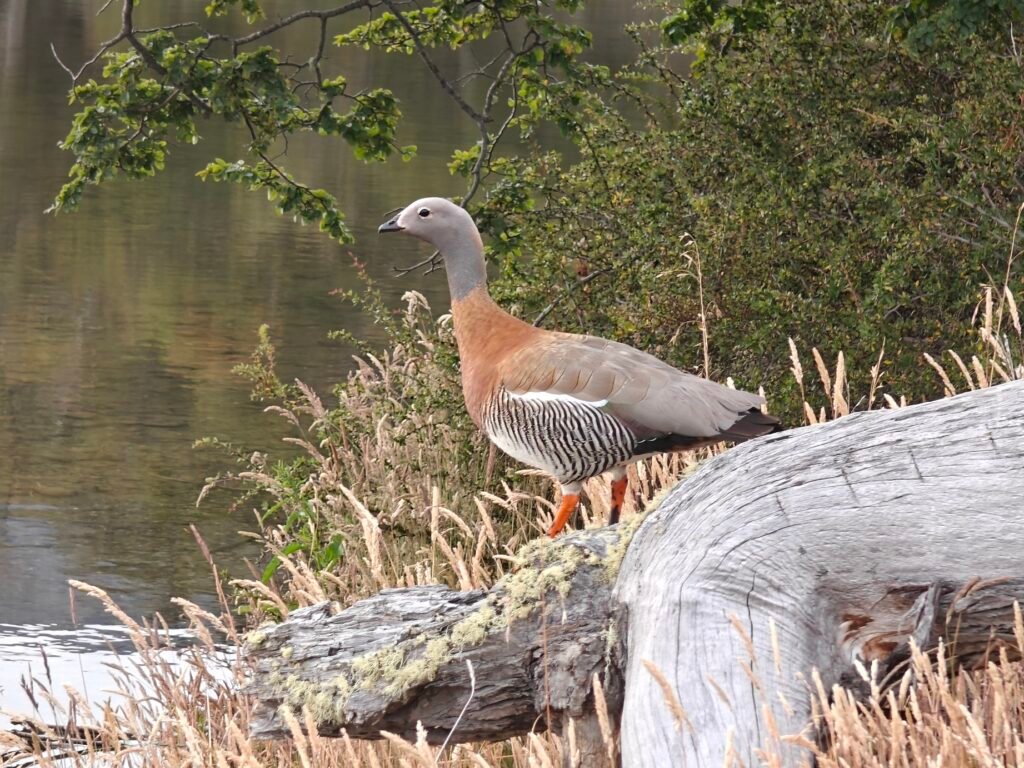
I should also note the abundance of Guanacos – close relative of the Alpaca – along the route. Last year Nancy and believed ourselves lucky when we spotted a few of these beautiful creatures en route to Torres del Paine, but here we are inundated with Guanacos at every turn. They are in the fields by the dozens and along the roadside edges everywhere, making driving somewhat hazardous. Fortunately, they mostly seem wise to the hazards of challenging vehicles or darting across in front of the oncoming vehicles. Neverthess, we saw more than a few roadside carcasses. I should note that while we find Guanacos beautiful creatures and love seeing them, the sheep ranchers view them as pests and call them “a plague on the land” – not too surprising coming from livestock ranchers, when anything competing with resources on the land is viewed as something to do away with – argh!
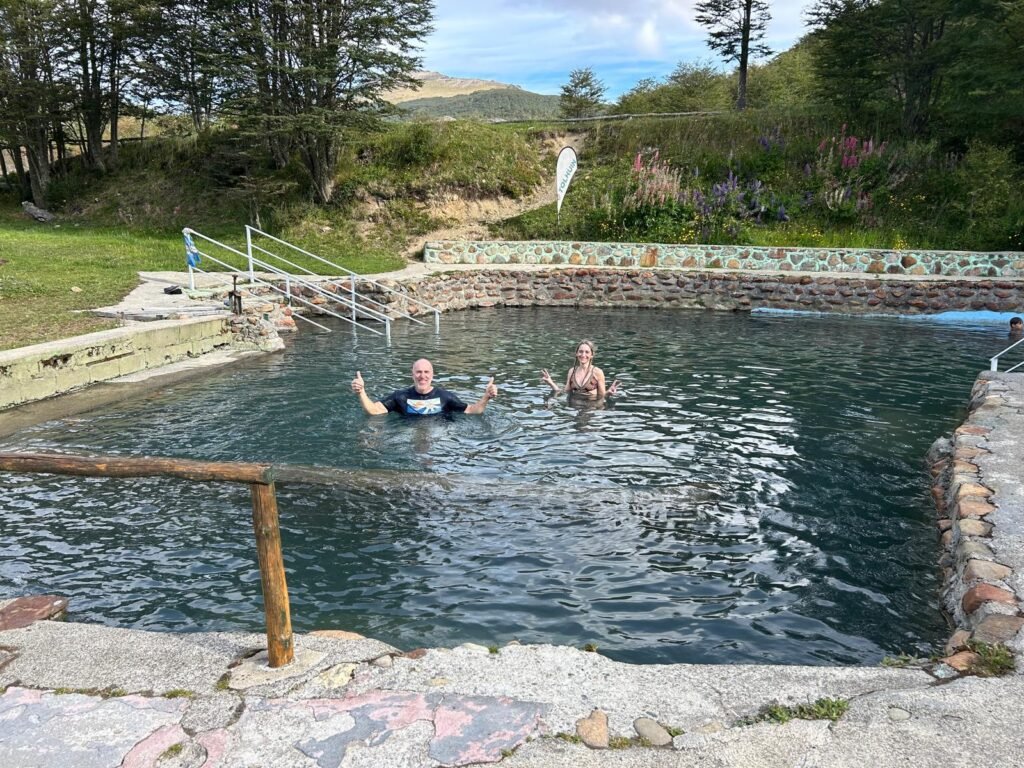
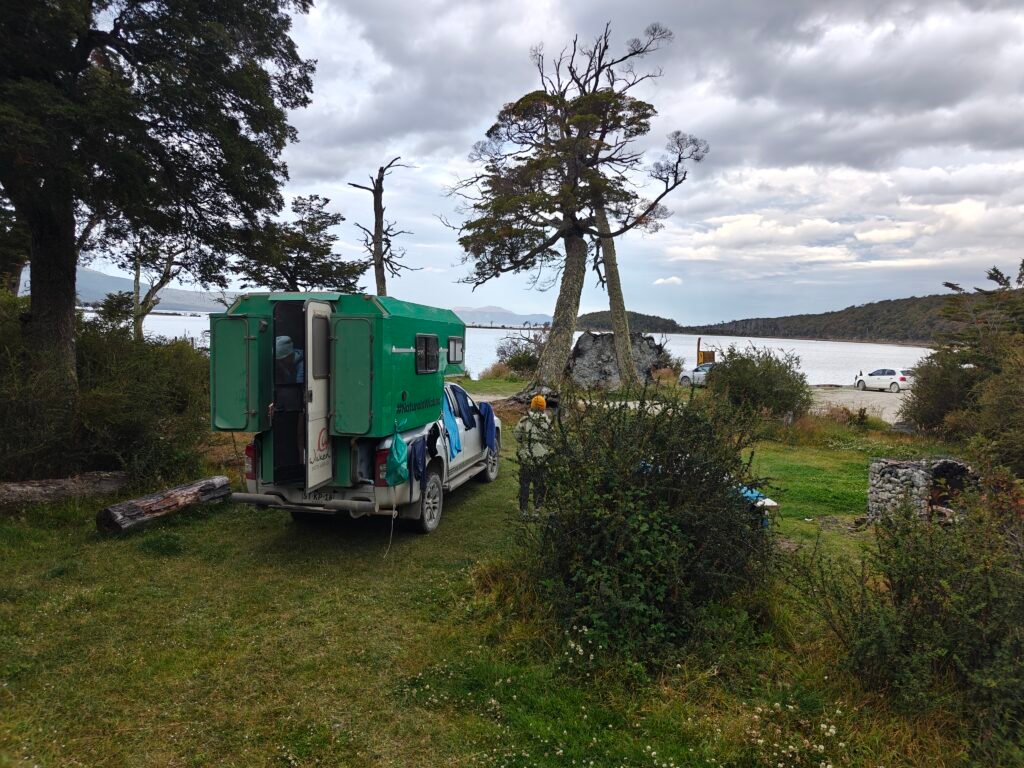
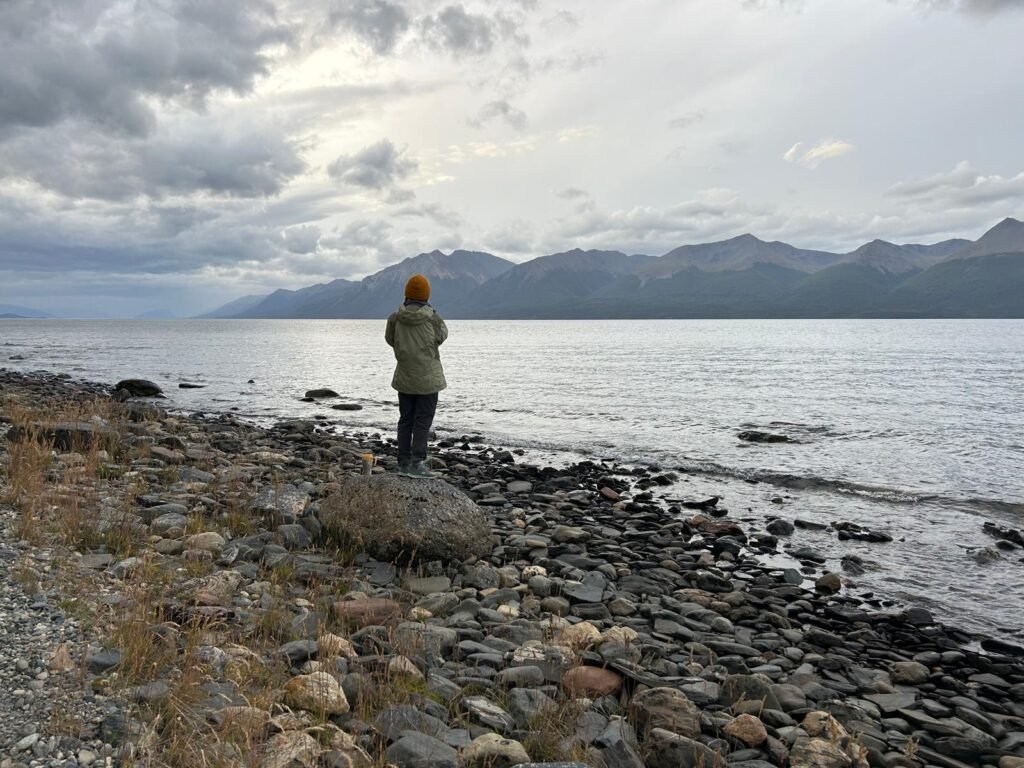
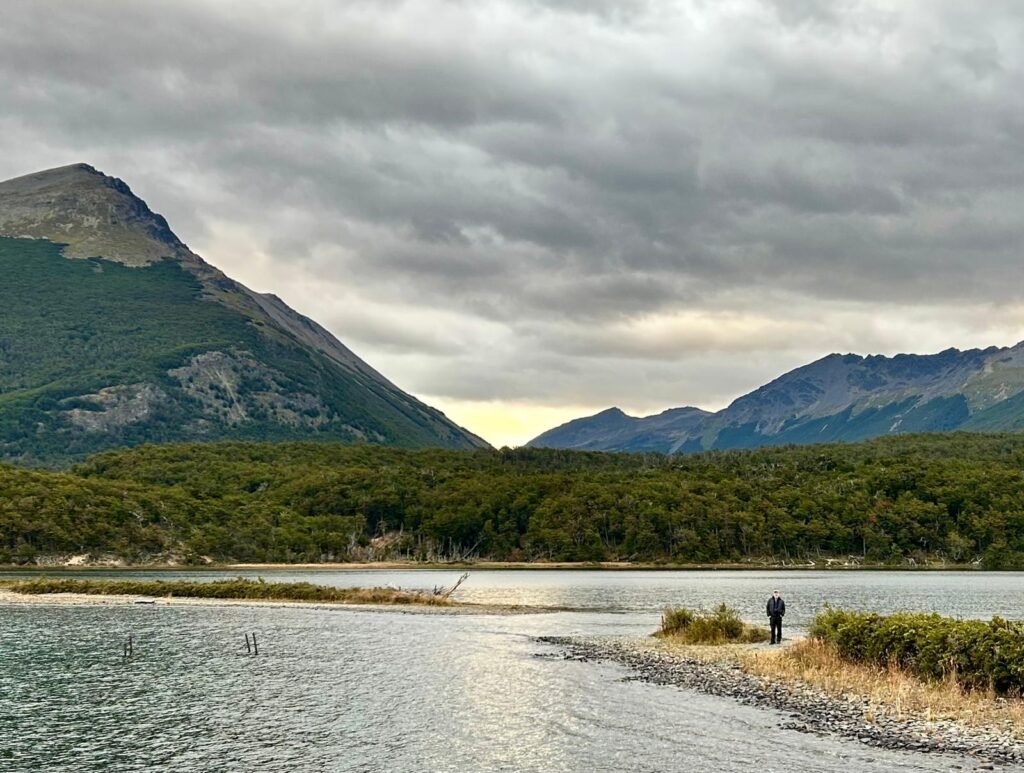
Our last night destination before Ushuaia was another semi-wild campsite on Lago Fagnano located halfway between the towns of Tolhuin and Ushuaia (see C on map above). But before getting to the lake, Caitlin had us detour to a commerical natural hotspring, which turned out to be quite nice and relaxing. We ended the day at a nice campsite on Lago Fagnano that is quite popular with the local fishermen. There were dozens of fishers when we arrived and lots of cars, and it appeared that we might be in for a roudy night, but alas, they all departed at or around sunset and we had the site to ourself – nice! Here’s some pics:
OK, on to Ushuaia and Tierra del Fuego National Park for some hiking at “the end of the world”. See you there!
Is the landscape pretty often windswept Kevin?
Wow… beautiful. That a lot of sheep!
I liked your other truck better…nice trip love the photos
That is obviously not the green dragon. Did you sell the green dragon and buy or rent this camper?
What a nice trip so far with beautiful pictures. Are you all in tents because that camper doesn’t look big enough for the 3 of you?
Love Joan
Love the picture of the king penguins.
I already shared with Talia.
Such a beautiful place. The lake, the campsite , amazing
LOVE the photos and all of the info you shared!