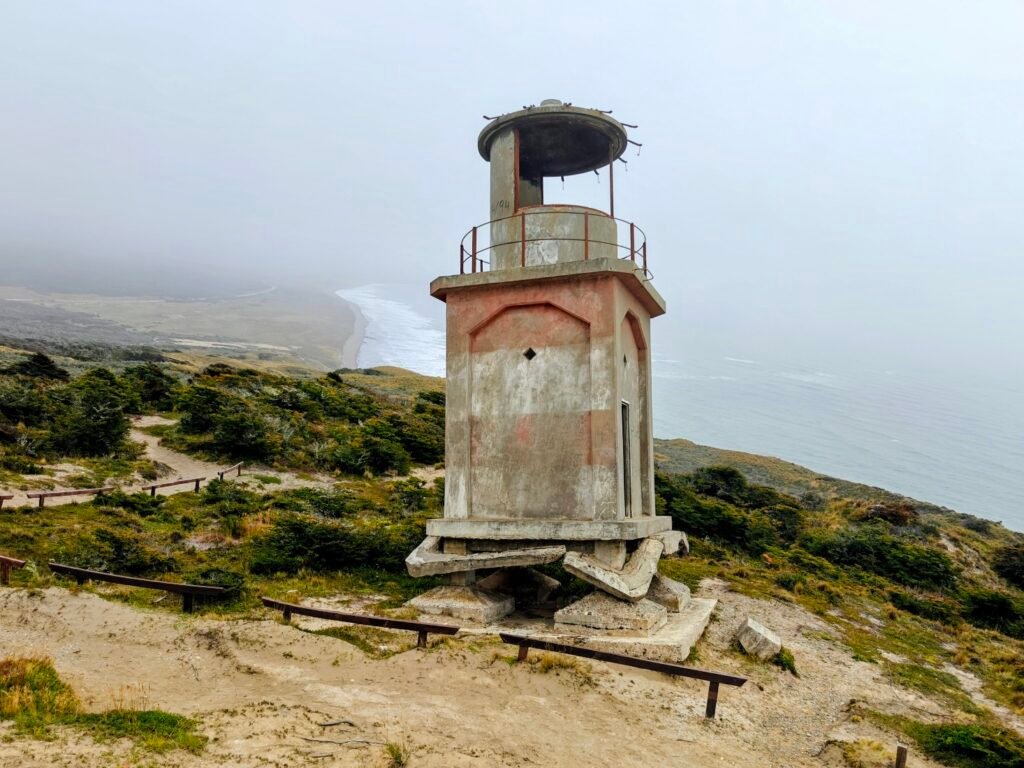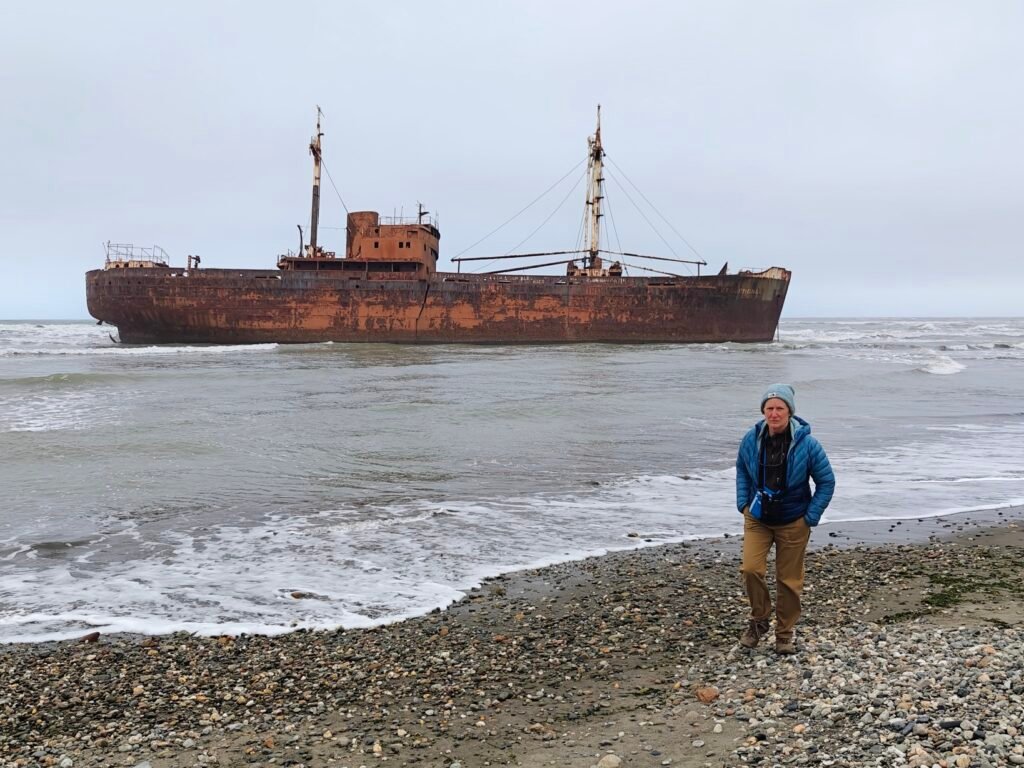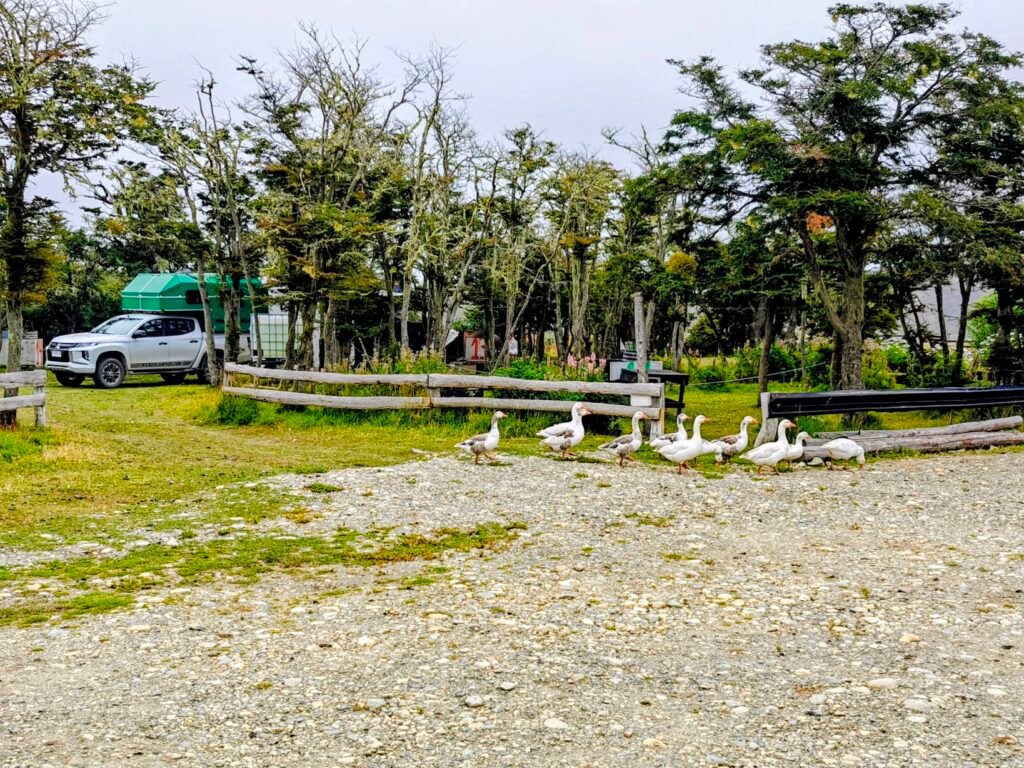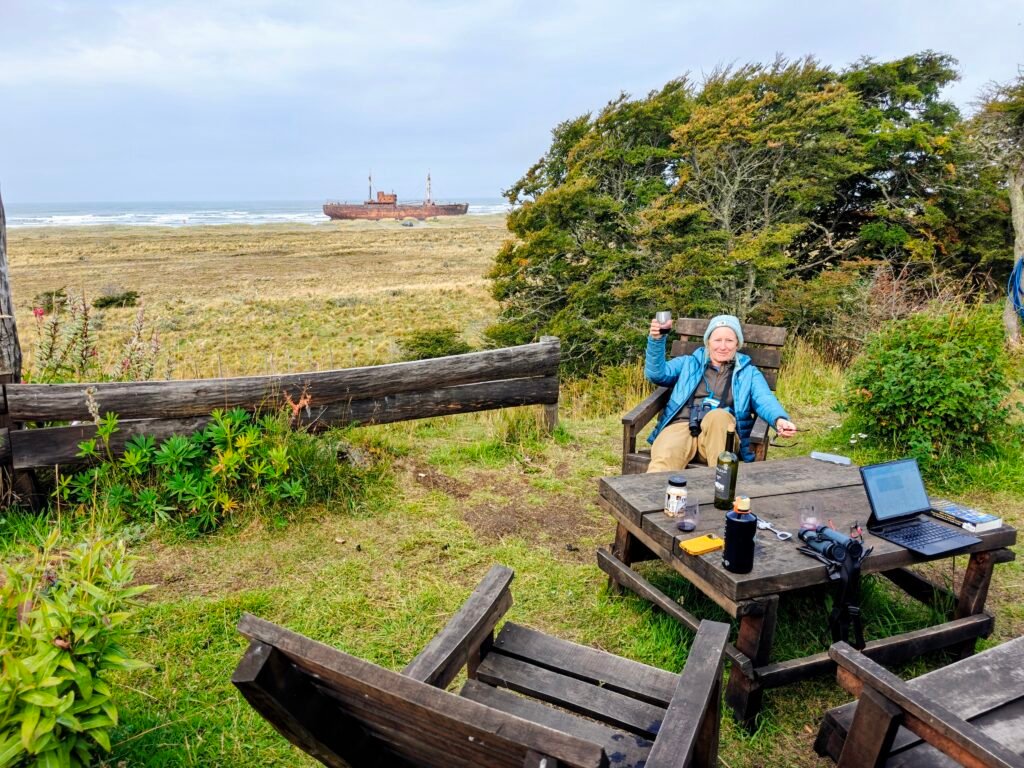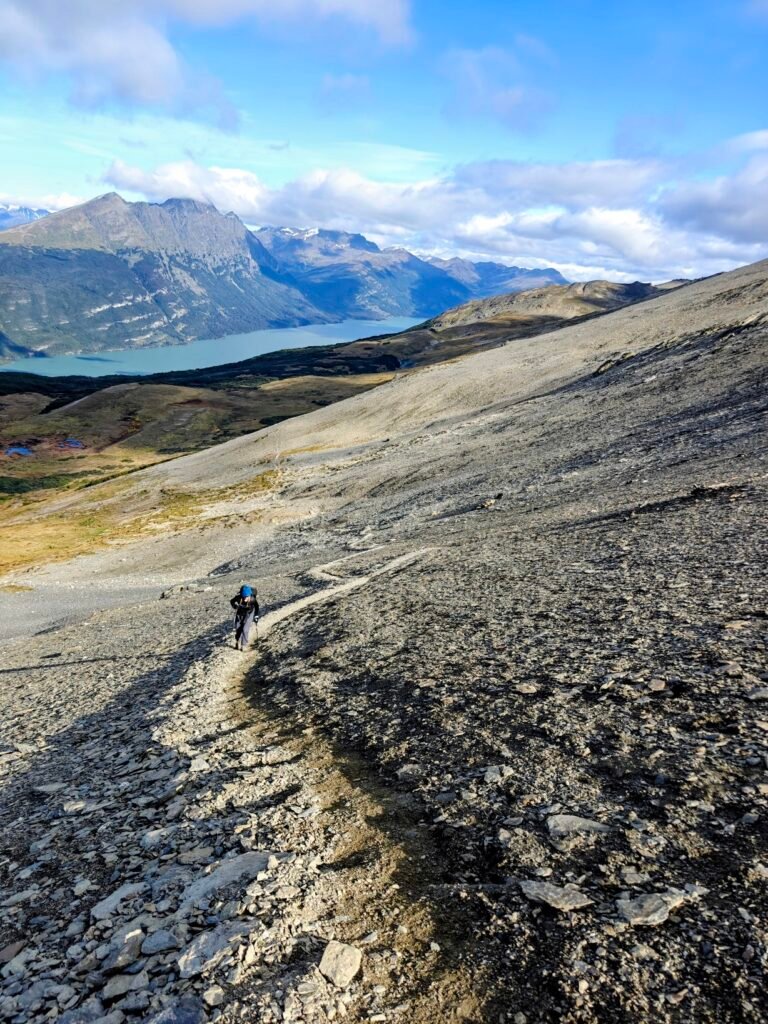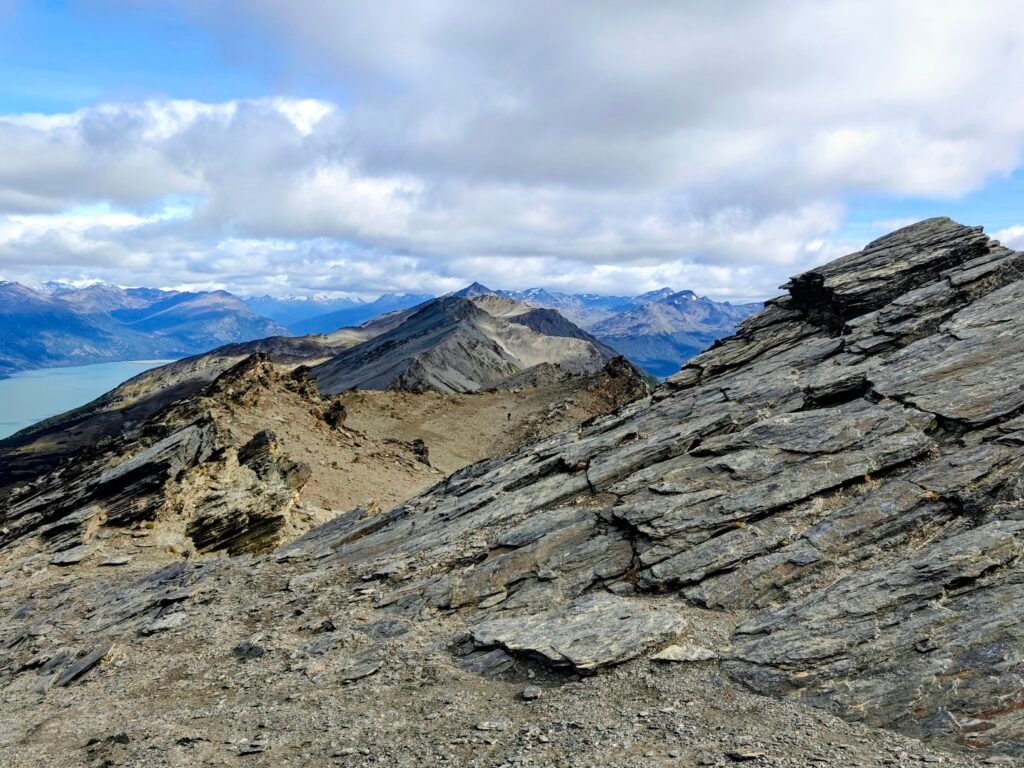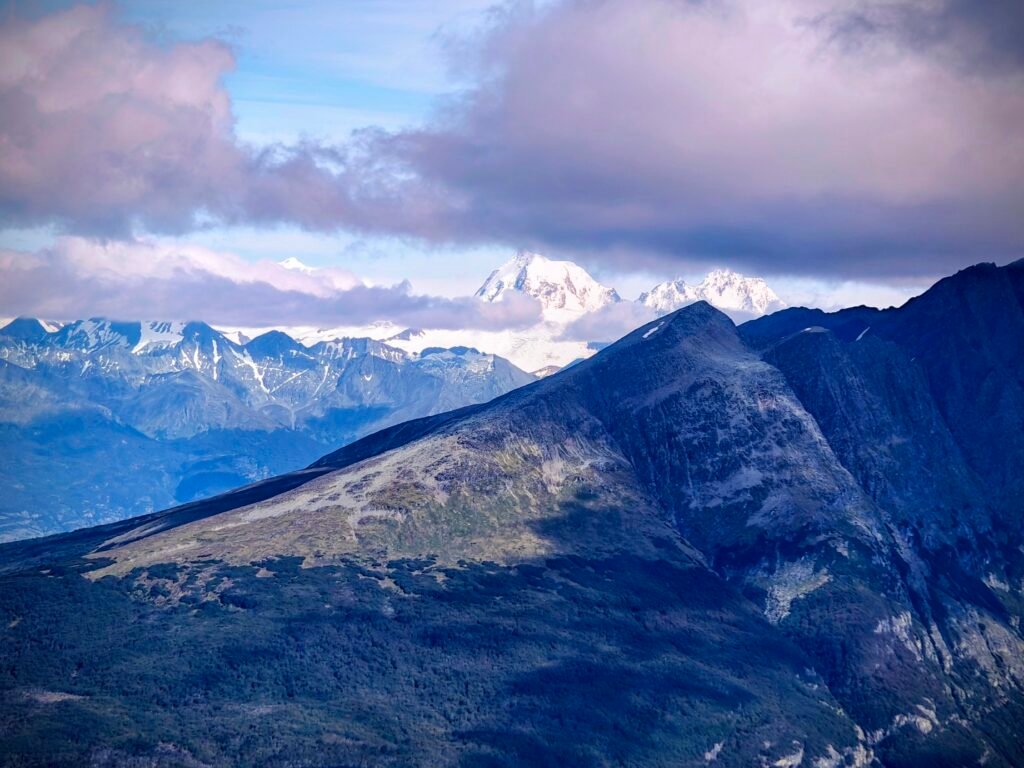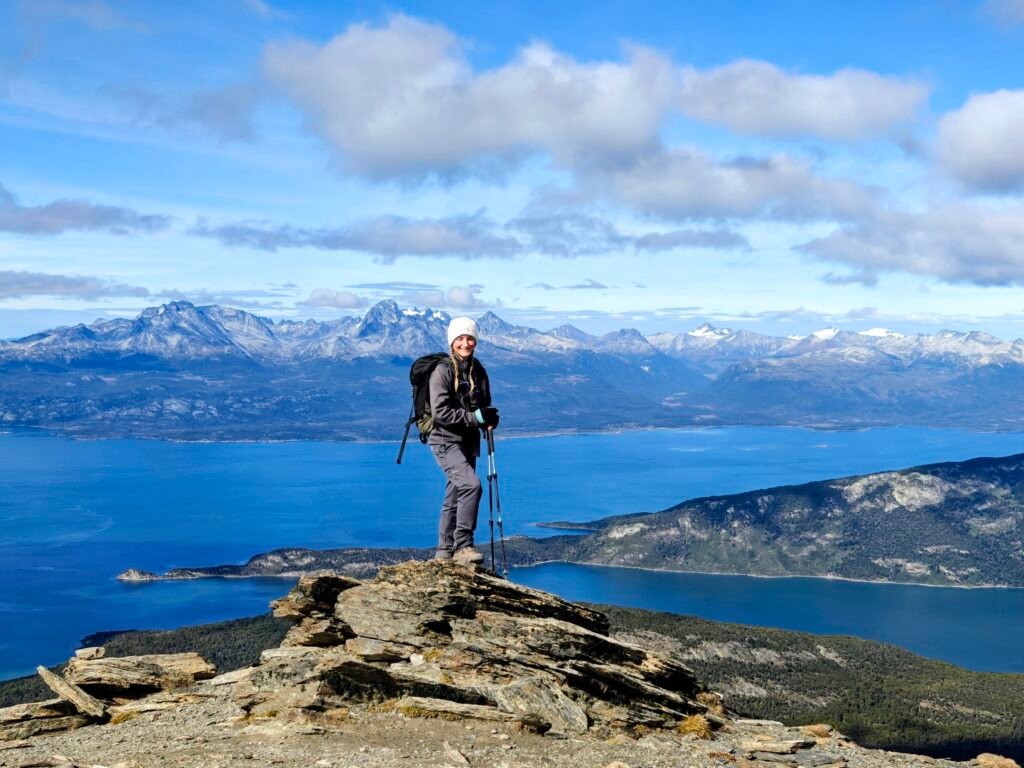
Feb 20-22: Tierra del Feugo

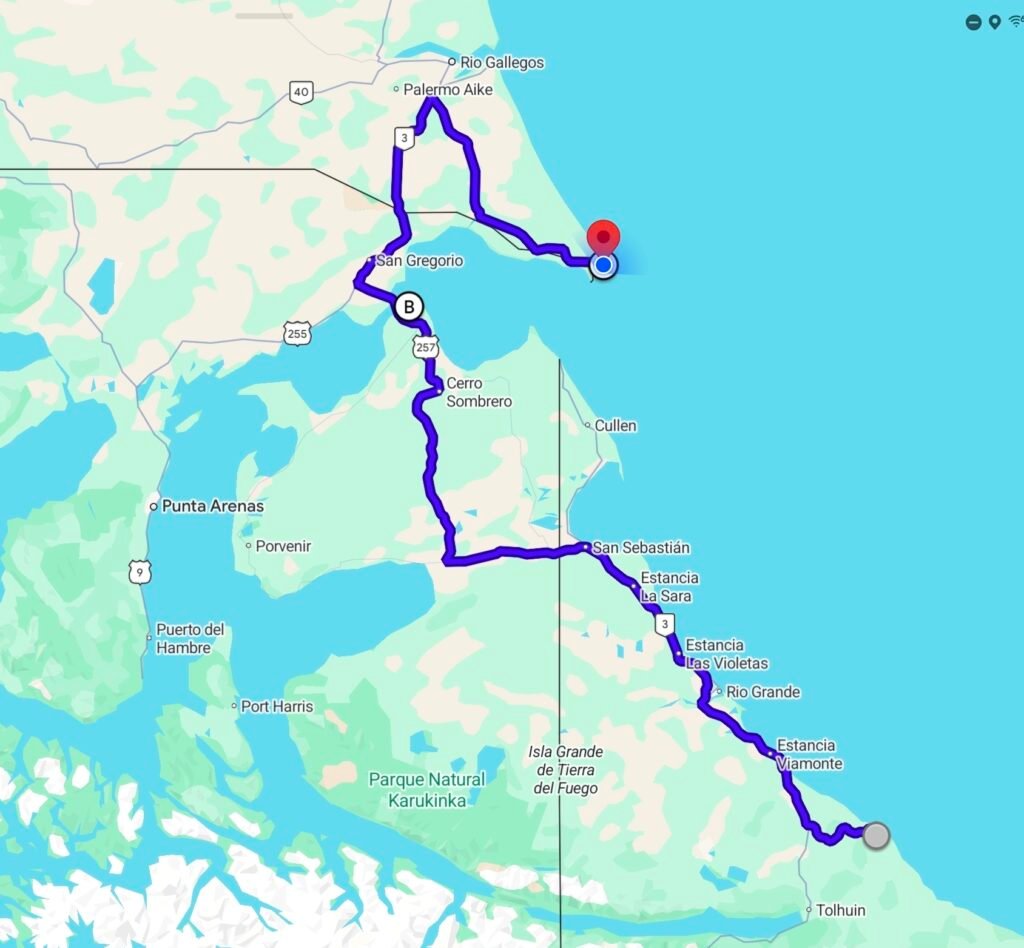
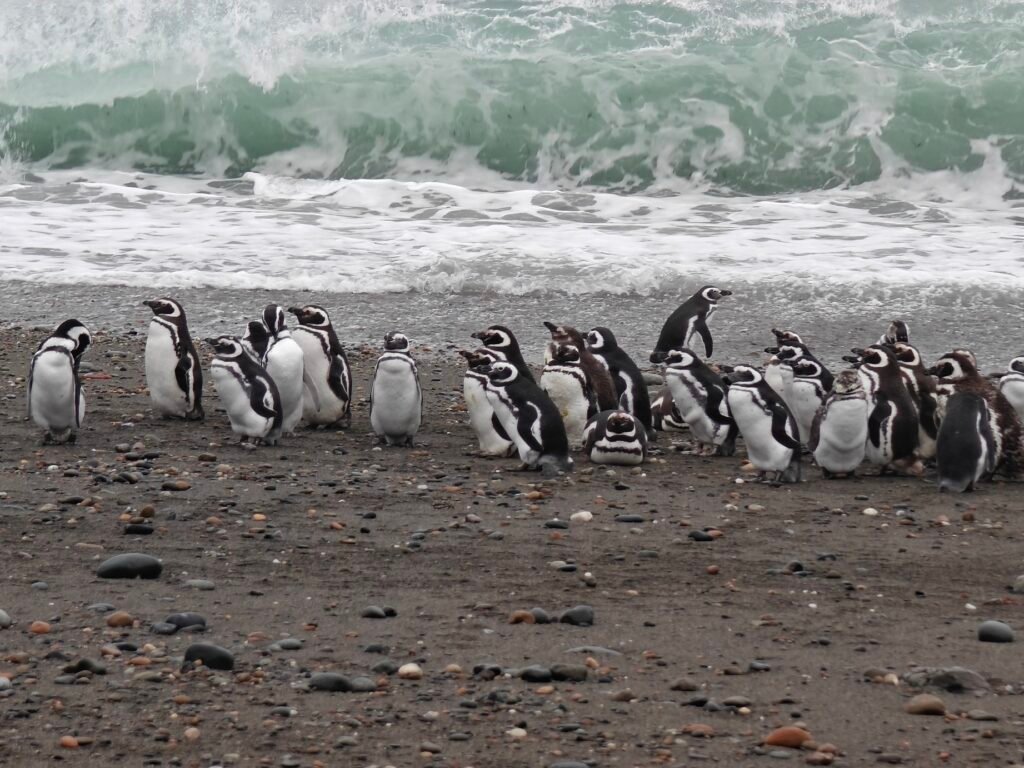
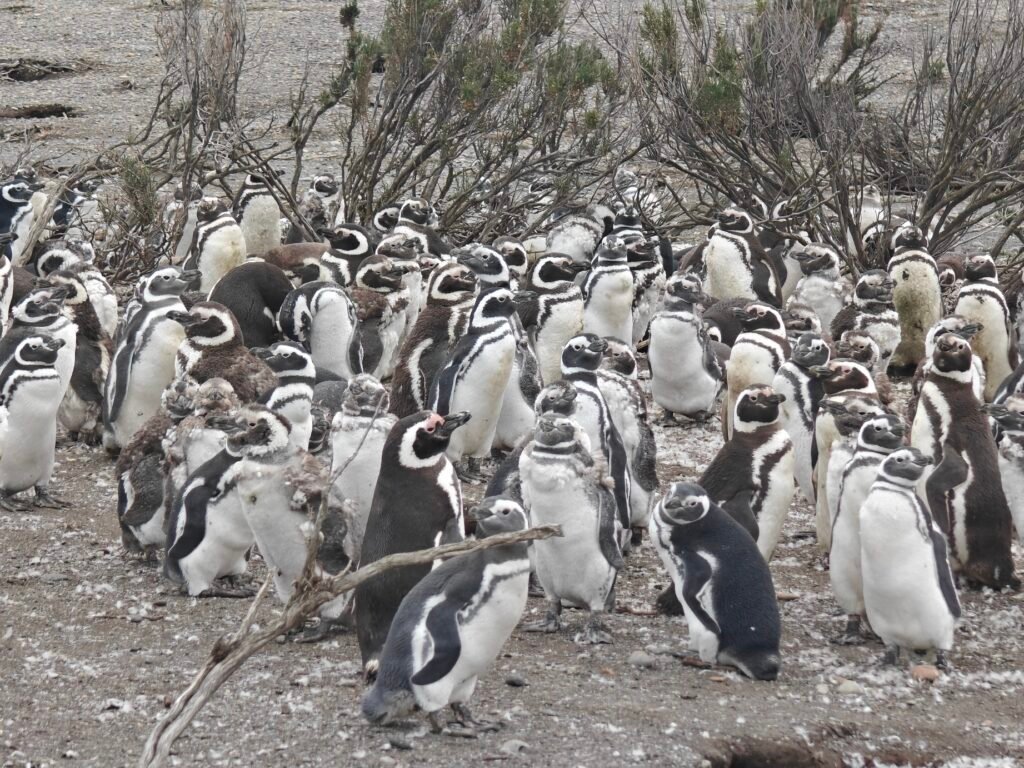
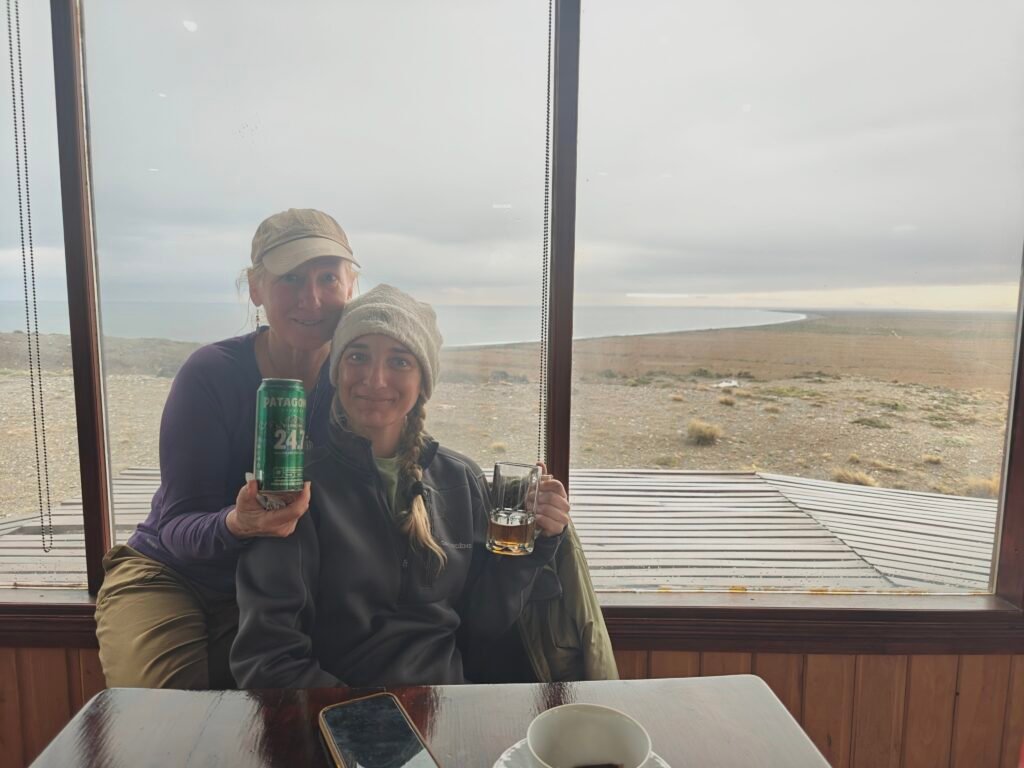
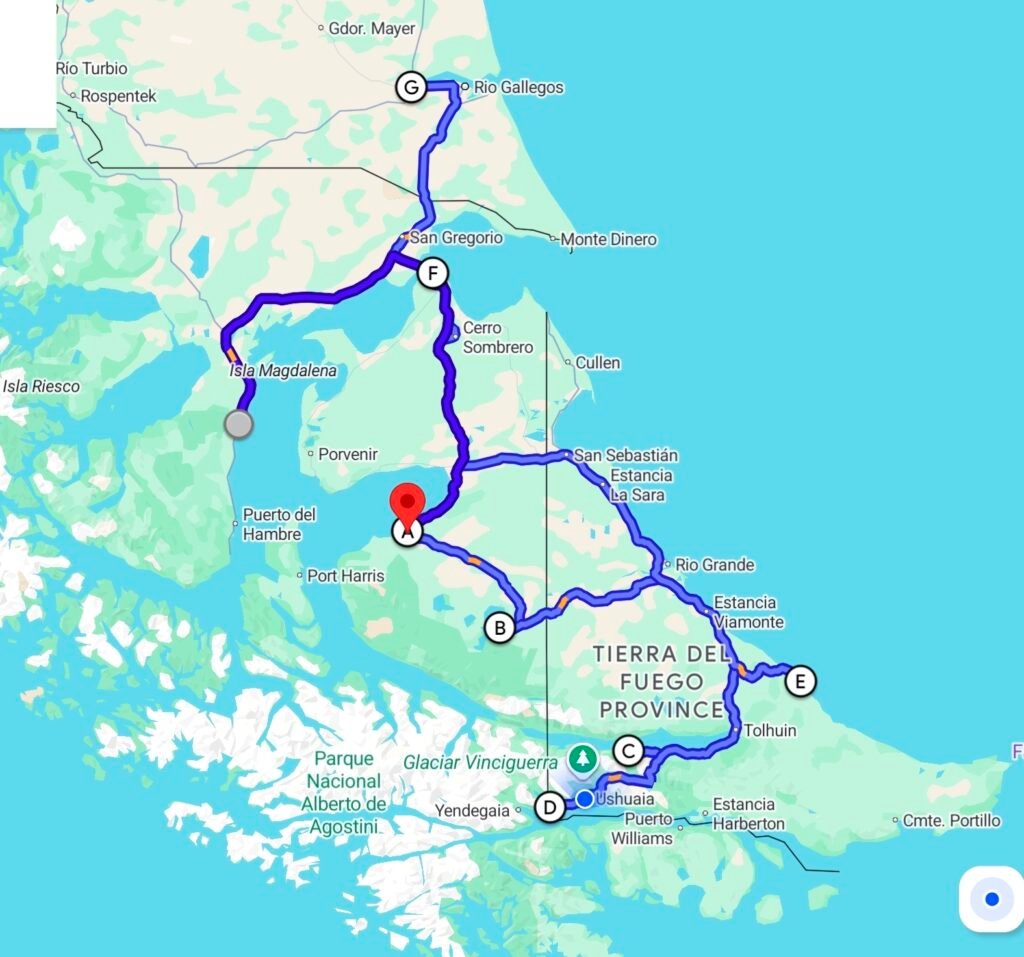
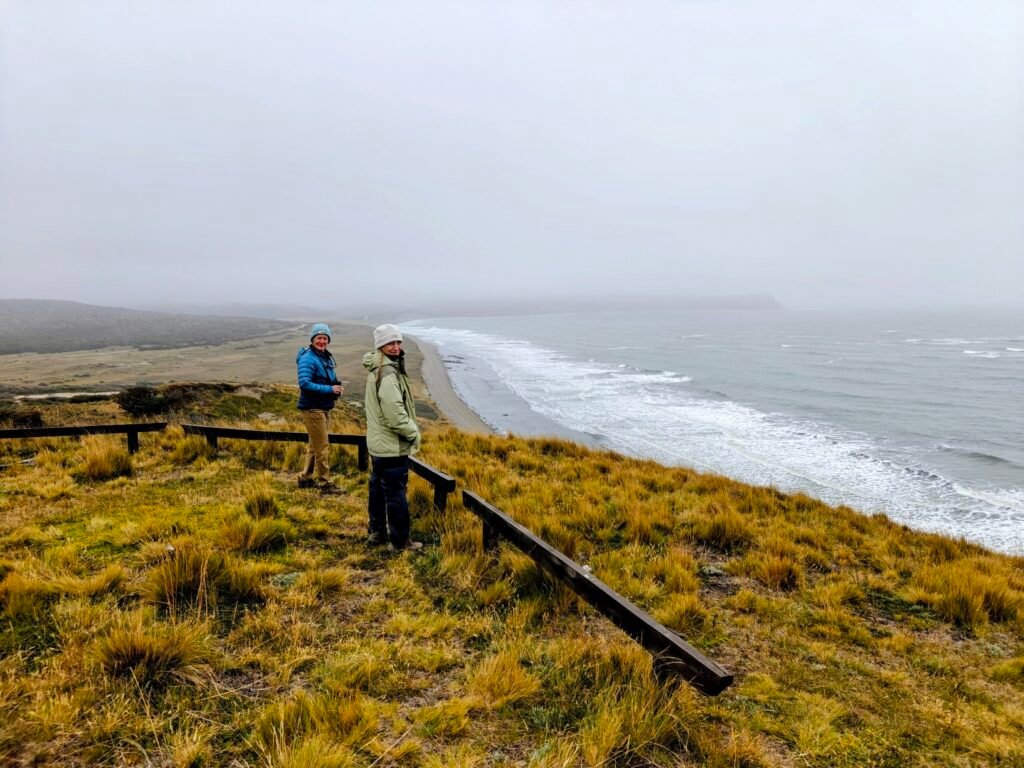
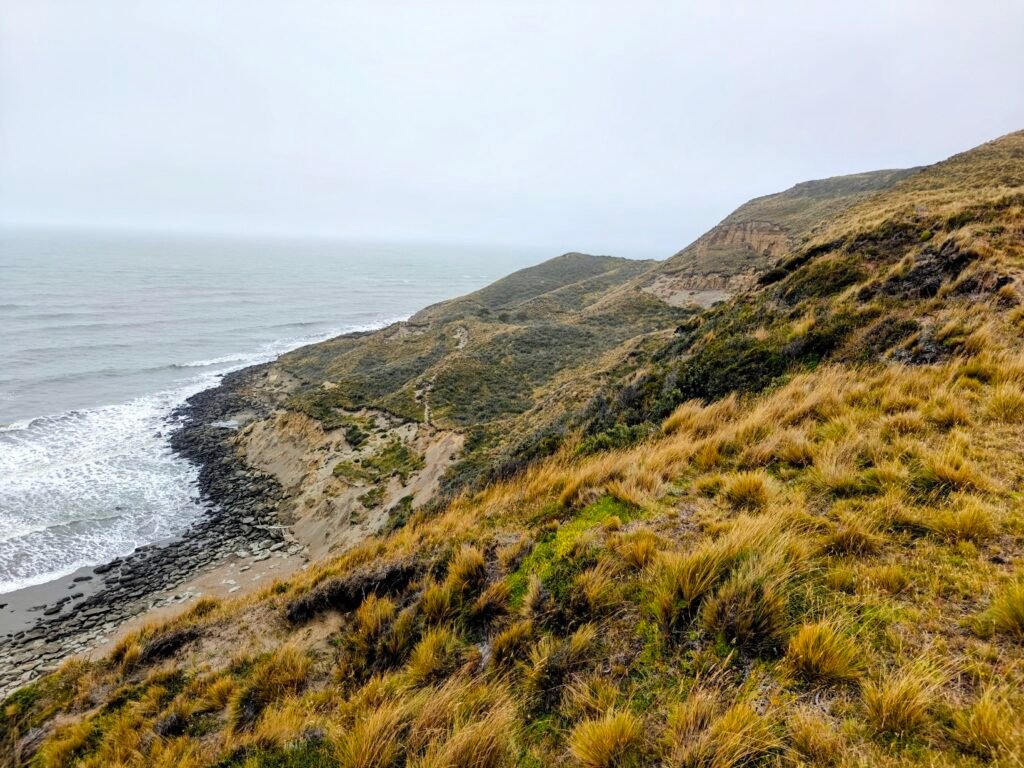
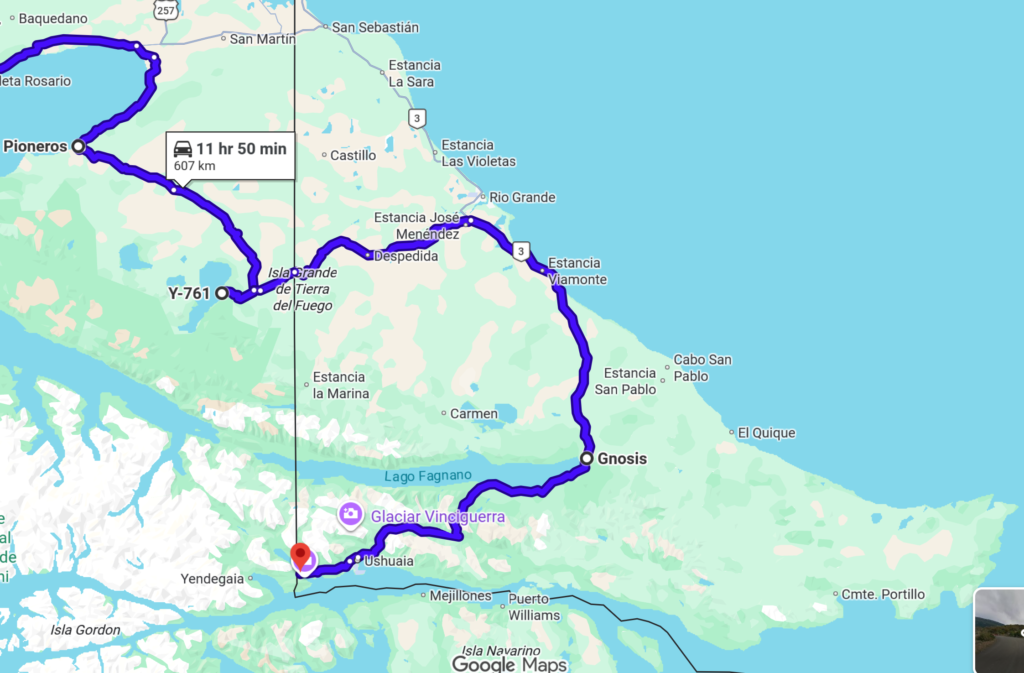
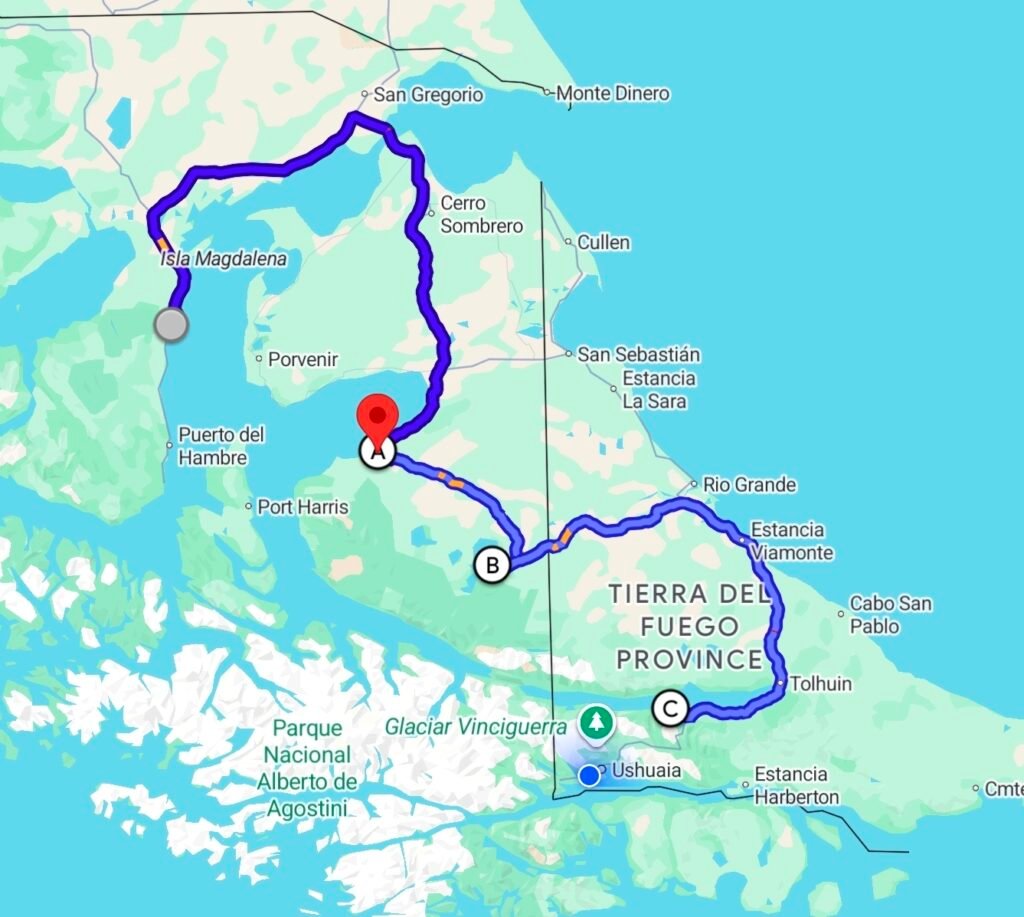
We began our overland journey from Punta Arenas by crossing the Strait of Magellan to the archipelago of Tierra del Fuego. Our first stop was the King Penguin colony at Parque Pinguino Rey, a protected area located in Bahia not far from the town of Cameron (see A on the map below).

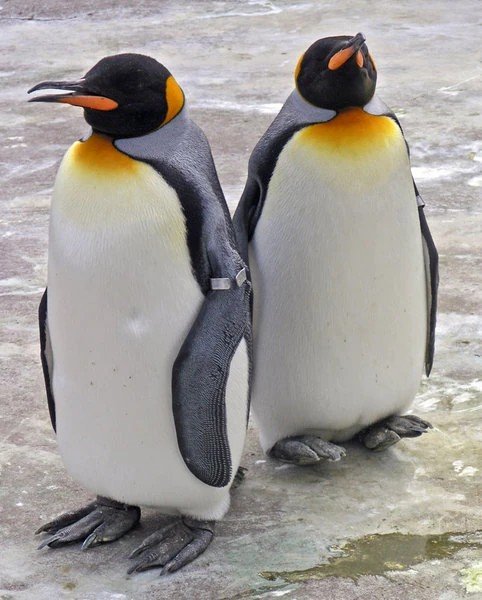
King penguins are the second largest penguin species in the world (28-39 inches tall and 21-40 pounds), second only to Emperor penguins, and are distributed circumpolar in the Antarctic, with colonies reaching north to Tierra del Fuego and the Falkland Islands, among other locations. Most colonies are located on remote and isolated islands, making them difficult to visit, but the colony at Parque Pinguino Rey is readily accessible, so we deemed it a must see destination. Unfortunately, we arrived late (due to frustrating camper delays which I won’t rant about yet) and weren’t able to hike into the sanctuary and get close to the penguins, so we had to be satisfied with seeing them from afar with binoculars. But just so you see what we wanted to see up close, here’s a picture of King Penguins from the internet:

King penguins

Here are just a few interesting factoids about King penguins. They mainly eat small fish, squid, and krill. Their main predators as adults are leopard seals and orcas. On foraging trips, they repeatedly dive to over 300 ft, and have been recorded at depths greater than 1,000 feet. They have a long reproductive cycle of 14 months and produce only a single egg with each breeding cycle, which means they can only raise 2 chicks every 3 years. Not surprisingly, this species was exploited commercially in the past for its blubber, oil, meat and feathers, but thankfully today it is fully protected under the IUCN, with a total population size estimated at over 2 million.

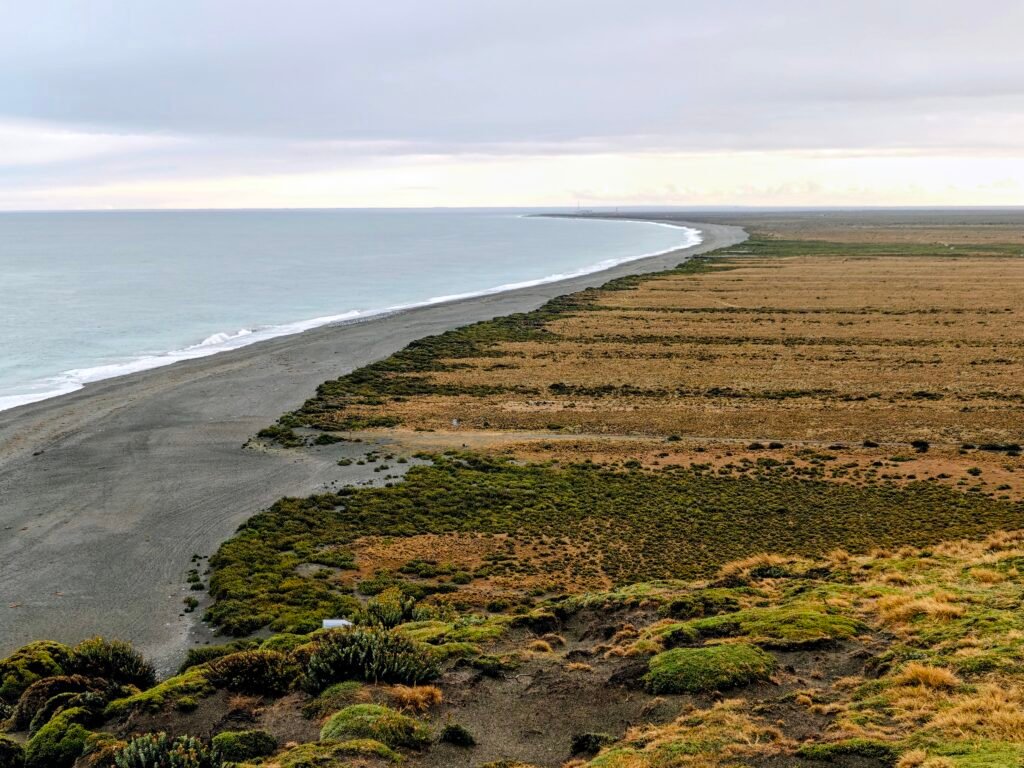
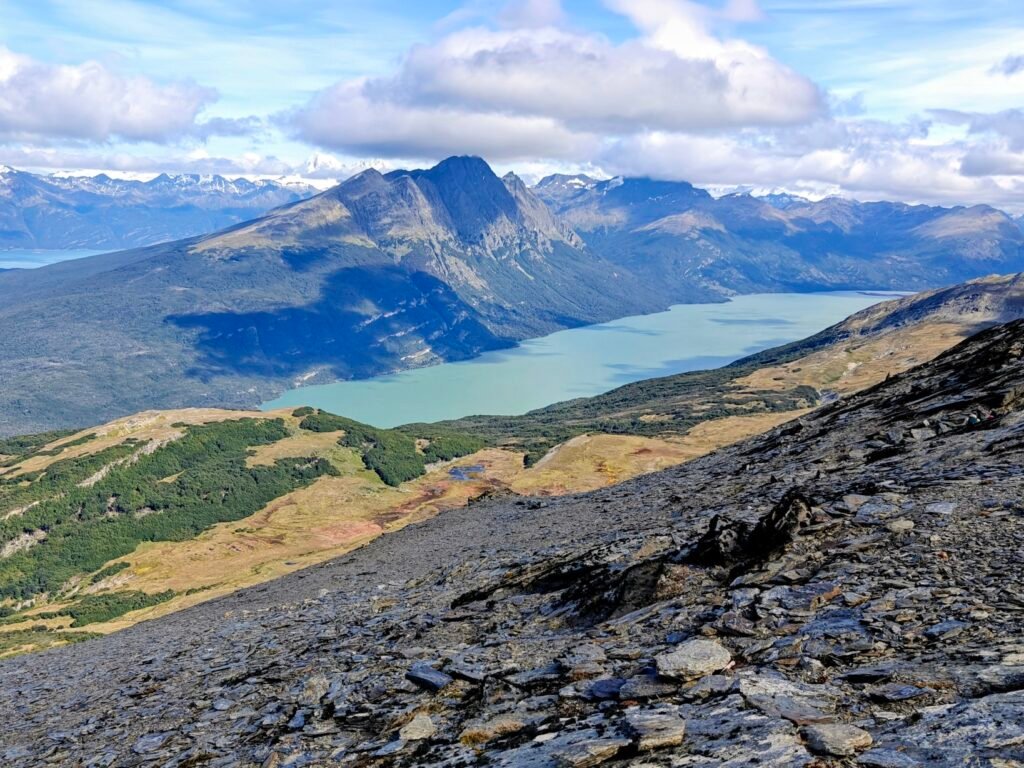
Although we were somewhat unsuccessful at the King Penguin colony, we were here to explore the landscape of Tierra del Fuego. Tierra del Fuego (“Land of Fire”, the name given to the area by Magellan because of the numerous fires from the indigenous people he saw along the coastline ), as I have previously noted, is actually an archipelago consisting of many islands. Our journey covers only the main island of Isla Grande de Tierra del Fuego, with an area of ~28,000 square miles. The western two-thirds is part of Chile, and the eastern part is part of Argentina. The southernmost extent of the archipelago, Cape Horn, lies just north of 56 degrees south, which is roughly the same distance south of the equator as the Alaskan peninsular and Scotland are north of the equator.

The indigenous people of Tierra del Fuego the were mostly wiped out by the colonialists during the late 1800s which was spurred on by the discovery of placer gold in the streams. Today, oil extraction, sheep farming, and tourism are what drives the local economy.

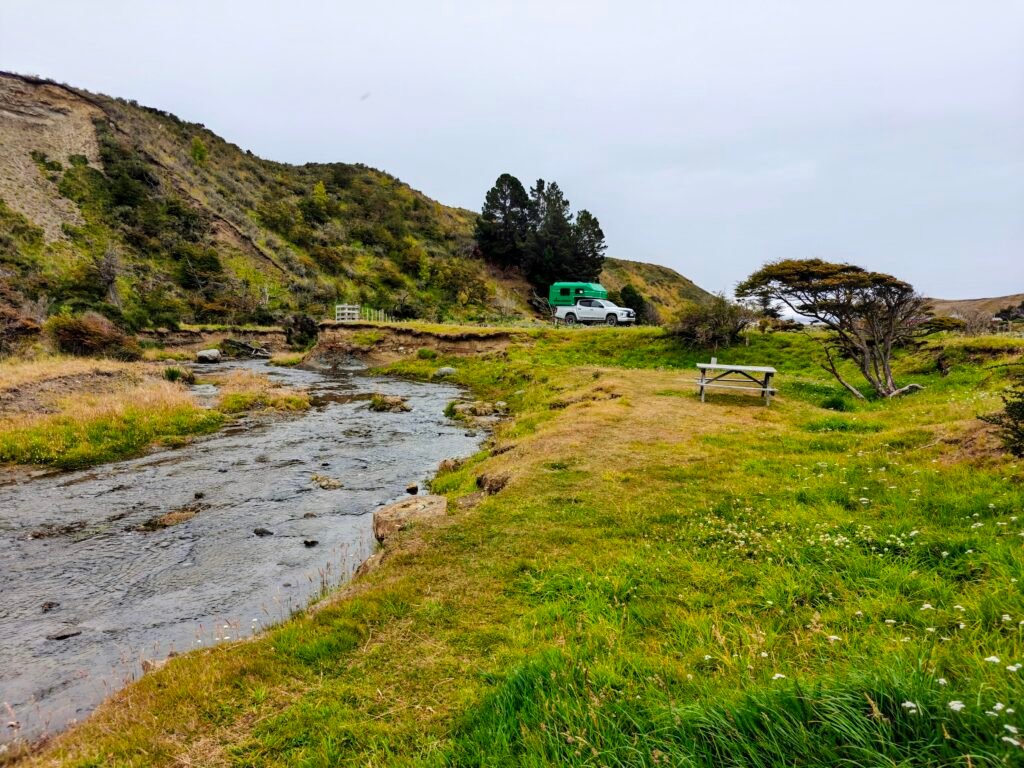
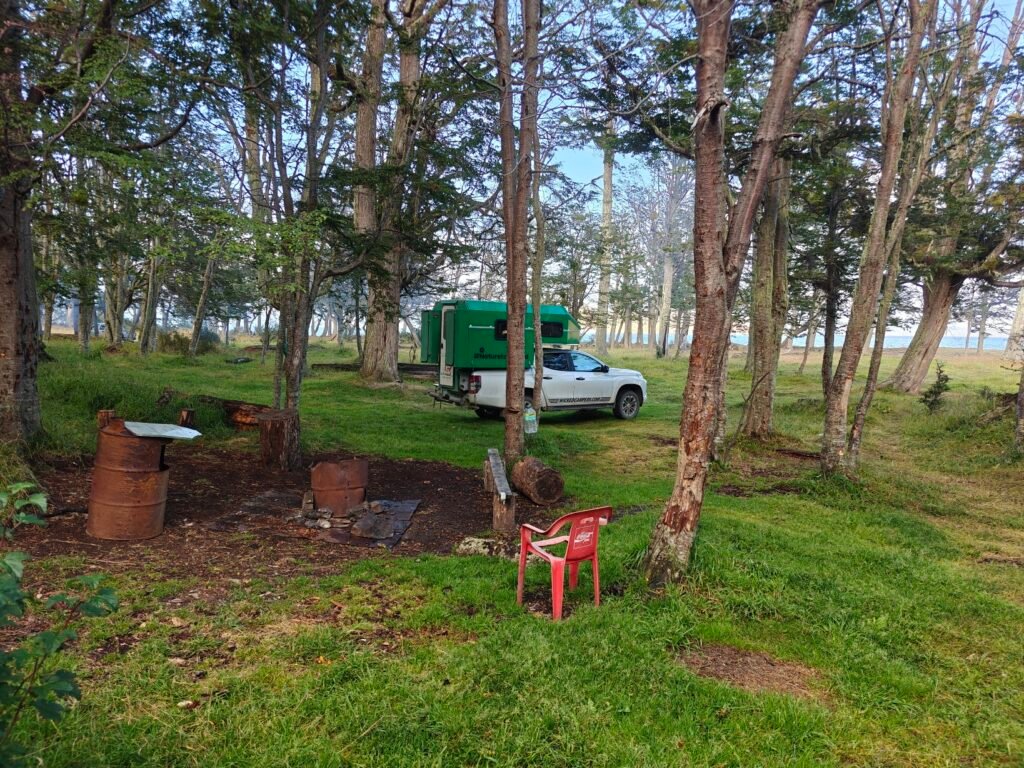
Our first night was spent camping in a quaint little campground in the small sheep-farming town of Cameron (see A on the map above). Not much to report here other than to say it was pleasant.

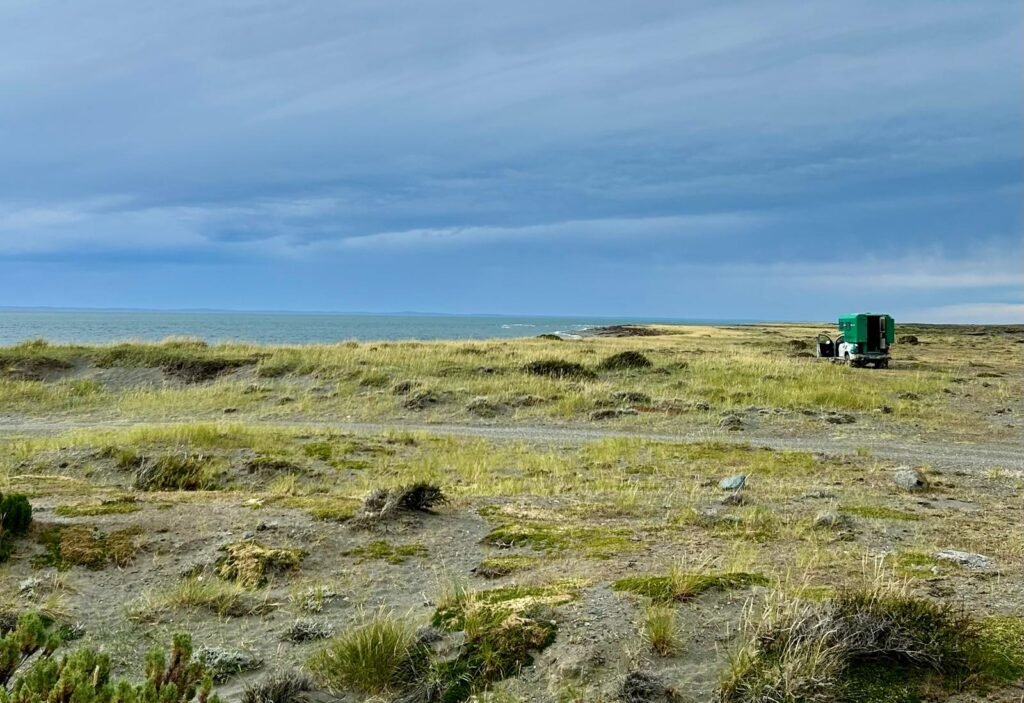
Campsite at Cameron

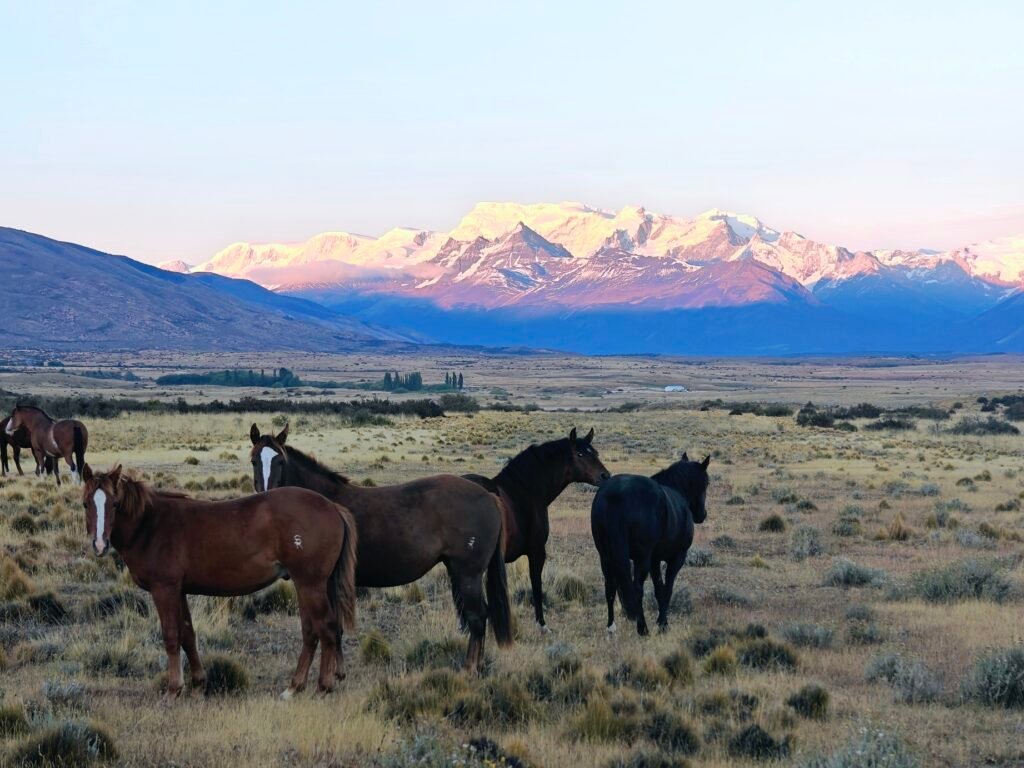
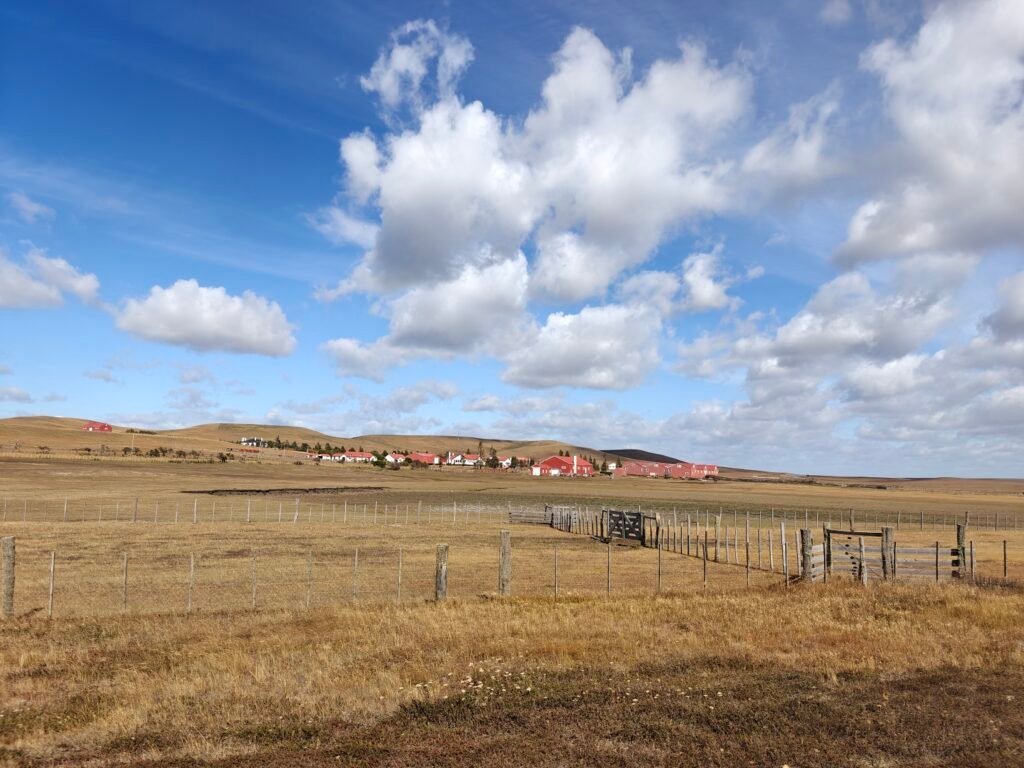
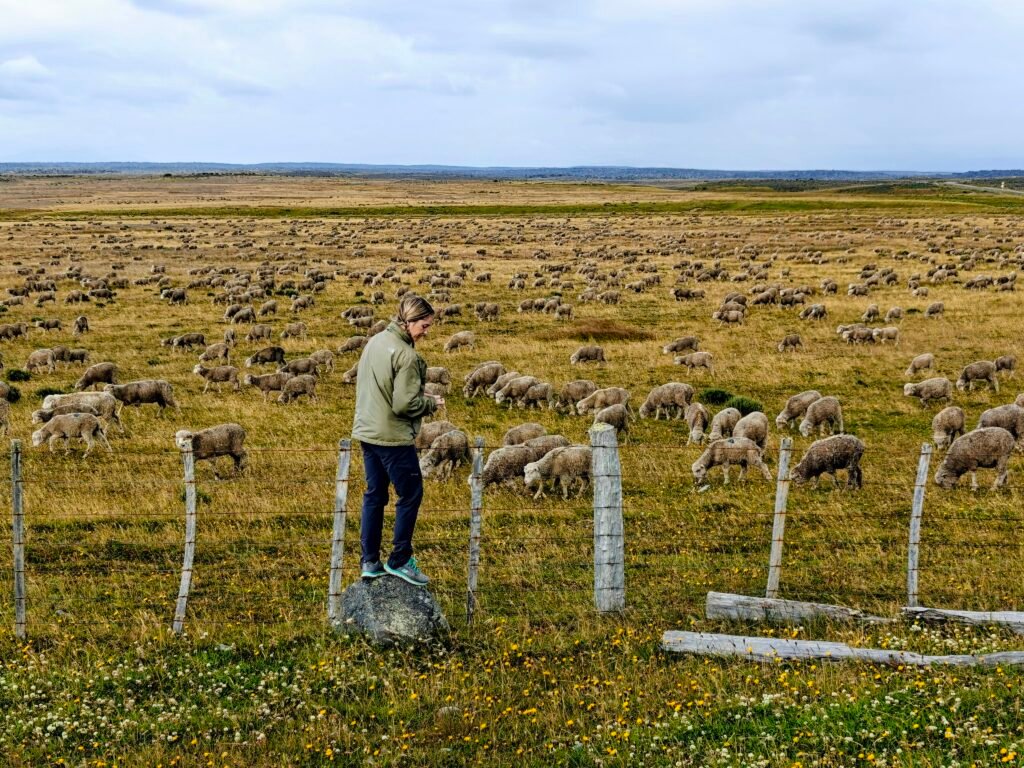
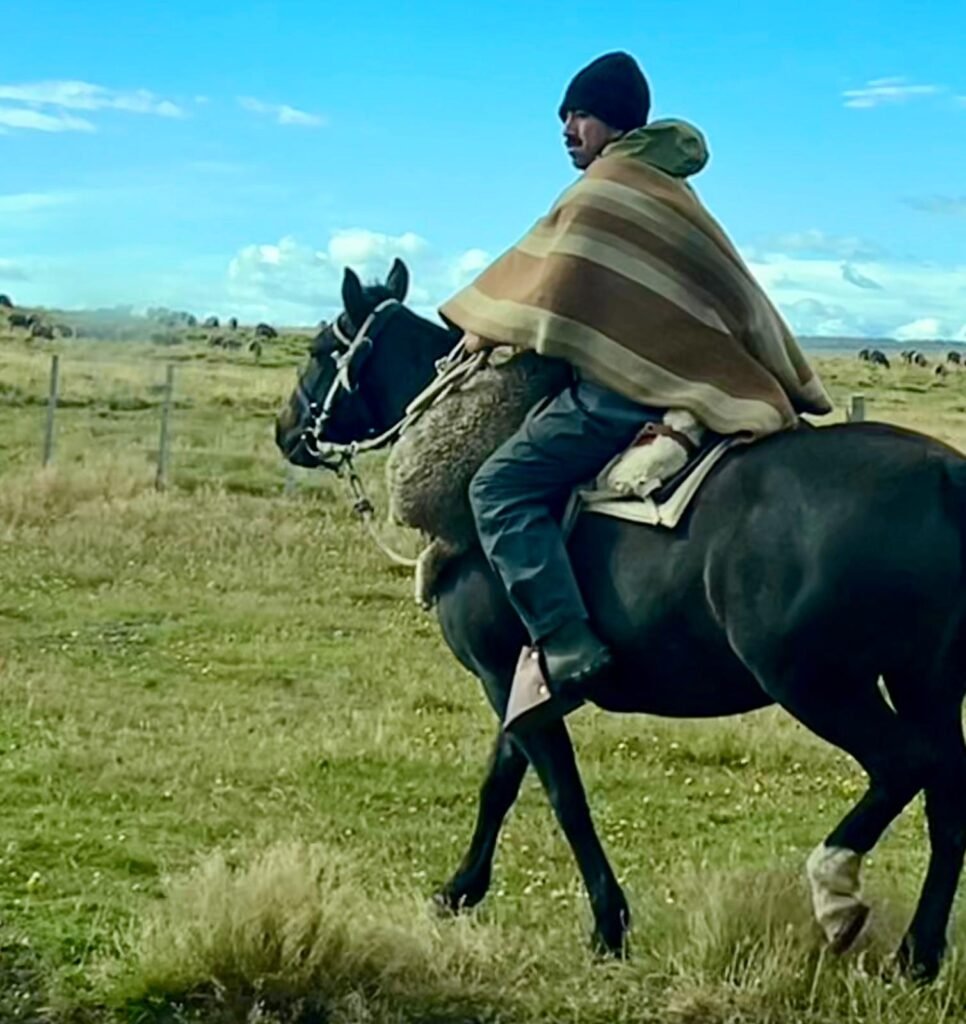
Our drive from Cameron to our next destination wild campsite on Lago Blanco (see B on the map above) gave us a great introduction to the mainstay livelihood of the rural residents of this part of Tierra del Fuego, namely, sheep farming. You haven’t witnessed sheep herds until you visit this place. There are probably 5 to 10 thousand sheep for every human in this landscape. The grasslands are vast and the sheep appear as, what John Muir called them, “range maggots”. Sheppards on horseback and sheep in the tens of thousands. Truly a site to see if you don’t mind livestock ranching on a grand scale. However, I must say the rangeland didn’t look too overgrazed or damaged by the vast sheep herds. Here’s a couple of photos to inspire your imagination on the life of sheep farmer in Tierra del Fuego (i.e., a lonely existence, unless you like sheep as company):

Sheep farm Estancias
Caitlin and the “range maggots”
Sheppard on Tierra del Fuego

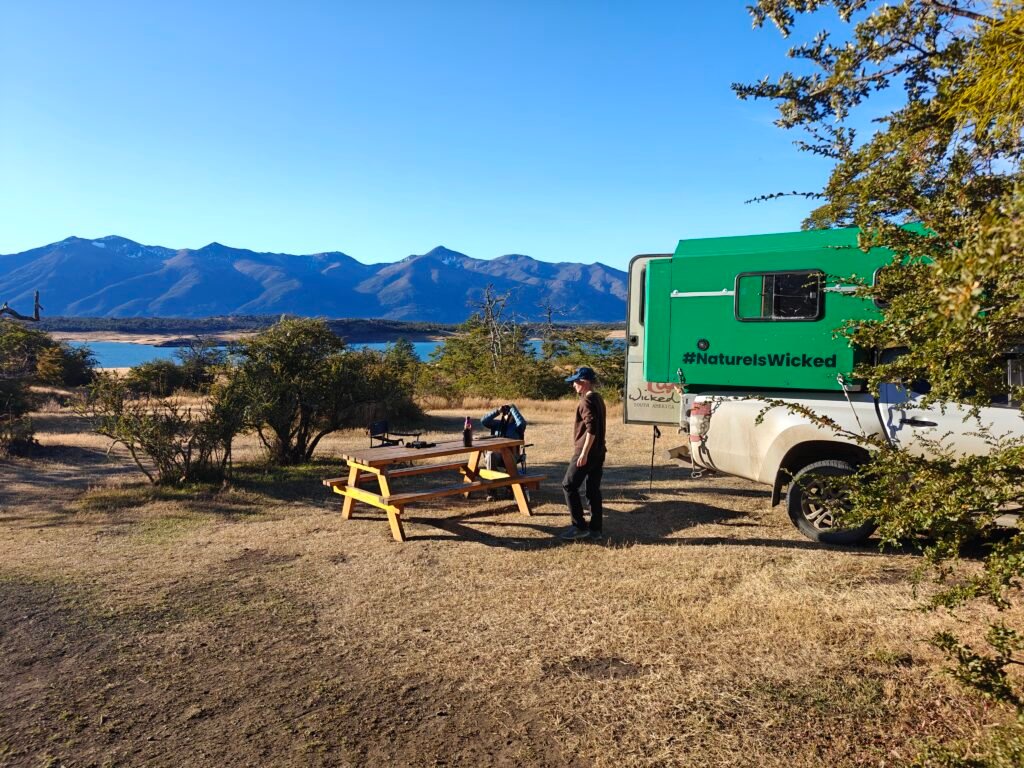
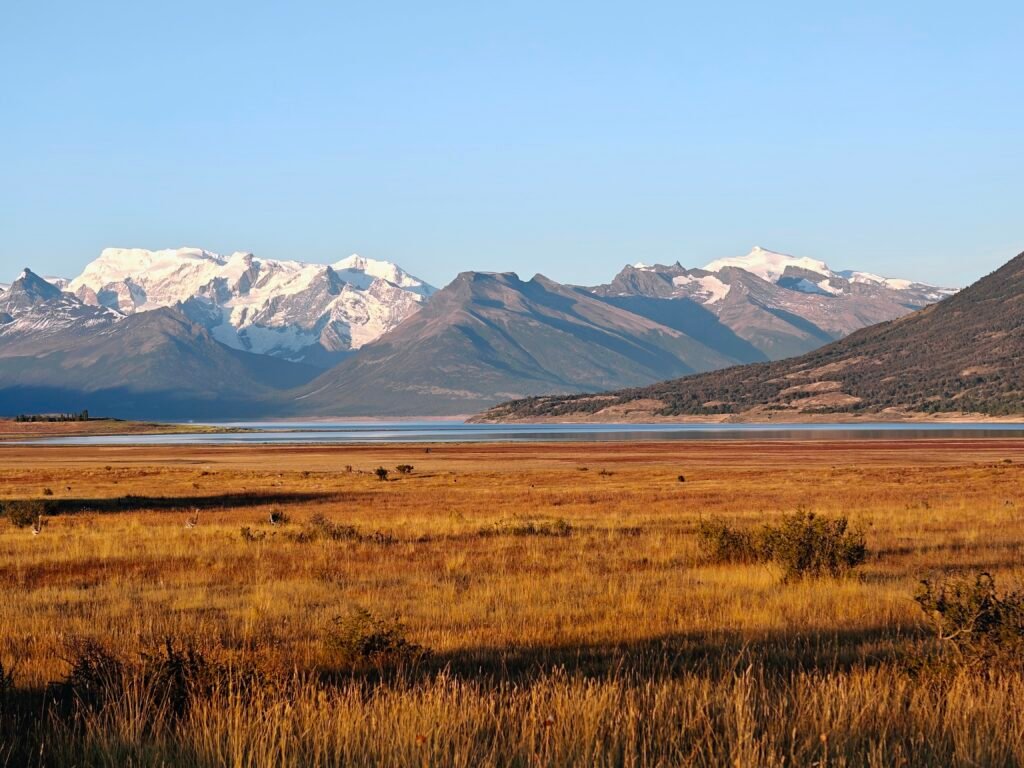
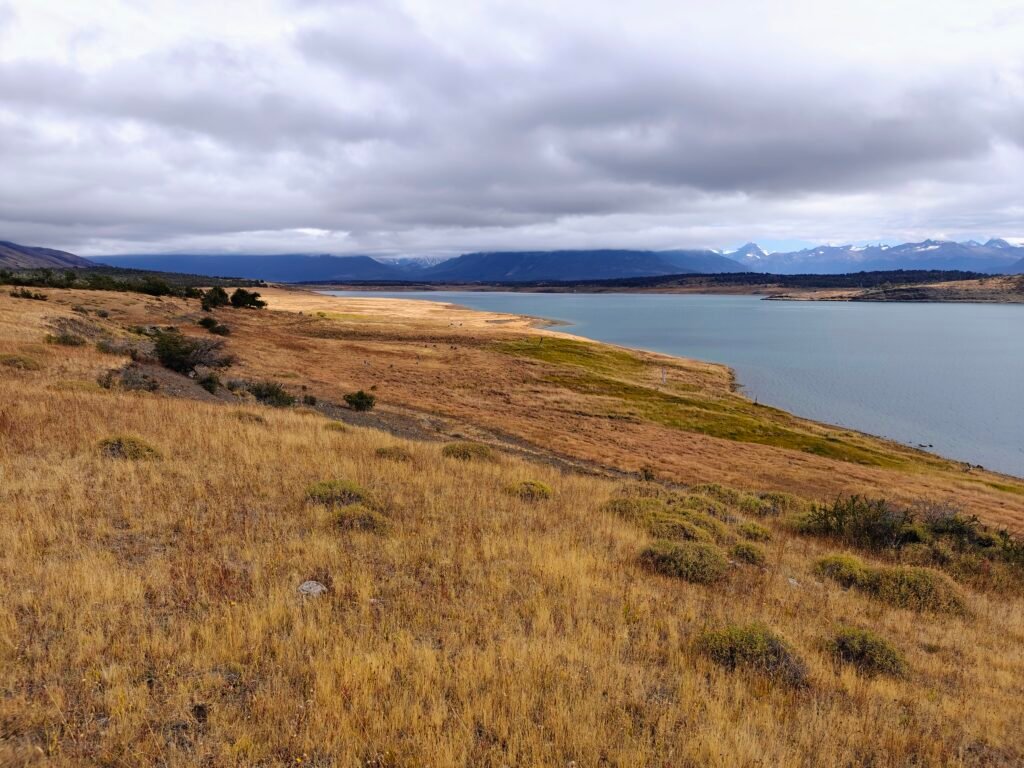
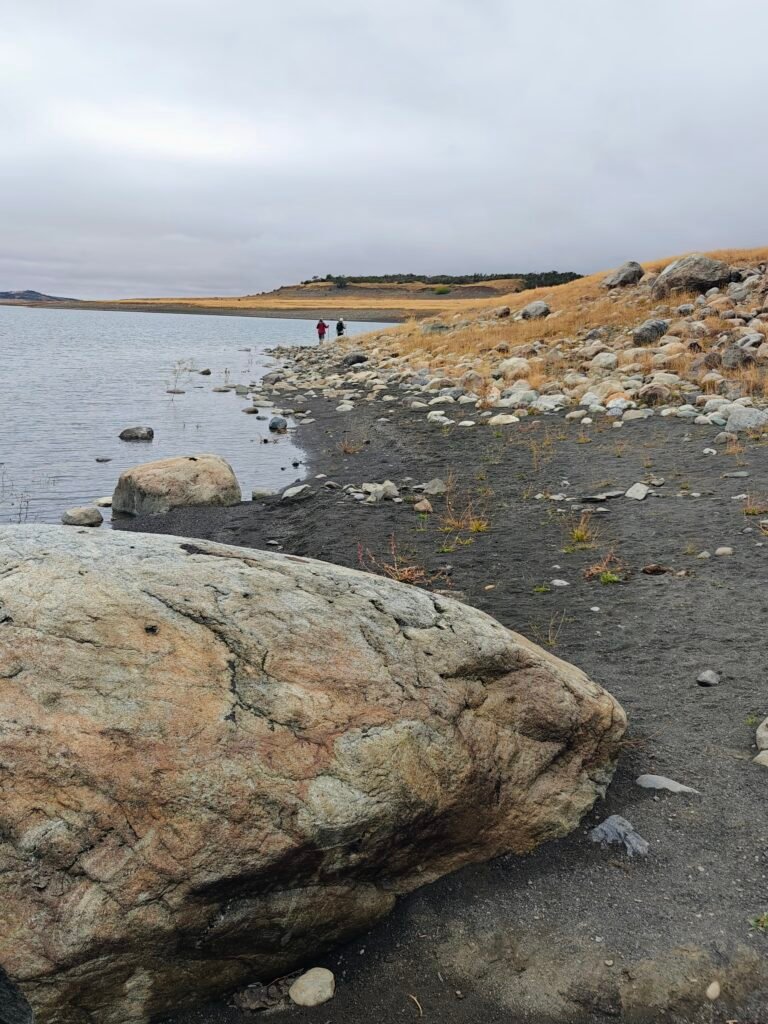
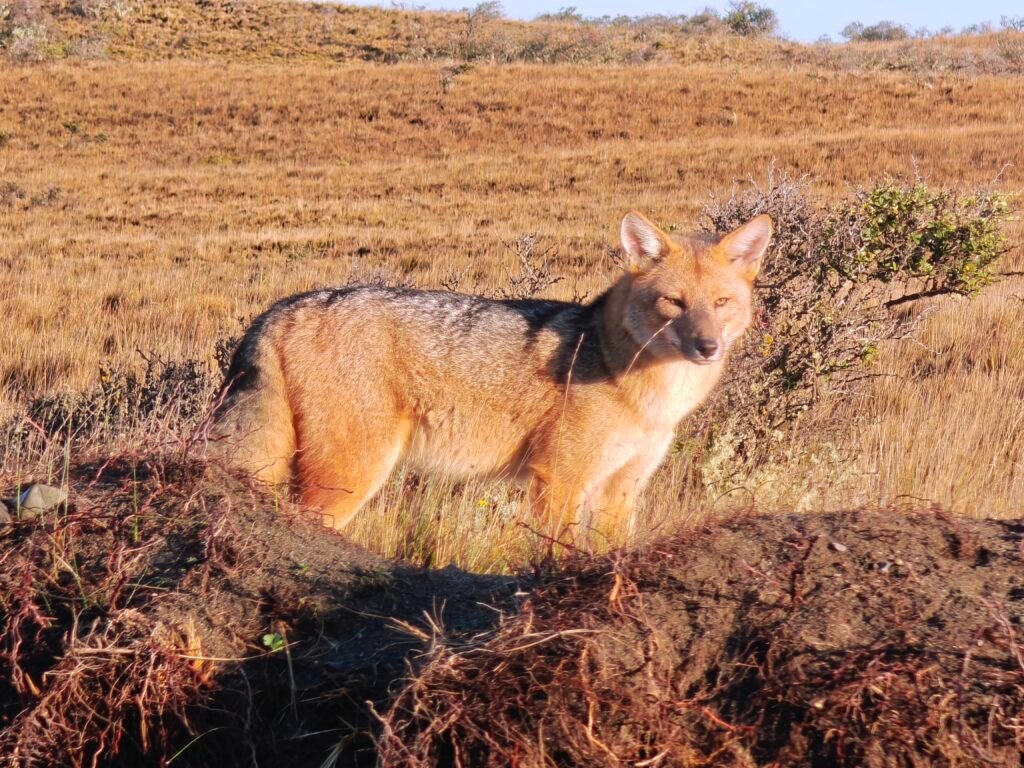
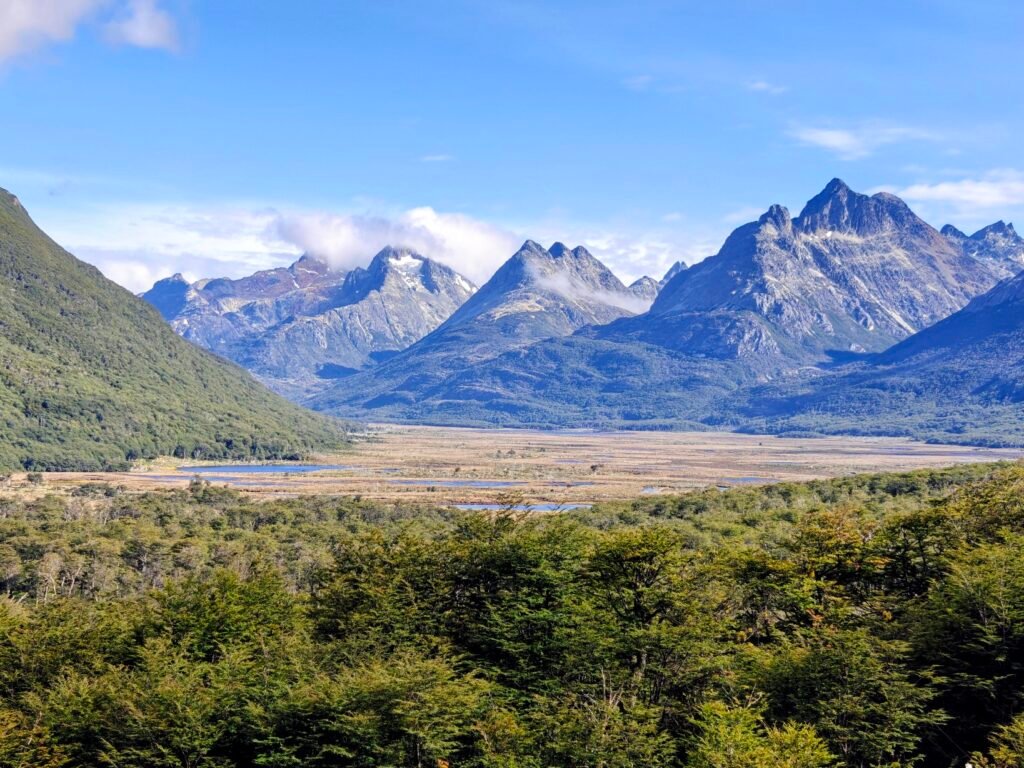
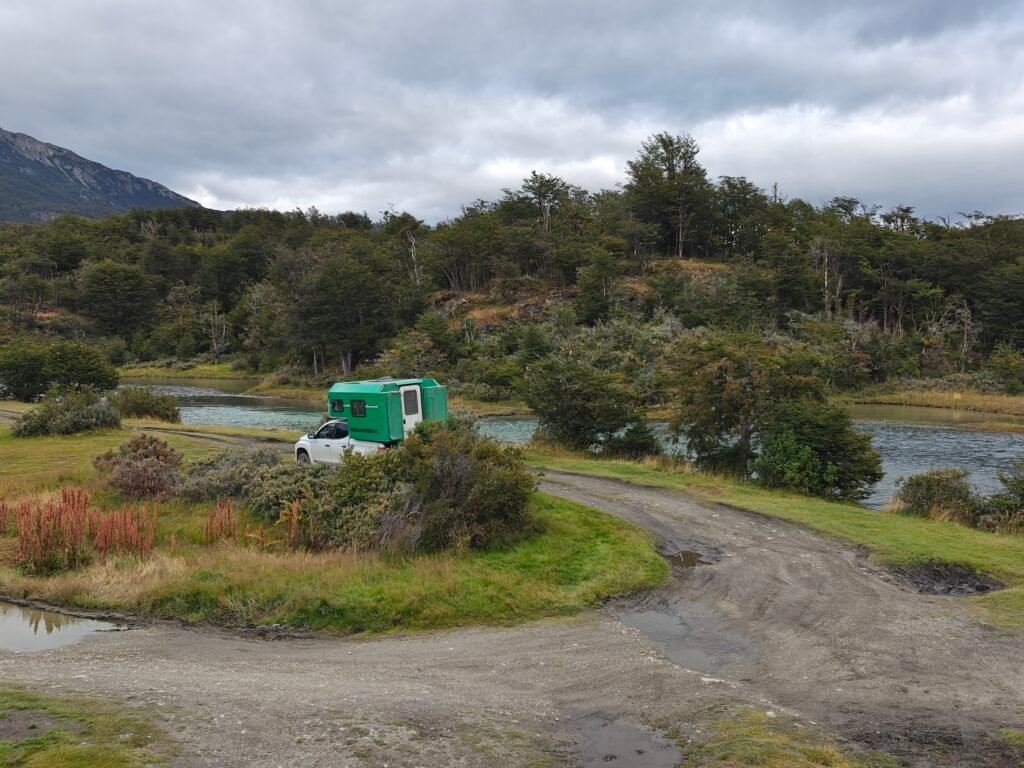
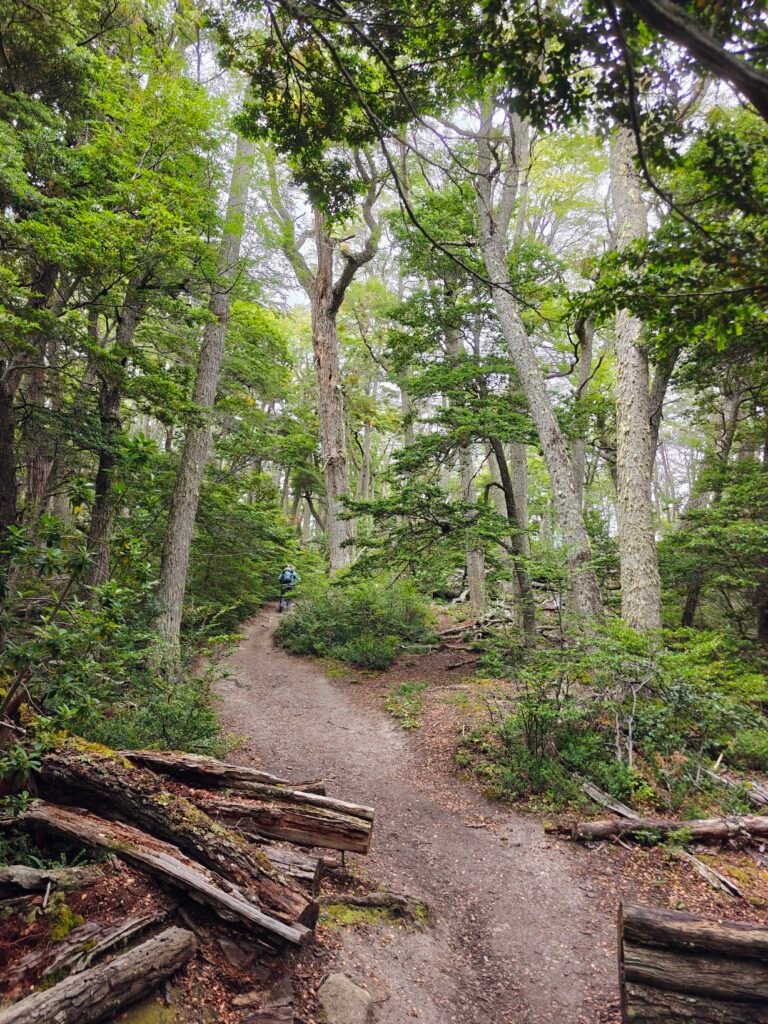
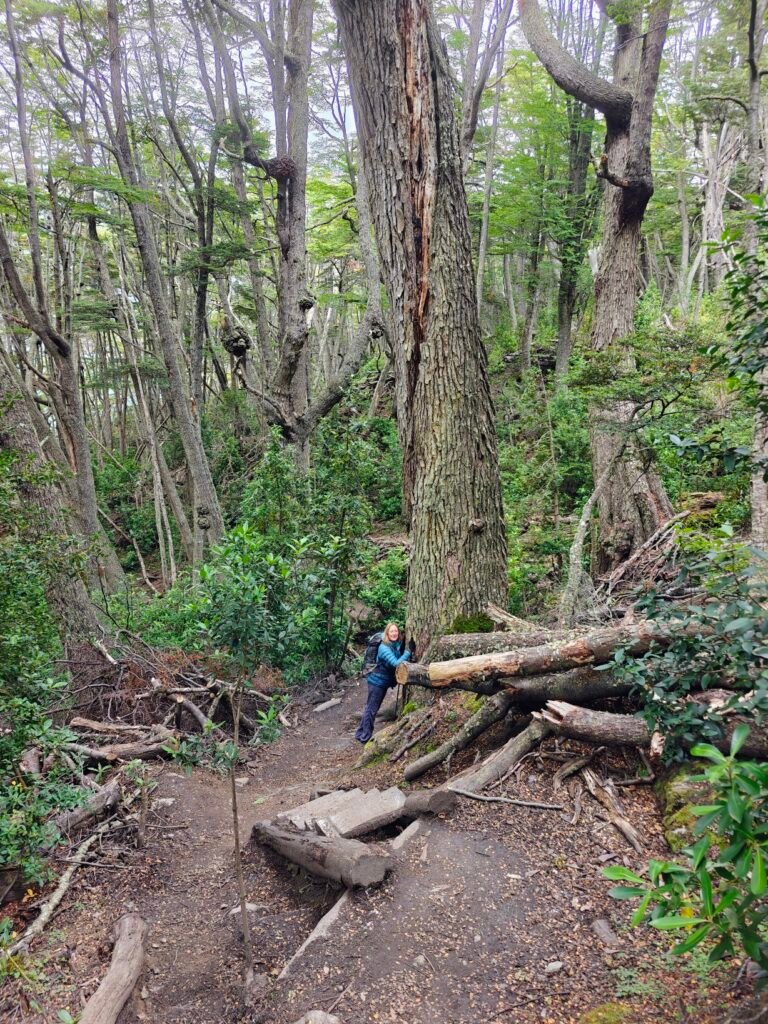
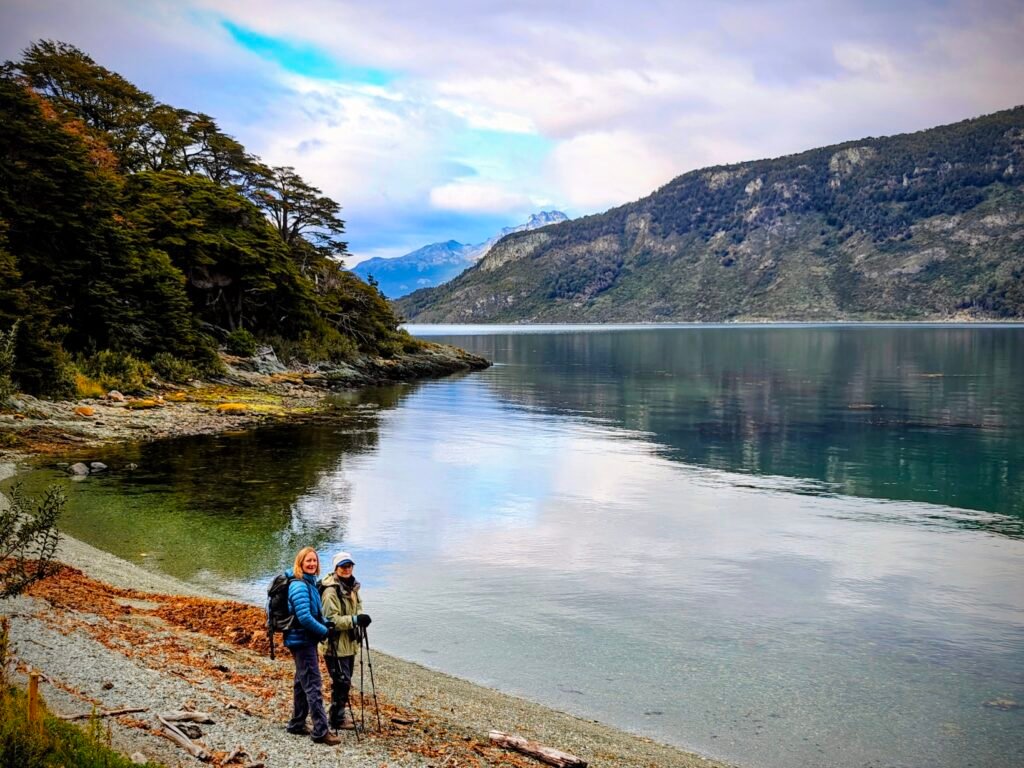
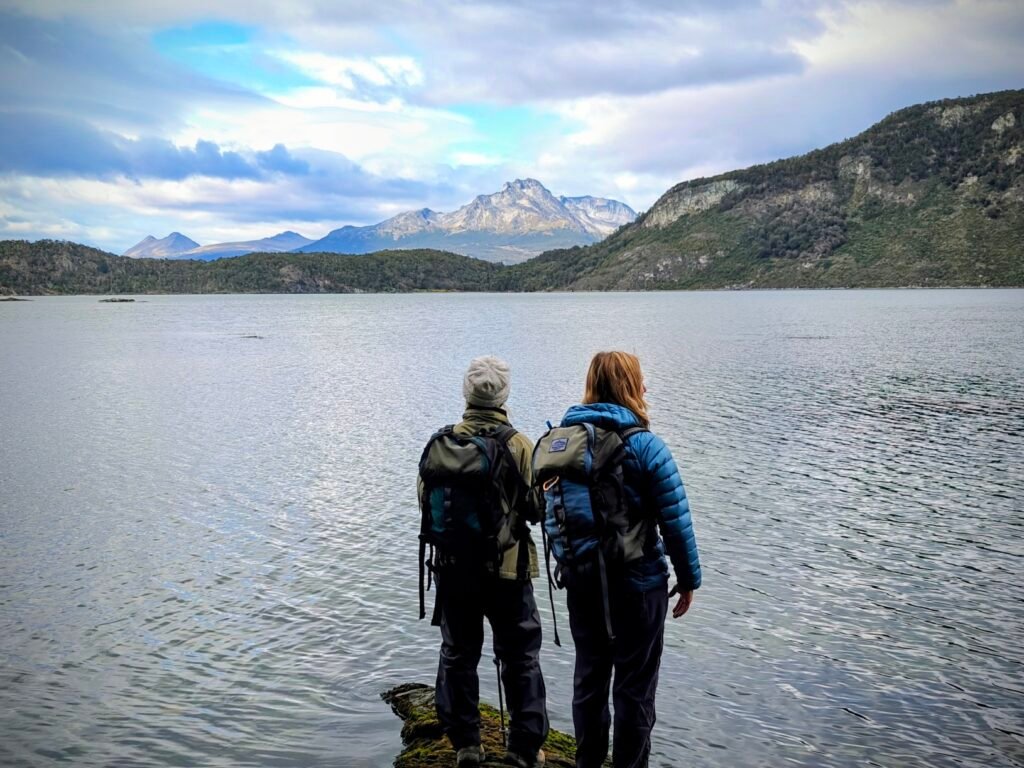
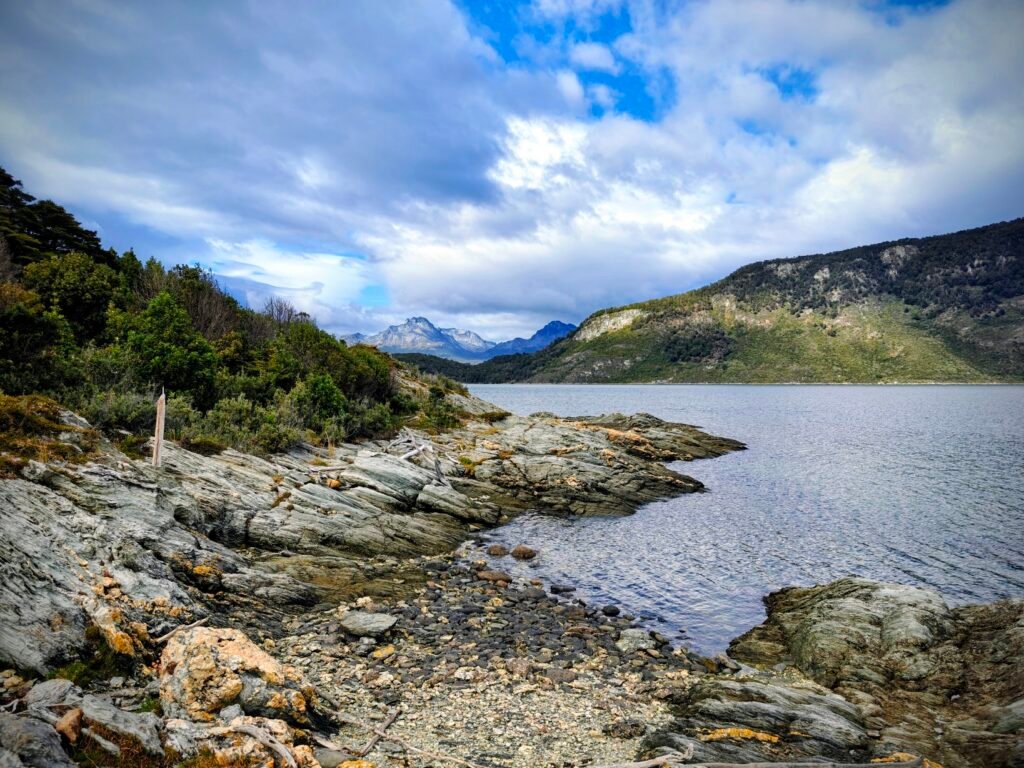
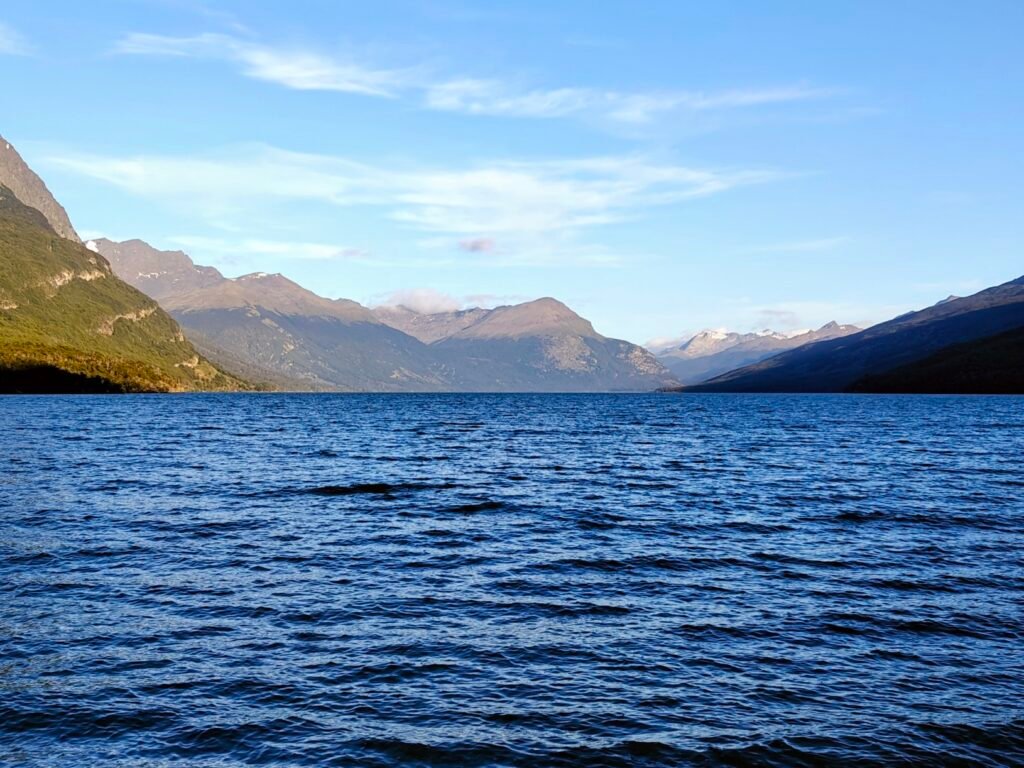
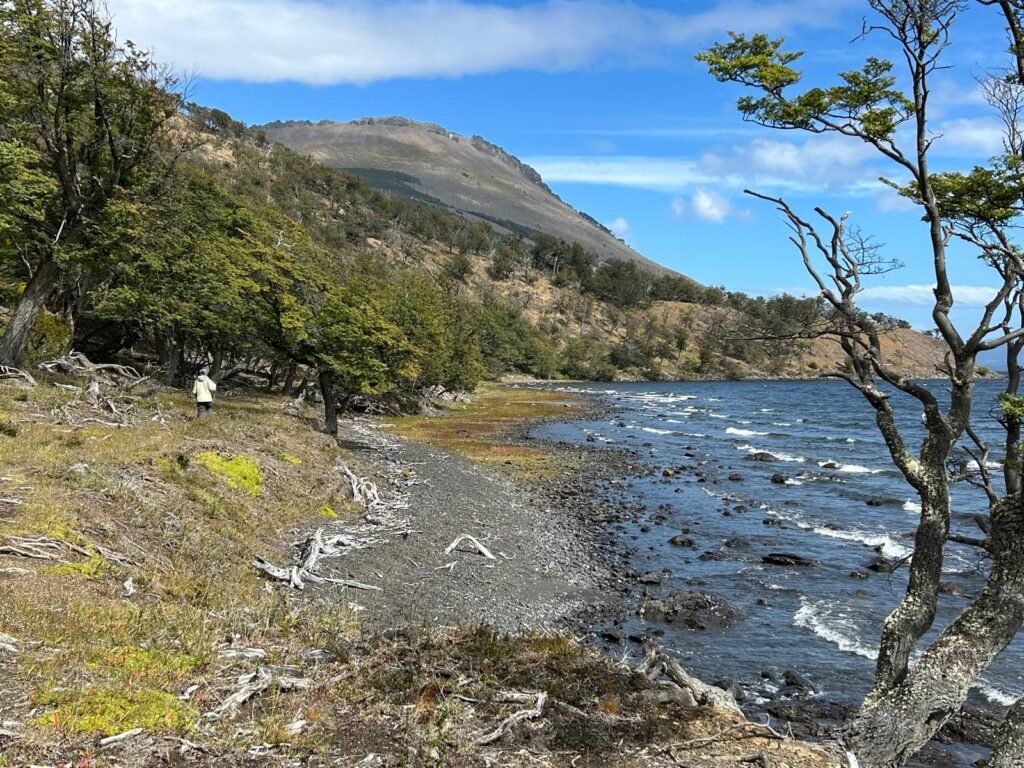
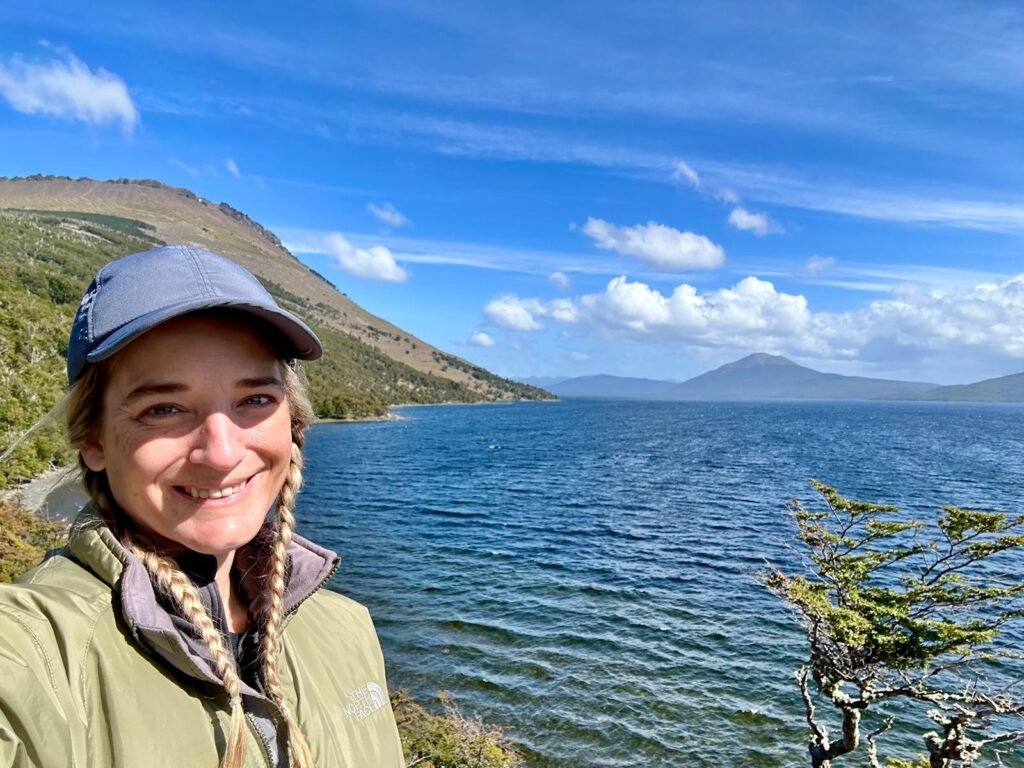
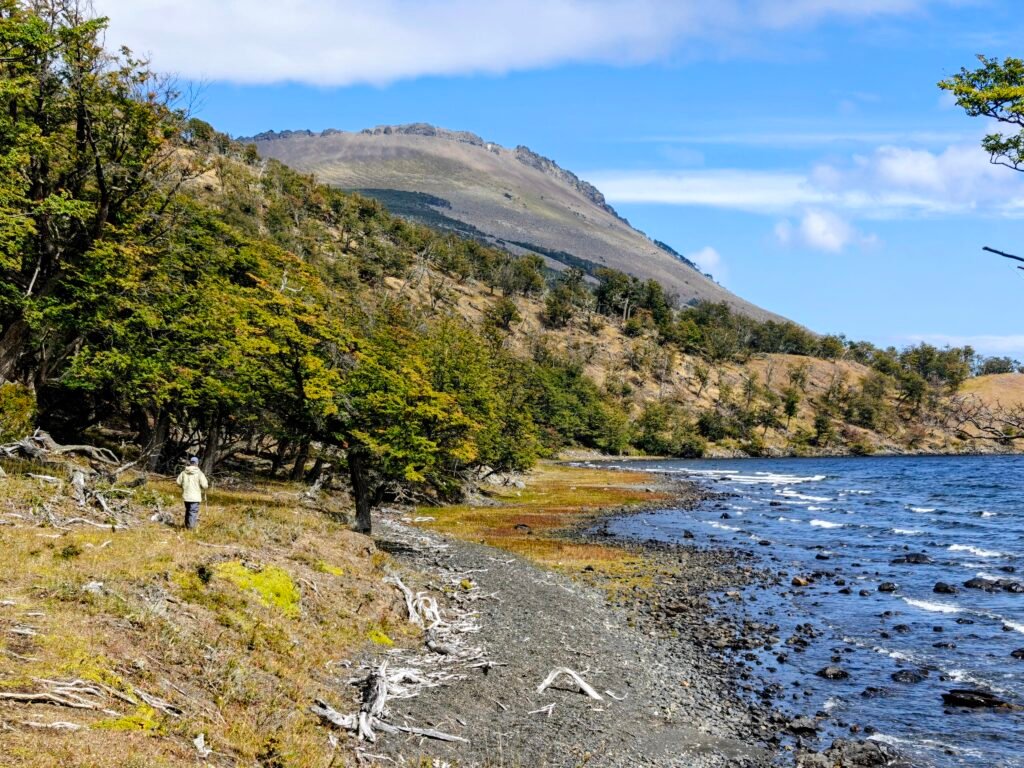
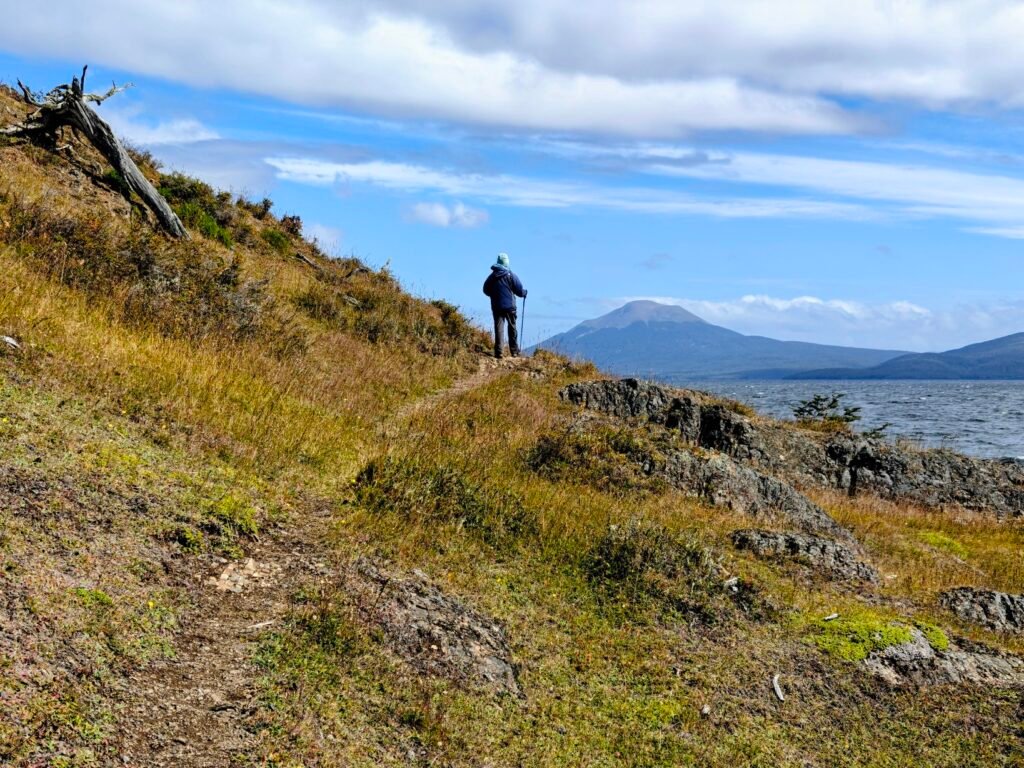
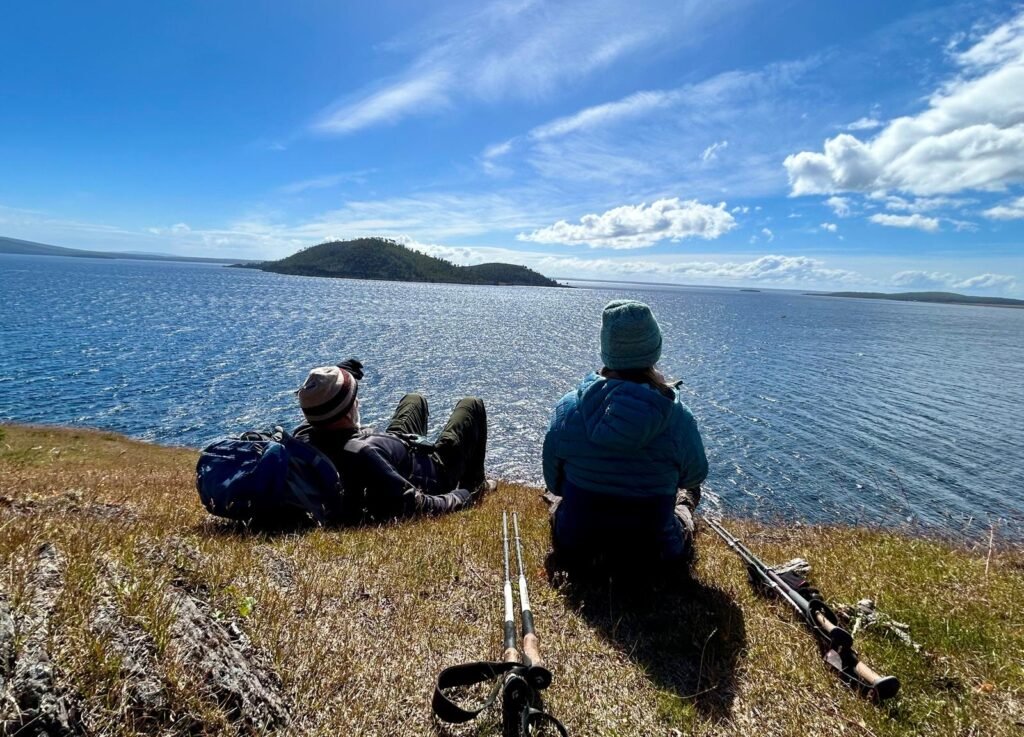
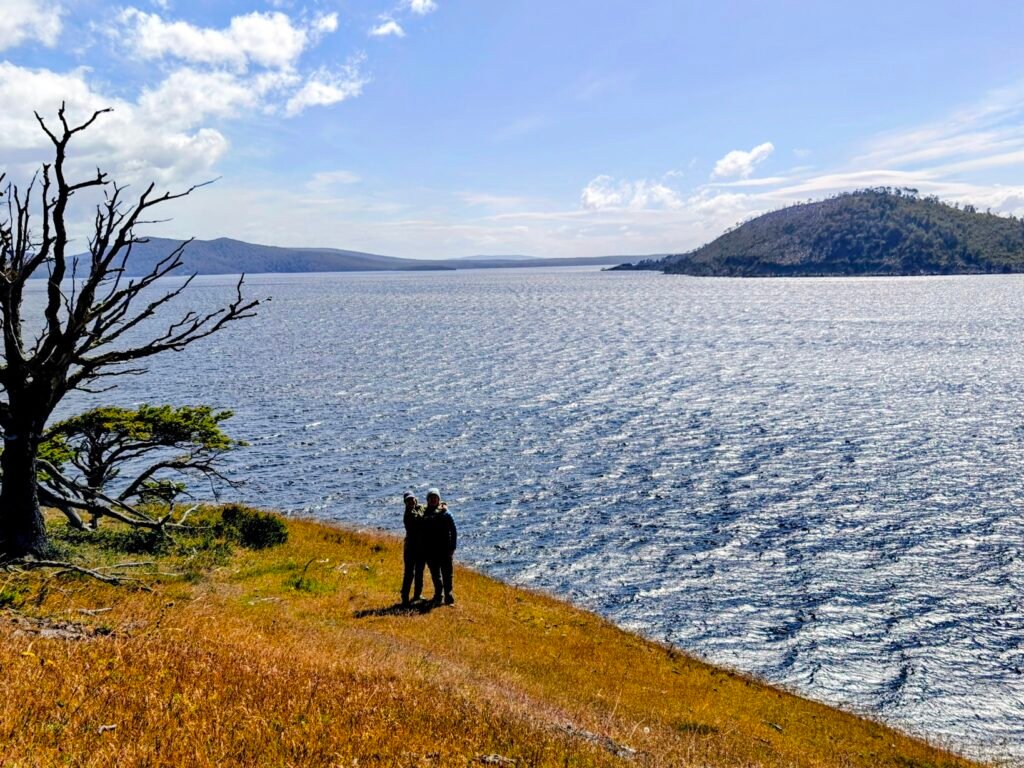
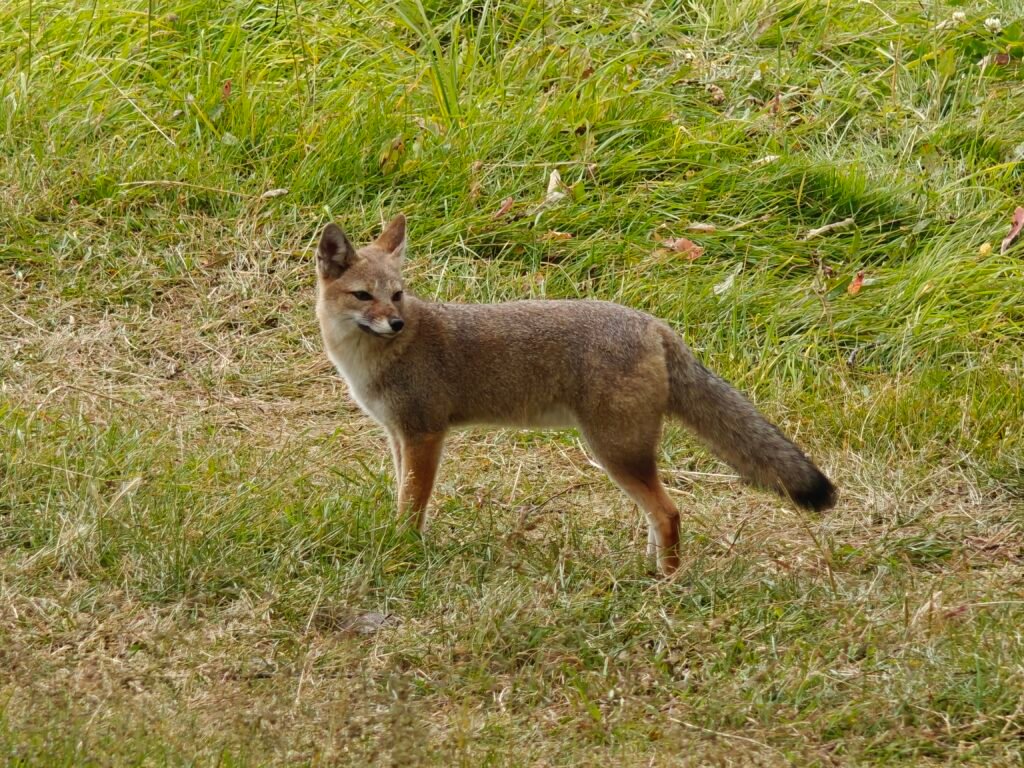
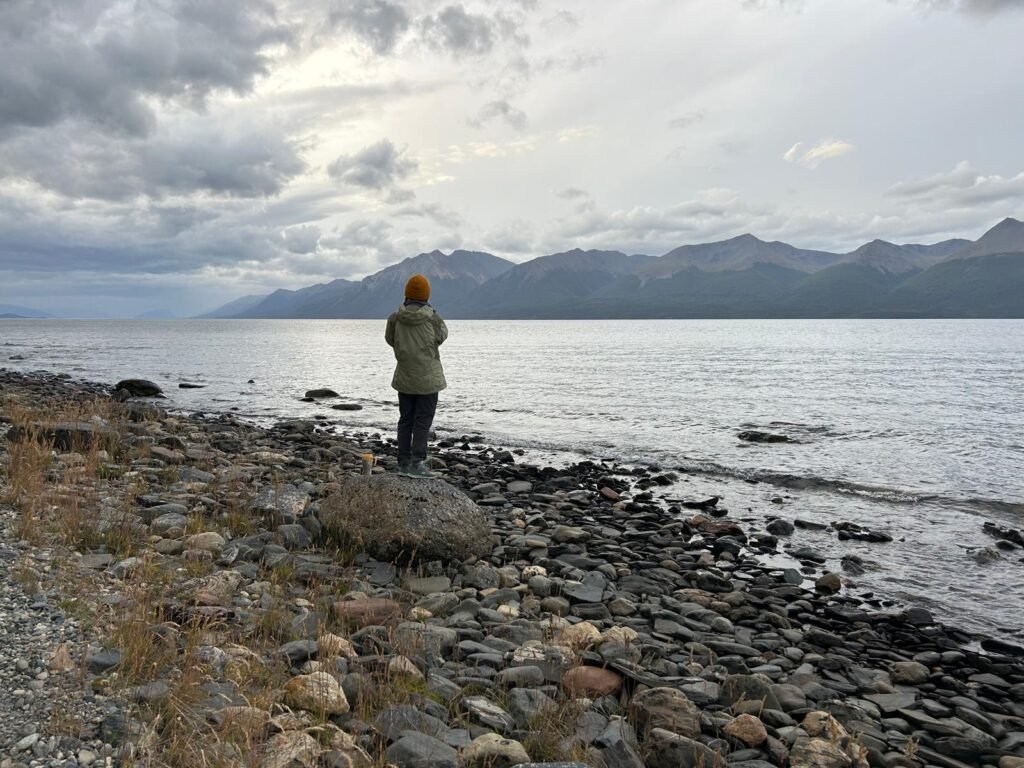
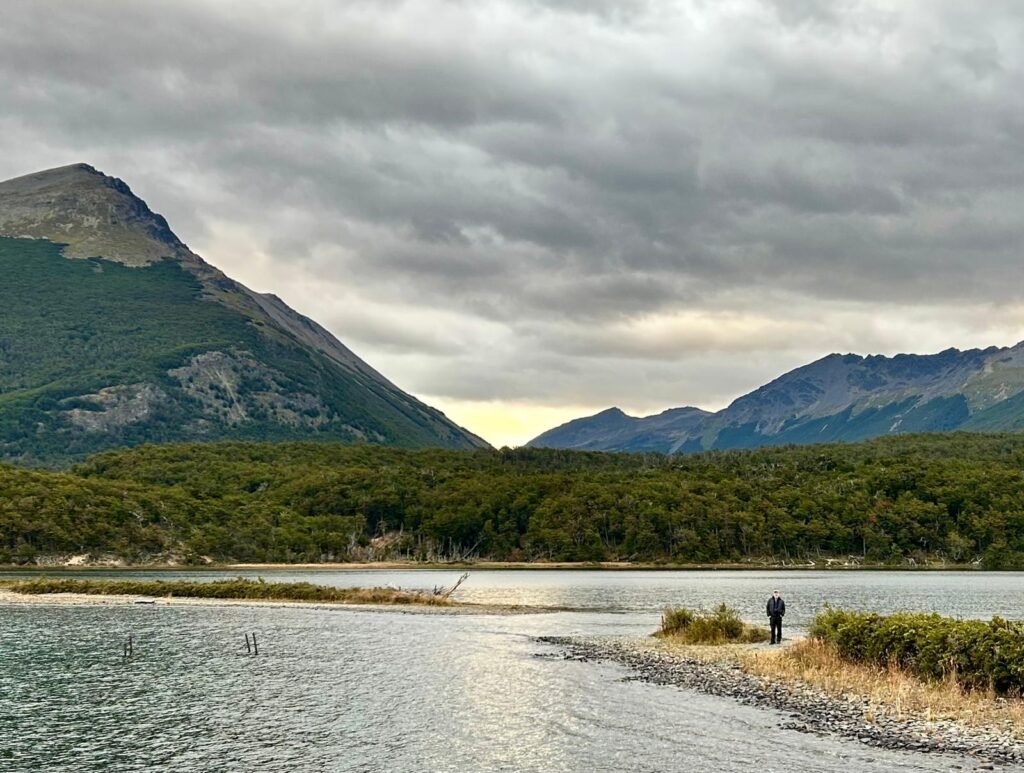
Our semi-wild campsite on Lago Blanco, a beautiful freshwater lake in the interior of Tierra del Fuego, was sweet. The setting was beautiful as the lake was surrounded by mountains. We also had a nice visit to our campsite by a Patagonian fox, a threatened subspecies of the South American Grey Fox. Importantly, we had the opportunity to stretch our legs on a few-hour hike along the lakeshore. Here’s some photos:

Campsite at Lago Blanco
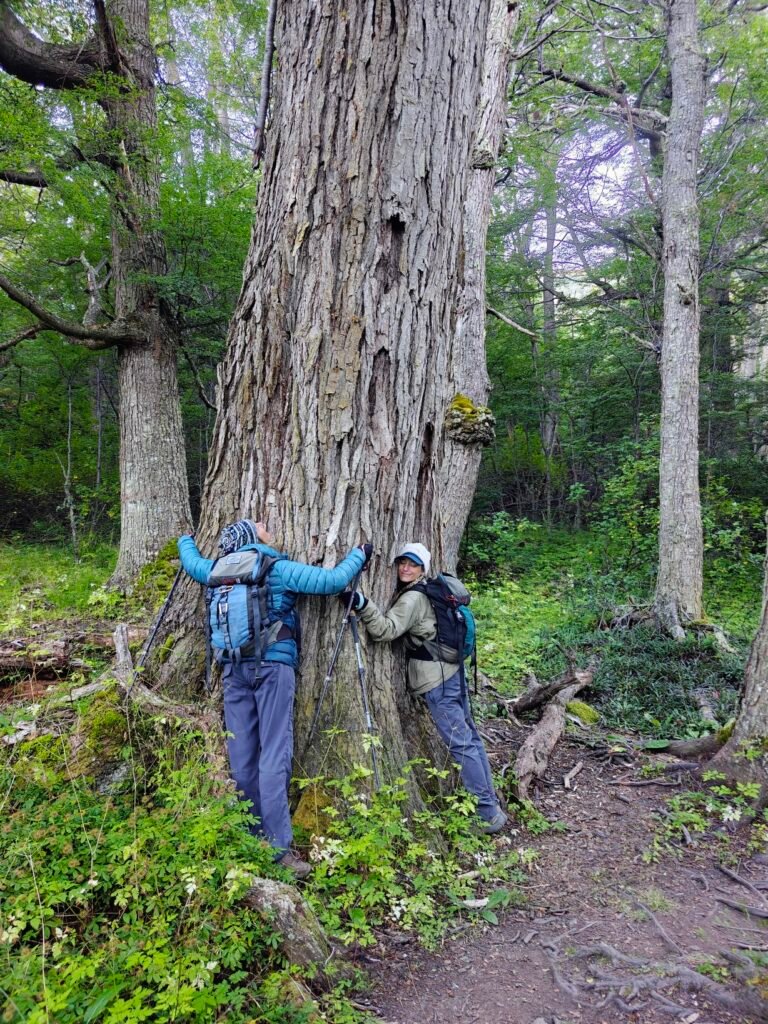
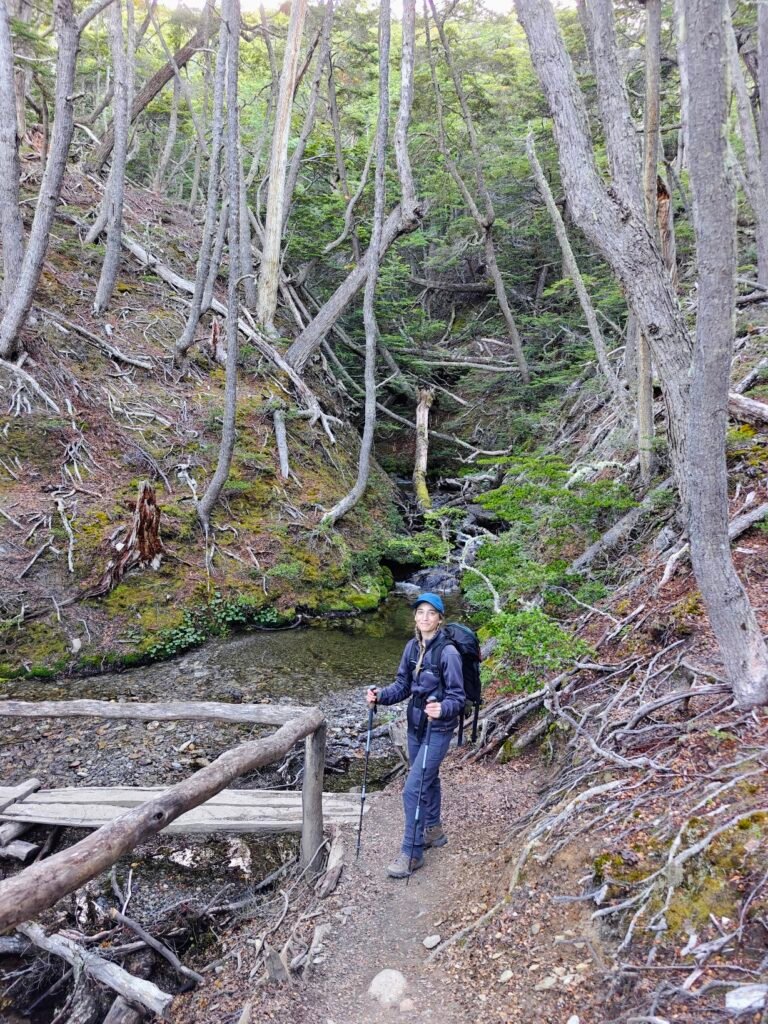
Hiking along the shore of Lago Blanco
The shore of Lago Blanco
Hiking along the shore of Lago Blanco
Lago Blanco
The shore of Lago Blanco
Patagonian fox

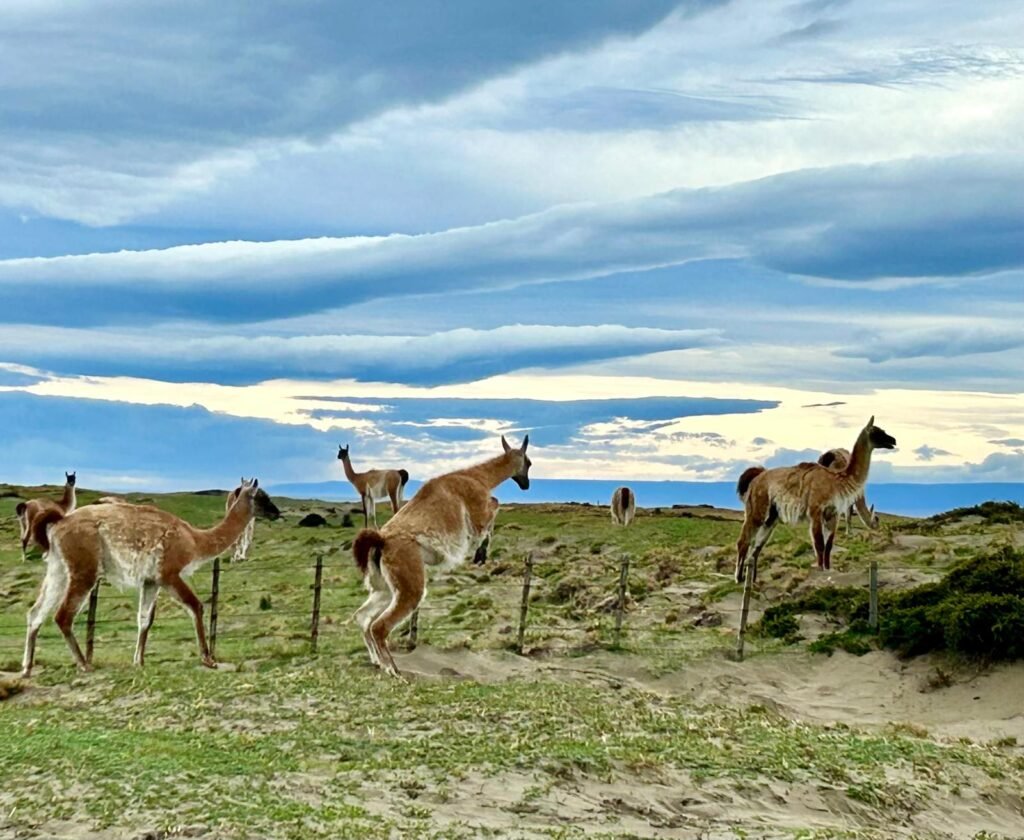
I should also note the abundance of Guanacos – close relative of the Alpaca – along the route. Last year Nancy and believed ourselves lucky when we spotted a few of these beautiful creatures en route to Torres del Paine, but here we are inundated with Guanacos at every turn. They are in the fields by the dozens and along the roadside edges everywhere, making driving somewhat hazardous. Fortunately, they mostly seem wise to the hazards of challenging vehicles or darting across in front of the oncoming vehicles. Neverthess, we saw more than a few roadside carcasses. I should note that while we find Guanacos beautiful creatures and love seeing them, the sheep ranchers view them as pests and call them “a plague on the land” – not too surprising coming from livestock ranchers, when anything competing with resources on the land is viewed as something to do away with – argh!
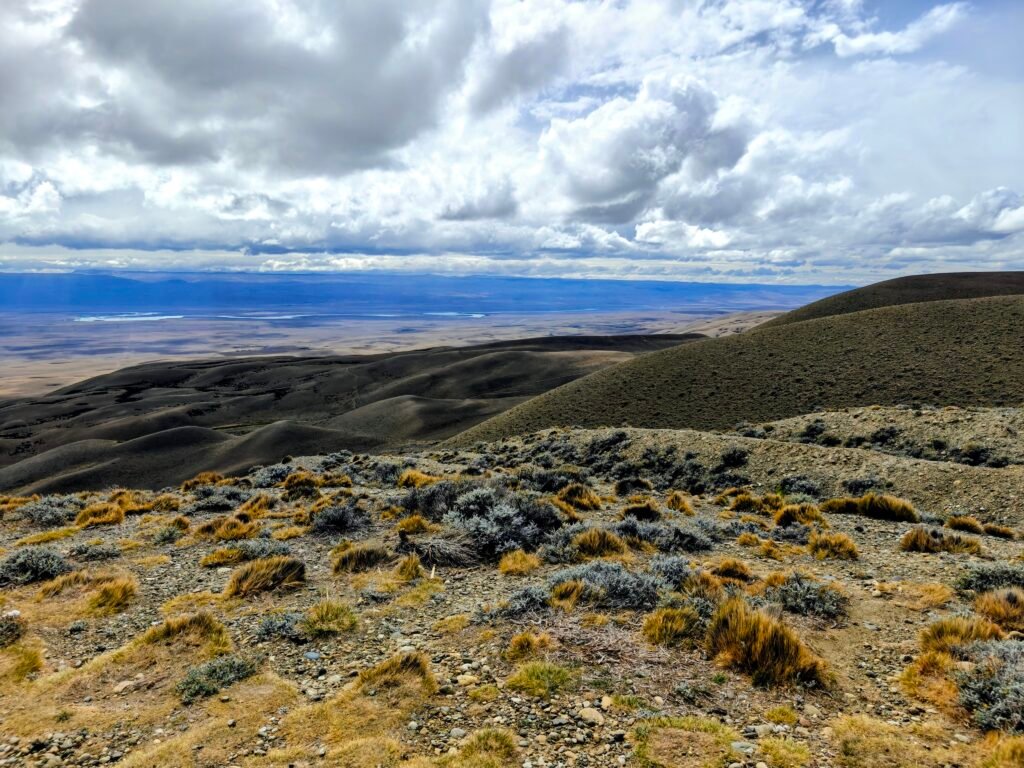
Guanacos

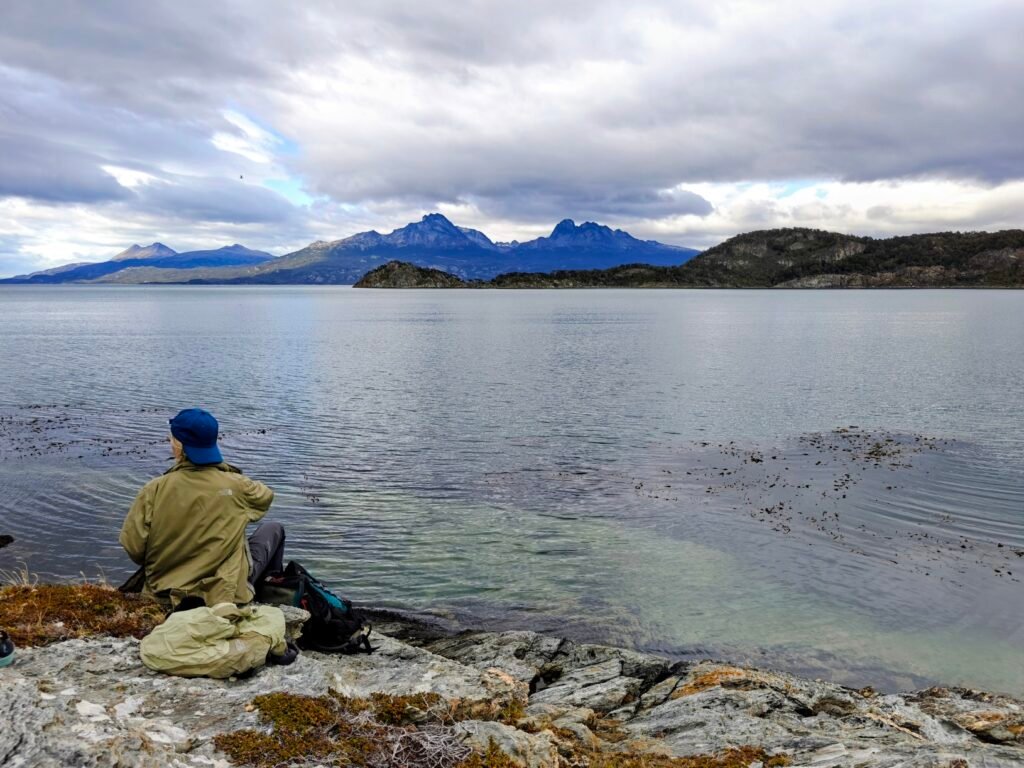
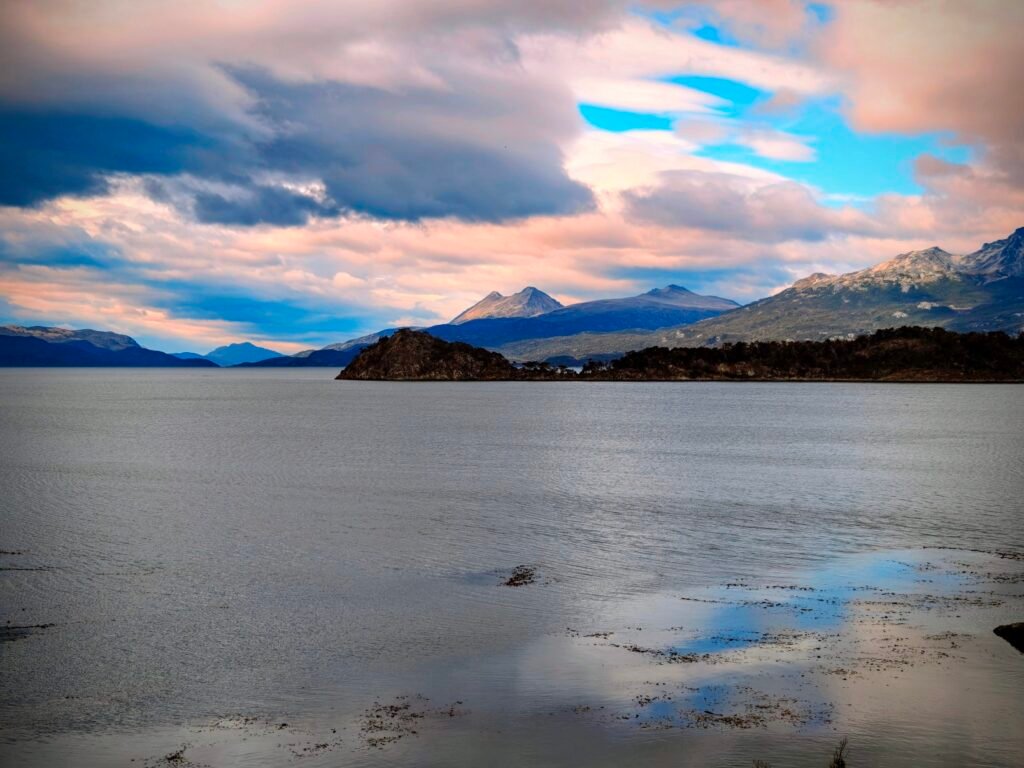
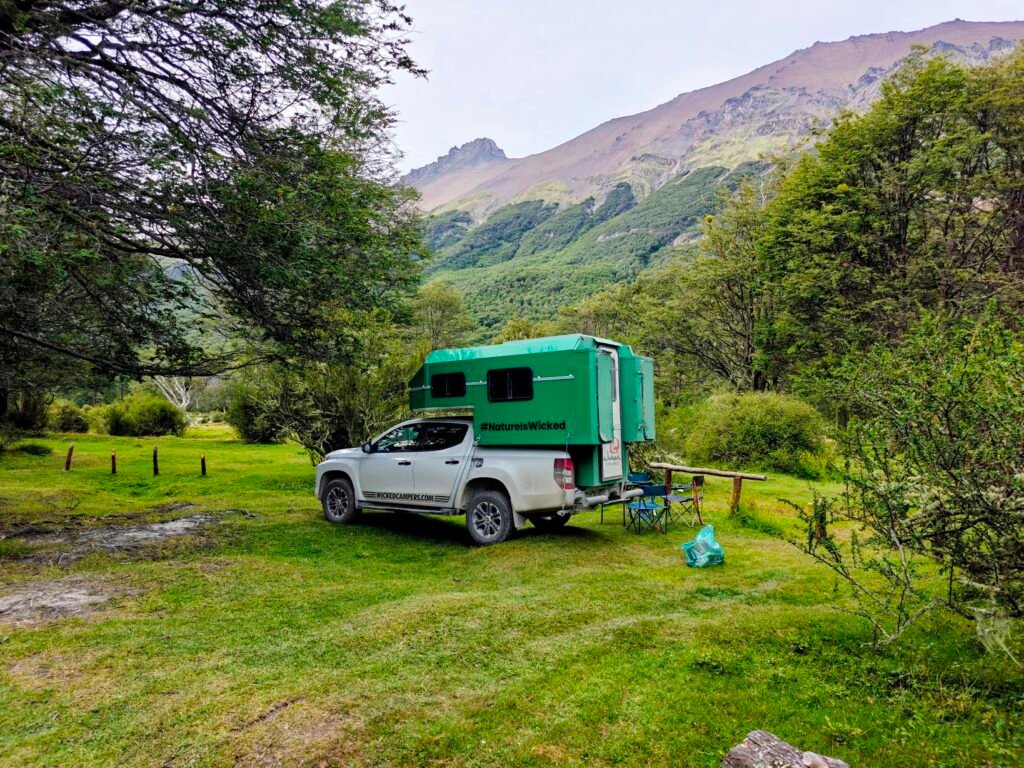
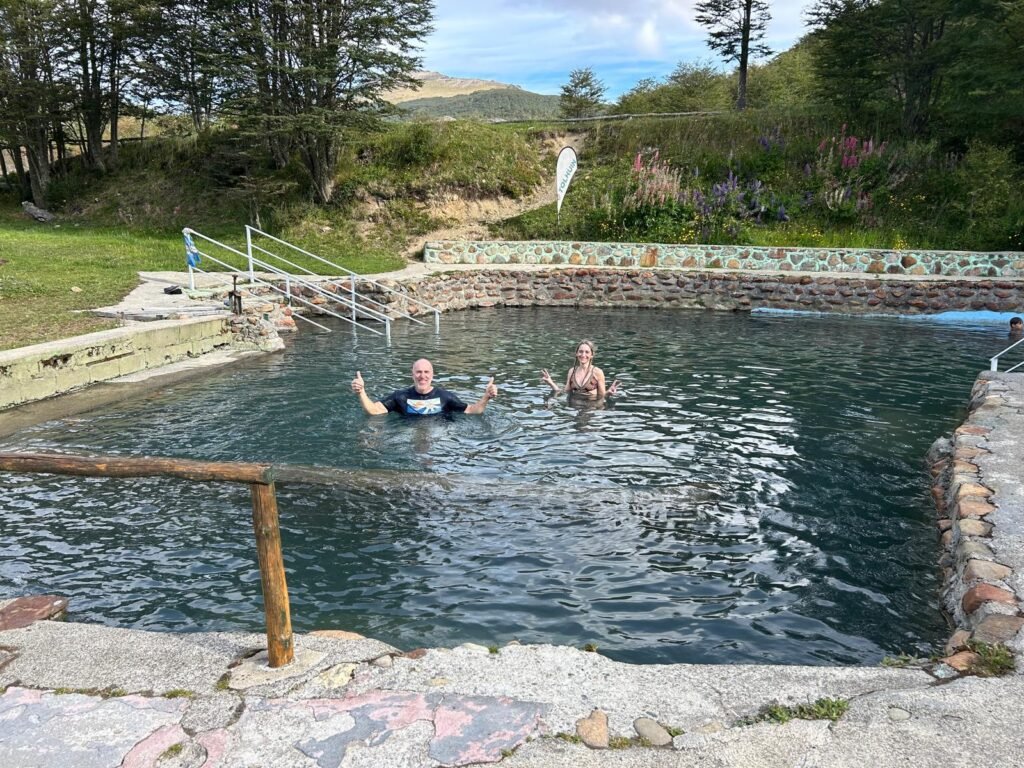
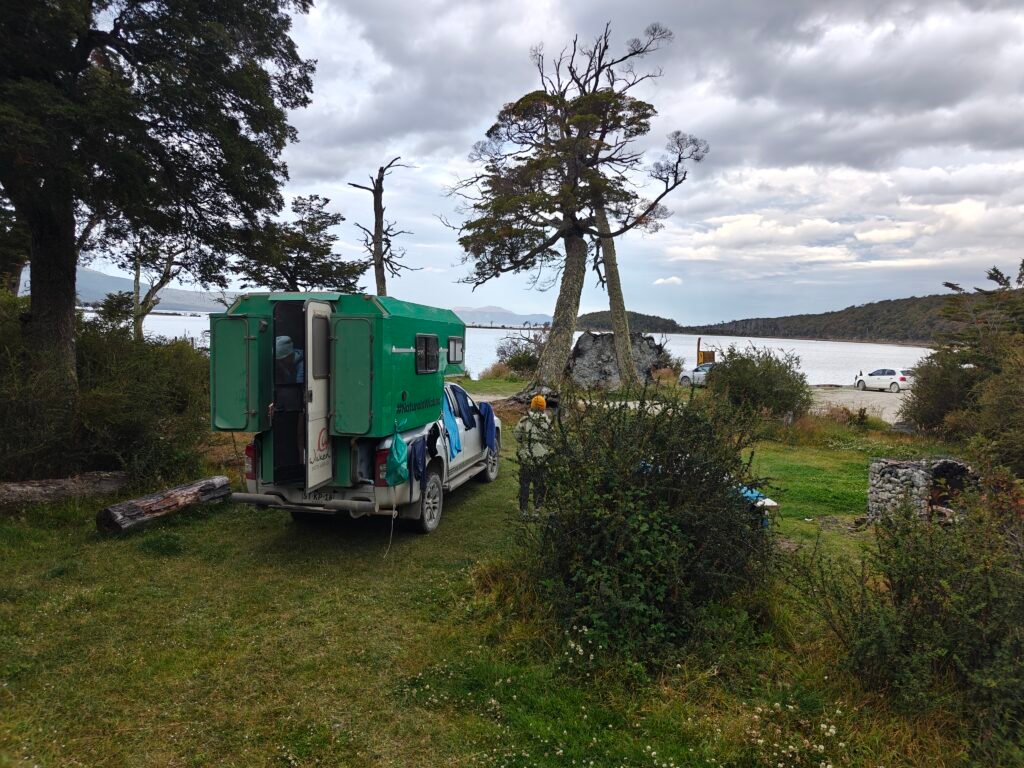
Our last night destination before Ushuaia was another semi-wild campsite on Lago Fagnano located halfway between the towns of Tolhuin and Ushuaia (see C on map above). But before getting to the lake, Caitlin had us detour to a commerical natural hotspring, which turned out to be quite nice and relaxing. We ended the day at a nice campsite on Lago Fagnano that is quite popular with the local fishermen. There were dozens of fishers when we arrived and lots of cars, and it appeared that we might be in for a roudy night, but alas, they all departed at or around sunset and we had the site to ourself – nice! Here’s some pics:
Hot springs near Ushuaia
Campsite at Lago Fagnano
Lago Fagnano
Campsite at Lago Fagnano (on the far shore)
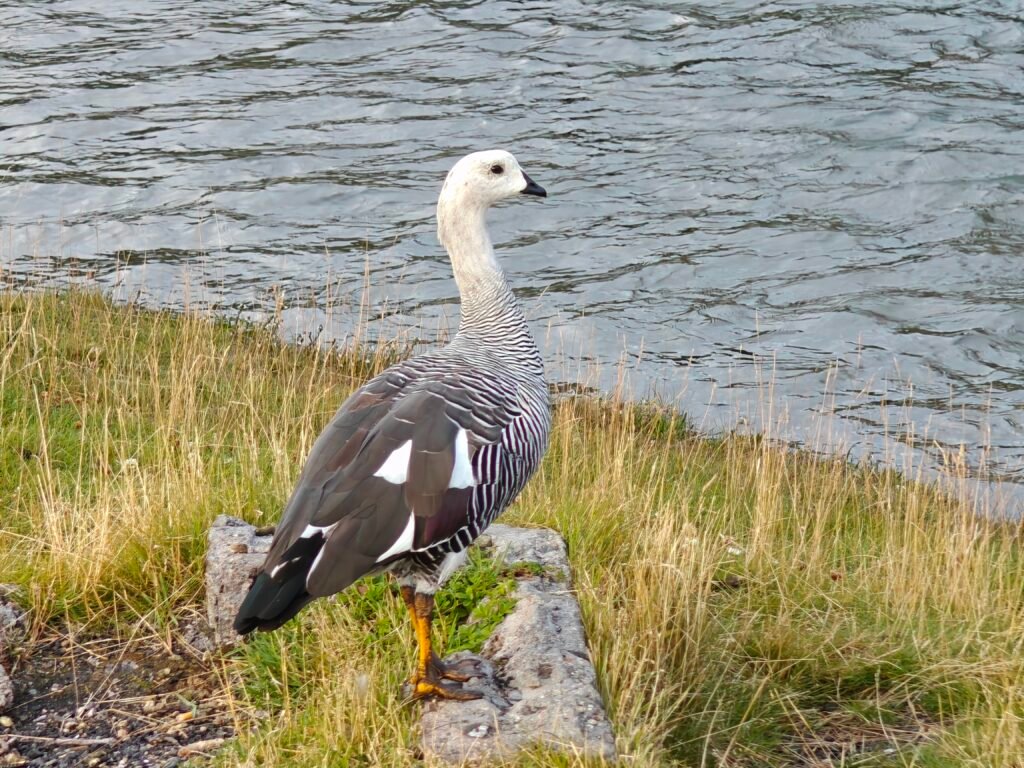
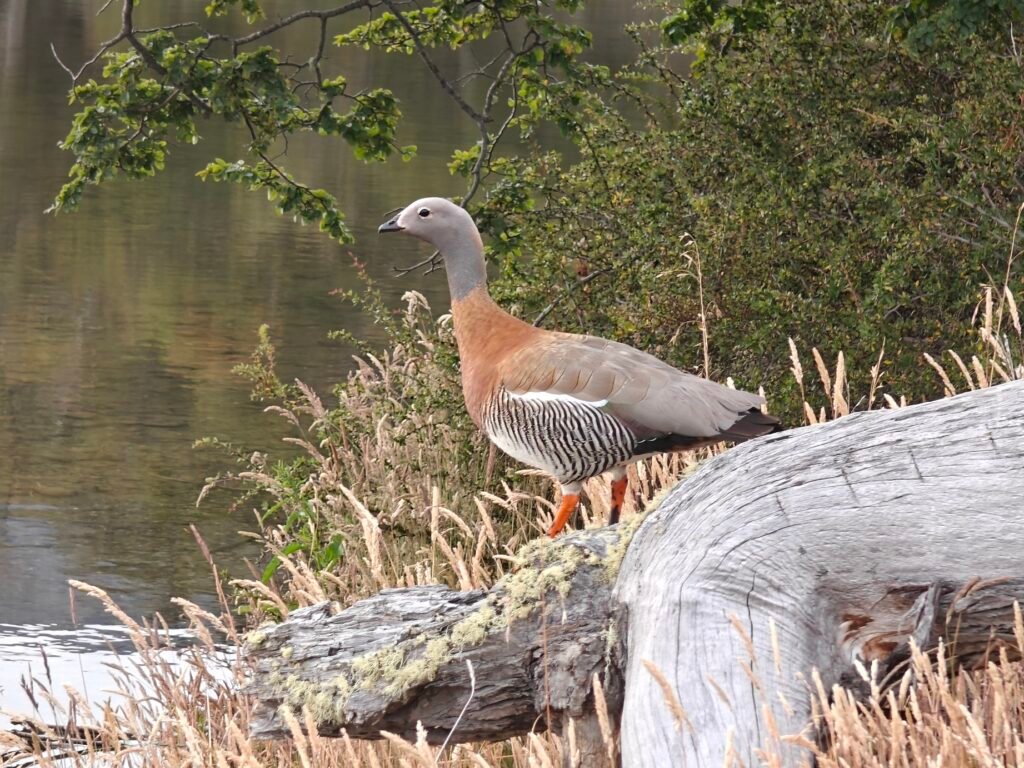
Ashy-headed goose at Lago Fagnano

OK, on to Ushuaia and Tierra del Fuego National Park for some hiking at “the end of the world”. See you there!

Feb 18-19: Punta Arenas and Strait of Magellan Boat Cruise

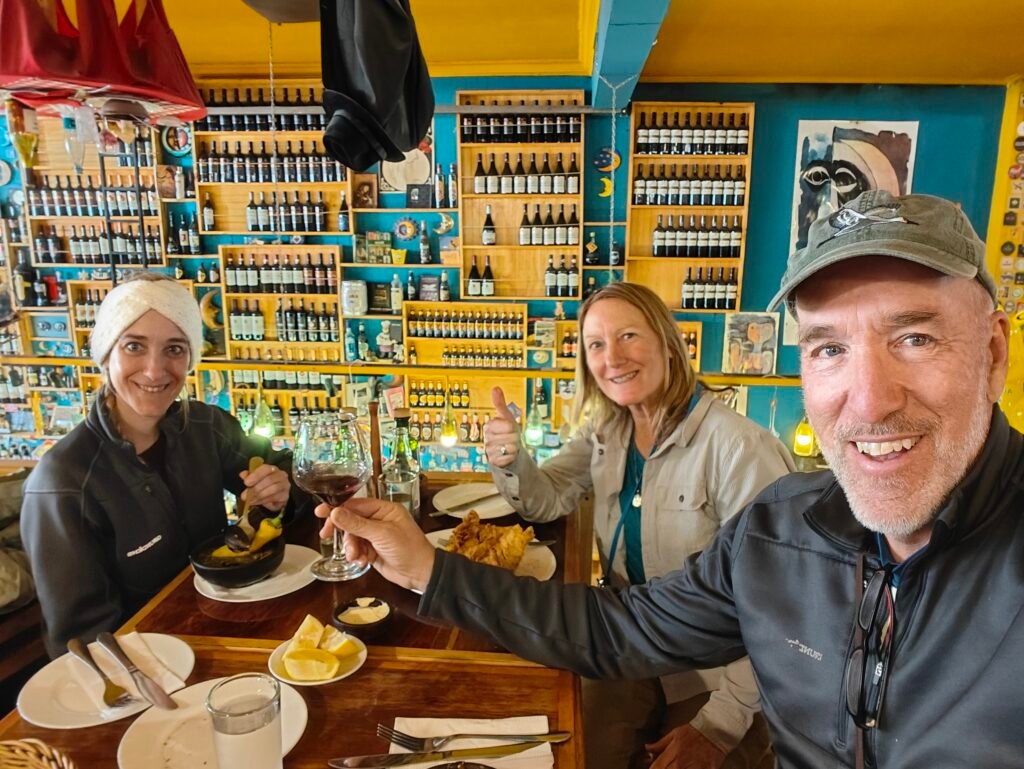
We arrived in Punta Arenas on the 17th and headed straight to our AirBnB for needed some R&R. Here’s first night celebration for arriving without issue:

First night in Punta Arenas

The following day, we picked up our Wicked camper, purchased supplies, and Nancy and Caitlin stolled along the waterfront and went to a very old museum on the history of the region while I dealt with picking up the camper and getting it squared away (i.e. got new tires put on to save headaches later):

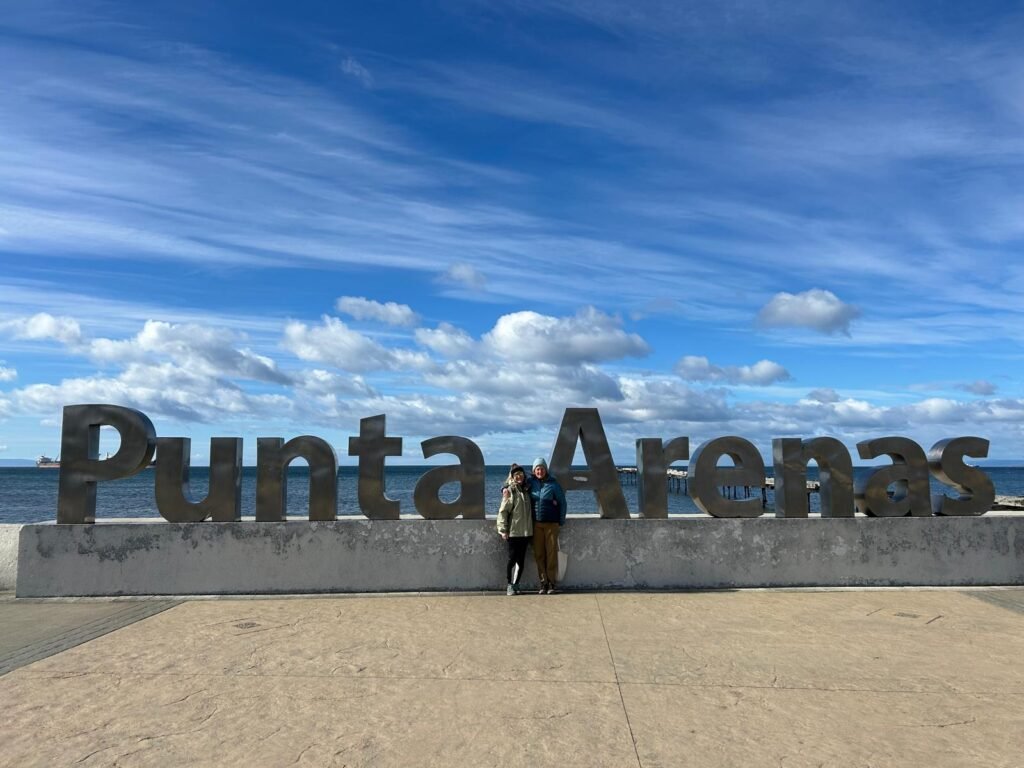
Punta Arenas on the waterfront
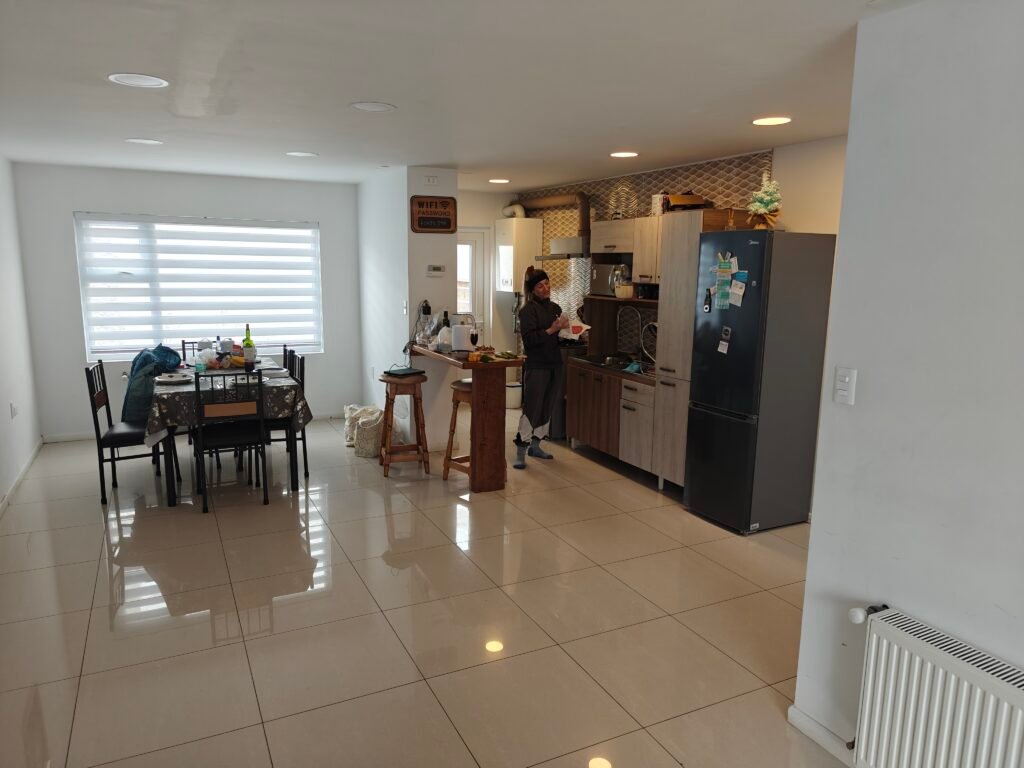
Caitline preparing gourmet dinner in our AirBnB
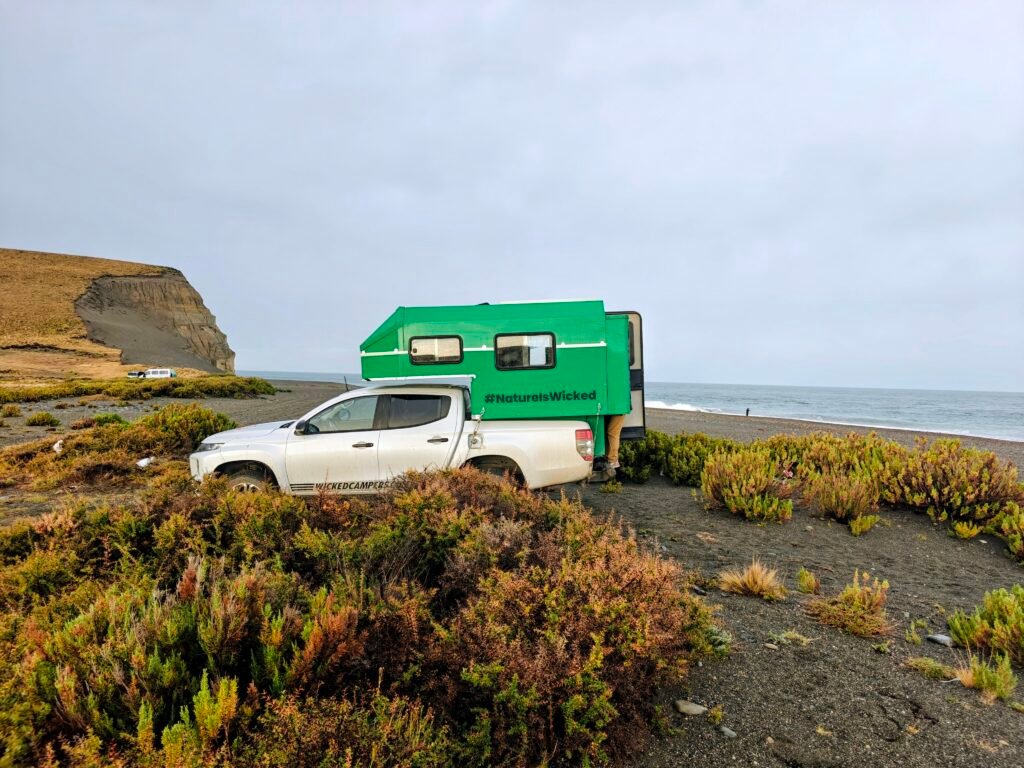
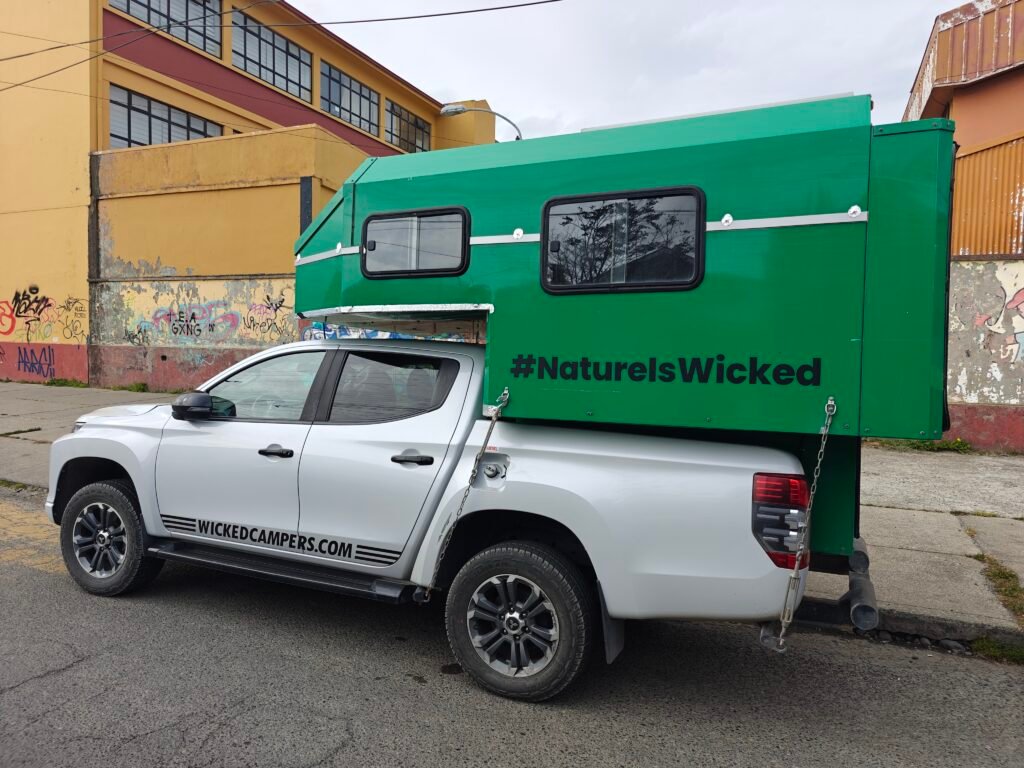
Our Wicked camper: small but suffient, the way we like it!
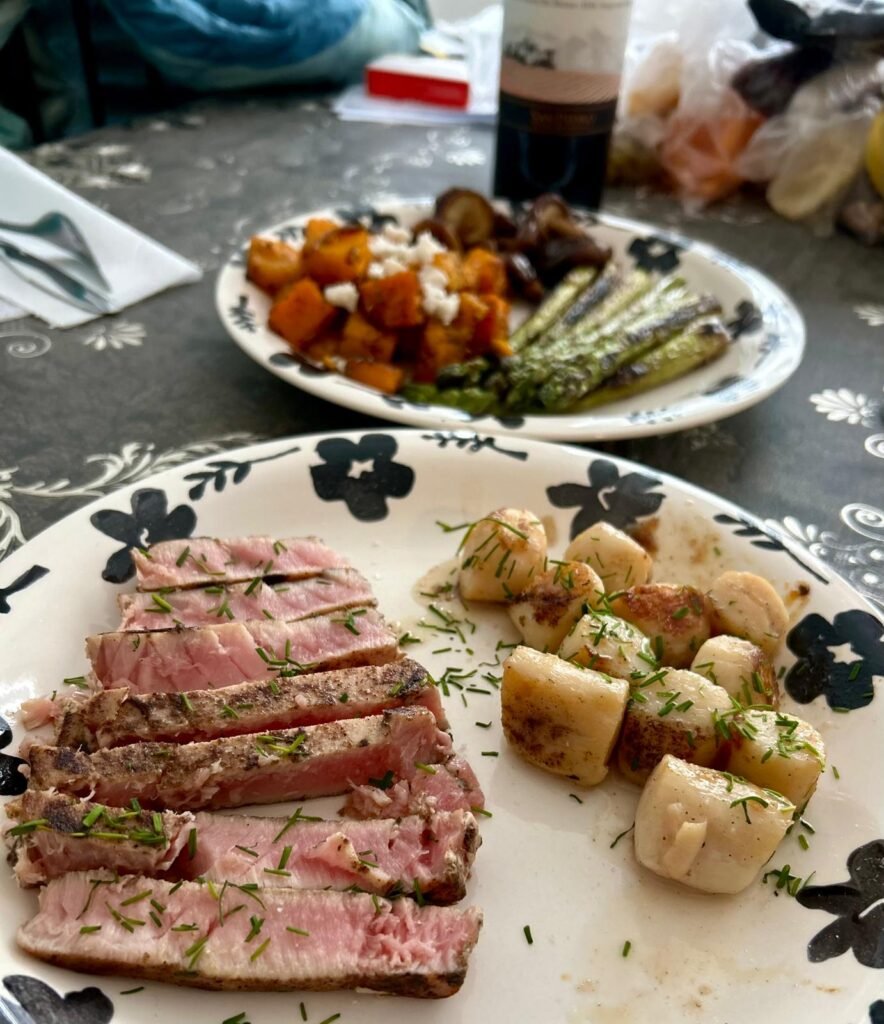
Caitlin cooked a gourmet meal of fresh scallops, tuna and vegies in our AirBnB!

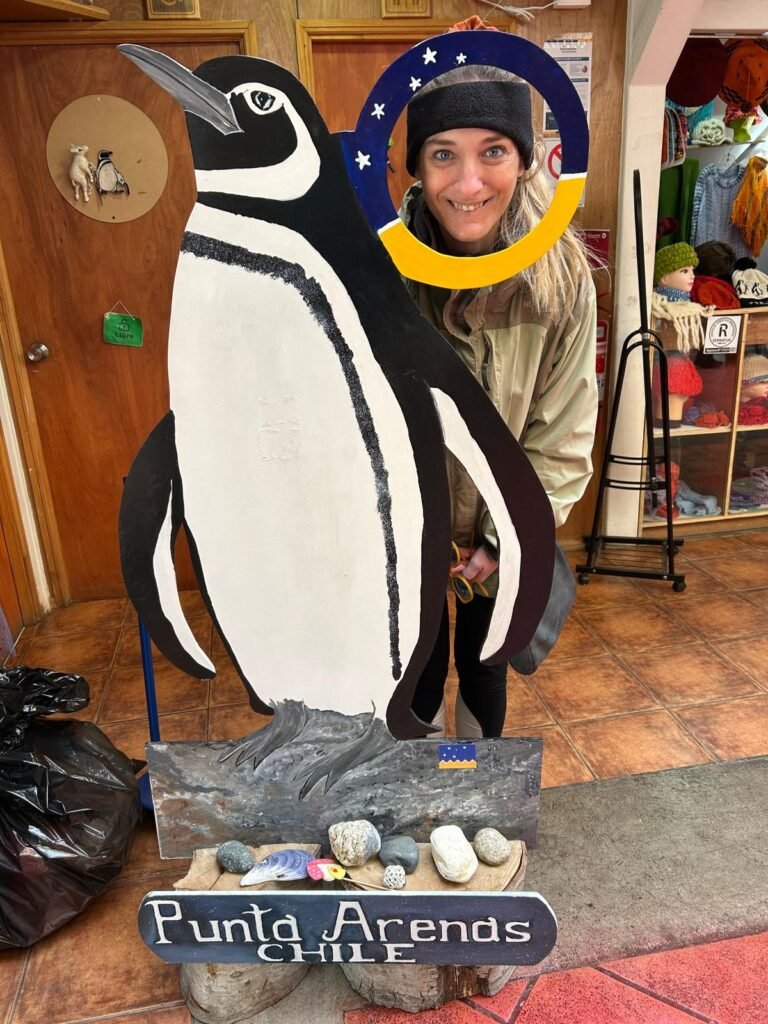
And in anticipation of seeing penguins in the coming days, Caitlin got into the mood:

Caitlin and her magellanic penguin friend

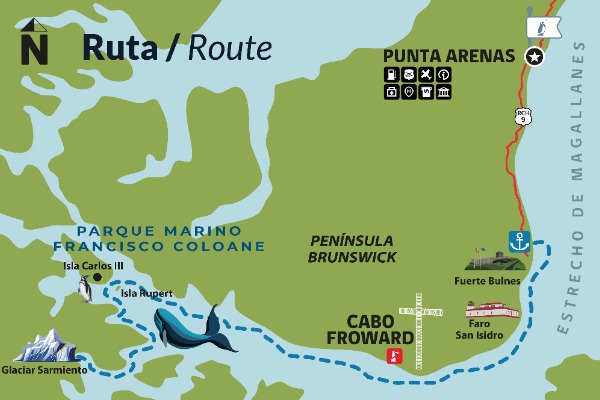
On the 19th, we splurged for an all-day boat cruise through the Francisco Coloane Marine Park in the southern area of the Strait of Magellan, passing Cape Froward, the southernmost point of the mainland Continent, and tidewater glaciers along the way (see map below for route).

Here are some selected photos from our boat journey:

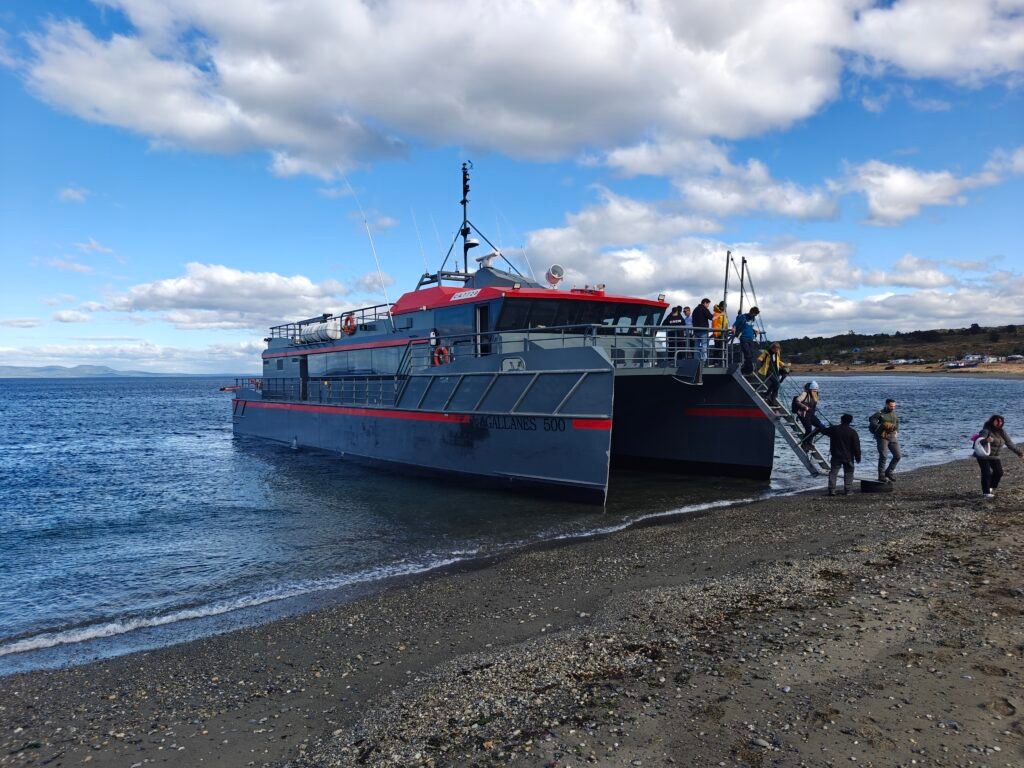
Our tour boat
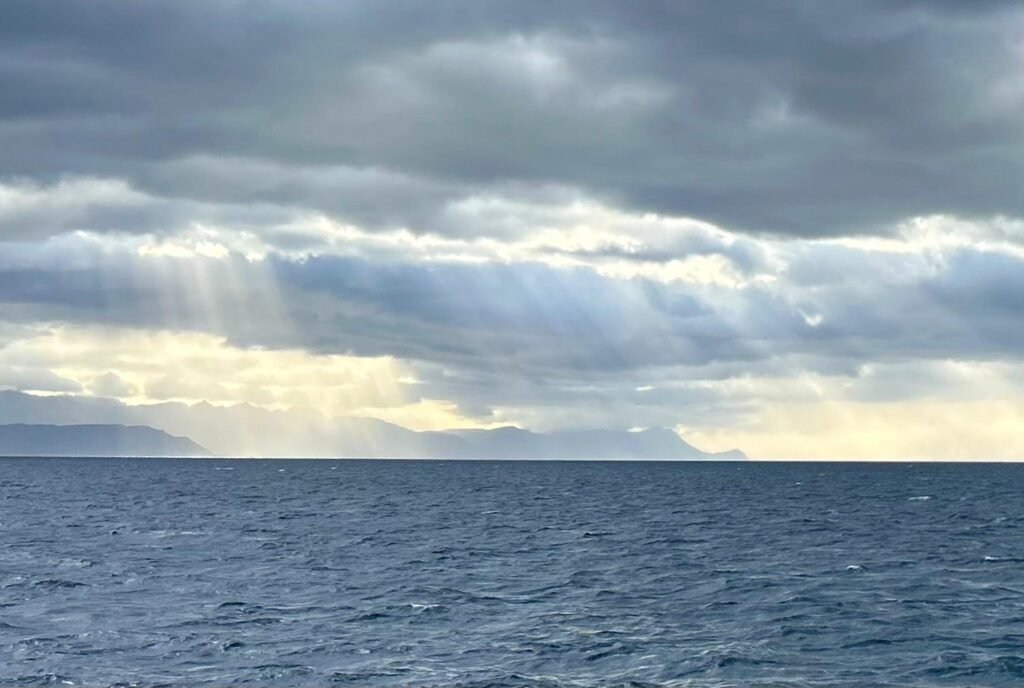
Typical intermittent rain and wind in the Strait of Magellan
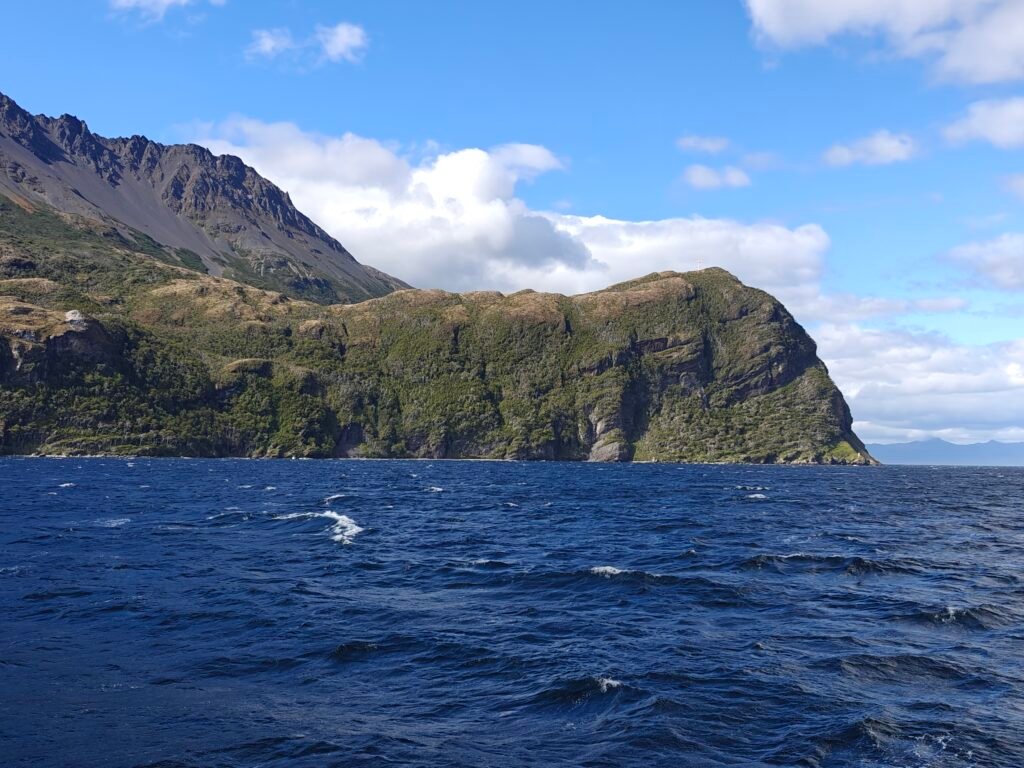
Cape Froward
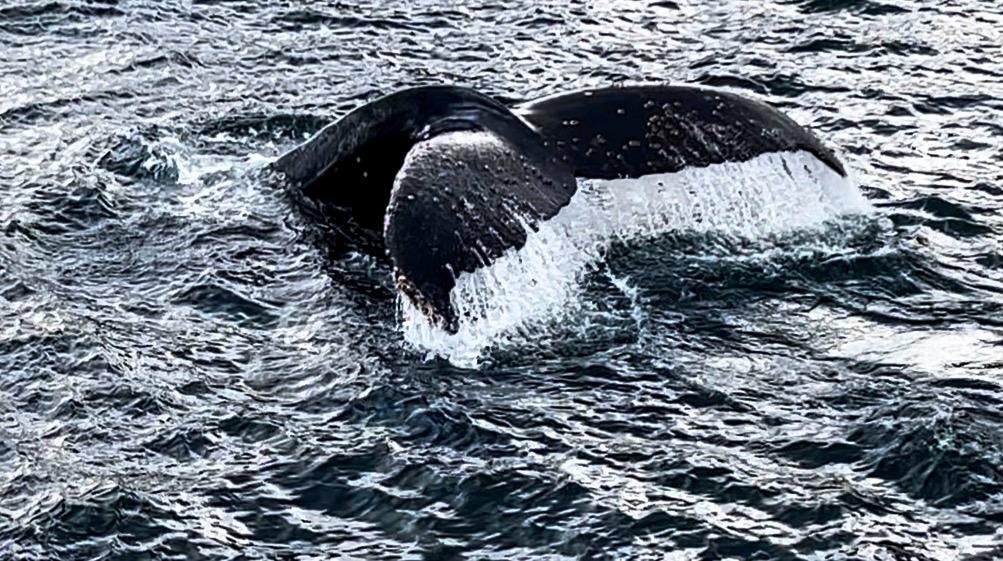
Humpback whale fluke
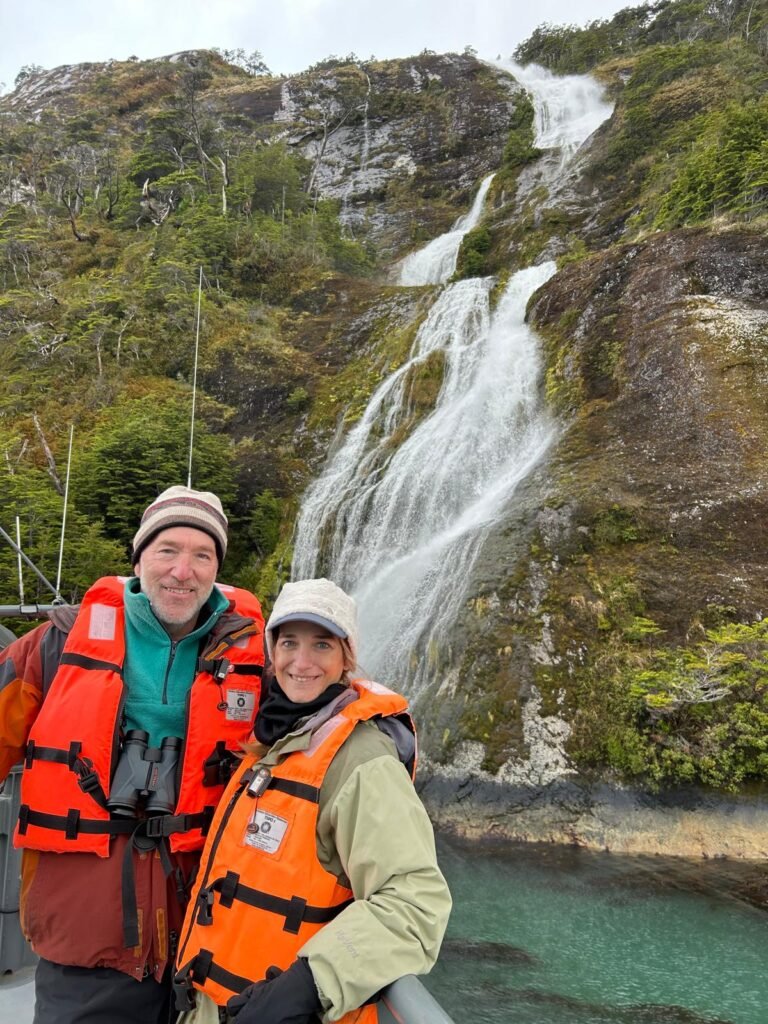
Me and the doodle at a fjord waterfall
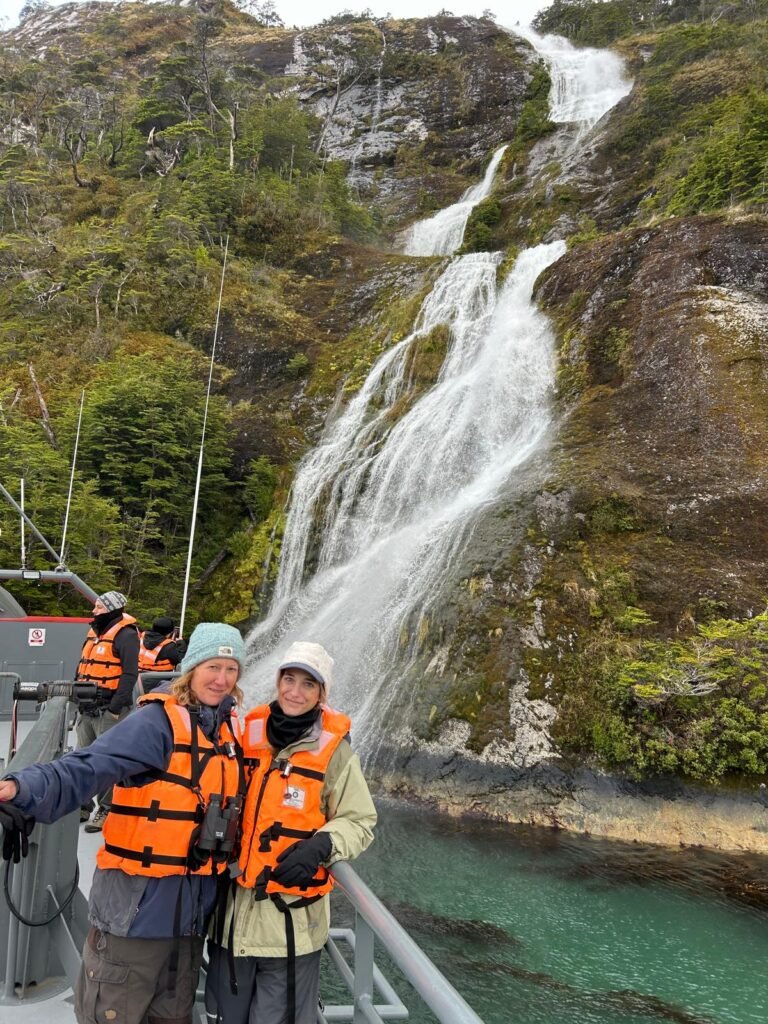
Nancy and the doodle at the fjord waterfall
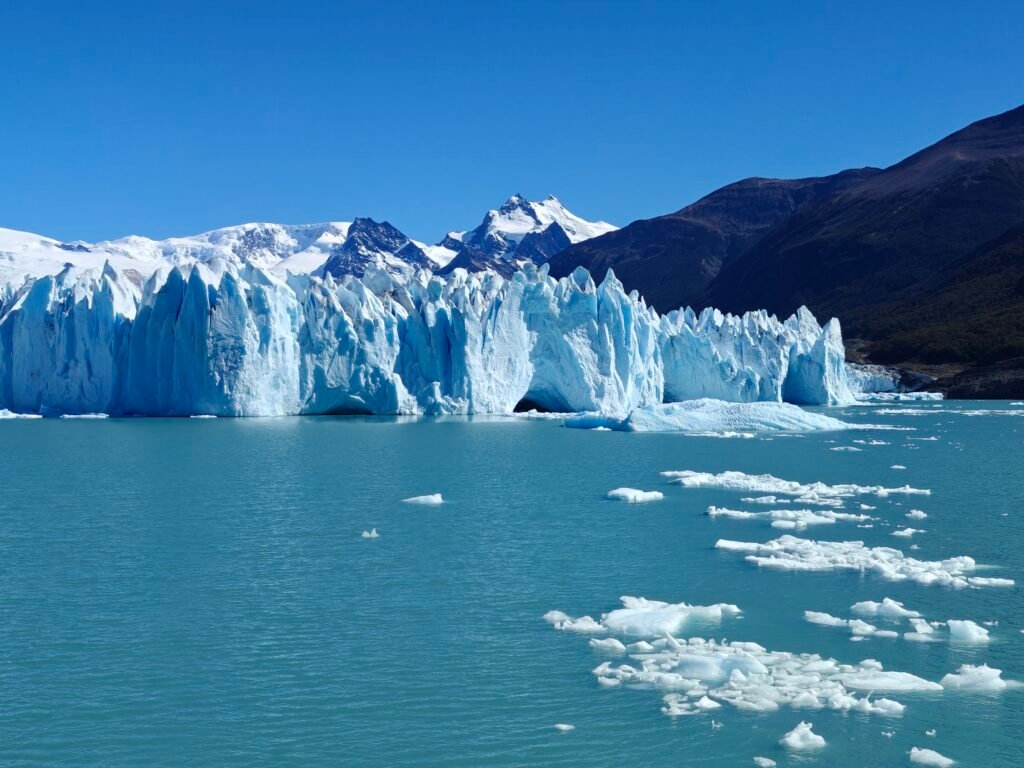
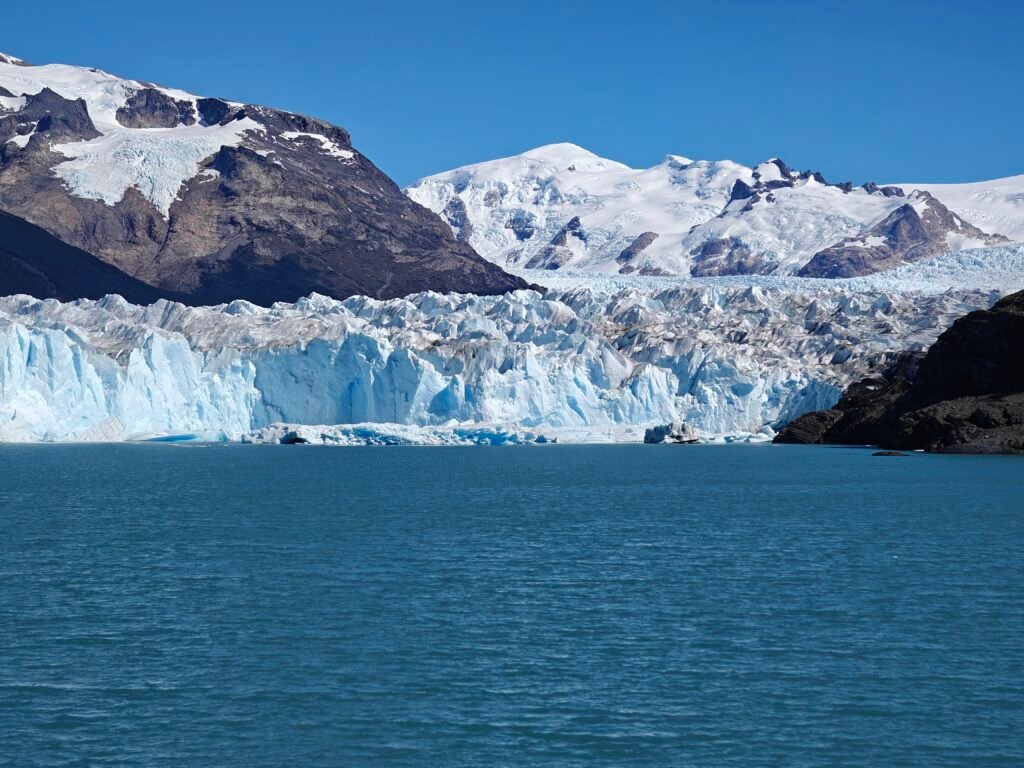
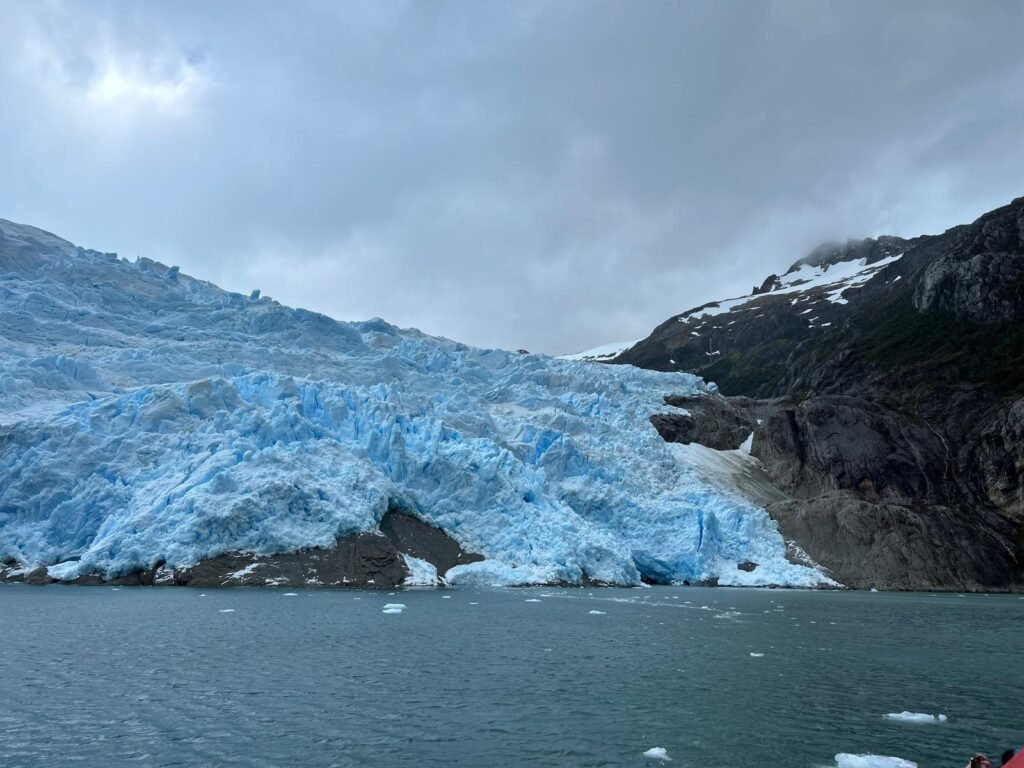
Tidewater glacier in Francisco Coloane Marine Park
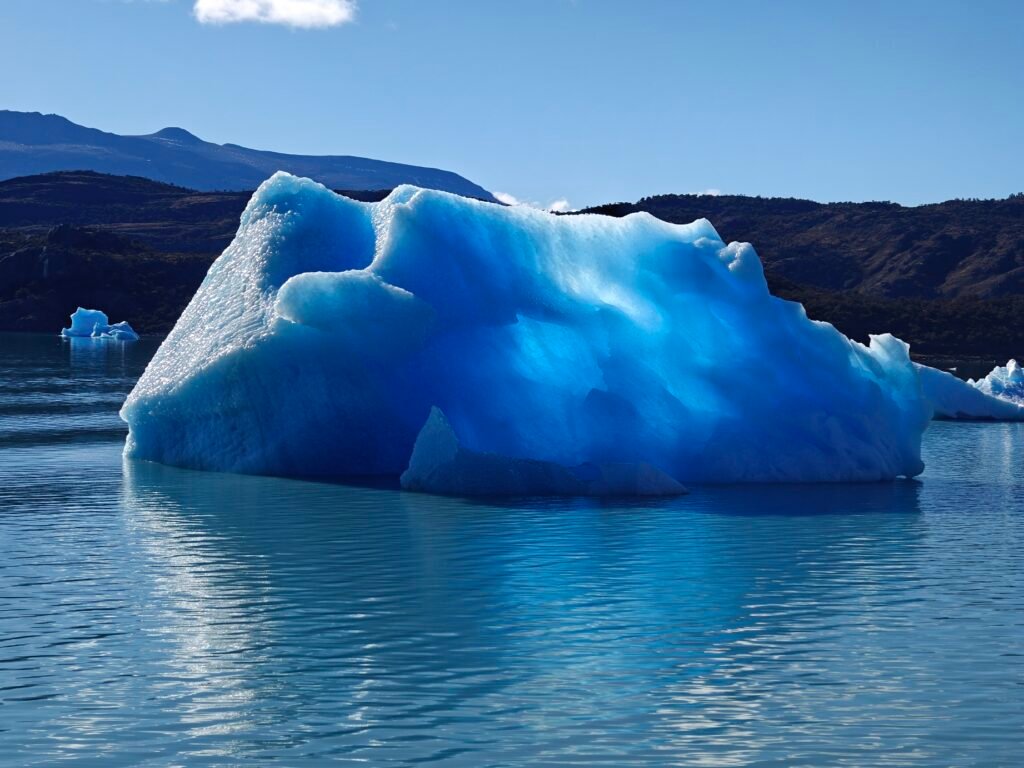
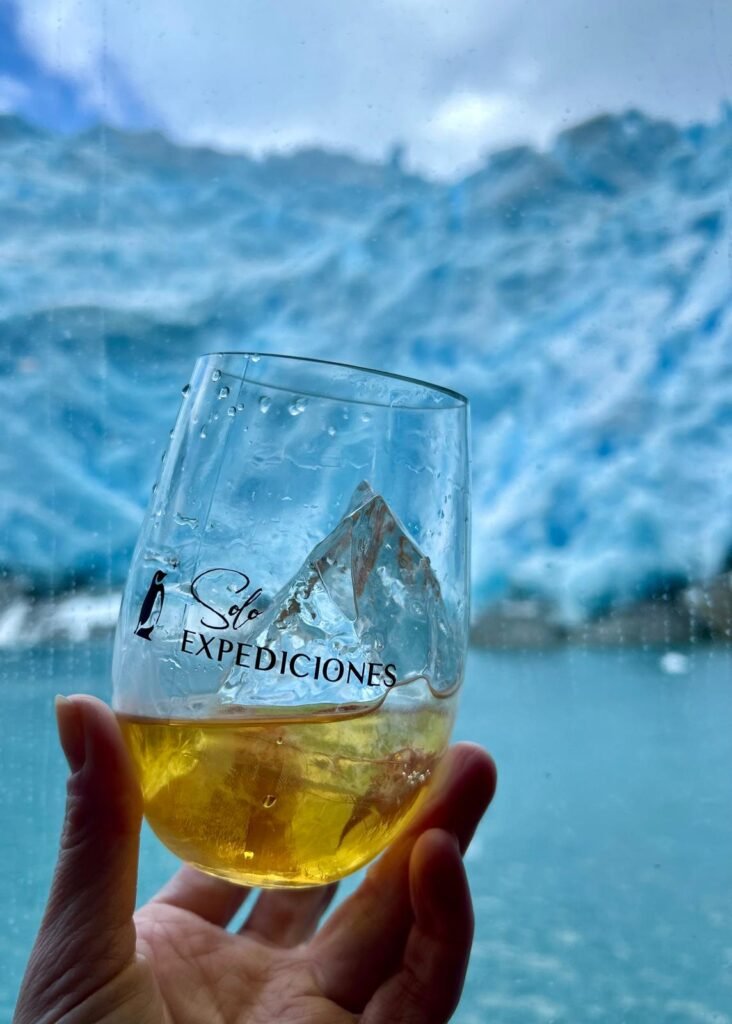
Alcoholic drink at the glacier on the rocks made from glacial ice!
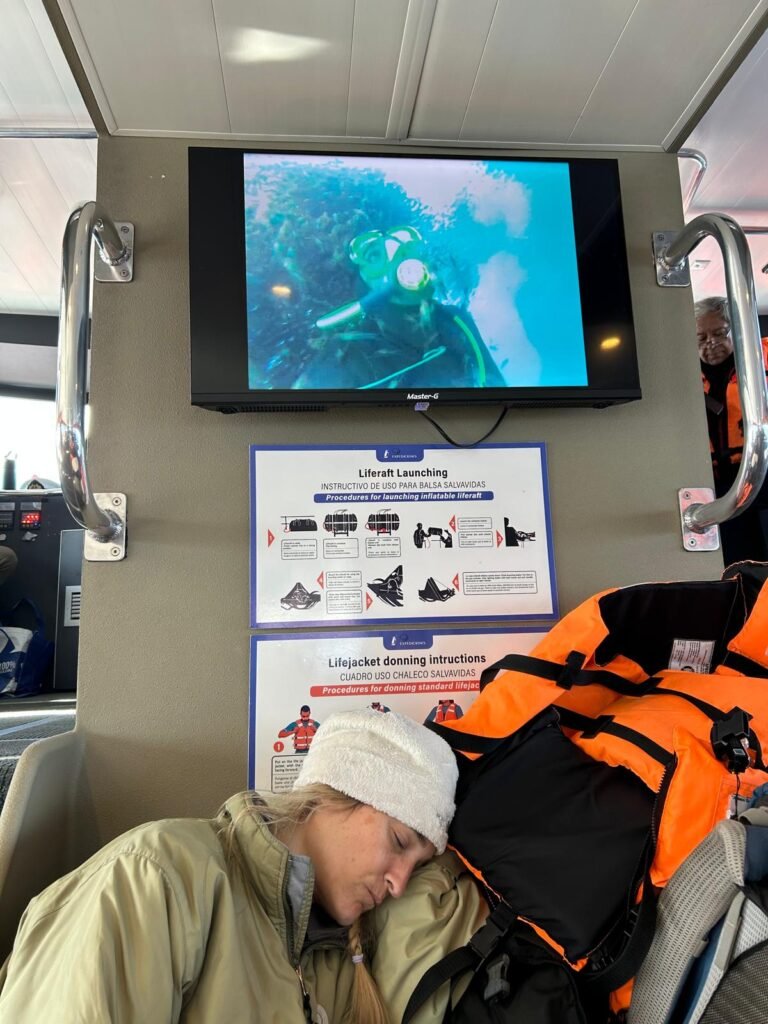
Caitlin dreaming of scuba dives to come (see dreamscape in the screen above)
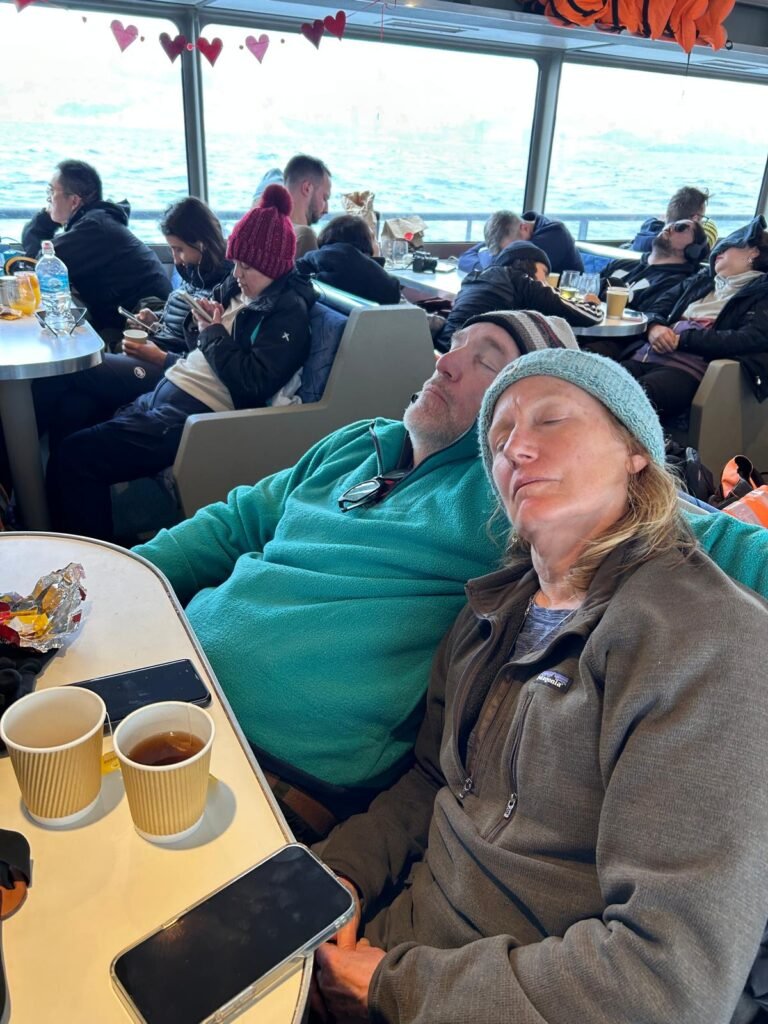
Boat ride home after a long day

Now for a tiny bit of history! The Strait of Magellan, of course, is named after the famed Portuguese explorer Ferdinand Magellan, who was the first to attempt to circumnavigate the world in the name of Spain between 1519-1522. You may recall that he fell short of his goal, dying in a battle in the Philippines in 1591 just short of his goal, but his crew did complete the voyage. Magellan pioneered the 350-mile long navigable route through the fjords and channels between the mainland and Tierra del Fuego, thereby circumventing the treacherous ocean-going route – which can have 80-foot waves at times – around the southern-most islands of Tierra del Fuego – Cape Horn. The Strait is used today by cargo and passenger ships traversing from the southern Atlantic to the southern Pacific Oceans and either avoiding the costly passage through the Panama Canal or too large to use the Canal. And did you know that Magellan also gave us the name for the Pacific Ocean.

OK, enough of humpback whales, glaciers and Magellan, let’s move on to the Grand Island on Tierra del Fuego. See you there!

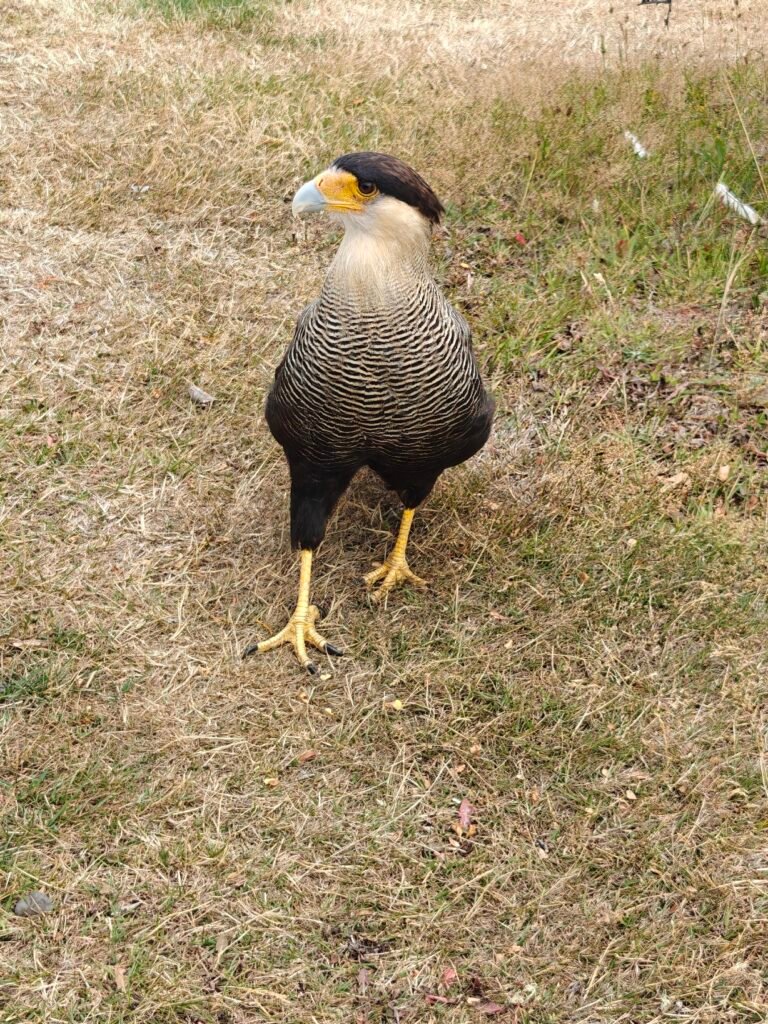
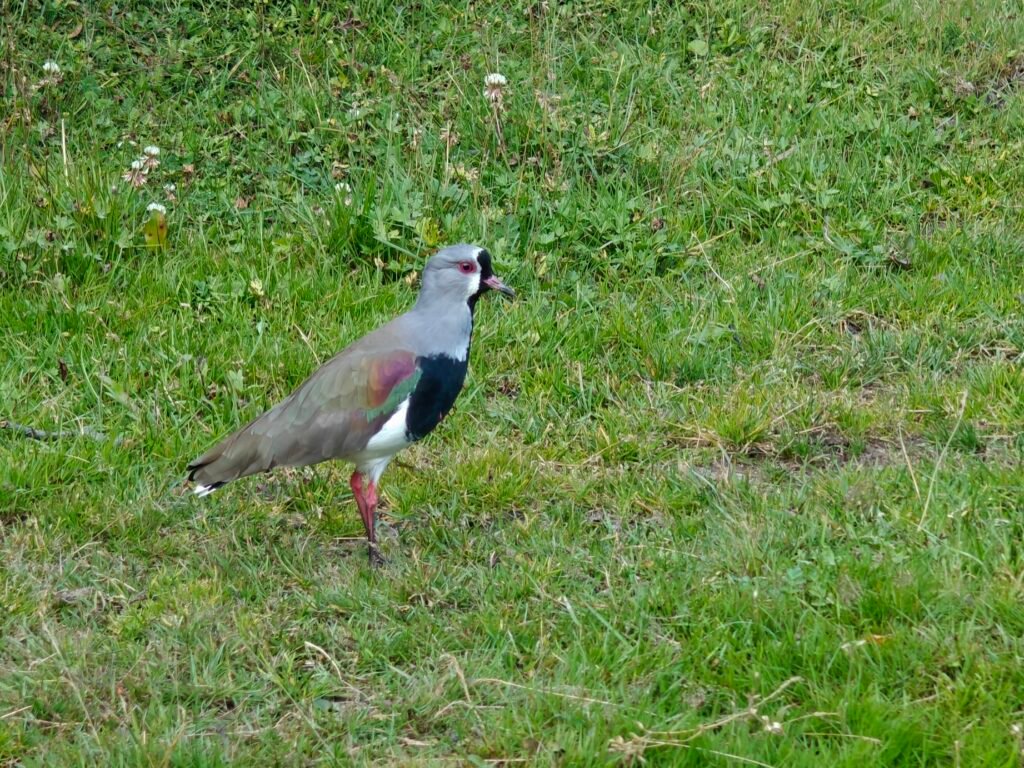
PS: for the birders: one new species, Striated Caracara

It Ain’t Africa This Time: Patagonia Bound!

Welcome back to my overland blog, only this time it ain’t about my journey through Africa. Instead, this series of posts is about a short, one-month long overland trip to Patagonia with Nancy and Caitlin beginning February 17, 2026. Yes, that’s right, Caitlin is joining Nancy and I for this overland journey. Indeed, this year’s journey back to Patagonia for Nancy and I came at the special request of Caitlin, who saw pictures from our Patagonia trip last year and decided it was a must see destination for her.

Note, if you are new to my blog and you want to get email notifications of new posts, then send me an email with a request or fill in the information on the Contact page and request being added, but be sure to let me know who you are (i.e., how I might know you or why you want to join) because I don’t add anonymous requests.

What, you say? Patagonia two years in a row? Last year (2025), Nancy and I (minus Phil and Mary who had to cancel at the very last minute – literally the night before – due to some unexpected GOS (Getting Old Sucks) issues), overlanded along the Carretera Austral route down the Chilean coast from Puerto Montt to Punta Arenas (see map below). It was an epic journey that I won’t recap here, other than to say that we were awestruck by the amazing rugged landscapes, the remoteness, the wonderful and abundant self-drive camping options, and the friendliness of the people, all of which inspired us to return to explore the Argentina side of Patagonia. And when Caitlin asked if we would take her to Patagonia, we didn’t hesitate to say YES. Not only that, but several of my blog-followers asked me to include this Patagonia trip on my blog, so, here it goes:

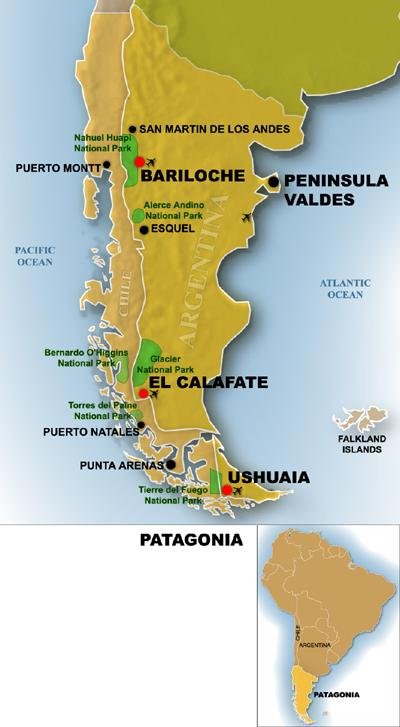
First, let’s clear up a little of the mystique of Patagonia. Patagonia is a familiar name for the vast geography at the southern tip of South America, but to my surprise when we first entertained the trip, I discovered that Patagonia isn’t a formal geographic entity by any political means. It is NOT a formal state or province and has no formal political boundary. Instead, it is somewhat vaguely defined as the southern portion of the continent incorporating parts of both Chile on the western side of the Andes Mountains and Argentina on the eastern side of the Andes extending from roughly the Colorado and Barrancas Rivers on the north in Argentina southward to the tip of the continent. Surprisingly, on the Chilean side there does not appear to be consensus on where exactly the northern boundary lies.

Patagonia is an extraordinarily diverse landscape, including cold, wet, dense forests on the western side of the Andes and dry prairie grasslands and deserts in the rain-shadow of the Andes on the eastern flanks of the mountains and plains extending eastward to the Atlantic Ocean. The Patagonian Andes rise upwards to 5,000-10,000 feet in most places, with the highest peaks reaching over 13,000 feet, with vast ice fields and mountain glaciers capping the highest elevations and in places extending all the way down glacially-carved valleys to the ocean. The west coast is dominated by numerous fjords and channels creating a labyrinth of isolated islands. Due to the harsh environment and complex geography, the region is relatively unpopulated (<2 million), which makes for great overlanding for us!

The name “Patagonia” is believed to have originated from Ferdinand Magellan’s 1520 passage through the region, where he encountered the native Tehuelche people, whom he called “Patagones,” possibly referring to their large feet or large shoes. The region was often subsequently referred to as the “land of giants” owing to the relatively large natives, who were much larger than the Europeans at the time.

Patagonia has been inhabited by indigenous peoples for more than 10,000 years, and possibly as much as 18,500 years. The region was colonized by Spain beginning in the 1500’s after Magellan’s exploration, but only sporadically and intermittently until the early 1800s when the region began to separate from Spain, but it wasn’t until the late 1800’s through a series of Spanish-American wars, and ultimately the treaty of 1881, that Chile and Argentina separately achieved full independence from Spain.

The contemporary economy of Argentine Patagonia is largely based on sheep farming, the extraction of oil and natural gas, and tourism, while in Chilean Patagonia the economy is dominated by fishing, salmon and muscle aquaculture, forestry, and tourism.

OK, that’s my brief overview of Patagonia, which doesn’t do it justice, but it will have to suffice lest this post get even longer. Hopefully, the pictures and descriptions to follow in subsequent posts will put a bit more flesh on the bones.

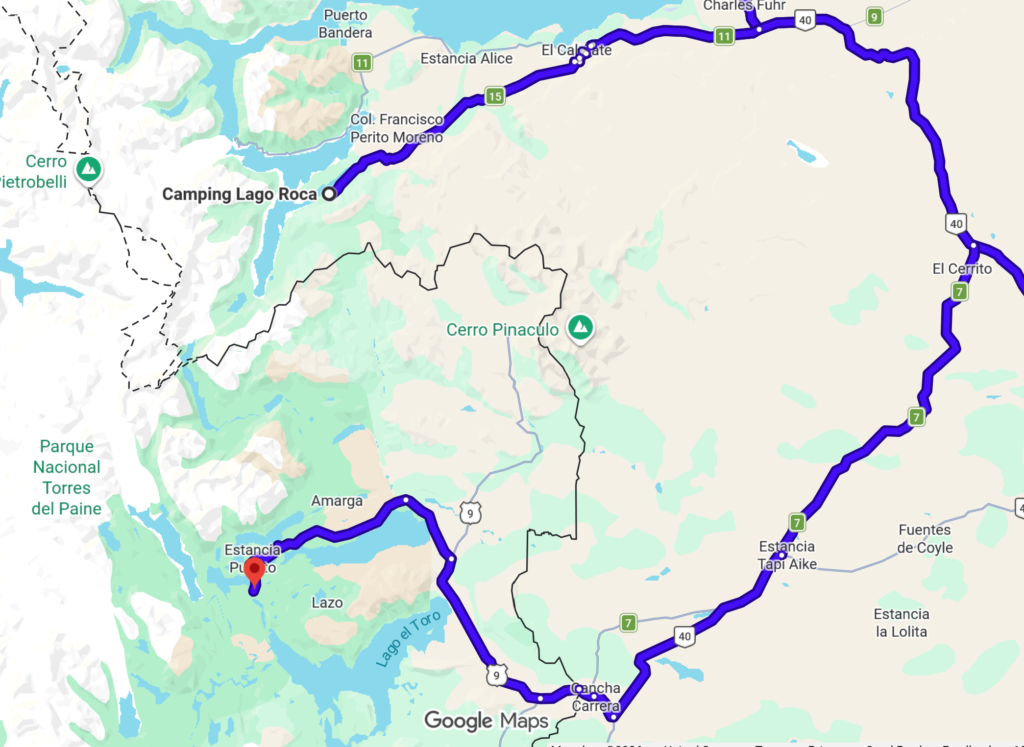
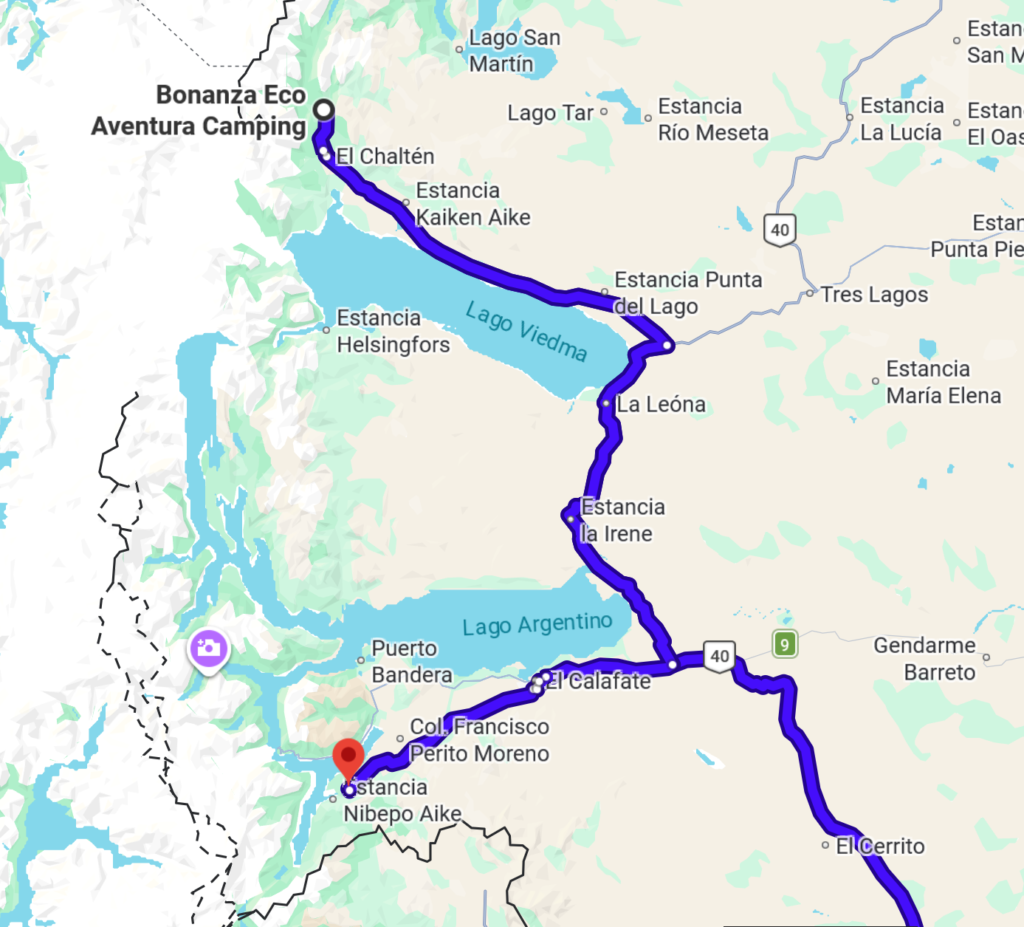
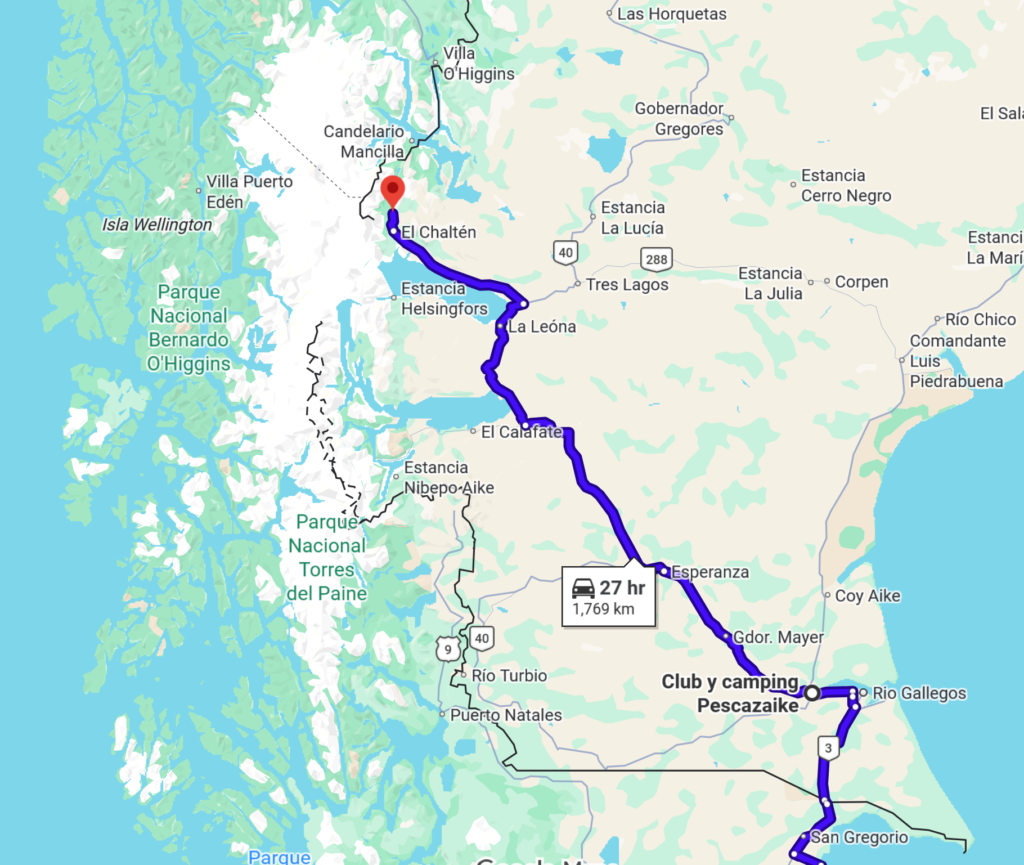
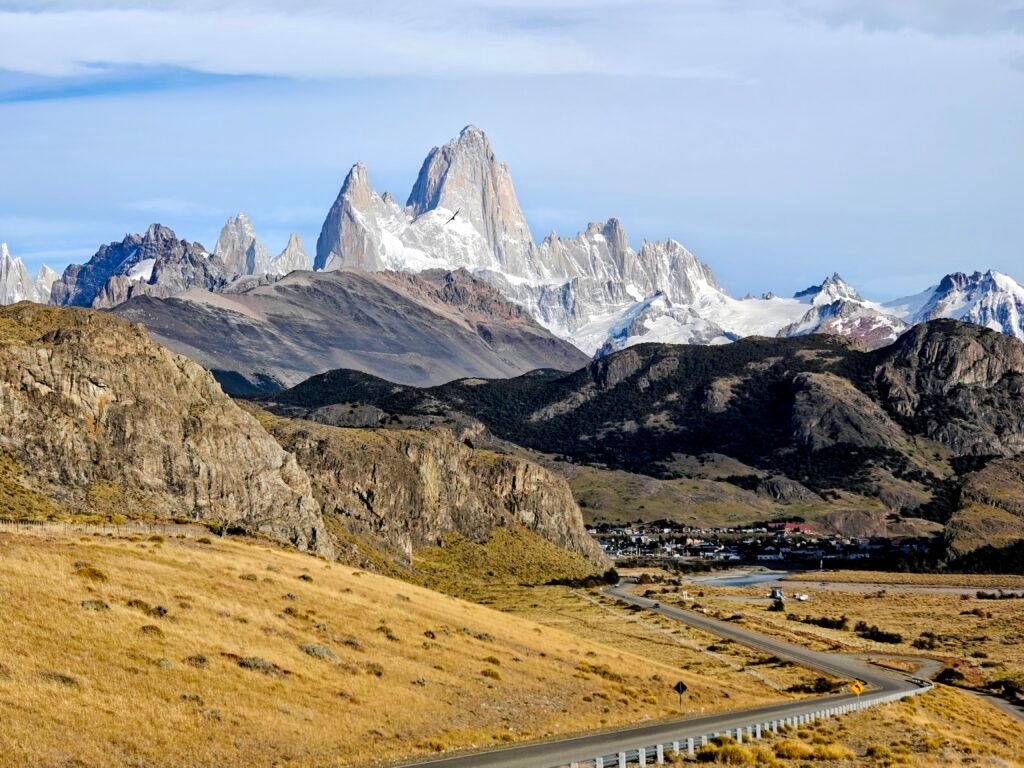
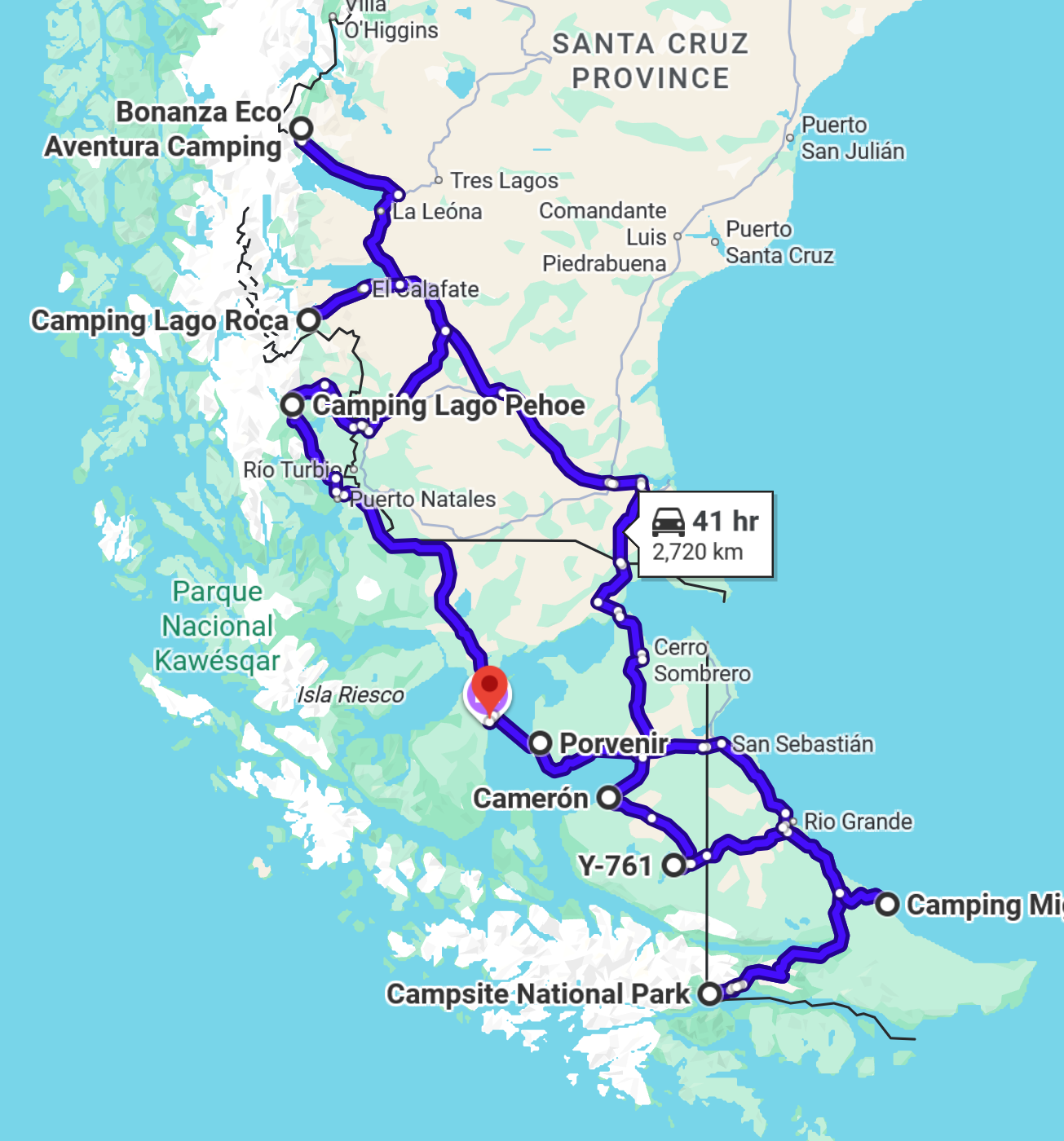
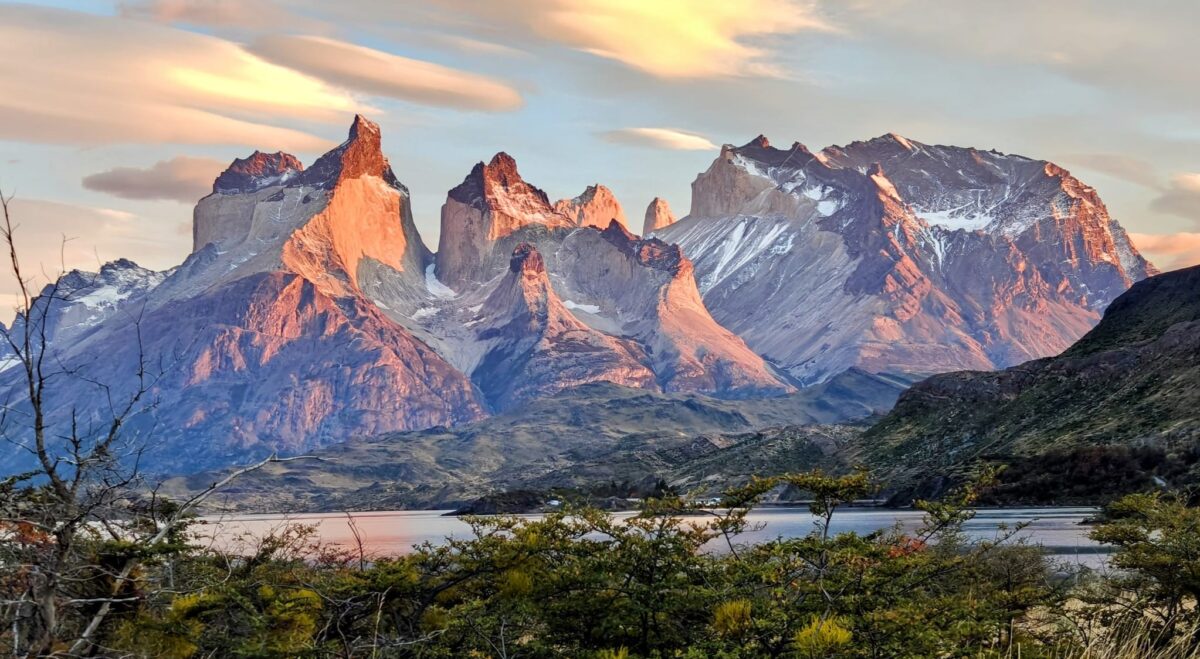
Our trip this year begins February 17 in Punta Arenas, Chile, situated on the Strait of Magellan and close to the southern tip of the mainland of South America. From there, we will take a ferry across the Strait to the archipelago of Tierra del Fuego for a week of exploration, beginning with a visit to a King Penguin colony and ending with a couple of days of hiking in Tierra del Fuego National Park outside of the bustling tourist town of Ushuaia, Argentina. Then we will make our way slowly north back to the mainland and on to Glacier National Park and several days of hiking – weather permitting – outside of the small mountain adventure towns of El Chalten and El Calafate. Lastly, we will make our way back south to Torres del Paine National Park in Chile before returning to Punta Arenas. Here’s a look at our intended route, starting in Punta Arenas (the red waypoint on the map) and heading south on a counter-clockwise loop with a few side excursions, and eventually landing back in Punta Arenas:

That’s it for my introduction to Patagonia and overview of our overland trip. See you on the trail!